
Pest Control in Bear Branch, Kingwood
Bear Branch is a Kingwood village inside Houston city limits, about 35 road miles east of our Spring office. Wooded tracts, Bear Branch Park and the intermittent Bens Branch channel shape the work here: roof rats and squirrels reaching roofs from trees, lone star ticks in brushy edges, and mosquitoes in pools left after rain.
Call 281-627-4810 Request a free inspection
Year-round protection plans from $70 Core · Premium · Legendary See the plans
Bear Branch, Kingwood on the map
Bear Branch is one of the established villages in the middle of Kingwood. OpenStreetMap places the Bear Branch neighborhood point a short walk from Bear Branch Elementary, and an OSRM driving route from our office on Dornoch Drive to that point measures 35.0 miles. That makes it one of the farthest stops we run, but it is still on the route. A Census TIGERweb point check returns “Houston city” for the same spot, so a Bear Branch home is a City of Houston address with a Kingwood mailing name, like the rest of Kingwood.
A village built around woods and a ditch
Look at Bear Branch on the map and two things stand out. The first is Bear Branch Park, the green space next to the school and pool. The second is the run of mapped woodland around it; OSM tags several tracts here as forest, among them this one and this one. Houses back onto those trees on more than one street.
The waterway is Bens Branch, a stream that OpenStreetMap tags as intermittent and labels with the flood control unit number G103-33-00. Intermittent is the important word. A channel that only carries water some of the time spends a lot of the year as a chain of puddles, and that is exactly the kind of habitat mosquitoes use.
Mosquitoes after the rain stops
Texas A&M’s AgriLife Today report on mosquitoes after rain says Culex mosquitoes lay eggs in pools in dried-up creeks and other low spots, and that container species can go from egg to biting adult in a matter of days. Bens Branch after a summer storm, followed by a week of heat, fits that description. So does the saucer under a potted fern on a shaded patio.
The ditch is not yours to treat, and we do not touch it. What we can do on a mosquito control visit is work the yard side: the shrubs and shaded fence lines where adults rest during the day, plus any gutter, drain or container that holds water. Harris County Public Health’s Mosquito and Vector Control Division handles county-level surveillance and says its treatments run between 8:30 p.m. and 5 a.m., weather permitting. Our yard work is separate from theirs.
Roof rats, squirrels and the tree line
Bear Branch’s canopy is the reason attic calls here lean toward climbing animals. The Texas A&M rodent IPM guide says roof rats prefer mature vegetation, vines and trees for cover and nest above ground more often than not. The same guide notes a rat needs a hole about the size of a quarter to get in. On a house where branches touch the shingles, a rat can reach that hole without ever coming to the ground.
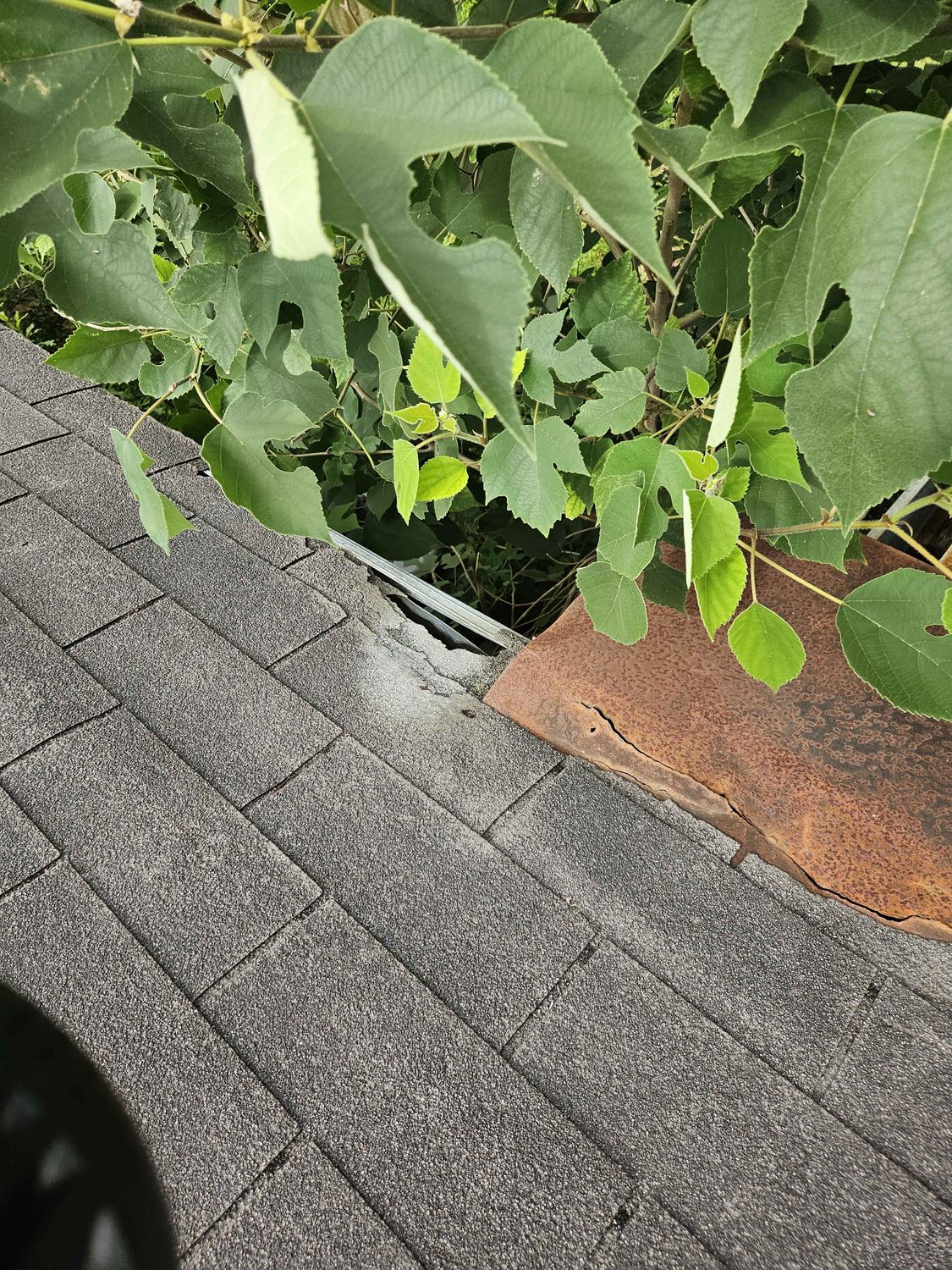
Scratching after dark usually means roof rats in the attic. Activity at sunrise points more toward squirrels; see squirrel control. Either way, the lasting fix is exclusion: finding every entry, closing it with material the animal cannot chew, and getting limbs back off the roof.
Raccoons belong in the same conversation. A Texas A&M AgriLife raccoon fact sheet says that in towns the damage they cause is mainly to attics and roofs, and that pet food and trash cans give them an easy meal. A cat bowl left on the back porch near the park is an invitation. Our raccoon control page explains how removal and sealing work.
Ticks where the yard meets the woods
The Texas A&M Field Guide to Common Texas Insects puts lone star ticks in wooded areas with underbrush, along creeks and near animal resting places, with adult and nymph activity peaking from March through May and again in July and August. A Bear Branch backyard that ends at a strip of woods along the ditch checks every box. Dogs bring them in first. Tick control treats that brushy edge and the shady spots where pets lie down.
Termites and the slab
Harris County is on Texas A&M’s list of counties with confirmed Formosan subterranean termites. The page says winged swarmers fly at night in late May and early June and are drawn to lights, so a pile of wings on a windowsill that time of year is worth a call. Shade and leaf litter keep soil damp against the slab, which helps native subterranean termites too. See termite control.
Your HOA and our work
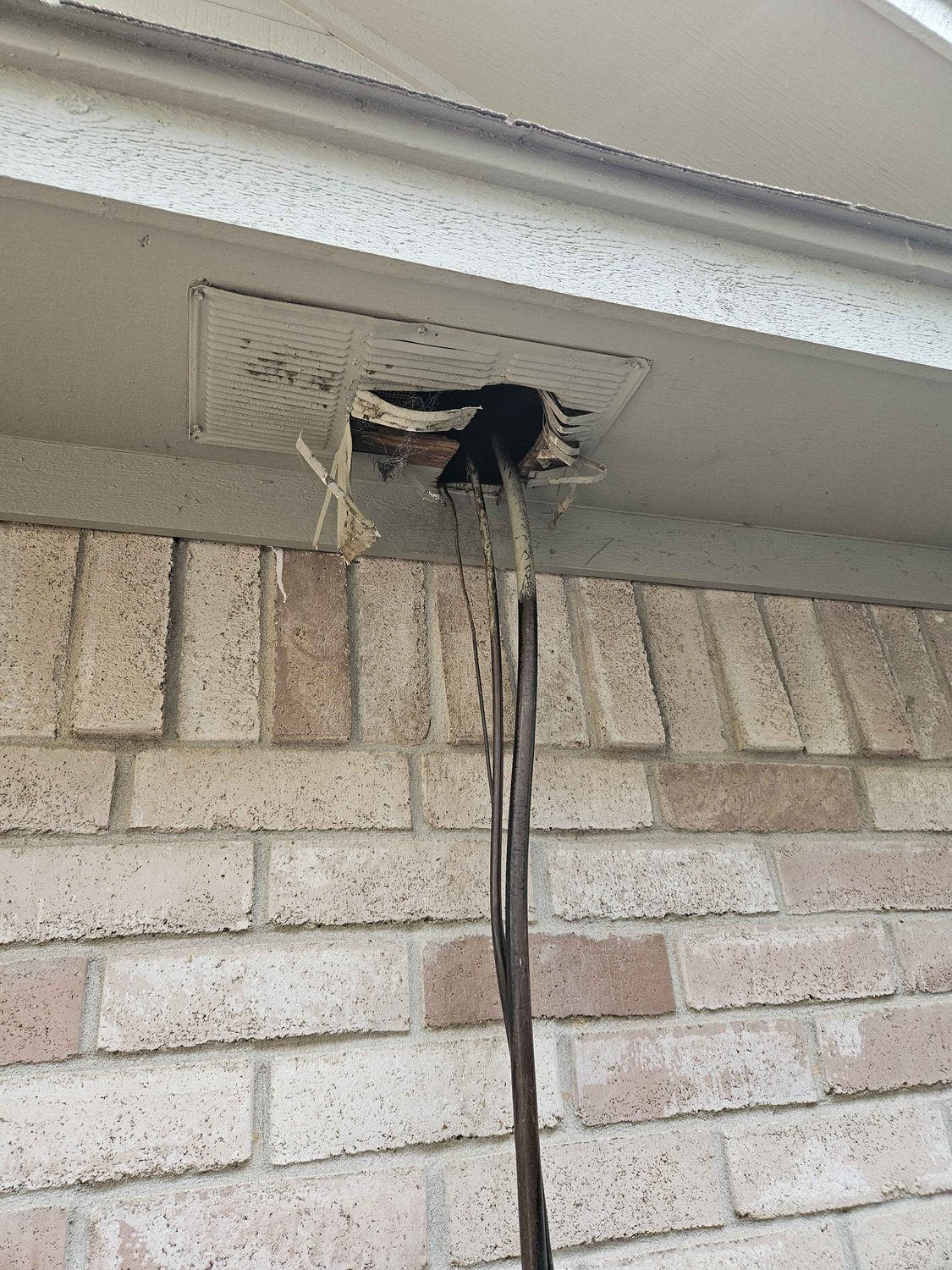
The Bear Branch Village association keeps a resident portal with its governing documents, an architectural page and its management company, Goodwin and Company. If a repair would change the look of a soffit, vent or roofline, read the architectural rules there before work starts.
Starting service
Every visit begins with a free inspection and a written price. There is no long-term contract, the 100% Service Guarantee covers the work, and ongoing service is available through our Core Protection Programs. If you live just north in Elm Grove, that page covers Taylor Gully and its flood control project.
Frequently asked questions
Bens Branch is dry half the year. Can it still breed mosquitoes behind our fence?
Yes, mainly after it rains and then stops flowing. A creek that drops to a string of puddles is the kind of low spot AgriLife names for Culex mosquitoes. Walk the back fence a few days after a storm, and tip anything in your own yard that is holding water.
Something runs across our Bear Branch roof at night. Rat or squirrel?
Night noise points to roof rats more than squirrels, which keep daylight hours. Both use limbs to reach the shingles. We look for droppings, rub marks and chewed vents in the attic on the free inspection, then plan removal and exclusion around what we actually find.
Do we need the association's approval before you seal up the outside of our house?
Bear Branch Village posts its restrictive covenants and an architectural section on its association website. Most of our exclusion work is screens, flashing and sealant matched to the house, but if a repair would change how the exterior looks, check with the association first.
Will you treat for ticks where our yard meets the woods?
Yes. Lone star ticks favor wooded ground with underbrush near creeks, which describes several edges in this village. We treat the shaded, brushy margin and the places pets rest, and we suggest keeping that strip cut back so it dries out between treatments.
Pest problem in Bear Branch?
No long-term contracts, and service agreements are backed by our 100% Service Guarantee.
Because we are based in Spring, we can often come out the same or next day for urgent problems. Call before noon, Monday through Friday, for the best chance at next-day service.
Last updated