
Cockroach Control in Spring and North Houston
Two roaches account for nearly every call here. The small, striped German cockroach lives and breeds indoors, so it is treated with baits, growth regulators and crack work in kitchens and baths. The large American cockroach, the palmetto bug, lives outside and wanders in, so the work shifts to the exterior, drains and entry gaps.
Call 281-627-4810 Request a free inspection
Year-round protection plans from $70 Core · Premium · Legendary See the plans
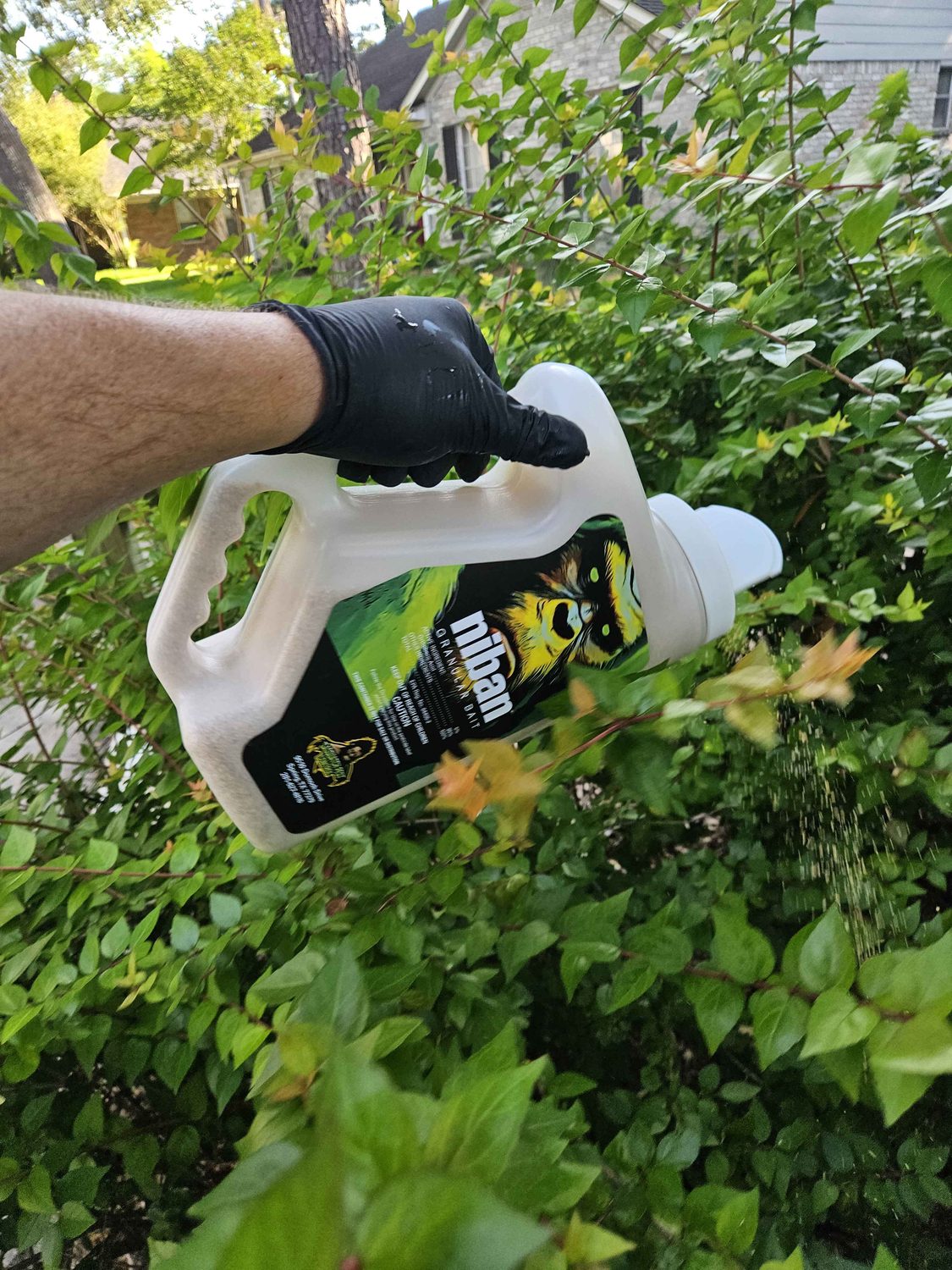
Roaches: the job at a glance
| What it covers | German, American and other cockroaches in homes, apartments and commercial kitchens across Harris and Montgomery counties |
|---|---|
| Included | Species identification, harborage inspection, baits, insect growth regulators, void and crack treatment, and exterior prevention where it helps |
| Not included | Plumbing repairs, appliance removal, deep cleaning, or repairing anything roaches have already damaged or soiled |
| How long it takes | German roach jobs run several weeks with follow-up visits; American roach work is mostly exterior and needs fewer return trips |
| Before we arrive | Skip the bug bombs and store sprays; they scatter roaches and can keep them from taking bait |
| What it costs | Free inspection, then a written price; which species it is and how many rooms or units are involved set it |
Two roaches, two different problems
People in north Houston use “roach” for several insects, and treating them as one is where most home efforts go wrong. Texas A&M AgriLife’s publication Cockroach Biology and Management (ENTO-037) lists the American, German, oriental and smokybrown as the most common cockroaches in Texas. Here, the first two make up nearly all of our roach calls, and they live completely different lives.
The German cockroach spends its whole life indoors. The same publication states that German cockroaches do not live outdoors in Texas. Kitchens, bathrooms and the warm motor areas of appliances are home.
The American cockroach lives mostly outside, in sewers, drains, mulch and tree holes, and comes inside looking for food or water. Most people here call it a palmetto bug or a water bug.
A plan built for one will miss the other. That is why identification is the first step on every roach job we do.
What north Houston gives roaches
Heat and humidity help both species. Texas A&M puts the German cockroach’s optimum temperature around 80 degrees and notes that warmer conditions shorten development and raise the potential for population growth. A north Houston kitchen, with a dishwasher, a refrigerator compressor and a slab that holds summer heat, sits in that range much of the year.
American cockroaches respond to weather more than to the house itself. Heavy rain floods the drains and storm sewers they live in, and dry spells push them toward any moisture they can find. Either one can bring a few big roaches through a floor drain, a garage door seal or a gap at the soffit. Texas A&M lists poorly sealed doors, roof soffits and floor drains as typical entry routes for the larger species.
Identifying what you found
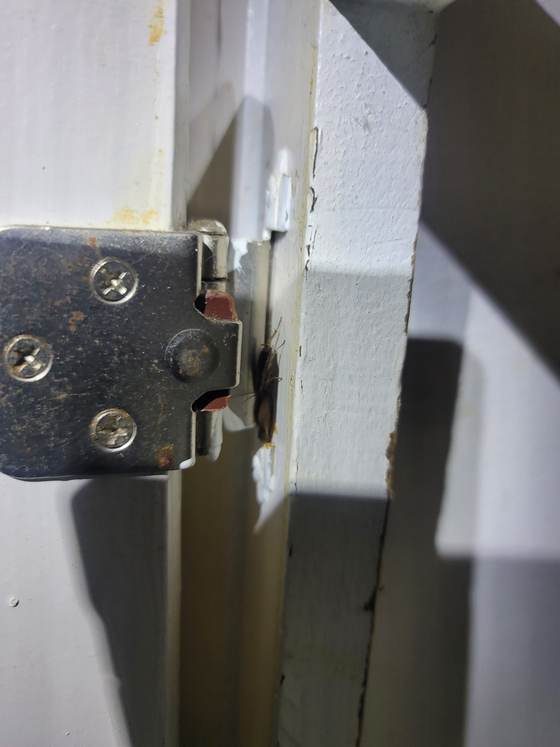
German cockroach. About half an inch to five-eighths of an inch long, light brown, with two dark stripes running lengthwise on the shield behind the head. Texas A&M’s Urban Entomology program notes in its German cockroach profile that the female carries her egg capsule until the eggs are nearly ready to hatch, which protects the young and is part of why this species rebounds after a light treatment. ENTO-037 adds that one capsule produces 30 to 40 nymphs and that the species can turn over a generation in about 100 days.
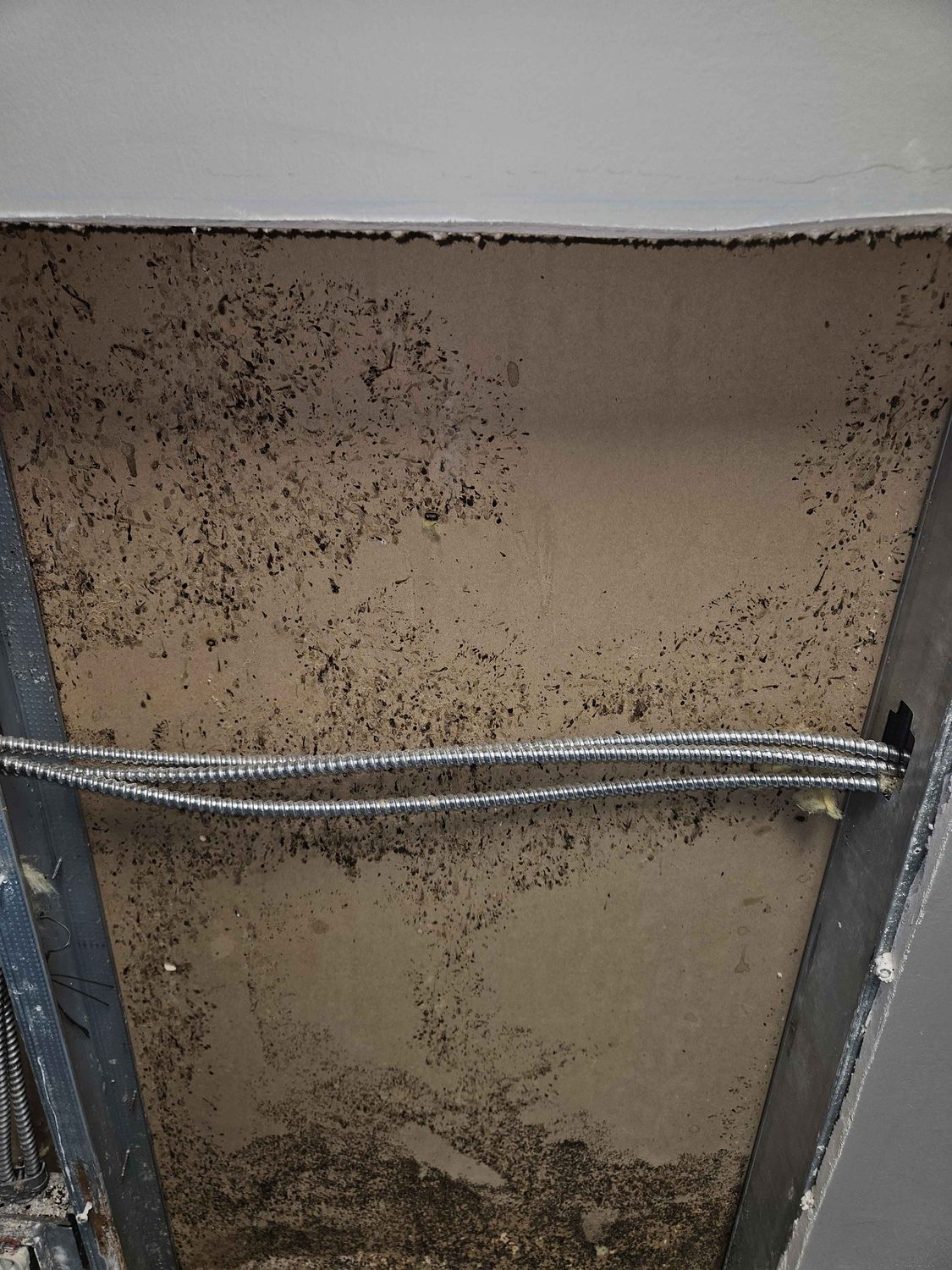
American cockroach. The largest roach in Texas at about one and a half to two inches, reddish-brown, with a pale yellowish band around the edge of the shield behind the head. Both sexes have full wings, and they can fly short distances. They are slow to mature, roughly 600 days to adulthood according to ENTO-037, so a few in the house rarely means they are breeding there.
Lookalikes. Smokybrown cockroaches are large and dark, common outdoors in humid parts of Texas around mulch, soffits and tree holes. Asian and field cockroaches look nearly identical to German roaches, but ENTO-037 notes they can be found outdoors, which German roaches in Texas are not. Where the roach turned up tells us almost as much as what it looks like.
More on each species is on its own page: German cockroaches in the kitchen and American cockroaches (palmetto bugs).
Can German cockroaches fly?
No. Adult German cockroaches have wings that reach the end of the abdomen, but Texas A&M AgriLife’s ENTO-037 says they do not fly, and Texas A&M’s urban entomology program says they rarely do. They run, and they spread by riding in with groceries and boxes. A roach flying at you is almost always another species.
On a humid north Houston evening, the roach that takes off from a porch light or a garage wall is usually one of the big outdoor species. AgriLife’s cockroach biology and management publication says both male and female American cockroaches can fly. It describes the smokybrown cockroach as having wings that extend past the abdomen in both sexes, and as common outdoors in the more humid parts of Texas, where it lives in mulch, tree holes, soffits and the eaves of attics.
That difference matters for how to get rid of German cockroaches, because they are not coming in from the yard. ENTO-037 states plainly that German cockroaches do not live outdoors in Texas, and the urban entomology profile adds that spraying the outside of the house is unnecessary for them. The work belongs in the kitchen and bathrooms: gel bait in small, pea-sized placements in the cracks where they hide, cleanup that removes competing food, and patience. AgriLife suggests switching to a bait with a different active ingredient if one has not brought the numbers down in two to three weeks, and its tips for professionals note that pyrethroid sprays are highly repellent to this species, which is one more reason to keep sprays off the bait.
Our German cockroach profile covers identification in more detail, and types of cockroaches in Houston sorts out the rest of the local lineup.
How we work as a cockroach exterminator in Houston
These are the company’s own steps, in the order they happen.
- Confirm the species. We look at the roaches, the droppings and the egg cases. For German cockroaches we map the harborages: behind the refrigerator and stove, under the sink, inside cabinet hinges, around the water heater and inside small appliances.
- Bait where they live. Gel baits go into the cracks and voids where roaches shelter and feed, in small placements close to the activity.
- Apply a growth regulator. An insect growth regulator goes into spots like refrigerator compressor areas, behind stoves and around water heaters. It keeps nymphs from maturing into breeding adults, which is how the cycle actually breaks.
- Treat the voids and edges. Depending on the job, that includes treating the voids behind outlets and window and cabinet trim and a baseboard treatment through the home. For German roaches, we keep sprays away from the bait placements so the roaches keep feeding.
- Work the outside for American roaches. For palmetto bugs, the emphasis moves to the perimeter: an exterior treatment around the foundation, dust in wall voids and drain lines, bait at entry points and moisture zones, and a list of gaps worth sealing.
- Come back. German cockroach jobs get scheduled follow-ups to catch nymphs that hatch after the first visit. American roach jobs get checked to make sure the outside work is holding.
There is no long-term contract, and the work is covered by our 100% Service Guarantee.
Why bug bombs and store sprays backfire
Aerosol foggers do not reach the cracks where German cockroaches spend most of their time. ENTO-037 puts that at about 75 percent of the roach’s life, inside gaps from one thirty-second to three-sixteenths of an inch wide. A spray that lands on the counter mostly drives the population deeper into the walls or into the next room. It can also leave residue on and around bait placements, which competes with the bait we are trying to get them to eat. The result is often more spread and less feeding, the opposite of what you want.
Tools worth having at home
Two inexpensive things help a roach job along, and both come straight from Texas A&M’s advice.
Sticky cards. ENTO-037 recommends sticky monitors, the glue boards sold as roach traps, placed next to doors, behind laundry machines and under the stove and refrigerator. The publication is candid that they are better for monitoring than for control, though they do catch a share of the larger outdoor species. For us, a card that fills up behind the fridge in three days and a card that stays empty under the bathroom sink are two useful facts. Put a few out before the first visit and leave them where they are.
A vacuum with a HEPA filter. The same publication suggests vacuuming roaches and the crumbs they live on from under stoves and behind refrigerators, using a HEPA filter because roach harborages carry allergens that can make breathing hard for some people. Empty the canister or bag outside.
What we would steer you away from is a closet full of different sprays. Mixing products in the same kitchen makes our bait work harder, and it makes it difficult to tell what is working.
Getting ready for the first visit
Roach work goes better when the technician can reach the places roaches hide. Before a German cockroach treatment, clear the countertops and the cabinet under the kitchen sink, and pull food out of the lower cabinets nearest the stove and dishwasher. If you can slide the refrigerator and range forward a few inches, do it; if not, we will. Tell us about any room where you have seen roaches, including the garage and laundry, and point out a dishwasher or microwave you suspect has them inside. Pets and fish tanks are worth mentioning too, so placements can be adjusted around them.
For American cockroach work, the outside matters more. Unlock side gates, move anything stacked against the foundation where you can, and note which drains the roaches seem to come out of.
Signs and what they mean
| What you find | What it usually points to |
|---|---|
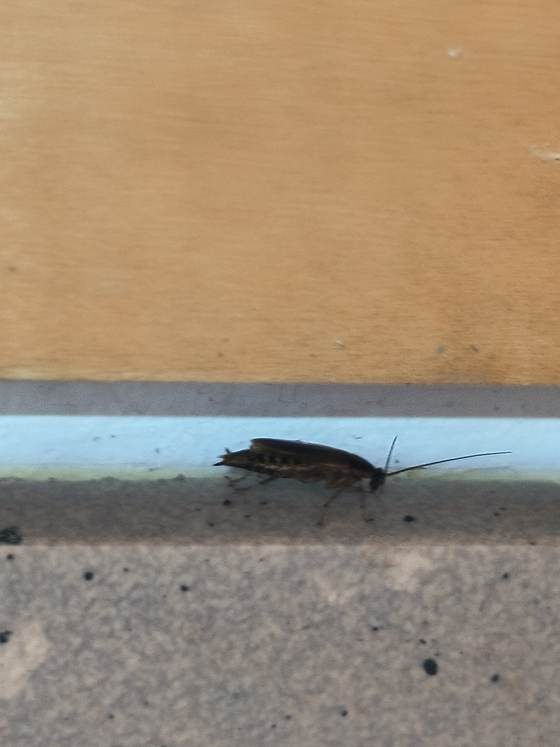
| Specks like ground pepper in drawers and cabinet corners | German cockroach droppings near a harborage |
| Small tan roaches in daytime | A large German population that has outgrown its hiding spots |
| A single large roach in the garage or tub | An American cockroach that came in from outside |
| Brown, bean-shaped capsules glued in a cabinet or closet | Egg cases from a larger species; German females carry theirs |
| A musty, oily smell in the kitchen | A heavy, established infestation |
| Roaches coming up through a floor drain | American cockroaches traveling from the sewer line |
What putting it off costs
German cockroaches are the expensive one to wait on. A population that could have been handled with a few weeks of bait and growth regulator becomes a job that reaches into every cabinet and appliance. They are also a health concern: Texas A&M describes German cockroaches as one of the most widespread public health pests in homes, apartments and restaurants, carrying germs and linked to allergies and asthma. American cockroaches are less likely to build up inside, but each one that walks across a counter has come from a drain.
Homes, apartments and commercial kitchens
In a single-family home, we can usually reach every harborage and control the whole problem. Apartments and townhomes are harder, because German cockroaches travel through shared walls and plumbing chases. Treating one unit while the neighbor’s stays infested buys a few quiet weeks. Property managers get the best results treating affected units and the units next to them.
Restaurants, commissaries and food service kitchens are their own category, with health inspection standards and documented service. Those accounts run through our commercial program, which schedules visits around service hours and keeps the records an inspector will ask for.
What helps between visits
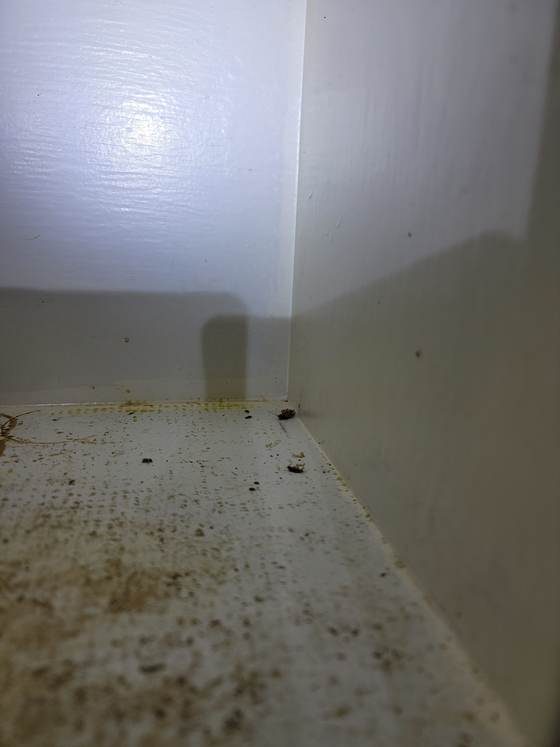
- Clean grease from stovetops and the floor beside the range nightly. Texas A&M notes that good sanitation makes baits work better, because roaches have fewer alternatives.
- Empty pet bowls at night and keep pet food in sealed containers.
- Fix leaks under sinks and around the water heater.
- Caulk gaps around plumbing, along backsplashes and where cabinets meet walls.
- Check grocery boxes, delivery cartons and secondhand appliances before they come inside.
- Keep mulch and leaf litter thin near the foundation and make sure garage door seals touch the slab.
- Put covers or screens on floor drains in laundry rooms and garages.
Problem pages under cockroach control
Related services
Roaches and ants often share a kitchen; see ant control. Where roaches are the food source, spiders tend to follow, which is covered under spider control. If roaches arrived along with rats in an attic or garage, rodent control is the next page to read, and pantry pest control covers beetles and moths in stored food.
To put a name to the roach you found, our guide to the types of cockroaches in Houston compares the common ones, and the pest library has a separate entry on the Texas tree roach.
We handle roach work in The Woodlands, Tomball, Atascocita, Magnolia, Champions and across Harris and Montgomery County. Book a free inspection through the contact page.
Frequently asked questions
I only saw one roach. Do I have an infestation?
It depends which one. A single big reddish roach in the garage or bathroom is often an American cockroach that wandered in from outside. A small tan roach with two dark stripes behind its head is a German cockroach, and those almost never travel alone. Seeing one in daylight usually means a crowded population.
Why do I have German cockroaches when my kitchen is clean?
They ride in. Texas A&M lists groceries and boxes as common ways cockroaches enter homes, and secondhand appliances and shared apartment walls are others. Cleanliness affects how quickly they grow and how well baits work, but a spotless house can still get them.
How long will it take to get rid of German roaches?
Plan on several weeks and more than one visit. Baits need time to move through the population, and the egg capsules a female carries hatch after the first treatment. The follow-up visits are there to catch those new nymphs before they mature and start the cycle again.
Why do palmetto bugs show up after heavy rain?
American cockroaches live in sewers, drains, mulch and other damp outdoor spots. When storms flood those places, they move, and floor drains, door gaps and soffits are common ways in. Sealing those entry points and treating the outside are what cut down on rainy-night visitors.
Do you handle roaches in restaurants and apartment buildings?
Yes. Those are some of the most common German cockroach jobs, and they need a schedule and service records rather than a one-off treatment. Multi-unit buildings also need neighboring units checked, because roaches move through shared walls and plumbing chases.
How do you get rid of German cockroaches for good?
Bait placed where they hide, plus cleanup that takes away the food competing with it. Texas A&M AgriLife ranks baits among the most effective cockroach insecticides for homes and advises rotating to a different active ingredient if one stalls. Follow-up visits catch the nymphs that hatch from egg capsules after the first round.
Our largest service areas
Cockroach Control in north Houston?
No long-term contracts, and service agreements are backed by our 100% Service Guarantee.
Because we are based in Spring, we can often come out the same or next day for urgent problems. Call before noon, Monday through Friday, for the best chance at next-day service.
Last updated