
Bat Exclusion in Spring and North Houston
Bats in a north Houston attic are handled by exclusion, not killing. We confirm the colony and find every gap, then fit one-way devices so the bats fly out at dusk and cannot get back in. Texas A&M advises evicting between September and April, outside the pup season. Then we seal the house and clean the guano.
Call 281-627-4810 Request a free inspection
Year-round protection plans from $70 Core · Premium · Legendary See the plans

Bats: the job at a glance
| What it covers | Bat colonies in attics, soffits, wall voids, chimneys and behind shutters at homes and businesses in Harris and Montgomery counties |
|---|---|
| Included | Inspection, one-way exclusion devices, sealing every gap once the bats are out, and guano cleanup with containment and protective gear |
| Not included | Exclusion during the pup season, and full insulation or drywall replacement, which is quoted separately |
| How long it takes | Devices stay up at least a week in warm weather and two in cool, per Texas A&M, then the openings are sealed |
| Best timing | September through April; Texas A&M advises against evicting during the spring-to-late-summer maternity season |
| What it costs | Free inspection, then a written price; roof height, the number of exit points and how much sealing is needed set it |
Bats and north Houston
Houston is bat country, and that is not a figure of speech. Texas Parks and Wildlife’s page on the Waugh Drive Bridge puts the colony there at an estimated 250,000 Mexican free-tailed bats, and says the bats stay through the year, with the best emergences on warm nights and the bats staying inside the crevices when sunset temperatures are near 50 degrees or it is raining.
Those same bats roost in houses. TPWD’s species page for the Brazilian free-tailed bat, the same animal under its other common name, lists human habitations, bridges and other buildings among its roosts. It also notes the species eats only insects, such as moths, beetles and flying ants, and that it is a known carrier of rabies. Each female has one pup a year.
So a colony in a soffit in Spring or Klein is not unusual. The attic offers what a bridge offers: a narrow, warm, dark gap high off the ground with an easy drop into open air at dusk.
How do I know if I have bats in my attic?
The surest signs of bats in an attic are dark, crumbly droppings piling up under one gap in the soffit or roofline, a sharp ammonia smell, and squeaking or rustling in a wall at dusk and dawn. Watching that roofline at sunset settles it: bats drop out of the same opening one after another.
We identify the species on the inspection, but you do not need to know it to know you have bats. AgriLife suggests watching the building at dusk and just before dawn to see where they come and go, and notes that on nights cooler than 50 degrees they may not leave at all. What you will notice:
- Guano. Dark, crumbly pellets under a gap in the soffit, stuck to siding below the roofline, or piled on attic insulation. Unlike mouse droppings, bat guano crushes to a glittery powder of insect parts.
- Smell. A strong ammonia odor in or under the attic from urine and guano.
- Sound at dusk and dawn. Squeaking and fluttering in a wall or ceiling as the colony leaves and returns.
- Rub marks. Brown, greasy staining around a narrow gap where bats squeeze in and out.
- The emergence itself. Stand outside at sunset and watch the roofline. Bats dropping out of one spot one after another is the clearest proof.
Lookalikes are few, but people do confuse a large guano pile with rodent droppings. If the droppings are hard pellets that do not crumble, look at rodent control instead.
The species you are most likely hearing has a nickname that fits. Texas Parks and Wildlife’s profile of the Brazilian free-tailed bat says it is often called the “house bat” because it roosts in attics, under roof overhangs and in narrow spaces between signs and buildings. Our library page on the Mexican free-tailed bat covers how to recognize it.
When you notice the signs matters almost as much as what you notice. TPWD’s nongame species rules discourage excluding bats from buildings between May 1 and August 15, when young are unable to fly and may be trapped inside. Spotting guano in May is still worth acting on: the inspection, the count of exit points and the plan can all happen right away, and the one-way devices go up once the young are flying.
Inside Houston city limits, the city’s animal agency draws a clear line. BARC’s page on wild animals on private property says it does not handle pest removal, bat colonies included, and points residents to a licensed pest control company. It does respond to a possible rabies exposure or a wild animal loose inside a bedroom or living room. For how the state and federal rules fit together, see our guide to bats, birds and wildlife law in Texas.
Where bats get into local houses
Texas A&M AgriLife’s fact sheet on bat management says colonies may roost in attics, under eaves, under shingles or siding, or in the wall spaces of buildings, and that bats return to the same roost year after year. It names the Mexican free-tailed bat and the cave myotis as the state’s two most common species, both of which often occupy buildings. On north Houston homes, the openings that lead to those roosts tend to be:
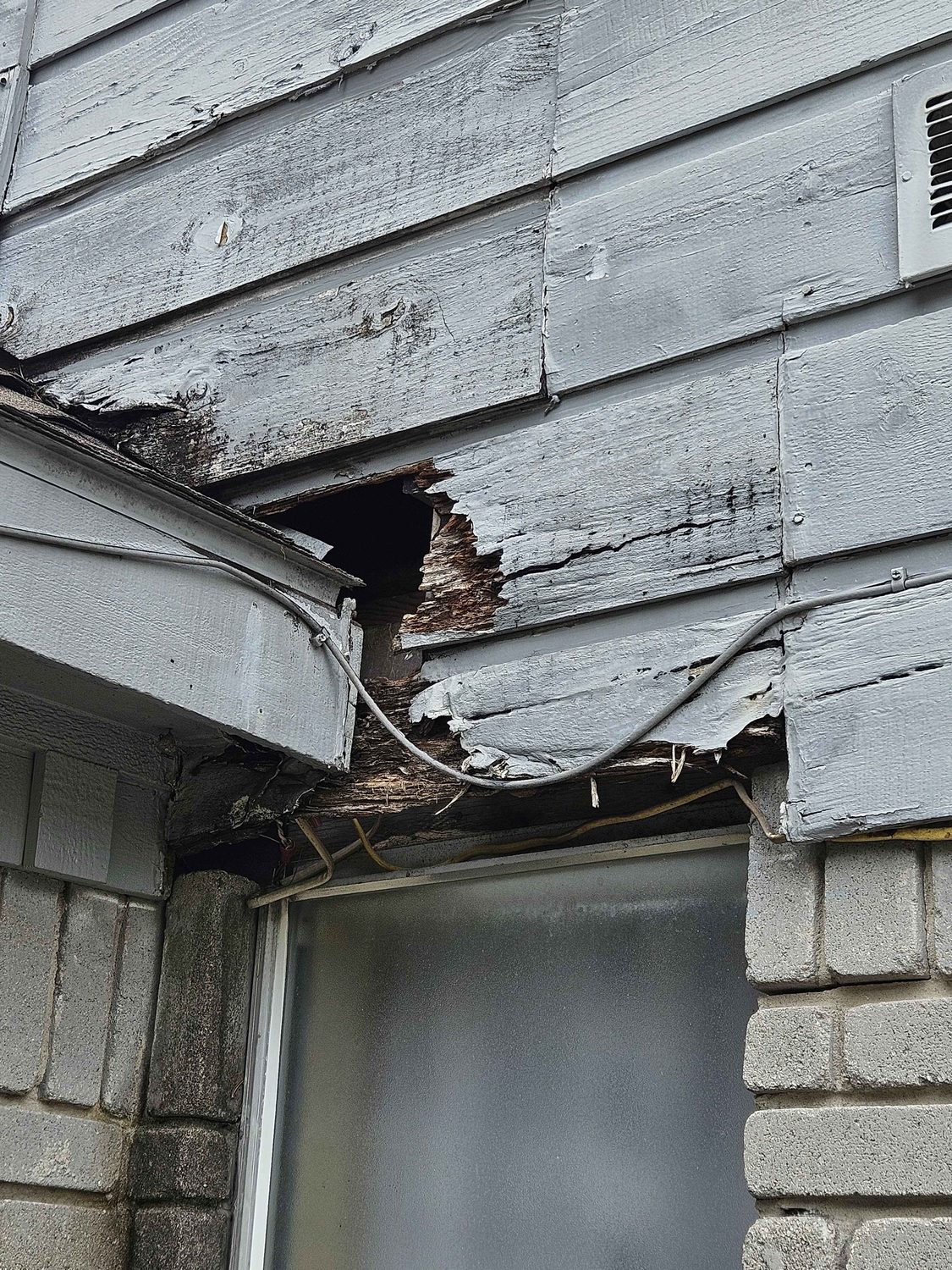
- The top of the soffit, where it meets the brick or siding. A gap of a half inch or so along a few feet of wall is plenty.
- Ridge vent ends and the cap at a hip. Bats crawl under the end of the vent and into the attic.
- Fascia board joints and corners, especially where the board has shrunk or the paint line has cracked.
- Chimney chase tops and flashing, on homes with a framed chase.
- Behind exterior shutters and trim boards, where a small colony can sit without ever entering the attic.
- Gable vents with torn or missing screen.
Because the colony uses only a few of these and the rest sit unused, an exclusion that covers only the busy exits often fails. The bats simply switch to a quiet gap. Finding every candidate opening is what makes the sealing stick.
Why timing decides the job
Bat exclusion done at the wrong time of year is worse than none. Texas A&M AgriLife’s guide to removing a bat colony says maternity season is usually from spring to late summer, and that the best time for eviction is between September and April, depending on where you are in the state. During the maternity season, pups in the roost cannot fly yet. Exclude the adults and the young are trapped inside.
The same guide sets the length of the exclusion: leave the one-way devices in place for at least one week in warm weather and two weeks when it is cooler than 50 degrees, then remove them and permanently seal the entry points.
What that means for a homeowner who finds bats in May: the colony is usually inspected, documented and planned for, and the devices go up once the pups are flying. In the meantime, the job is keeping bats out of the living space and keeping people away from the guano.
What Texas law says
Texas A&M AgriLife’s summary of Texas laws pertaining to bats cites the Texas Parks and Wildlife Code, Chapter 63, Section 63.101, under which no one may hunt, sell, buy or possess a bat or any part of one, dead or alive. The same page says a bat inside or on a building occupied by people may be removed, and that bats in buildings can be legally removed or evicted.
It also states that using chemicals to kill bats, including insecticides, rodenticides, disinfectants and mothballs, is a federal violation. That rules out the hardware-store approach. Exclusion is the method that fits the law, and it is the only one we use.
Bat removal in Houston: how our exclusion works
This is how we handle bats. Every job starts with a free inspection, and there is no long-term contract.
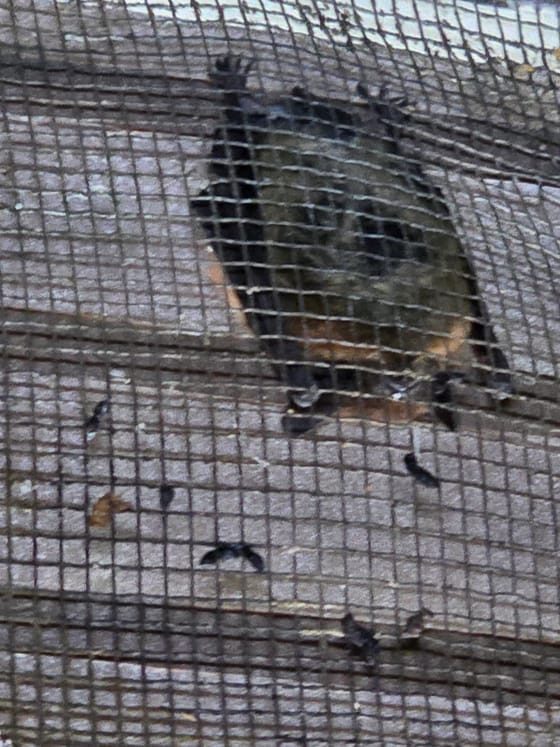
- Inspection. We check the house inside and out to confirm bats, judge the size of the colony, and find every entry and exit, including the secondary gaps that are easy to miss: ridge vent ends, the top of a chimney chase, loose flashing, the space behind shutters.
- Timing. The exclusion is scheduled outside the maternity season so no flightless pups are left inside.
- One-way devices. Exclusion devices go over the active entries. Bats fly out at night to feed and cannot get back in, and over the following days the colony leaves on its own.
- Sealing. Once the colony is out, every gap, vent, crevice and roofline opening is sealed with durable material so bats, and other wildlife, cannot return.
- Guano cleanup. Accumulated guano is removed using containment and protective equipment, the area is decontaminated, and contaminated insulation is addressed where needed.
Extensive insulation removal is quoted under attic insulation, and larger roofline repairs under exclusion and repairs.
If you find bats between May and August
Finding a colony in summer is common, because that is when the noise and smell peak. The colony stays until the pups can fly, but there is still plenty to do:
- Have the inspection done now. The entries are mapped, the colony is sized up, and the exclusion is booked for the first window after the pups are flying.
- Close the house side. Check the attic hatch, ceiling fixtures, recessed lights and the gaps around ductwork boots, and close anything that lets a bat into the living space.
- Stay out of the guano. Do not store things in that part of the attic or let anyone sweep it.
- Leave the outside alone. Do not plug the exit holes. That is the step that kills pups and pushes adults indoors.
What a finished exclusion looks like
When the job is done, the devices are off, every gap on the list is sealed, and the attic is quiet at dusk. Watching the roofline at sunset for a few evenings afterward is the simplest check: no bats leaving means no bats inside. The guano has been removed, the area decontaminated, and any insulation that was too far gone has been dealt with or quoted. Outside, the colony has moved on to another roost, which in this part of Texas usually means a tree, a bridge or someone else’s unsealed soffit.
The health side, stated plainly
Two concerns come with a roost in the house, and neither calls for panic.
Rabies. Texas DSHS’s 2024 animal rabies report counted 205 rabid bats that year, about half of the 412 confirmed animal rabies cases in Texas, and names bats and skunks as the state’s primary rabies reservoirs. The vast majority of bats are not infected, but that number is why a bat is never picked up bare-handed and why any possible bite gets a call to a doctor.
Histoplasmosis. The CDC’s overview of histoplasmosis explains that the fungus lives in soil and in bird and bat droppings that mix in soil, mainly in the central and eastern states, and that people are infected by breathing in its spores. Dried guano that gets swept, vacuumed or kicked up is the exposure to avoid.
What waiting costs
A colony does not stay the same size. Each year adds pups, and the guano and urine keep accumulating in one part of the attic. Over time that soaks insulation, stains ceilings and drywall, and leaves an odor that outlasts the bats. Waiting also has a calendar cost: a colony found in April that is not dealt with before the maternity season has to stay until the pups can fly.
A colony that has found its way into a wall void can also find the gaps around ceiling fixtures and attic hatches, and a bat in the bedroom turns a nuisance into a call to the doctor.
Homes and commercial properties
On a house, bat work usually means one colony, a dozen or so gaps, and an attic to clean. Commercial buildings can host far bigger colonies: expansion joints in tilt-wall warehouses, the voids behind storefront facades, parking structures, and long runs of soffit on schools and churches. Those jobs need more planning around the building’s own schedule and a written record of the exclusion. They are arranged through our commercial program.
Prevention you can do yourself
You cannot make a house unattractive to bats, but you can close it:
- Screen gable, soffit and ridge vents with fine mesh.
- Cap the chimney.
- Repair loose fascia, flashing and soffit panels promptly, especially after a storm.
- Caulk or fill gaps where different materials meet, such as brick and trim.
- Do this between September and April, never over an active colony in the pup season.
And leave the bats outside alone. A free-tailed colony eating moths and beetles over the neighborhood is doing you a favor.
Bat problems we cover in detail
- Bats in the attic: what to do between finding them and the exclusion window.
Where people go next
If the animal in the attic turns out to be scurrying by day, see squirrel removal. Birds nesting in vents and on ledges are under bird control. Bat exclusion is backed by our 100% Service Guarantee, and the terms page sets out what that includes. We do bat work across Harris County and Montgomery County, including Klein, Champions, Cypress and Conroe. To schedule a free inspection, reach us here.
Frequently asked questions
Is it legal to get bats out of my house in Texas?
Yes, by the right method. Texas A&M AgriLife's summary of Texas bat law says bats inside or on a building occupied by people can be legally removed or evicted. Killing them with chemicals is a different matter: AgriLife notes it is a federal violation.
Why can't you do it in June?
June falls in the maternity season, when mothers are nursing pups that cannot fly. Seal the adults out then and the pups starve inside the wall. AgriLife's guidance puts the eviction window between September and April for that reason.
A bat got into the bedroom. What should I do?
Do not touch it bare-handed, and keep pets out. Texas A&M AgriLife says that if the bat was in a room with a sleeping person or a child, or anyone may have had contact, it should be captured if possible and submitted for rabies testing. If no one had contact, it can be released outdoors.
Is bat guano in the attic dangerous?
It can be. The CDC says the fungus that causes histoplasmosis lives in soil mixed with bird and bat droppings, and people get sick by breathing in its spores. Do not sweep or vacuum dried guano; we remove it with containment and protective equipment.
Will the bats come back after the exclusion?
Bats are drawn to old roosts, so an exclusion only holds if every gap is sealed afterward, not just the ones they were using. That is why the inspection looks for secondary openings and why sealing is part of the job, not an add-on.
Can I use mothballs or a spray to drive them out?
No. AgriLife notes that using chemicals, including insecticides, disinfectants and mothballs, to kill bats is a federal violation. Beyond the legal problem, a roost full of sick or dead bats is a much worse attic to deal with.
What are the first signs of a bat colony in a Houston attic?
Droppings usually show up before anything else: dark pellets collecting below a soffit gap or stuck to siding under the roofline, which crush to a glittery powder. An ammonia odor and chirping at dusk follow as the colony grows. A few minutes outside at sunset shows exactly where they leave.
Our largest service areas
Guides
From the blog
Bat Exclusion in north Houston?
No long-term contracts, and service agreements are backed by our 100% Service Guarantee.
Because we are based in Spring, we can often come out the same or next day for urgent problems. Call before noon, Monday through Friday, for the best chance at next-day service.
Last updated