
Mexican Free-tailed Bat in Spring and North Houston
Tadarida brasiliensis · Wildlife
The Mexican free-tailed bat is the most common bat in Texas and an insect-eater worth protecting. Bats in a tree, under a bridge or in a bat house warrant nothing. A colony in an attic or wall warrants exclusion, which Texas law allows for occupied buildings, timed outside the pup season. Killing bats with chemicals is a federal violation.
Call 281-627-4810 Request a free inspection
Year-round protection plans from $70 Core · Premium · Legendary See the plans
Sometimes worth treating, sometimes not — it depends on what is below.
Mexican free-tailed bat at a glance
| Size | Medium-sized bat with long, narrow wings built for fast flight |
|---|---|
| Fur | Short and velvety, reddish to black |
| The tell | The end of the tail extends free beyond the tail membrane |
| Ears and feet | Broad ears and large feet |
| Diet | Only insects: moths, beetles, flying ants and similar |
| Young | One pup per female per year; flying within about a month |
| Legal status | Protected under Texas Parks and Wildlife Code §63.101, with a building exception |
Signs you have them
- Bats dropping one after another from a single gap in the roofline at dusk
- Dark, crumbly droppings piled under a soffit gap or stuck to siding below the eave
- Brown, greasy rub stains around a narrow opening
- Squeaking and rustling in a wall or ceiling at dusk and before dawn
- A sharp ammonia odor in the attic or under the eaves
- A single bat found inside the living space
The most common bat in Texas, and a good neighbor in the right place
Tadarida brasiliensis goes by two common names, the Mexican free-tailed bat and the Brazilian free-tailed bat. Texas A&M AgriLife’s bat management fact sheet calls it the state’s most common species and one of the most abundant mammals in North America, and says it, along with the cave myotis, often occupies buildings.
TPWD’s free-tailed bat species page explains why that matters for the economy as well as the ecosystem: free-tailed bats eat an estimated 6,000 to 18,000 metric tons of insects a year in Texas. AgriLife’s fact sheet notes the diet runs mainly to moths, including corn earworm and armyworm moths, and beetles, with some mosquitoes.
So this profile does not recommend getting rid of bats. It recommends keeping them out of the house, legally and at the right time of year.
Identification
TPWD describes a medium-sized bat with broad ears, large feet, short velvety fur from reddish to black, and long, narrow, angular wings suited to fast flight. The feature in the name is the tail: the last part of it extends beyond the membrane between the legs, rather than being enclosed in it as in most bats.
Few homeowners get that close, and nobody should handle a bat to check. Around a north Houston house, a colony is usually identified by its habits rather than its anatomy.
Is it a bat at all?
The common confusion is not between bat species but between bat signs and rodent signs. Bat droppings collect in piles beneath a roost or an exit gap and crumble to a dry, shiny powder of insect parts. Rodent droppings are scattered along runways and stay hard. If they do not crumble, the roof rat profile is the better place to look.
Biology and the Houston year
TPWD says millions of free-tailed bats arrive in central Texas each spring and migrate south to Mexico and Central America for the coldest months, but that populations in East Texas are non-migratory and stay year-round. North Houston colonies therefore can be present in any month, roosting in buildings and under bridges throughout the metro area.
Each female has a single pup a year, and TPWD notes pups grow fur and are flying within about a month of birth. AgriLife’s guide to removing a bat colony puts the maternity season, varying by species and place, usually from spring to late summer.
Temperature affects what you see. AgriLife’s fact sheet notes bats may not leave the roost at all on nights cooler than about 50 degrees, so a winter inspection can take several evenings to map every exit.
Where bats roost on buildings
TPWD lists caves, mine tunnels, old wells, hollow trees, human habitations, bridges and other buildings as free-tailed bat roosts. AgriLife’s fact sheet says colonies in buildings roost in attics, under eaves, under shingles or siding and in wall spaces, and also behind gutters and in expansion joints. Bats are creatures of habit and return to the same roost year after year.
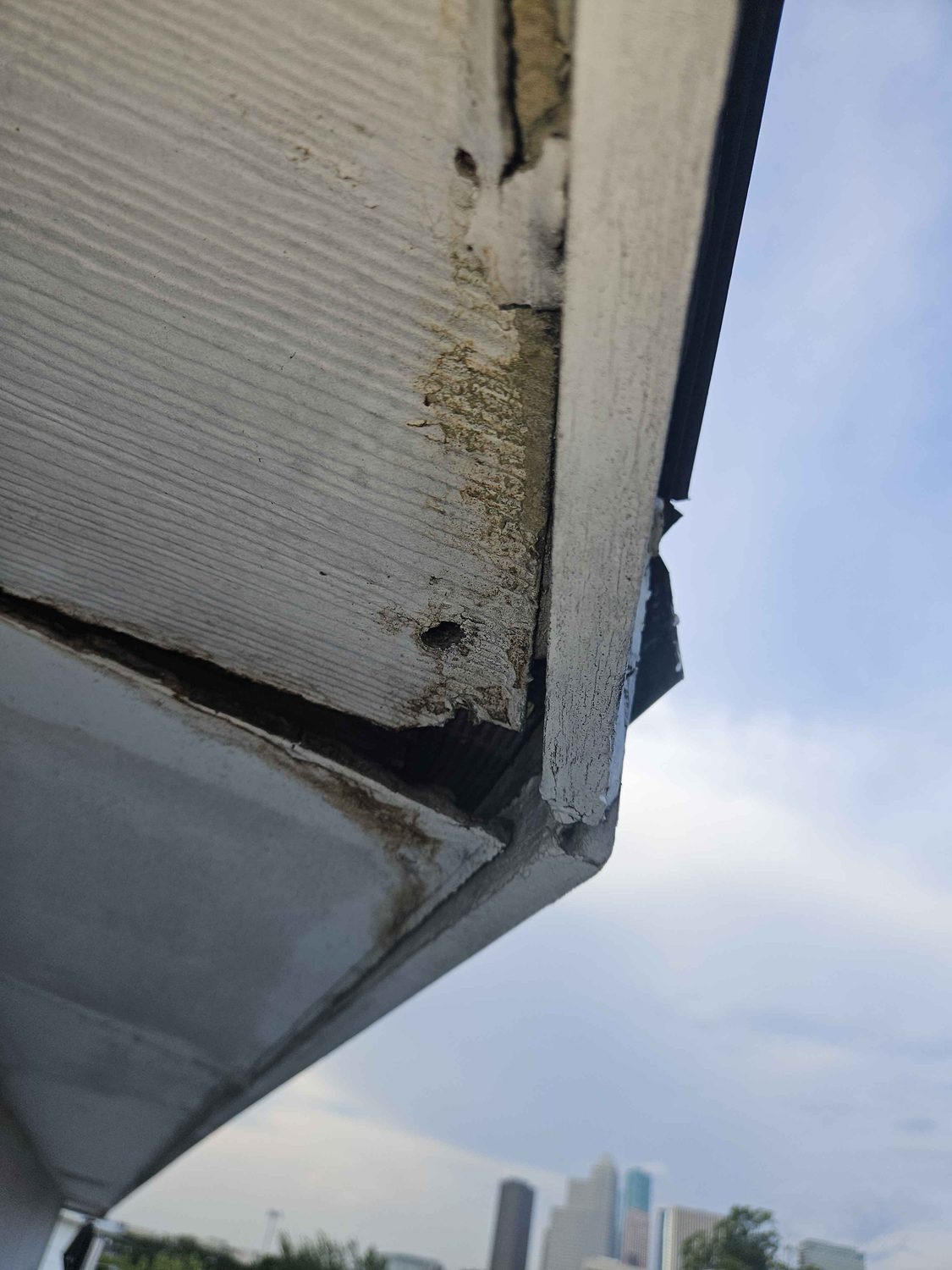
On homes and businesses in Spring, Klein, Cypress and Humble, the openings are usually narrow and high:
- the gap along the top of the soffit where it meets brick or siding
- the ends of ridge vents and hip caps
- loose fascia joints and corner boards
- behind exterior shutters and trim
- gaps behind gutters
- expansion joints and flashing on commercial buildings, parking garages and stadium-style structures
Health risk, stated plainly
Rabies. AgriLife’s fact sheet says only a very small percentage of bats carry rabies, but a bat on the ground is more likely to be sick or injured, and nobody should handle one. Texas DSHS’s rabies page lists bats among the wildlife that must be tested if they bite, and lists bats that cannot fly among warning signs. AgriLife’s guidance is that a bat found in a room with an unattended child, a sleeping person, or an intoxicated or impaired person, or where direct contact is possible, should be captured if possible and submitted for testing.
Histoplasmosis. The CDC’s histoplasmosis page explains that the fungus lives in soil and spreads in bird and bat droppings mixed into it; breathing the spores causes a lung infection with symptoms appearing 3 to 17 days later. It does not spread between people.
Structure. AgriLife’s fact sheet notes large guano deposits add weight to ceilings, stain, smell, and attract cockroaches and flies.
One bat inside the house
A single bat in the living room is a different situation from a colony in the attic, and AgriLife’s fact sheet treats it separately. Most bats that end up indoors get there by accident and cannot find the way back out.
The sheet’s method is straightforward. Wait until the bat lands on a wall or ceiling, place a small box or coffee can over it, and slide a piece of cardboard between the container and the surface so the bat is scooted inside. Do not touch it with bare hands at any point.
What happens next depends on contact. If there is any chance someone was bitten or touched it, or it was in a room with a sleeping person or an unattended child, keep it for rabies testing and call local animal control to pick it up. If nobody had contact, the sheet says it can go to a wildlife rescue group or be released outside away from people and pets, preferably after sundown.
A bat that appears inside more than once a season usually means a roost in the walls or attic with a gap into the living space, and that is a job for exclusion.
What Texas and federal law allow
AgriLife’s page on Texas laws pertaining to bats cites Texas Parks and Wildlife Code section 63.101: no one may hunt, sell, buy or possess a bat or any part of one, dead or alive. A bat inside or on a building occupied by people may be removed. The same page states that using chemicals to kill bats, including insecticides, rodenticides, disinfectants and mothballs, is a federal violation. AgriLife’s fact sheet adds that pesticides against bats are not legal and that bat traps are inappropriate, since both leave sick or trapped bats where people and pets find them. TPWD notes the species is not federally listed but is considered vulnerable.
That is why this profile is marked “depends.” A colony using your house can be excluded. Bats in the trees, under a bridge or in a bat house are not a pest problem and should be left alone.
What exclusion realistically involves
AgriLife calls exclusion the only effective way to evict bats permanently: seal every inactive gap, fit one-way devices over the active exits, leave them at least one week in warm weather and two in cool weather, confirm no bats remain, then remove the devices and seal those openings too.
Our bat exclusion service follows that sequence. A free inspection confirms the colony and finds every entry, including the secondary gaps. The work is scheduled outside the pup season. One-way devices go over the active entries, and once the bats are out, every opening is sealed. Guano is cleaned up with containment and protective equipment. The bats in the attic problem page covers what to do while waiting for the season to open. The work carries our 100% Service Guarantee.
Prevention
- Walk the house at dusk in early spring and watch the roofline for emergence.
- Keep soffit, fascia and ridge vent gaps closed as part of routine roof upkeep.
- Replace torn gable vent screens with sturdy mesh.
- If you want bats nearby for insect control, put up a bat house away from the home rather than tolerating a colony in the attic.
Related pages
- Bat exclusion
- Bats in the attic
- Roofline and soffit gaps
- Schools, offices and other commercial buildings: commercial
- For a free inspection, use the contact page.
Frequently asked questions
Is it legal to get bats out of my house in Texas?
Yes, by exclusion. Texas A&M AgriLife's summary of Texas bat law cites Parks and Wildlife Code section 63.101, which bars hunting, selling or possessing bats but allows a bat inside or on a building occupied by people to be removed. AgriLife adds that using chemicals to kill bats is a federal violation.
When can bats be excluded?
Outside the maternity season. AgriLife says maternity season usually runs from spring to late summer and that the best time to evict bats is generally between September and April. Sealing a roost in June traps flightless pups inside.
A bat was in the bedroom while we slept. What now?
Do not release it. AgriLife's bat guidance says a bat found in a room with a sleeping person, an unattended child, or anyone who may have had contact should be captured if possible and submitted for rabies testing. Call your doctor and local health department.
Is bat guano in the attic a health risk?
It can be. The CDC says the fungus behind histoplasmosis spreads in bird and bat droppings that mix into soil, and people get sick by breathing in spores. AgriLife recommends professional cleanup with respirators, gloves and dampened guano rather than dry sweeping.
Sources
- Texas Parks and Wildlife Department — Brazilian (Mexican) free-tailed bat — read October 5, 2026
- Texas A&M AgriLife Extension — Bat Management: What everyone should know — read October 5, 2026
- Texas A&M AgriLife, Bats in Schools — Texas laws pertaining to bats — read October 5, 2026
- Texas A&M AgriLife, Bats in Schools — Removing a bat colony — read October 5, 2026
- CDC — About histoplasmosis — read October 5, 2026
- Texas Department of State Health Services — Rabies — read October 5, 2026
Next scheduled review of this page against its sources: October 5, 2027.
Pest problem in north Houston?
No long-term contracts, and service agreements are backed by our 100% Service Guarantee.
Because we are based in Spring, we can often come out the same or next day for urgent problems. Call before noon, Monday through Friday, for the best chance at next-day service.
Last updated