
Raccoon in Spring and North Houston
Procyon lotor · Wildlife
Raccoons are common across north Houston and mostly go unseen because they forage at night. A raccoon passing through the yard needs nothing more than locked-down trash. One denning in an attic, chimney or under a house warrants removal and exclusion, because it tears open rooflines, soils insulation and leaves droppings that can carry raccoon roundworm.
Call 281-627-4810 Request a free inspection
Year-round protection plans from $70 Core · Premium · Legendary See the plans
We treat this, and finding it usually warrants treating.
Raccoon at a glance
| Weight | Roughly 7 to 30 pounds depending on the source and the animal |
|---|---|
| Length | About 26 to 45 inches including the tail |
| Markings | Gray-brown body, black mask across the eyes, black rings on a bushy tail |
| Feet | Five long, dexterous toes on each foot |
| Young | One litter a year of three to five, usually born February or March |
| Active | Almost entirely at night; solitary outside the breeding season |
| Texas status | Furbearer under Texas Parks and Wildlife rules |
Signs you have them
- Heavy thumping or walking overhead at night, not light scurrying
- A soffit panel, roof vent or turbine base pulled loose or bent back
- Chirring, purring or whimpering from an attic or chimney in late winter or spring
- Trash cans tipped and torn open, or lawn patches rolled back overnight
- A pile of large droppings in one spot on a roof, deck, attic or woodpile
- Muddy, hand-like prints on siding, AC units or the pool deck
A neighbor most people never see
Procyon lotor lives throughout Texas. TPWD’s raccoon species page describes it as common statewide, at home in brushy or wooded country near streams, lakes and swamps, and quick to settle near people wherever food, water and shelter are on offer. North Houston offers all three. Cypress Creek, Spring Creek, the San Jacinto forks and hundreds of detention ponds run through neighborhoods full of mature trees, pet food and unsecured trash.
Texas A&M AgriLife’s leaflet L-1902, Controlling Raccoon Damage, makes the key point: raccoons are very common in urban areas but often go undetected because most of their foraging happens at night. A raccoon that visits your trash cans is normal. A raccoon that lives in your house is a problem.
Identification
The mask and the ringed tail make adults hard to mistake. TPWD gives a length of 33 to 45 inches and a weight of 7 to 20 pounds; L-1902 lists 10 to 30 pounds and 26 to 38 inches, which reflects how much individual animals vary. Both describe a grayish-brown body, a black mask across the face, black rings around a furred tail, and five long toes on each foot. TPWD notes the hands are notably dexterous, which is exactly what makes a raccoon so good at peeling back a roof vent.
What it gets confused with
- Virginia opossum. Gray and nocturnal too, but with a white, pointed face, naked ears and a bare, rat-like tail. An opossum does not have the strength to pry open a roofline; a raccoon does.
- Tree squirrels. Attic noise from squirrels comes in daylight and sounds light and quick. A raccoon overhead at night sounds like a person walking.
- Neighborhood cats under a deck or in a shed can leave similar droppings and tracks, though a cat’s prints show no long fingers.
Biology and the Houston season
L-1902 gives one litter a year of three to five young, usually born in February or March after a 63-day gestation, with a lifespan of up to 12 years. TPWD adds that the young open their eyes at 18 to 24 days, walk at four to six weeks, wean at about three months and stay with the mother for a further year. Raccoons are almost exclusively nocturnal and largely solitary, strong climbers and swimmers with excellent night vision.
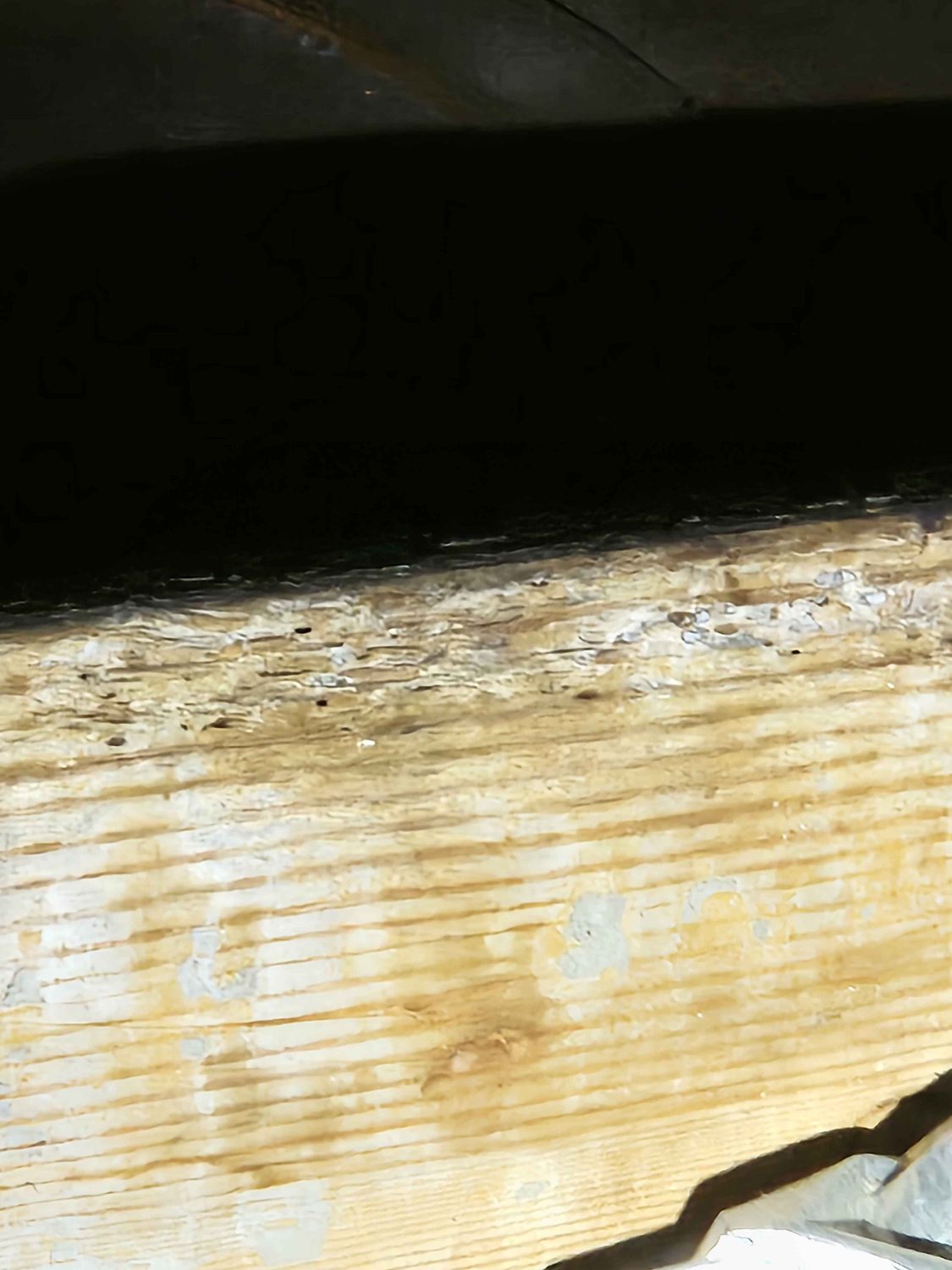
That calendar is why so many raccoon calls in Spring, Klein and Kingwood come between late winter and early summer. A female looking for a dry, protected den before giving birth is the animal that pulls up a soffit or moves into a chimney chase. Through summer, the young become mobile and the family gets noisier. By fall, juveniles are dispersing to find dens of their own.
Where it shows up in and around buildings
L-1902 lists the most common urban den sites as attics and chimneys, under houses and under woodpiles. On local homes and businesses, entries tend to be:
- roof vents and turbine bases, folded up at a corner
- soffit returns and the joints where a lower roof meets a wall
- uncapped chimney flues and loose chase caps
- gaps under decks, porches, and pier-and-beam additions
- open attic gable vents and torn screens
Food sources keep them around: dog and cat food left out, fruit trees, gardens, bird feeders, compost, koi ponds, and garbage. At restaurants and apartment complexes, dumpster enclosures are the draw.
Damage and health risk
Structure. L-1902 says urban damage occurs mainly to attics and roofs. In practice that means torn vents and soffits that leak in the next storm, flattened and soiled insulation, chewed ductwork, and a urine smell that soaks into drywall. Outdoors, raccoons ruin gardens, raid fruit trees and roll back fresh sod looking for grubs.
Raccoon roundworm. The CDC’s page on Baylisascaris infection explains that Baylisascaris procyonis is found in raccoons and is thought to pose the greatest risk to people because raccoons live so close to homes. People are infected by swallowing eggs from contaminated soil or feces, and the eggs need two to four weeks in the environment to become infectious. Cases are not frequently reported, but infection can be severe if the larvae reach the eye, organs or brain. Most infections are in young children. A pile of raccoon droppings on a deck, in an attic or on a flat roof is worth treating as contaminated, and the CDC’s advice is to remove feces before the eggs have time to become infectious.
Rabies and other disease. L-1902 lists fleas, ticks, lice, roundworms, tapeworms, distemper, tuberculosis, mange and rabies among raccoon parasites and diseases. Texas DSHS’s rabies page names raccoons among the wildlife species that can transmit rabies and says a biting raccoon must be tested. A raccoon that is active in daylight, staggering or unafraid of people should be left alone and reported to local animal control.
Gardens, ponds and backyard flocks
Not every raccoon problem is in the attic. On larger lots in Magnolia, Tomball and along the Montgomery County line, the calls are often about a vegetable garden stripped overnight, fish gone from a pond, or a henhouse raided. L-1902 notes that ordinary fencing does not keep raccoons out of gardens or poultry houses, because an animal that cannot go under or through a fence simply climbs over it.
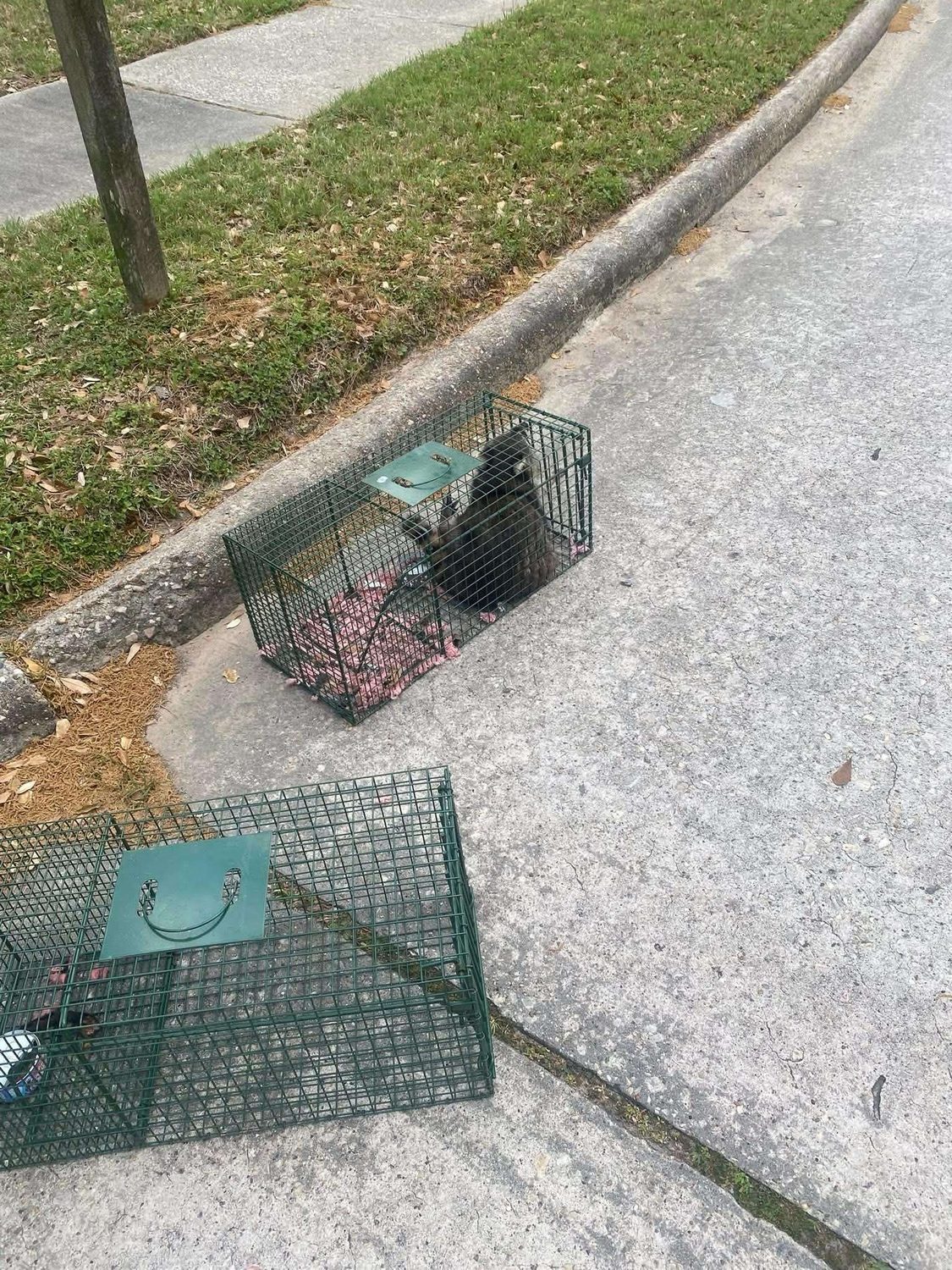
The leaflet’s alternatives are specific. A single electrified wire strand placed 8 inches out from the fence and 8 inches above the ground repels raccoons and most other small animals. To stop digging under a fence, bury a 2-foot strip of wire mesh so it extends 6 inches below the surface and then 18 inches outward at that depth. It sums up raccoon damage control in four rules: remove the food supply, remove the water supply, modify the habitat, and trap responsibly.
Those measures protect a garden or a coop. They do not fix a raccoon already denning in a structure, which is where removal and exclusion come in.
What Texas rules say
Raccoons are classified as furbearers. TPWD’s nuisance fur-bearing animal rules allow landowners or their agents to take nuisance furbearers on their own land without a hunting or trapping license. Capturing and relocating one requires authorization from the department and from the owner of the property where it will be released, with monthly reporting. Nobody may keep the animal or its pelt outside the open trapping season.
What the work realistically involves
L-1902 notes that no repellents, toxicants or fumigants are registered for raccoon control, so the realistic answer is physical: get the animal out, and make the opening impossible to reuse.
Our raccoon control process starts with a free inspection for the den, the entry, any damage and any young, because kits change how and when removal happens. The animals are removed from the structure, and how they are handled afterward is explained at the inspection within Texas rules. Entries are then sealed and the vulnerable roof and attic areas reinforced with heavy-duty, raccoon-resistant material, with barriers over vents, chimney tops and the gaps under decks where they fit. Contaminated areas are addressed, and we walk through the attractants in the yard. Larger carpentry falls under exclusion and repairs, and the roofline and soffit gaps page shows the typical weak points. Work is covered by our 100% Service Guarantee.
Prevention
From L-1902’s own recommendations, adapted to a north Houston lot:
- Screen chimneys and attic and foundation vents.
- Feed pets in the morning and pick up leftovers; empty water bowls at night.
- Bring bird feeders in at night or mount them on tall poles away from trees.
- Keep trash cans lidded and secured, and put them out the morning of pickup.
- Pick up fallen fruit and pecans.
- Trim branches that give easy access to the roof.
Related pages
- Raccoon removal and exclusion
- Exclusion and repairs
- Roofline and soffit gaps
- Opossum removal and exclusion, for the animal under the deck
- For a free inspection, use the contact page.
Frequently asked questions
Is it legal to remove a raccoon from my attic?
Raccoons are furbearers in Texas. TPWD rules let landowners or their agents take nuisance furbearers on their own land, but relocating one requires department authorization and the consent of the owner where it is released. We explain the handling at the inspection, within those rules.
Why are raccoon droppings a concern?
The CDC says raccoons carry Baylisascaris procyonis, a roundworm whose eggs in the feces become infectious after two to four weeks. Human cases are rare but can be severe, and children are most at risk. Do not handle a latrine without gloves and a plan.
Can I use mothballs or a repellent to drive it out?
Texas A&M AgriLife's raccoon leaflet says no repellents, toxicants or fumigants are registered for raccoon control. Removal of the animal and a sealed, reinforced opening are what actually work.
What if there are babies in the attic?
That changes the timing and the method. Young are usually born in February or March and stay with the mother for months. Sealing the opening with kits inside traps them, so the inspection looks for young before anything is closed.
Sources
- Texas A&M AgriLife Extension Wildlife Services L-1902 — Controlling Raccoon Damage — read October 5, 2026
- Texas Parks and Wildlife Department — Common raccoon — read October 5, 2026
- Texas Parks and Wildlife Department — Nuisance fur-bearing animals — read October 5, 2026
- CDC — About Baylisascaris infection — read October 5, 2026
- Texas Department of State Health Services — Rabies — read October 5, 2026
Next scheduled review of this page against its sources: October 5, 2027.
Pest problem in north Houston?
No long-term contracts, and service agreements are backed by our 100% Service Guarantee.
Because we are based in Spring, we can often come out the same or next day for urgent problems. Call before noon, Monday through Friday, for the best chance at next-day service.
Last updated