
Tree Squirrels in Spring and North Houston
Wildlife
Three tree squirrels live in East Texas: the fox squirrel, the gray squirrel and the small, nocturnal flying squirrel. In the yard they need no treatment. Once one is nesting in an attic or wall, it warrants removal and sealing, because squirrels gnaw wiring, shred insulation and chew new holes when an old one is blocked.
Call 281-627-4810 Request a free inspection
Year-round protection plans from $70 Core · Premium · Legendary See the plans
Sometimes worth treating, sometimes not — it depends on what is below.
Tree squirrels at a glance
| Fox squirrel | About 21 inches long, 1.5 to 2 pounds; gray-black back, orange belly, cinnamon-mixed tail |
|---|---|
| Gray squirrel | 16 to 20 inches, 1 to 2 pounds; grayish; also called the cat squirrel |
| Flying squirrel | 8 to 11 inches, about 5 ounces; pinkish-gray, gliding skin between the legs; active at night |
| Attic sounds | Daytime running and gnawing, busiest around morning and late afternoon |
| Litters | Usually two a year, in late winter to spring and again in late summer to fall |
| Texas status | Fox and gray squirrels are game animals |
Signs you have them
- Scampering, rolling or gnawing overhead in daylight, often early morning
- A chewed, rounded hole at a soffit corner, fascia joint or roof vent
- Squirrels running a limb or power line that ends at the roofline
- Pecan and acorn shells, or caches of nuts, in the attic insulation
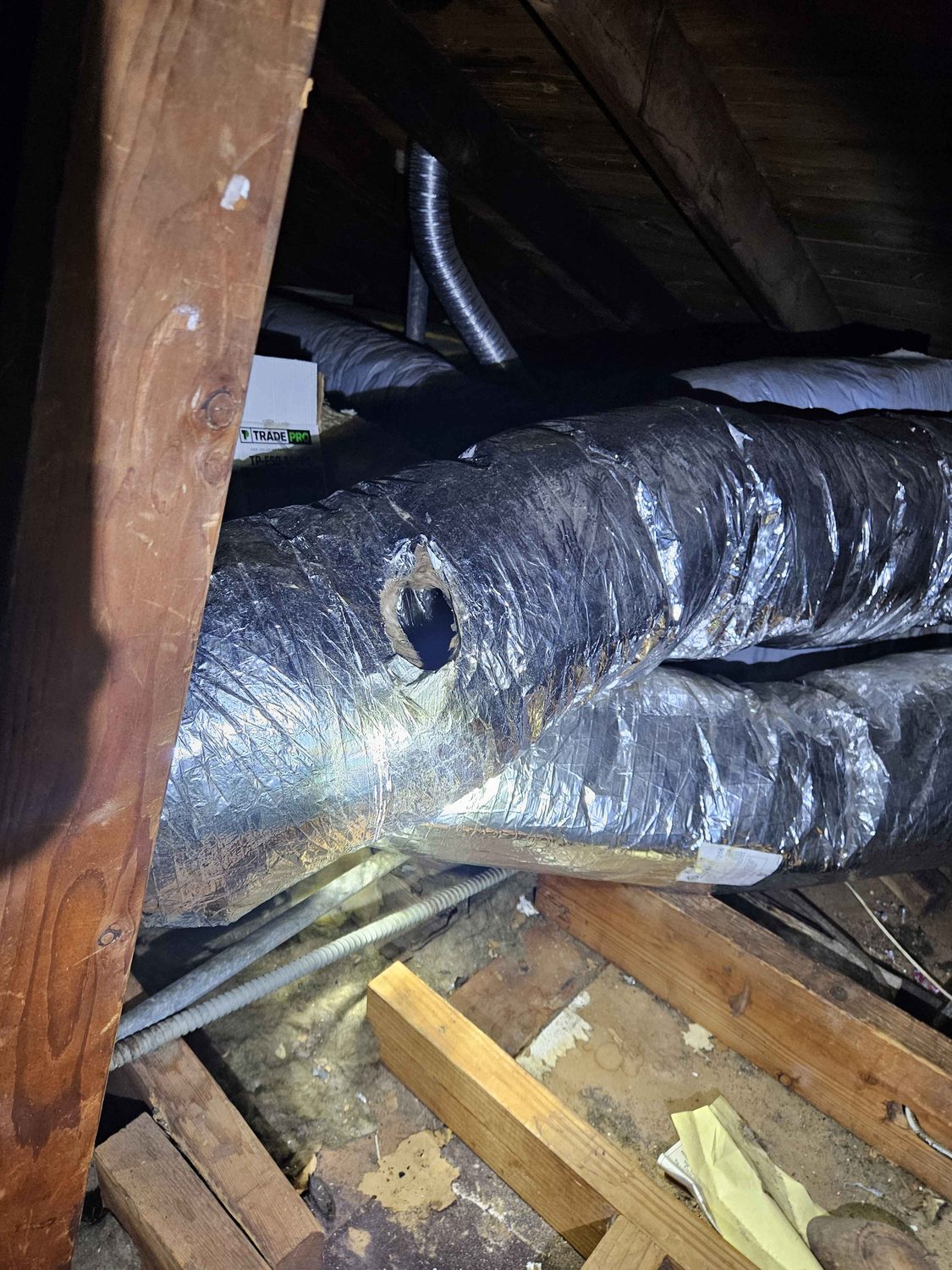
- Shredded insulation, chewed flex duct or bare wire on the attic top plates
Three squirrels, one attic problem
Texas A&M AgriLife’s leaflet L-1914, Controlling Tree Squirrels in Urban Areas, names three tree squirrels in Texas: the fox squirrel, the gray squirrel and the flying squirrel. All three occur in the eastern part of the state. Under the pine, oak and pecan canopy of The Woodlands, Kingwood, Spring and Conroe, all three can end up in an attic.
Most of the time they are just part of the yard. The trouble starts when a female needs a dry, protected nest for a litter and finds one behind a soffit.
Telling the three apart
Fox squirrel. TPWD’s eastern fox squirrel page calls it the most common squirrel in Texas, about 21 inches long and 1.5 to 2 pounds, with gray and black fur on the back, an orange belly, a tail of cinnamon mixed with black, and cinnamon feet. It lives in forests and along rivers and streams across the eastern two-thirds of the state.
Gray squirrel. L-1914 gives 16 to 20 inches and 1 to 2 pounds, plain gray with a bushy tail, and notes its nickname, the “cat” squirrel. Its Texas range is the eastern part of the state, and around north Houston it is tied to wooded creek and river bottoms.
Flying squirrel. The smallest and least common, about 8 to 11 inches and 5 ounces, pinkish-gray with a white underside and broad flaps of skin between the front and hind legs. It is the only nocturnal tree squirrel, which matters when someone is trying to identify night noises.
Animals mistaken for squirrels in an attic
- Roof rats. The most common confusion. L-1914’s rule of thumb: daytime running and gnawing usually means squirrels; running, squealing and gnawing at night generally means rats. Flying squirrels break the rule, so night noises with very large droppings or a gliding animal seen at dusk deserve a second look.
- Raccoons. Much heavier footsteps, mostly at night, and a torn-open entry rather than a neatly gnawed hole.
Biology and the north Houston calendar
TPWD says fox squirrels usually have two breeding seasons and two litters a year, with breeding peaks in January and February and again in May and June. Litters are usually three or four, born naked, blind and helpless, and on their own about three months later. TPWD records squirrels living up to 15 years.
L-1914 gives similar patterns: fox squirrel litters usually born in March or April and again in August or September; gray squirrels in February or March and again in September or October; flying squirrels in April or May and again in September.
In practice that means two seasons of attic calls here: late winter into spring, and late summer into fall. Both are when a female is looking for a nest site and when young may be in the attic.
Diet, per TPWD, includes acorns and other nuts, buds, fruit, fungi, insects and the inner bark of trees. The page notes a single fox squirrel may bury several thousand pecans over three months, which is why pecan trees and attic nut caches go together. L-1914 lists nesting sites as tree cavities, old woodpecker holes and attics, with leafy nests in branches when nothing better is available.
Where they get in
L-1914 says squirrels usually enter attics from the roof, especially where tree limbs overlap the roofline, and most often through vents that are not adequately screened, though they will gnaw their way in too. On local homes the usual points are:
- soffit corners and the returns where a soffit meets a wall
- gable and box vents with flimsy or missing screen
- the joint where fascia boards meet at a corner
- gaps around plumbing vent boots and roof penetrations
- the edge where a second-story wall meets a lower roof
Utility lines and fences carry them too. A pecan limb a foot from the shingles is practically a front door. The roofline and soffit gaps page covers the repair side.
Damage and risk
L-1914 lists the damage: eating pecans, fruit, berries, bird seed and garden vegetables, nesting in attics, extensive damage to insulation in attics and walls, gnawing on electrical wiring, and stripping bark from trees and ornamentals in winter.
Chewed wiring is the serious one. Exposed conductors in an attic full of dry insulation and stored boxes are a fire risk, and nobody sees the damage until someone climbs into the attic for another reason. Torn flex duct quietly dumps conditioned air into the attic all summer.
Next to rats and raccoons, squirrels are a property problem far more than a health one. The practical worries are the damage above and the smell of a squirrel that dies inside a wall after an opening is closed too early.
A note on flying squirrels
The flying squirrel deserves its own paragraph because it breaks every squirrel rule homeowners rely on. L-1914 describes it as the smallest Texas tree squirrel, about five ounces, pinkish-gray with a white underside, with broad webs of skin connecting the front and hind legs and a flat, bushy tail. It is the only tree squirrel active at night. Its litters, three or four young, usually arrive in April or May and again in September, and the young are weaned at six to eight weeks.
That makes it easy to mistake for a rat: small, nocturnal, overhead. The tell is the gliding: a small animal sailing from one trunk to another at dusk is not a rat. In the pine and hardwood stands around Conroe and The Woodlands, it is worth considering any time night noises do not add up to rats.
The legal picture
TPWD’s protected wildlife page lists squirrels among Texas game animals, which require a license or permit to take or possess. L-1914 adds that fox and gray squirrels can be legally cage-trapped where they are causing damage or creating a nuisance, and that anyone wanting to relocate them should notify TPWD. The leaflet also notes there are no toxicants or fumigants registered for tree squirrels in Texas, and advises against shooting them in urban areas.
When treatment is warranted
- In the trees and yard: no. Feeders and fruit attract them; they are not a pest there.
- On the roof, testing the soffits: trim limbs and check the roofline now.
- Inside the attic or walls: yes. Removal, then sealing.
What the work realistically involves
L-1914 calls exclusion a permanent solution that does not harm the squirrels and presents no legal difficulties. It names sheet metal, hardware cloth and steel wool for sealing, says openings should not be sealed until the squirrels are out, and describes one-way doors that let squirrels leave but not return.
Our squirrel control process, set out there and on the squirrels in the attic problem page, follows that order. A free inspection covers the attic and roofline: entries, nests, droppings, damage, any young, and the limbs or lines the squirrels use to reach the roof. The squirrels and any young are removed, and how they are handled is explained at the inspection within Texas rules. Every current and likely entry is then sealed with heavy-duty, chew-resistant material, with follow-up checks offered because squirrels test repairs. Fascia and soffit carpentry is handled under exclusion and repairs. The work carries our 100% Service Guarantee.
Prevention
- Trim limbs back eight to ten feet from the roof, as L-1914 recommends.
- Where one isolated tree is the bridge, L-1914 describes sheet metal bands about two feet wide, six to eight feet up the trunk.
- Keep vent screens intact and replace flimsy ones with metal.
- Move bird feeders away from the house.
- Have the roofline checked in January and again in July, ahead of the two litter seasons.
Related pages
- Squirrel removal and exclusion
- Squirrels in the attic
- Roofline and soffit gaps
- Rodent control, if the noises turn out to be rats
- For a free inspection, use the contact page.
Frequently asked questions
How do I know the noise is a squirrel and not a rat?
Texas A&M AgriLife's squirrel leaflet gives the rule of thumb: running or gnawing sounds in the attic during the day usually mean squirrels, while running, squealing and gnawing at night usually mean rats. The exception is the flying squirrel, which is nocturnal.
Is it legal to remove squirrels in Texas?
Fox and gray squirrels are game animals in Texas, but AgriLife notes they can be legally cage-trapped where they are causing damage, and that anyone relocating them should notify Texas Parks and Wildlife. Exclusion, which keeps them out without harming them, raises no legal issue at all.
Will trimming my trees fix it?
It helps a lot. AgriLife recommends cutting limbs back eight to ten feet from the roof. Where squirrels can still jump from tree to tree, or run a power line, the attic itself has to be sealed too.
Can I just block the hole they are using?
Not until every squirrel is out, and not if there are young inside. A trapped squirrel will chew a new hole, often through the roof deck or a soffit, and young left behind die in the wall. AgriLife's guidance is to seal only after the squirrels have left.
Sources
- Texas A&M AgriLife Extension Wildlife Services L-1914 — Controlling Tree Squirrels in Urban Areas — read October 5, 2026
- Texas Parks and Wildlife Department — Eastern fox squirrel — read October 5, 2026
- Texas Parks and Wildlife Department — Protected wildlife — read October 5, 2026
Next scheduled review of this page against its sources: October 5, 2027.
Pest problem in north Houston?
No long-term contracts, and service agreements are backed by our 100% Service Guarantee.
Because we are based in Spring, we can often come out the same or next day for urgent problems. Call before noon, Monday through Friday, for the best chance at next-day service.
Last updated