
Squirrels in the Attic in Spring and North Houston
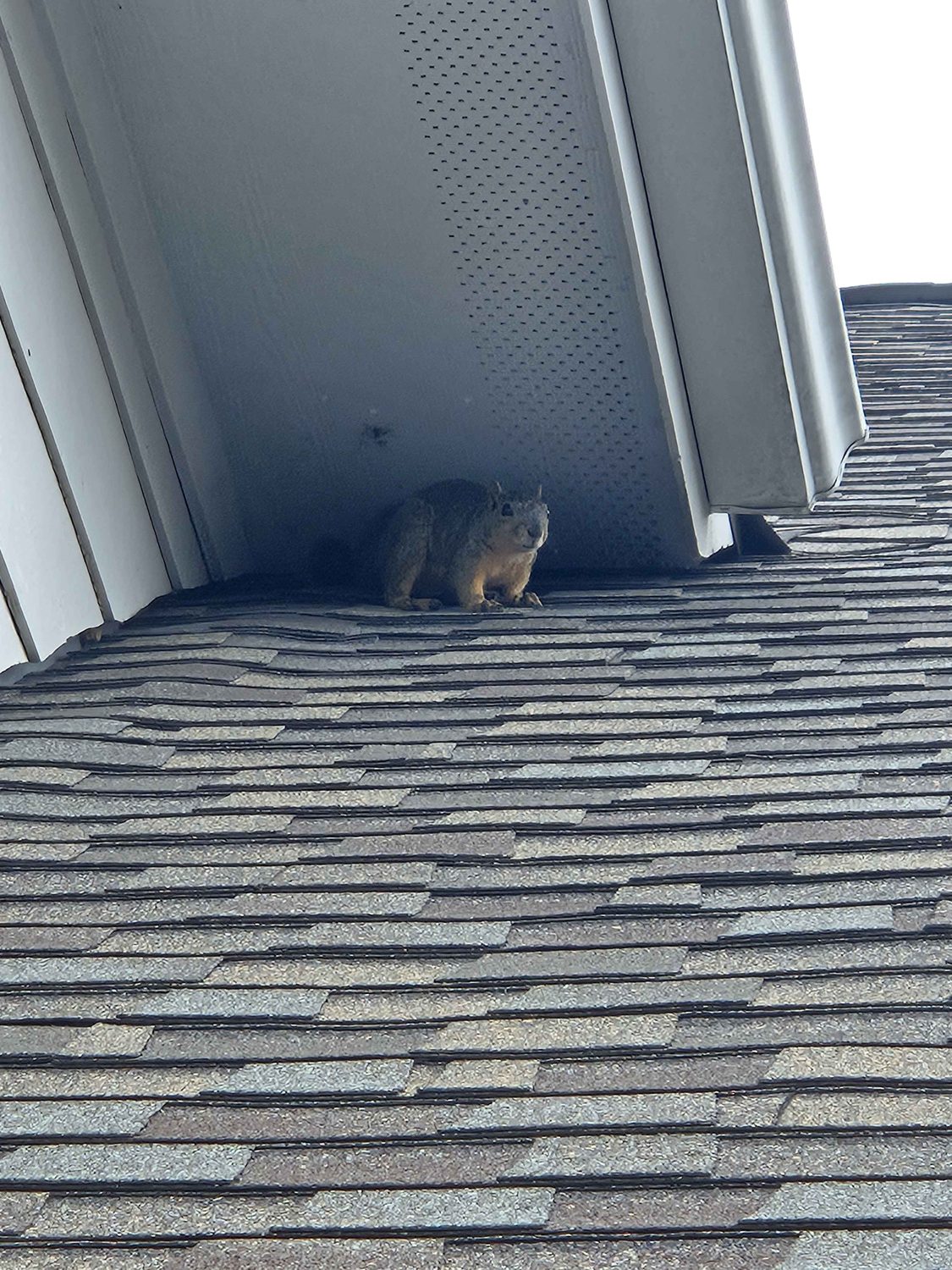
Running, rolling and gnawing in the attic during daylight, especially early morning and late afternoon, usually means fox squirrels that climbed an overhanging limb and got in through a vent or soffit corner. Do not seal the hole yet. Find out whether young are inside, then have the squirrels removed and every opening closed with metal.
Call 281-627-4810 Request a free inspection
Year-round protection plans from $70 Core · Premium · Legendary See the plans
What to do, in order
- Note what time of day the noise happens; daytime activity points to squirrels, night activity to rats or flying squirrels.
- Watch the roofline at sunrise from across the street to see where a squirrel goes in or comes out.
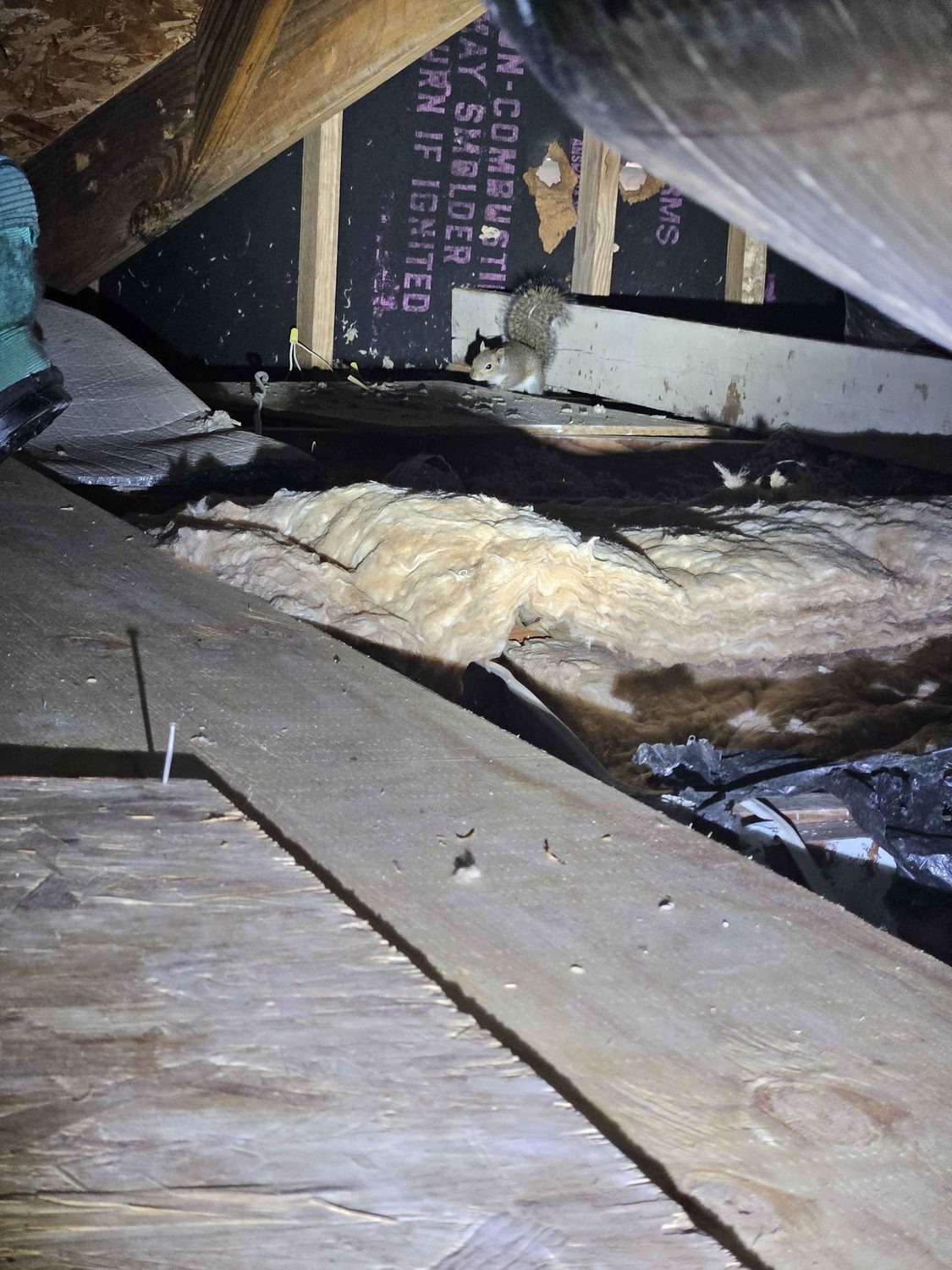
- Listen for high-pitched chatter from one spot, which can mean a litter of young in the attic.
- Leave the entry hole open for now so a mother is not cut off from her young.
- Check attic wiring near the entry from the hatch, and call an electrician if you see bare copper.
- Take down bird feeders near the house and rake up fallen pecans and acorns.
What it usually turns out to be
In a north Houston neighborhood with mature oaks and pines, daytime noise in the attic is almost always a fox squirrel. Texas A&M AgriLife’s leaflet on controlling tree squirrels in urban areas puts it simply: running or gnawing in the attic during the day often indicates squirrels, while running, squealing and gnawing at night generally indicates rats.
The attic is a natural choice for them. The same leaflet lists attics alongside tree cavities and old woodpecker holes as squirrel nesting sites, and says squirrels usually reach attics from the roof, especially where limbs overlap the roofline.
Two lookalikes come up regularly:
- Roof rats. Lighter, faster scampering, mostly after dark. Our page on roof rats in the attic covers that job.
- Flying squirrels. About five ounces according to AgriLife, and the only nocturnal tree squirrel. They sound like rats but leave no rat droppings.
A heavy animal that tears shingles or pulls soffit panels down is more likely a raccoon; see raccoon removal.
How to tell at home
A few days of paying attention usually confirms it.
- The schedule. Squirrel noise clusters around sunrise and late afternoon and is mostly quiet by full dark.
- The sound. Thumps, scrambling and a rolling sound, which is often a nut being moved across the decking.
- The entry. From the ground, look at soffit corners, gable vents and the spot where a lower roof meets a wall. A fresh hole has pale, rounded chewed edges, and there may be a stain from repeated use.
- The approach. Find the limb, power line or fence that reaches the roof. If a branch hangs over the shingles, that is very likely the route.
- Young. Fox squirrel litters, per AgriLife, are usually born in March or April and again in August or September, and are weaned at ten to twelve weeks. Chattering from one corner in those months is a strong hint.
Inside, a quick look from the hatch may show shredded insulation, nesting material and droppings near the eaves. Do not crawl across the joists to get closer; there is no need, and attics in July are dangerous places to spend time.
What we do about it
Our squirrel work begins with a free inspection and there is no long-term contract.
- Inspection. The attic and roofline are checked for every entry, nest, litter, piece of damage and the limbs or lines the squirrels use to get up.
- A plan that fits the season. If a litter is likely, the plan accounts for it, so no young are left sealed inside.
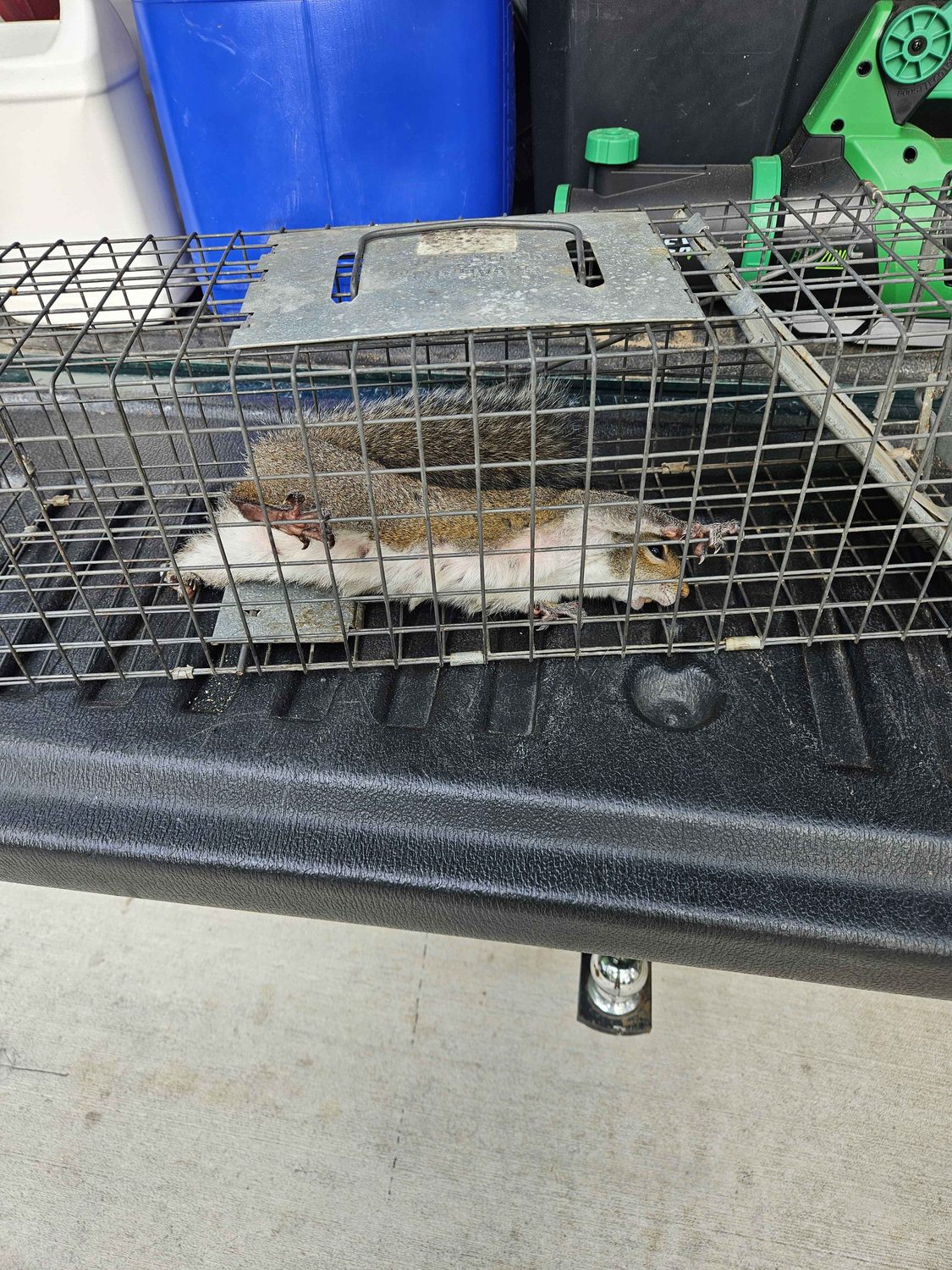
- Removal. The squirrels, and any young, are removed from the structure. How the animals are handled afterward is explained at the inspection, within what Texas rules allow.
- Sealing. Each entry, used or likely, is closed with heavy-duty, chew-resistant material once the attic is empty.
- Follow-up. Checks afterward confirm nothing is chewing back in, along with advice on limbs, feeders and food sources.
AgriLife’s leaflet makes the case for sealing over everything else: it calls squirrel-proofing a permanent solution that does not harm the squirrels and presents no legal difficulties. That matters because Texas Parks and Wildlife’s list of protected wildlife species classes gray and fox squirrels as game animals, with a license or permit required to trap, transport or possess one. The leaflet also notes no toxicants or fumigants are registered for tree squirrels in Texas, so poison is not an answer.
If the roofline itself is rotted or broken, the carpentry falls under exclusion and repairs, and our page on roofline and soffit gaps explains those openings.
What to do in the meantime
- Keep the hole open and leave the attic alone.
- Trim branches back from the roof if you can do it from the ground; AgriLife recommends at least eight to ten feet of clearance.
- Store birdseed and pet food in the garage in metal bins.
- Skip ultrasonic devices and mothballs.
- If you hear chewing near a light fixture or see a wire with the jacket stripped, have an electrician check it. AgriLife notes squirrels can damage wiring as well as insulation.
When to call
Call once you have seen a squirrel go into the roofline or heard daytime noise on more than one day. The sooner the openings are mapped, the more likely the job happens before a litter arrives. The months just before the spring and late-summer litters are the best time to have it done. Waiting tends to add a second chewed entry, more soiled insulation and young squirrels that learn your attic as home.
Related problems
Squirrel jobs often overlap with other roofline problems. If the evidence points to night-time activity, read roof rats in the attic. If a colony flies out at dusk, see bats in the attic. The full process is on our squirrel removal and exclusion page, and the work carries our 100% Service Guarantee. For a free inspection, contact us.
Frequently asked questions
Why not just plug the hole once the squirrel leaves in the morning?
Because you rarely know whether every squirrel is out. A mother shut away from her young will chew a new opening, often through a better part of the roof, and young left inside can die in the attic. Texas A&M AgriLife says openings should not be sealed until the squirrels are out.
Can squirrels get in where there is no hole?
They make one. AgriLife says squirrels usually enter through vents that are not adequately screened, but they will gnaw their way in when they need to. Soft soffit corners, rotted fascia and thin vent screens are the usual targets.
Can I trap the squirrels myself?
Fox and gray squirrels are game animals in Texas, and Texas Parks and Wildlife lists a license or permit as required to trap or transport them. AgriLife says they can be cage-trapped where they cause damage, but anyone planning to relocate one should notify TPWD first.
How long does it take to get them out for good?
It depends on how many openings there are and whether a litter is inside. The removal and sealing happen first, then follow-up checks confirm the attic stays quiet. Trimmed limbs make the result last much longer.
From the blog
Squirrel Removal & Exclusion in north Houston?
No long-term contracts, and service agreements are backed by our 100% Service Guarantee.
Because we are based in Spring, we can often come out the same or next day for urgent problems. Call before noon, Monday through Friday, for the best chance at next-day service.
Last updated