
Bird Control & Exclusion in Houston and Spring
Bird control in north Houston means physically denying pest birds the ledges, vents, signs and solar panels they roost and nest on. We identify the species first, because federal law protects most native birds, then install spikes, netting, bird wire or exclusion mesh and seal openings. The approach is non-lethal and built to last, not scare tactics.
Call 281-627-4810 Request a free inspection
Year-round protection plans from $70 Core · Premium · Legendary See the plans
Birds: the job at a glance
| What it covers | Pigeons, house sparrows, starlings, grackles and other nuisance birds on homes, storefronts, warehouses and rooftops in north Houston |
|---|---|
| Included | Species identification, a pressure and nesting survey, spikes, netting, bird wire, solar panel mesh and sealing of openings |
| Not included | Cleaning droppings off surfaces; we tell you what to clean and how, and your team or a cleaning contractor does it |
| Protected species | Native birds such as grackles and swallows are federally protected; pigeons, starlings and house sparrows are not |
| Best timing | Before nesting starts in spring; active nests of protected birds cannot be removed without a federal permit |
| What it costs | Free inspection, then a written price; ledge length, roof height, lift access and the netting or spikes needed set it |
Which birds cause the trouble here
Four birds account for most bird control calls in north Houston, and the law treats them differently, so identification comes before anything else.
- Rock pigeons. Texas A&M AgriLife’s leaflet on controlling feral pigeons notes they are not native; they were domesticated in Europe, brought over, and escaped to form feral flocks. Around town they roost and nest on ledges, beams, signs, rooftops and inside open warehouses.
- House sparrows. Introduced from Europe and found almost everywhere in Texas, according to AgriLife’s leaflet on controlling house sparrows. They nest in building vents, window ledges, advertising signs and the gaps behind them.
- European starlings. Robin-sized, short-tailed and speckled in winter, nesting in any suitable cavity in buildings or trees.
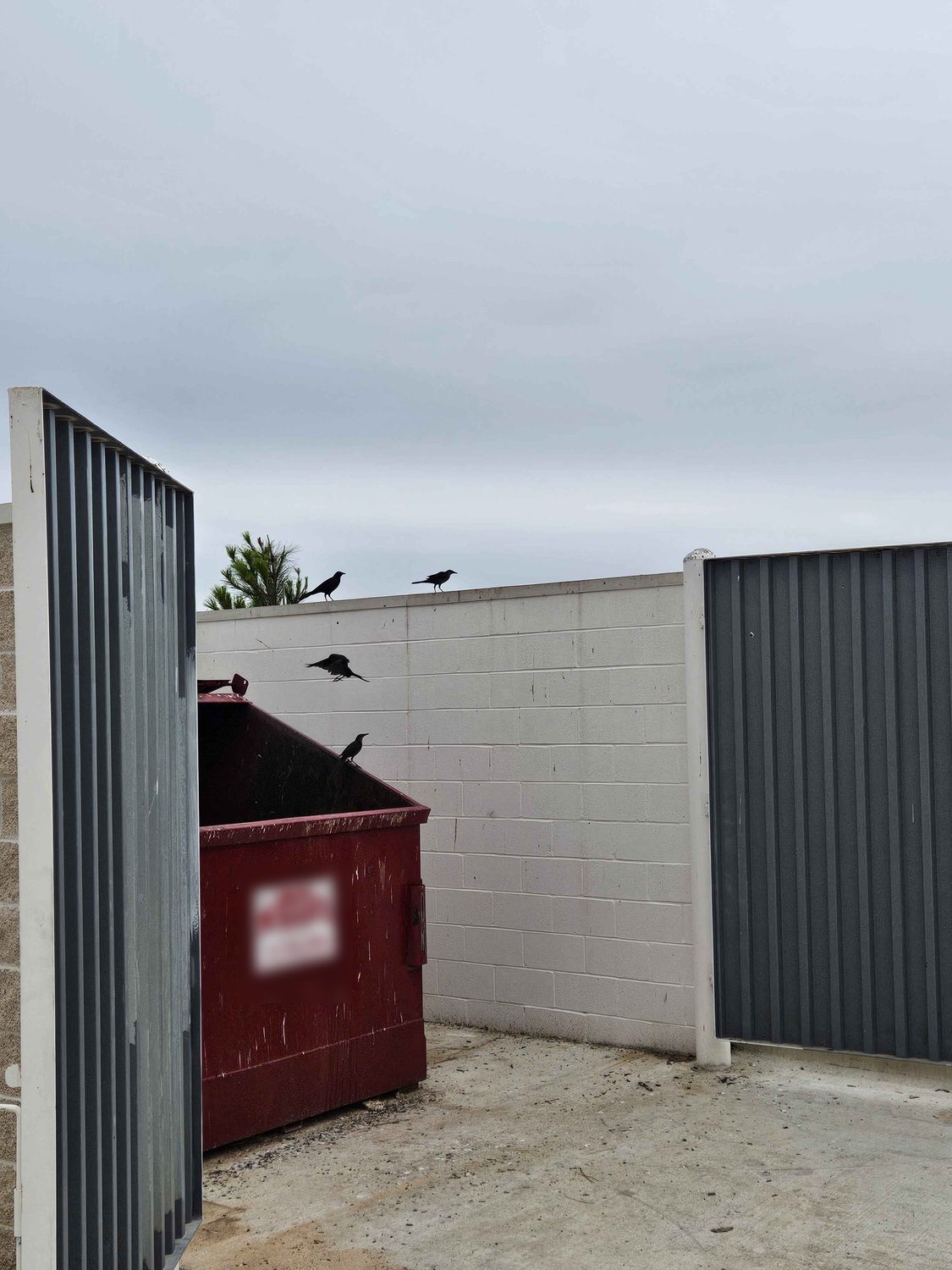
- Grackles. The big, loud blackbirds with yellow eyes and long, keel-shaped tails that pack the trees over shopping center parking lots at dusk. AgriLife’s leaflet on roosting birds in urban areas describes grackles, starlings and blackbirds flocking together through fall, winter and early spring and forming huge roosts in town.
Swallows, doves and mockingbirds come up too, mostly on homes, and all of them are native birds.
What federal and state law protect
This is the part that most bird control advertising skips. The U.S. Fish and Wildlife Service’s depredation permit FAQ says almost all birds native to the United States, including their nests and eggs, are protected under the Migratory Bird Treaty Act, and that protection is not limited to birds that migrate. The same document says nonnative species such as European starlings, rock (feral) pigeons and house sparrows are not protected under the act.
The Service’s announcement of its list of nonnative bird species names the rock pigeon among the well-known birds on that exempt list, and explains that starlings and house sparrows are outside the act because they do not belong to bird families the treaties cover.
Texas law lines up with this. Texas Parks and Wildlife’s page of protected wildlife species says all wild birds that migrate through or live in Texas, with their nests, eggs and young, are protected by state and federal law, and that European starlings, English sparrows and feral pigeons may be killed at any time and their nests and eggs destroyed.
Three practical points follow from the Fish and Wildlife Service FAQ:
- Scaring and excluding protected birds is allowed. No federal permit is needed simply to harass or scare birds away, except for eagles and federally listed species.
- Inactive nests can go; active ones cannot. An empty nest of a protected bird can be removed and destroyed without a permit. A nest with eggs or chicks needs one.
- Grackles are in between. They are protected, but the Service maintains a depredation order for blackbirds, cowbirds, crows, grackles and magpies that allows control under specific conditions, with reporting. We do not do lethal bird work under it; we exclude and deter.
How we handle a bird job
Every bird job follows the same process: inspection, a custom plan, installation and prevention, with no long-term contract.
- Inspection. We identify the species, the nesting and roosting areas, and the entry points into vents, attics or open structures. On commercial sites this includes a pressure map and photo record.
- A plan for the building. The plan matches the barrier to the bird and the surface. Pigeons on a parapet need a different answer than sparrows in a sign cabinet.
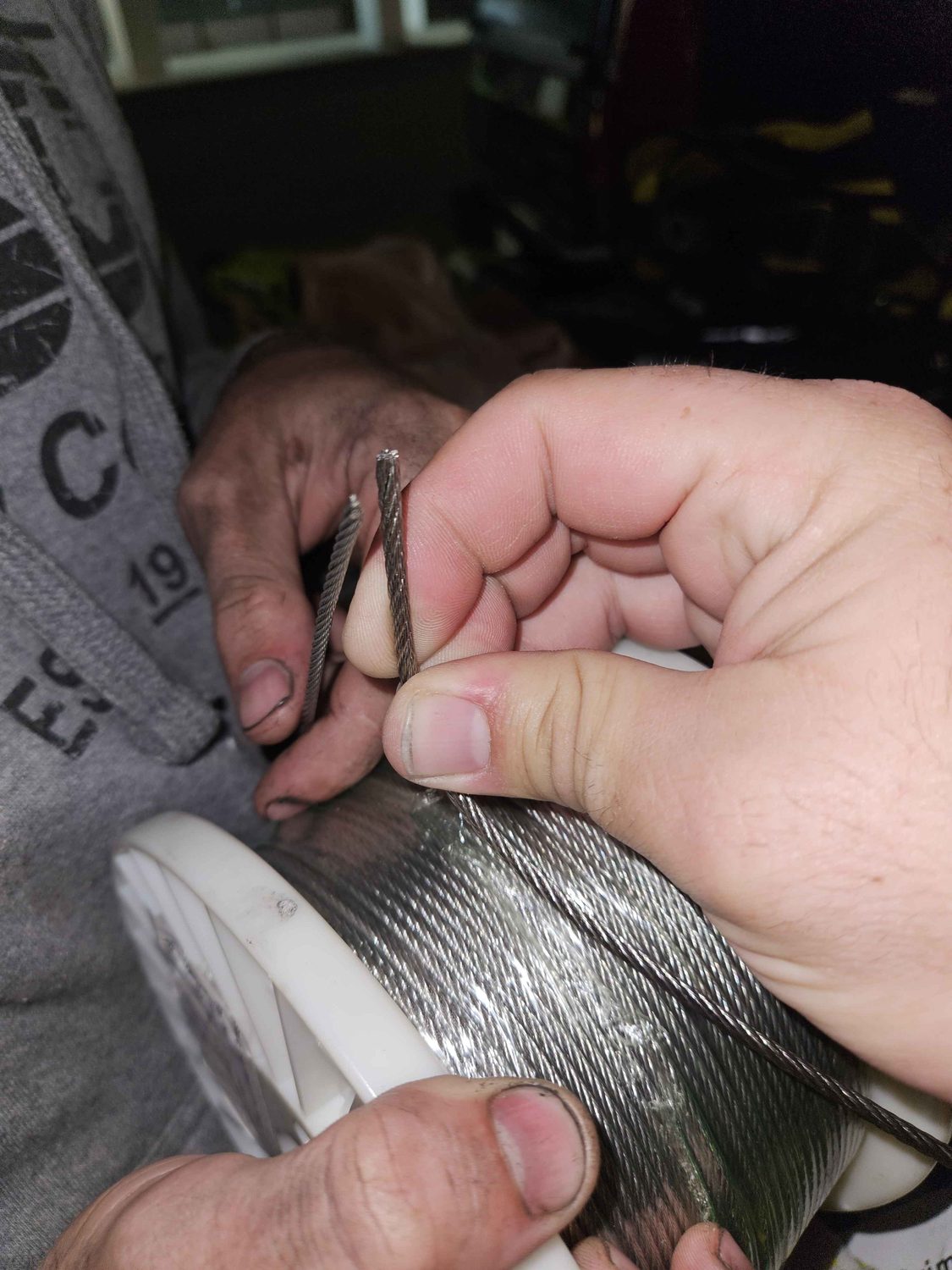
- Installation. Depending on the site, that means bird spikes on ledges and rooflines, bird wire on narrow perches, netting across open structures and warehouse bays, exclusion mesh around solar panels, and structural sealing of vents and gaps.
- Prevention and monitoring. Commercial accounts get monitoring and re-inspection visits and a written record of the controls installed.
Everything here is non-lethal. The point is to make the building useless to the birds, not to remove birds one at a time while the roost stays open.
Humane bird control: how exclusion works
Humane bird control means a bird loses the use of a spot, not its life. A pigeon or sparrow returns to the same ledge, vent or beam because it has landed or nested there safely before, so exclusion targets that exact surface and leaves the bird free to settle somewhere else. Spikes and bird wire stop the landing, netting and mesh close off a space, and sealing shuts the cavity a nest would go into. No bird is poisoned or shot.
Timing matters as much as hardware. Under the Fish and Wildlife Service guidance cited above, an empty nest of a protected bird can come down without a permit, so exclusion against swallows or other native species goes in after the young have fledged and before the next nesting season starts. Pigeons, starlings and house sparrows are outside federal protection, which means their nests can be cleared while the barrier is being installed rather than waiting out a season.
Why physical barriers beat gadgets
AgriLife’s pigeon leaflet is blunt about the alternatives. It describes noise devices such as distress calls and shell crackers as usually ineffective with pigeons, because city pigeons are used to loud noise. It gives decoy hawks and owls, balloons and streamers limited use, and calls the effectiveness of ultrasonic devices questionable. What it does endorse: blocking access to indoor roosts with hardware cloth, wood, masonry or metal, and fitting sharp metal prongs, often called porcupine wire, to sills, ledges and rooflines.
The sparrow leaflet says the same about acoustic and visual repellents, noting that sparrows adapt quickly. Its exclusion advice is specific: screen or block building openings larger than three-quarters of an inch, mount signs and air conditioning units tight to the wall, and use bird mesh, netting or hardware cloth over the crevices that remain.
Matching the barrier to the bird and the surface
Each tool in a bird job does one thing well, and the wrong one installed neatly still fails. Roughly how they sort out:
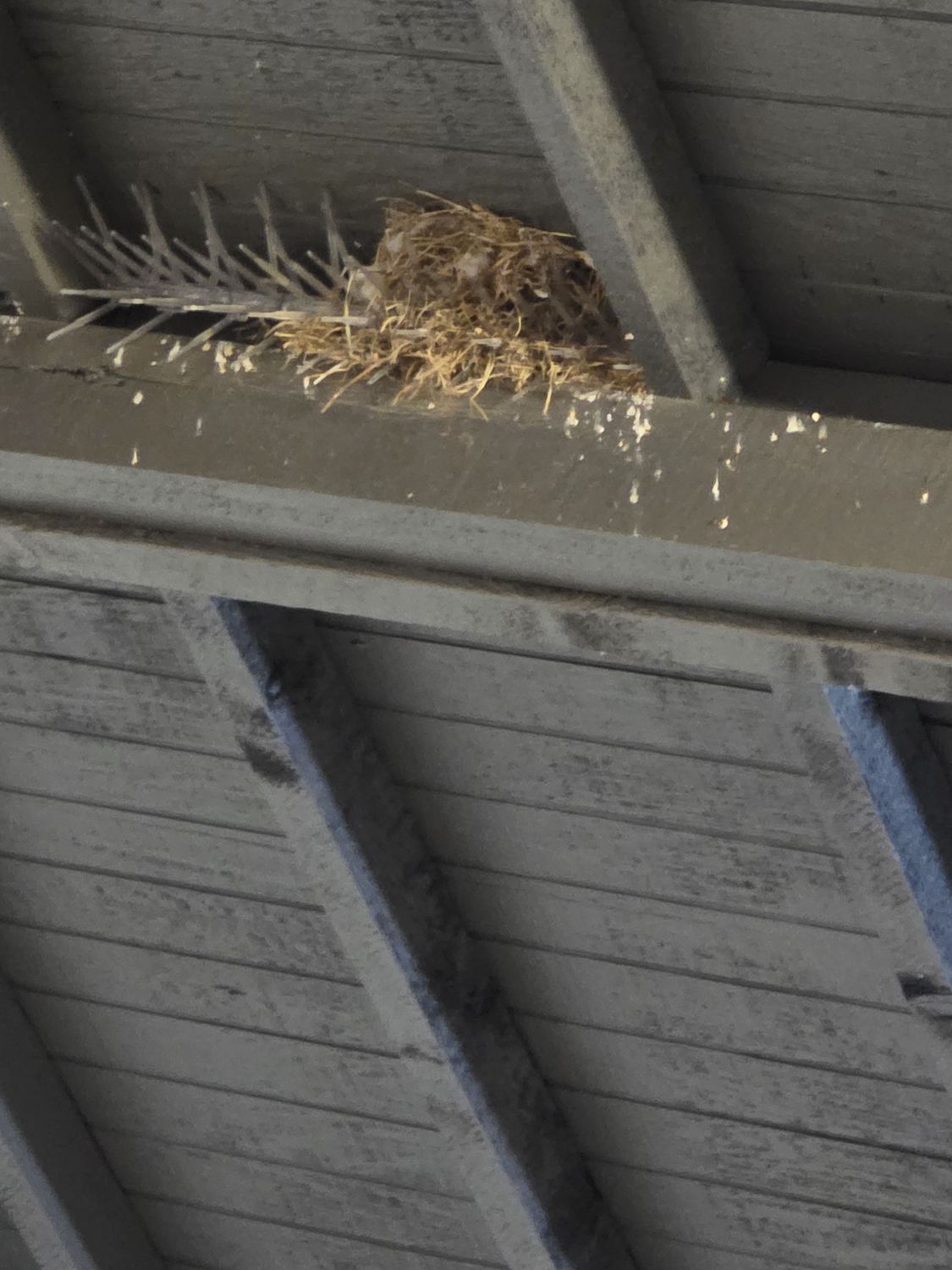
- Spikes suit ledges, parapet caps, sign tops, beams and light fixtures where pigeons land and loaf. They need to cover the whole perch; birds will sit on the six inches left bare at the end.
- Bird wire, tensioned lines a short height above a surface, suits narrow perches such as railings, gutters and roof ridges where spikes would look heavy or catch debris.
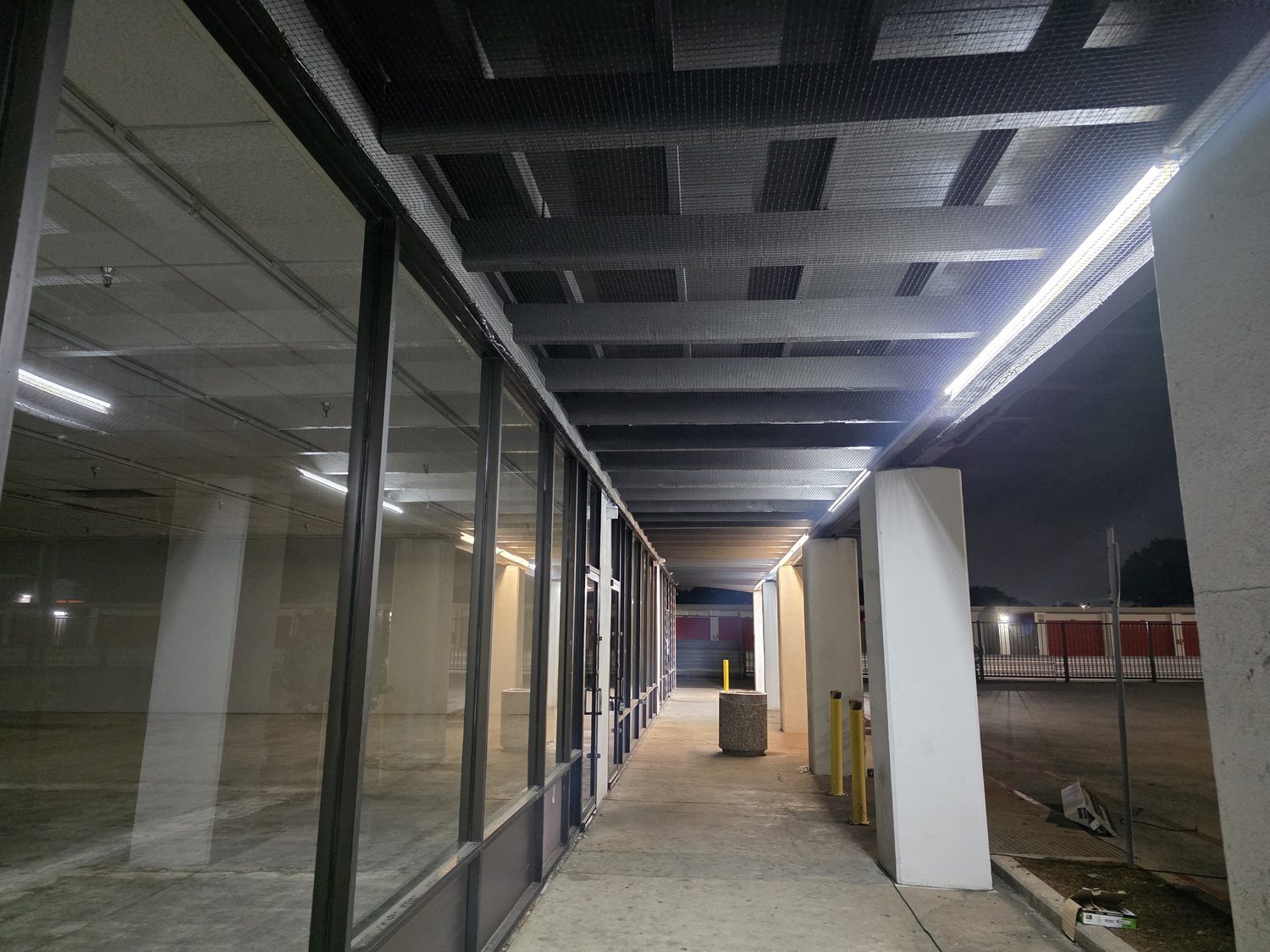
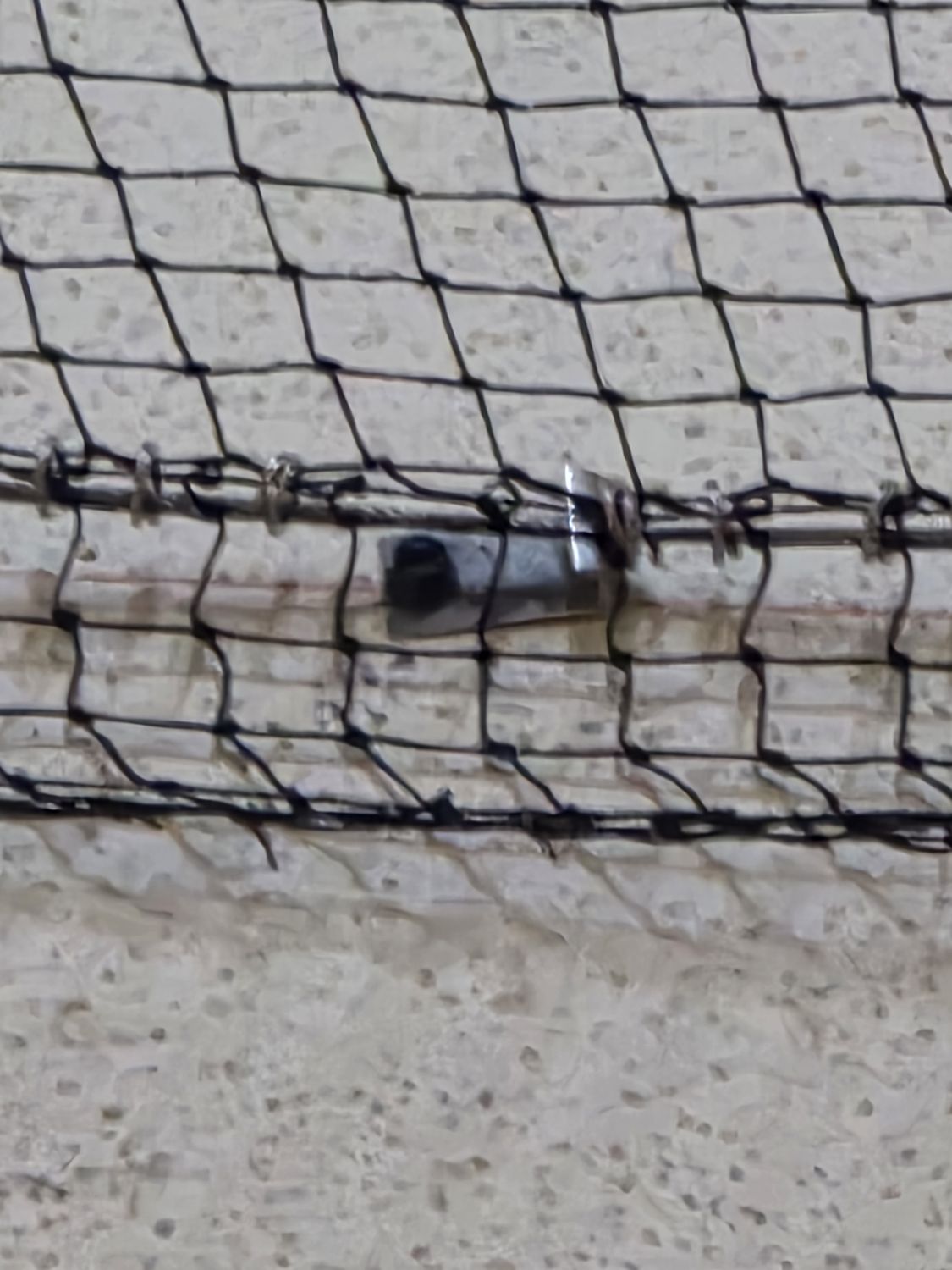
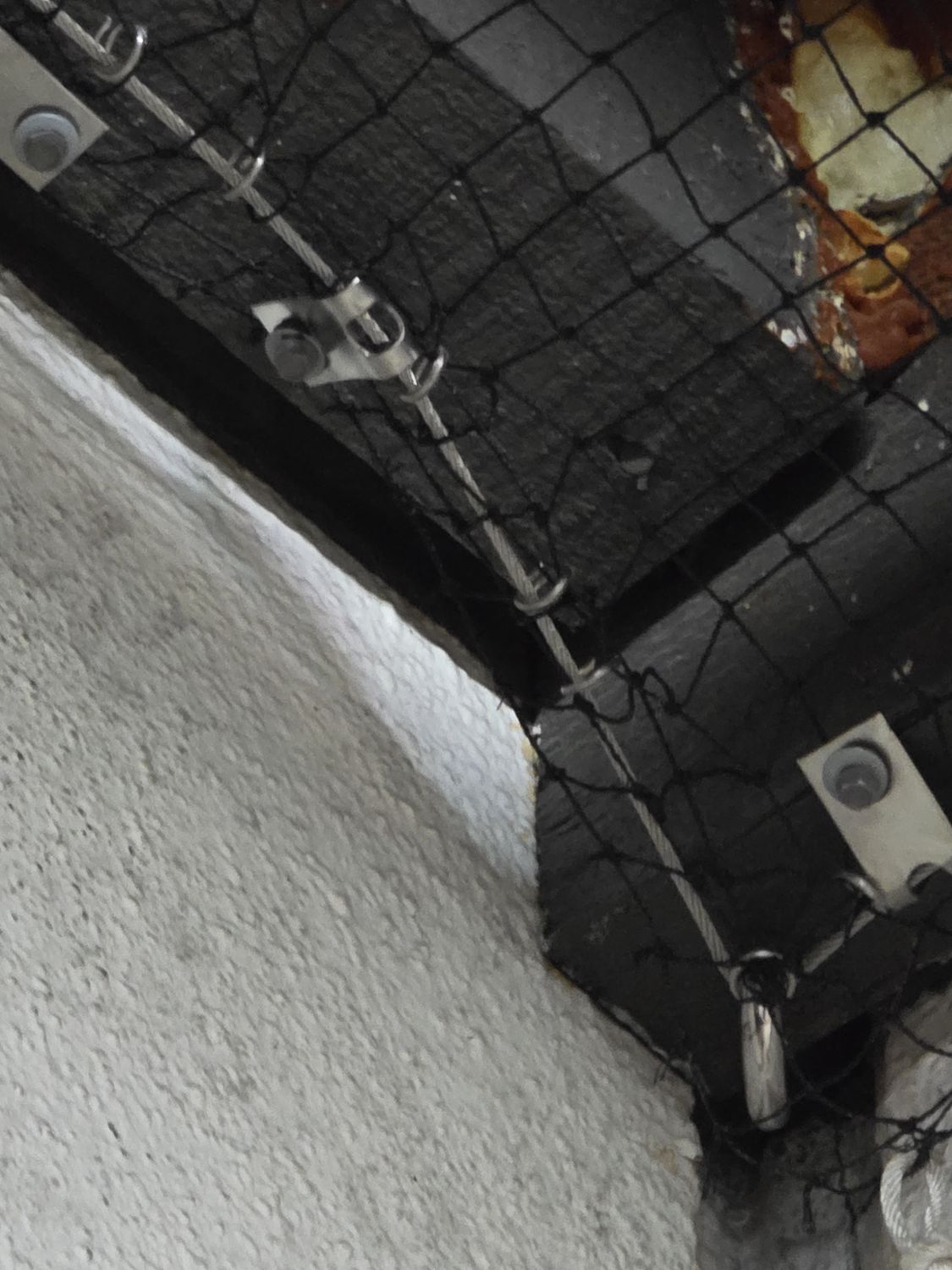
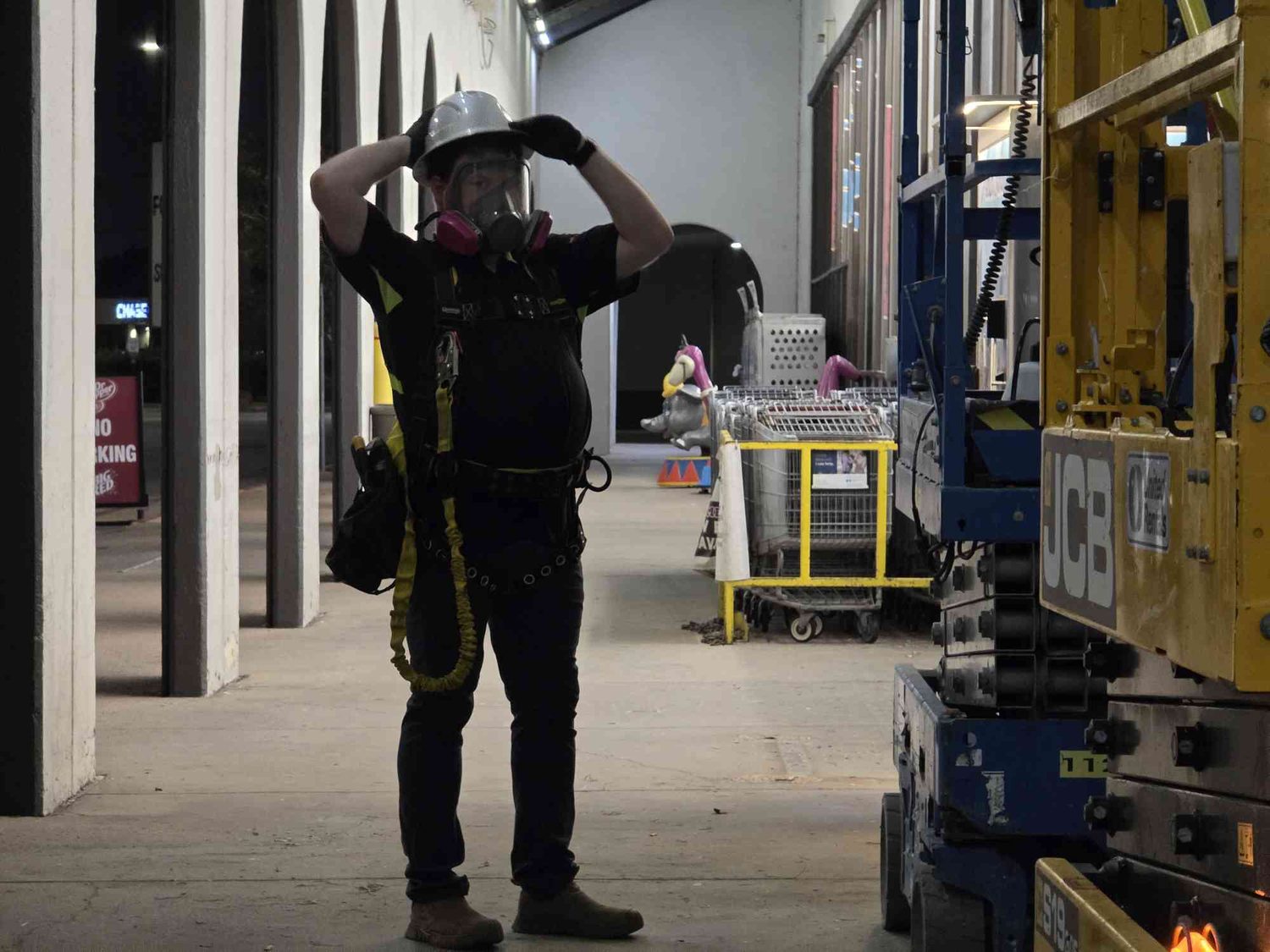
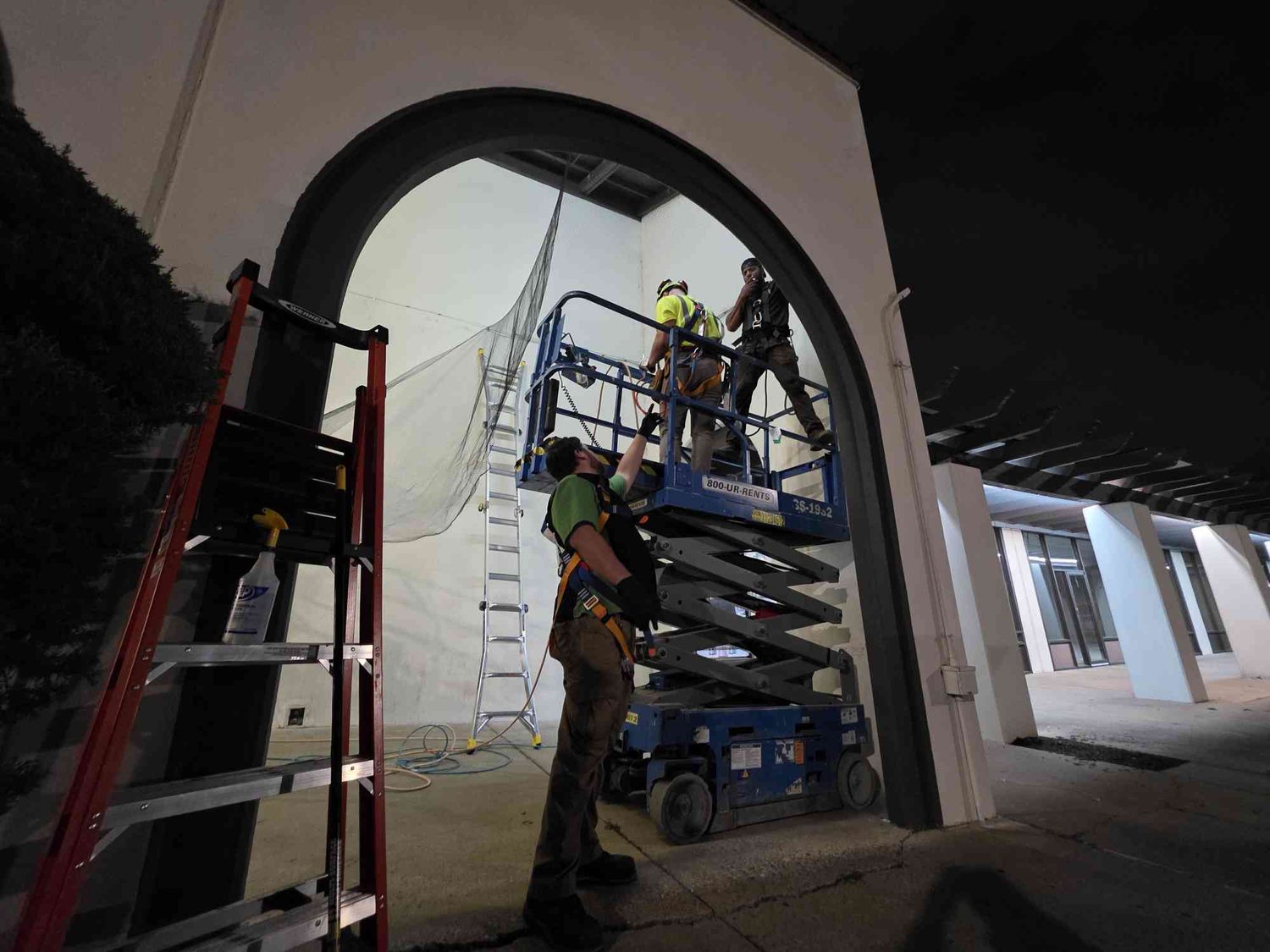
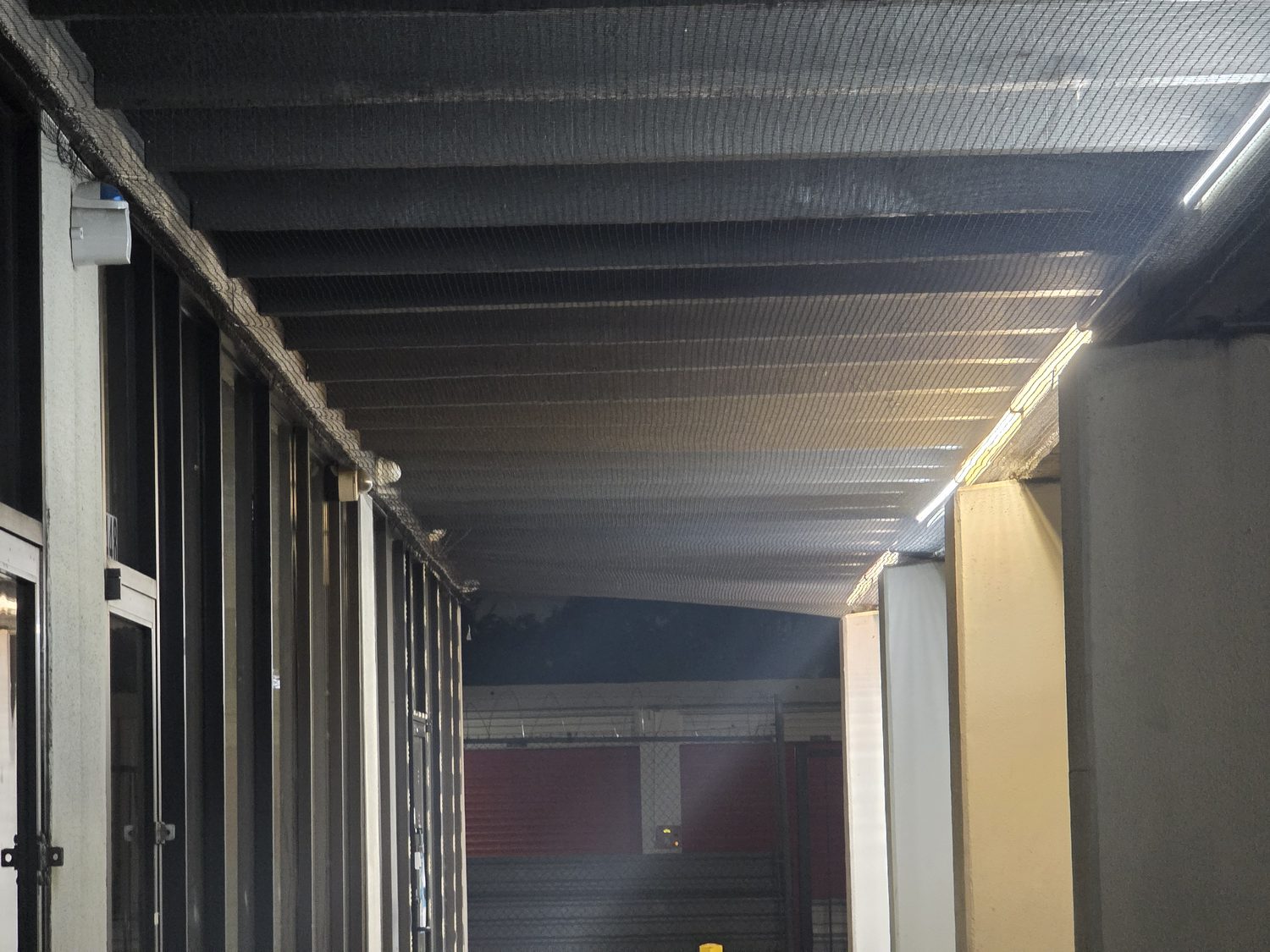
- Netting is for enclosing a space rather than a surface: warehouse bays, canopies, loading docks, courtyards and the underside of open structures. It only works if the edges are sealed, since one gap becomes the new doorway.
- Exclusion mesh wraps the perimeter of rooftop solar arrays so pigeons cannot get underneath.
- Structural sealing closes vents, soffit gaps, sign cabinets and other cavities where sparrows and starlings nest.
Most jobs use two or three of these together, picked after the inspection shows where the birds land, where they sleep and where they nest. A pigeon that loses its loafing ledge but keeps its nest site under a canopy has not really been moved, so both get covered in the same plan.
Do bird spikes work for pigeons?
Yes, bird spikes work for pigeons when they cover the whole ledge, sill or roofline the birds use. Texas A&M AgriLife’s feral pigeon leaflet calls the sharp metal prongs, which it names porcupine wire, costly but effective at stopping pigeons from roosting on sills, ledges and rooflines. They fail where gaps are left.
Spikes work by taking away a place to land, not by harming the bird. A pigeon that cannot settle its feet on a parapet cap moves on to the next flat surface, so spikes are one part of a plan rather than the whole of it. They do nothing for pigeons nesting inside a canopy, a warehouse bay or the space under rooftop solar panels; those call for the netting, exclusion mesh and structural sealing described above. Narrow perches such as railings and roof ridges are often better served by bird wire.
The AgriLife leaflet cited throughout this page is one of a set the Harris County office of Texas A&M AgriLife Extension hosts on its website, alongside its leaflets on house sparrows and urban roosting birds. Its advice matches what Houston commercial strips show: pigeons loafing on sign tops, parapets and light fixtures, which are the surfaces spikes suit best. Grackles packing the parking lot trees at dusk are a different case. They are native and protected under the Migratory Bird Treaty Act, so our work there is limited to making the building’s ledges unusable, as our guide to bats, birds and wildlife law in Texas explains.
For the details of a pigeon job, from ledges to solar arrays, see our pigeon control page and the rock pigeon profile in the pest library.
Solar panels on homes
Pigeons nesting under rooftop solar panels have become one of the most common residential bird calls. The gap between panel and roof is shaded, sheltered and out of reach, and once one pair nests there, others follow. Nesting material and droppings collect under the array, and the noise carries into the rooms below. The fix is to clear the space underneath and close the perimeter with exclusion mesh and perimeter sealing around the array. Since pigeons are not protected, the nests can be cleared as part of the job. If doves or another native species are nesting there, the active nests are left until they are empty.
What commercial documentation covers
For facilities that answer to an auditor, inspector or corporate standard, the work comes with a paper trail: a pressure map and photos of where the birds were, records of the exclusion installed and where, monitoring and follow-up visit records, and a sanitation action list for the facility’s own team. That record is what you hand an auditor when droppings were a past finding, showing the problem was assessed, controlled and checked.
Signs, and what each one means
- White streaking down a wall or sign face. A perch directly above, used daily. Spikes or wire on that ledge usually solve it.
- Nesting material sticking out of a dryer or bath vent. Sparrows or starlings nesting inside the duct, which blocks airflow as well as making a mess.
- Droppings and feathers piling under solar panels. Pigeons nesting in the gap between the panels and the roof. Exclusion mesh closes it.
- Birds flying in and out of a warehouse or dock bay. An indoor roost. Netting is usually the only lasting answer for large open structures.
- Thousands of birds in the parking lot trees at dusk. A grackle or starling roost. AgriLife notes the roost is hardest to break once established, so act early in the season.
- Mud nests under the eaves. Swallows. Wait until the nests are empty, then exclude before the next season.
What waiting costs, and the health side
AgriLife lists the damage plainly: pigeon droppings damage car finishes and kill grass and ornamental plants, and sparrows cause unsanitary, odorous conditions around buildings. Droppings on walkways create slip hazards, nests block gutters, vents and machinery, and in food or retail settings droppings near doors and docks can turn into an audit or inspection problem.
The health concern worth knowing is histoplasmosis. The CDC’s overview of histoplasmosis explains the fungus lives in soil and in bird and bat droppings that mix in soil, and that people catch it by breathing in spores. AgriLife’s pigeon leaflet advises a face mask with a dust filter when working in enclosed pigeon roosts. That is why dried droppings should be wetted and removed with dust protection, never dry-swept or blown off with a leaf blower.
Homes and commercial properties
On homes, bird work is usually sparrows in vents, pigeons under solar panels, or swallows building under the eaves. The fixes are small and specific.
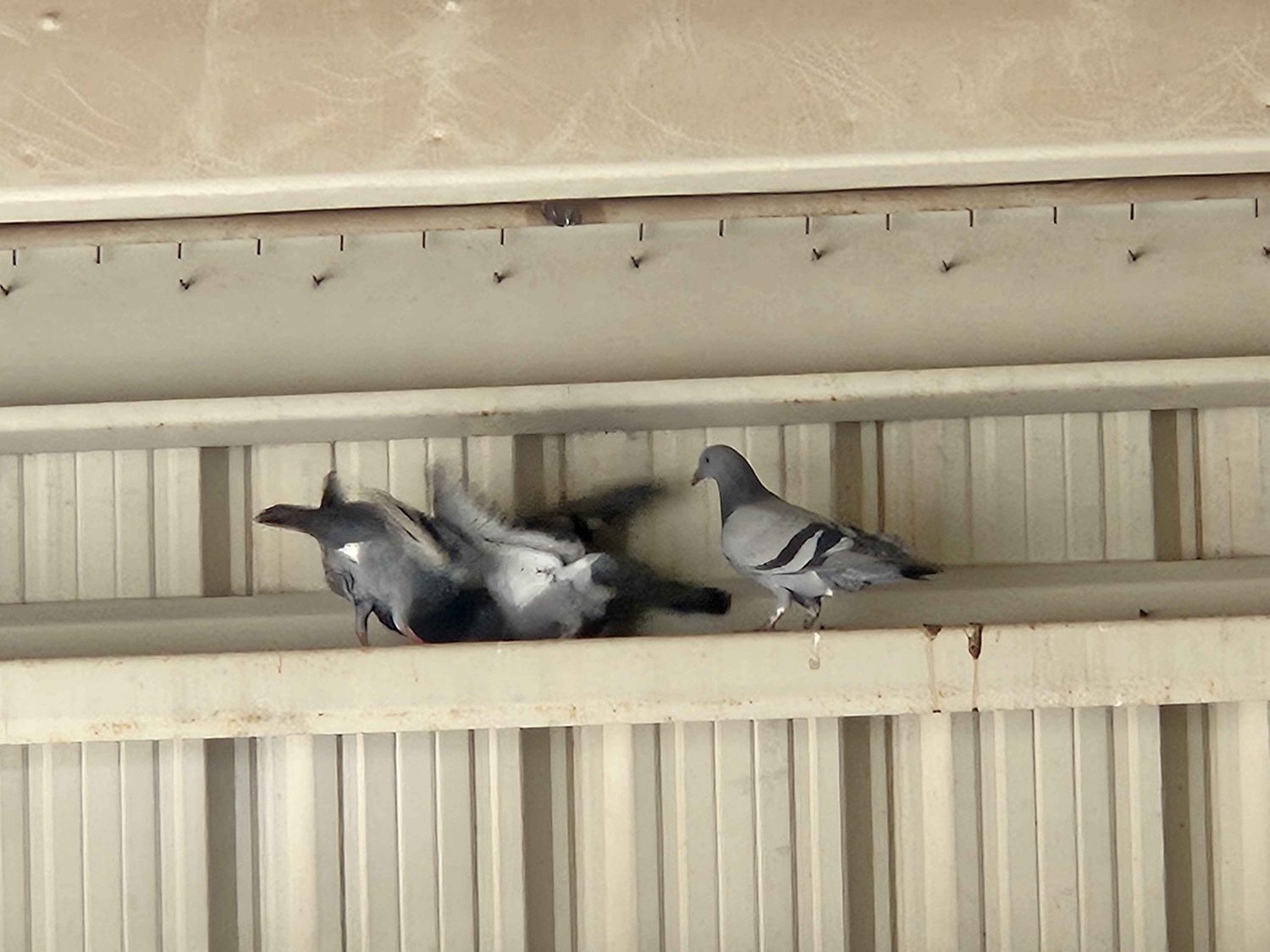
Commercial work is where bird control earns its keep: warehouses and distribution centers with open bays, grocery and restaurant rooflines, signs and canopies at retail centers, parking structures and loading docks. These sites usually want documentation as well as installation, including exclusion records, monitoring reports and a sanitation action list for the facility team. That is set up through our commercial program, and the wider account is described under commercial pest control.
Commercial bird abatement
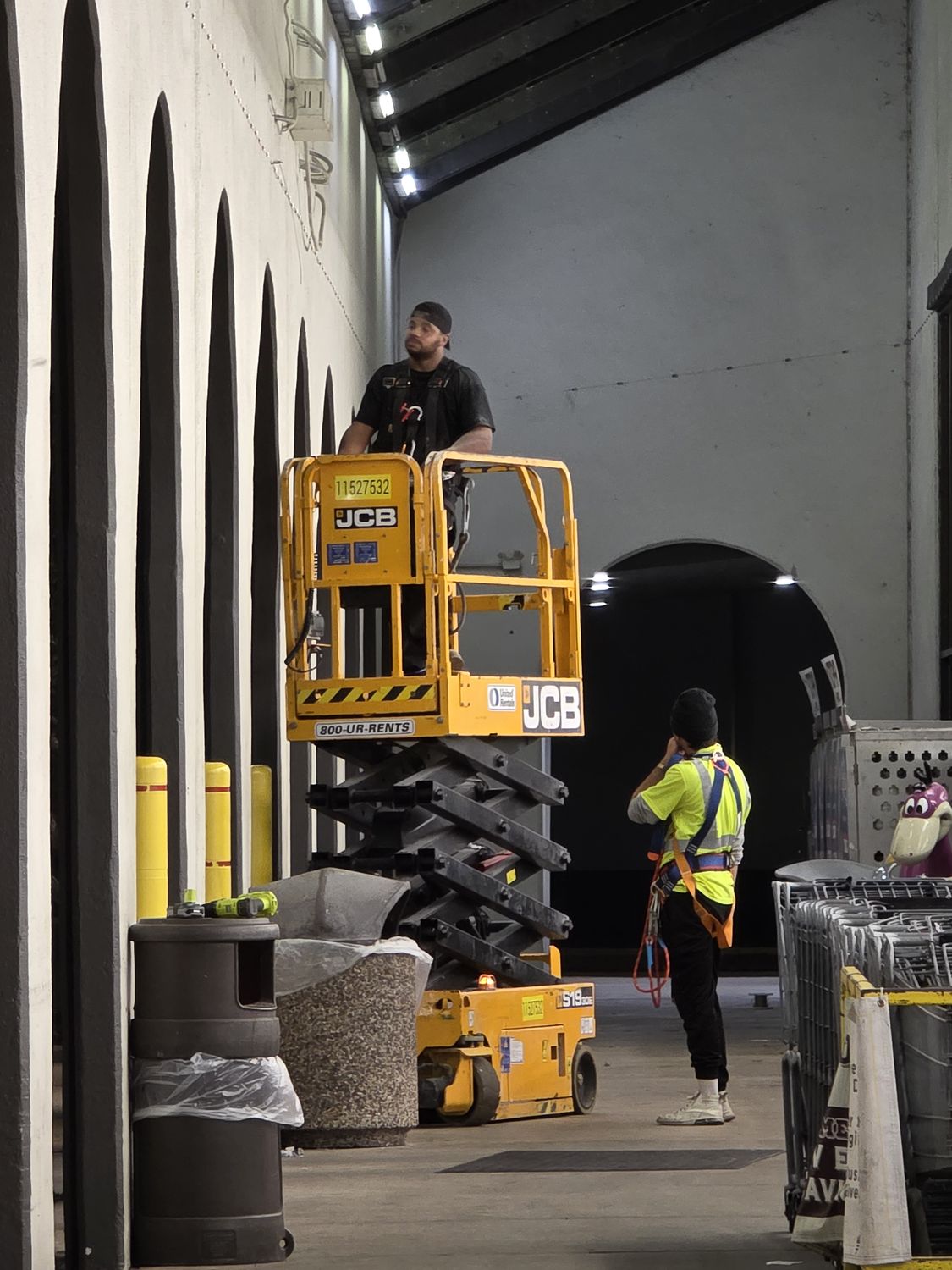
Bird abatement on a commercial property uses the same barriers as a house, scaled up to long rooflines and high work that usually needs lift access. Here is how it tends to sort out by type of site:
- Flat roofs and parapets. Spikes along parapet caps and roof-edge ledges where pigeons loaf; pigeon control goes into the detail.
- Signage. House sparrows build in sign cabinets and the gaps behind letters. Sealing those cavities and putting spikes on sign tops is covered under sparrow control.
- Loading docks and warehouses. Netting across bays and dock canopies, with every edge closed so the birds cannot work around it.
- Parking structures. Netting on the underside of the open deck and bird wire on rails and other narrow perches.
- Lot trees and light poles. Great-tailed grackles are protected, so the work stays on the building, taking away the perches they use there; grackle control explains what that can and cannot change.
Droppings that have already built up under a roost are a separate question, covered on bird droppings cleanup. For a property that needs documented bird abatement alongside other pest work, the account is set up through our commercial program.
Prevention you can do yourself
Exclusion does most of the work, but a building that keeps feeding birds will keep drawing them to every ledge that is not covered. These steps help:
- Do not feed pigeons, and ask neighbors and tenants not to.
- Keep dumpster lids closed and pick up spilled feed and food around patios.
- Screen dryer, bath and gable vents, and fit covers to open soffit gaps.
- Remove empty nests of protected birds outside the nesting season, then block the spot before spring.
- Use large seed such as sunflower in backyard feeders and keep seed off the ground; AgriLife notes sparrows prefer small seed like millet.
- Trim dense shrubs and trees near the building to make roosting less attractive.
Bird problems we cover in detail
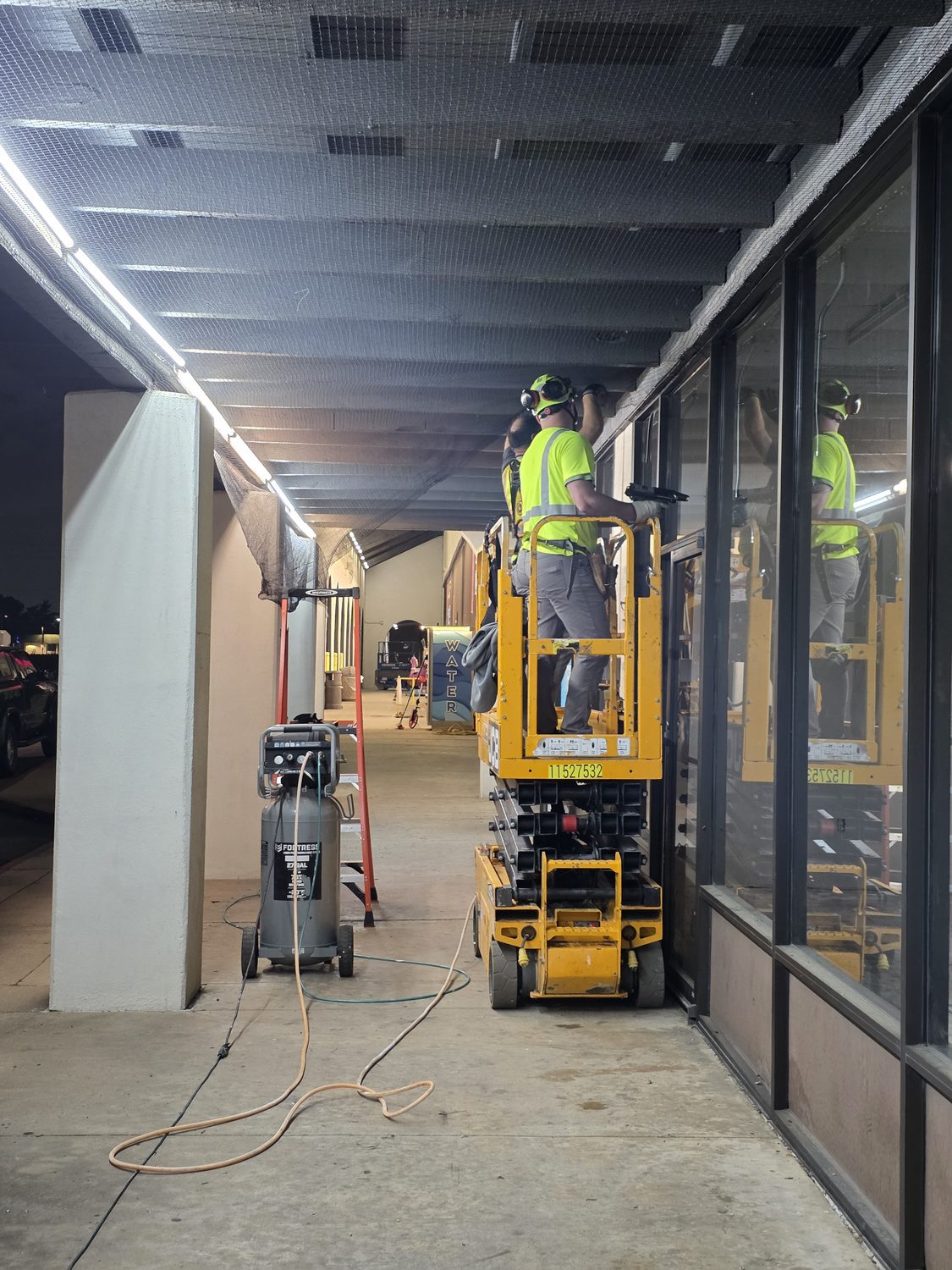
- Pigeons on a roofline: ledges, parapets and solar panels.
- Pigeon control: feral pigeons on homes and commercial roofs.
- Sparrow control: house sparrows in vents, signs and canopies.
- Grackle control: the protected blackbirds that roost over parking lots.
- Bird droppings cleanup: what to do about the mess a roost leaves behind.
Bird control near me in north Houston
If you searched for bird control near me from the north side of town, this is the area we cover from our base in Spring: Spring, The Woodlands, Houston, Cypress, Conroe, Kingwood, Tomball and Humble. Wherever the building is, the visit runs the same way: name the bird, find the surfaces it lands, sleeps and nests on, then match a barrier to each one.
Where people go next
If the droppings in the attic are crumbly and the animals fly out at dusk, they are bats, not birds; see bat exclusion. For vent and roofline openings that need carpentry, see exclusion and repairs. Bird work is backed by our 100% Service Guarantee, and the terms are on that page. We install bird exclusion in The Woodlands, Spring, Atascocita and Magnolia, and across the rest of our service area. For a free inspection, contact us.
Frequently asked questions
Can you just get rid of the grackles in the parking lot?
Grackles are native birds covered by the Migratory Bird Treaty Act. A federal depredation order allows control in narrow conditions with reporting, but our work is non-lethal: we take away the places they roost and perch on the building and advise on the trees and food sources drawing them in.
Are pigeons protected?
No. The U.S. Fish and Wildlife Service lists rock pigeons, European starlings and house sparrows as nonnative species not protected under the Migratory Bird Treaty Act, and Texas Parks and Wildlife says their nests and eggs may be destroyed.
Can you knock down the swallow nests under my eaves?
Not while they are in use. Swallows are protected, and the Fish and Wildlife Service says destroying an active nest, one with eggs or chicks, requires a permit. Empty nests can be removed. The fix is to put up exclusion before the birds come back to build.
Do ultrasonic bird repellers work?
Texas A&M AgriLife calls their effectiveness against pigeons questionable, and says city pigeons are used to loud noises. Decoy owls and streamers have limited use too. Physical barriers like spikes and netting are what hold up over time.
Will you clean the droppings off my building?
No. We assess the problem, install the exclusion and give you a written list of what needs cleaning and how. The cleaning itself is done by your own staff or a specialist contractor, and it should be done with dust protection.
Is porcupine wire the same thing as bird spikes?
Yes. Texas A&M AgriLife's pigeon leaflet uses the name porcupine wire for rows of sharp metal prongs fixed to sills, ledges and rooflines, the same product usually sold as bird spikes. It describes them as costly but effective for keeping pigeons from roosting.
Our largest service areas
Guides
Commercial bird exclusion: 6 photographs from real jobs
Every one of these was taken on a job around north Houston by whoever was doing the work. Stock photography is close to universal in this trade and a reader has no way to tell by looking, which is the only reason it is worth saying out loud. The rest of the archive is on the gallery.
From the blog
Bird Control in north Houston?
No long-term contracts, and service agreements are backed by our 100% Service Guarantee.
Because we are based in Spring, we can often come out the same or next day for urgent problems. Call before noon, Monday through Friday, for the best chance at next-day service.
Last updated