
Bird Droppings Cleanup and Health Risks
Bird droppings matter for health mainly when dried deposits are disturbed and the dust is breathed in. The CDC says the fungus behind histoplasmosis spreads in bird and bat droppings mixed with soil. NIOSH advises wetting material before removal, never dry-sweeping, and wearing respiratory protection. Large accumulations should go to a professional cleanup company.
Call 281-627-4810 Request a free inspection
Year-round protection plans from $70 Core · Premium · Legendary See the plans
What to do, in order
- Stop the birds first: close the perches and nest sites, or the droppings come straight back.
- Keep people, and anyone with a weakened immune system, away from the area until it is cleaned.
- Wear gloves, eye protection and a NIOSH-approved respirator; an N95 is the minimum the CDC mentions for workers.
- Spray the droppings with water to dampen them before touching them, and never dry-sweep, shovel dry or use a blower.
- Scoop the damp material into a sealed bag or container and dispose of it promptly.
- Hand large buildups, such as a garage deck, roof or warehouse floor, to a professional cleanup company.
Why droppings are a health question, not just a mess
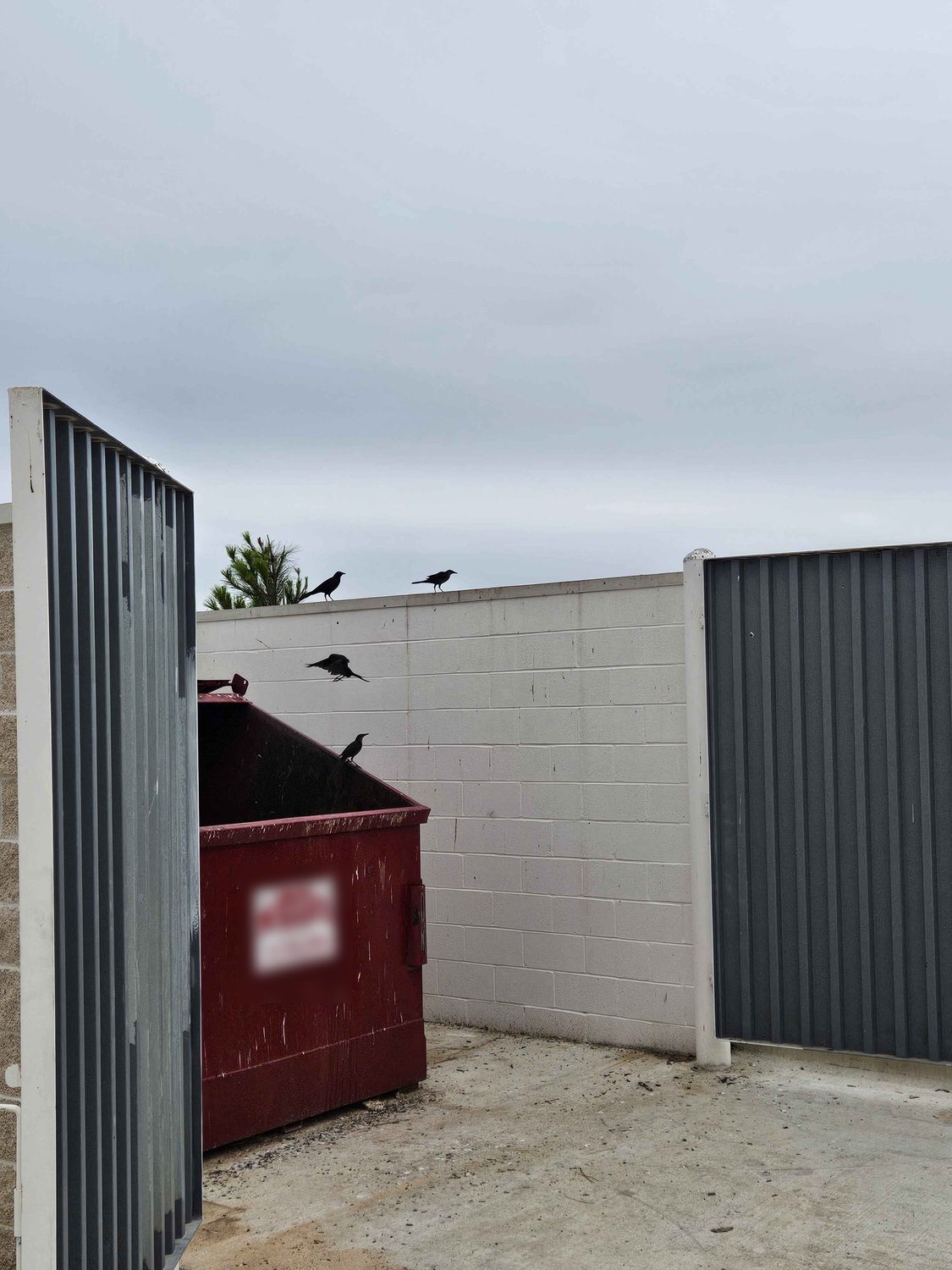
A few spots on a car are an annoyance. What turns bird droppings into a health issue is volume and age: the crusted layer on a parking garage beam ledge, the drift under a warehouse truss, the pile under a sign cabinet or a rooftop unit. When that material dries and is disturbed, it becomes dust, and dust gets breathed in.
The CDC’s overview of histoplasmosis says the fungus lives in soil, mainly in the central and eastern United States, and also spreads in bird and bat droppings that mix in soil. People catch it by breathing the spores. Symptoms such as fever, cough, fatigue, chills, headache, chest pain and body aches usually show up 3 to 17 days later, and the illness does not spread from person to person. NIOSH’s page on histoplasmosis and work says the fungus is found especially in soil containing large amounts of bird or bat droppings, and lists bridge workers, construction and demolition workers, and tree removal workers among the groups affected in work-related outbreaks.
Other infections linked to bird droppings
Histoplasmosis is the best-documented risk, but not the only one.
- Cryptococcosis. The CDC’s page on the causes of cryptococcosis says the Cryptococcus fungus is found in the environment, including soil, bird dung, decaying wood and some trees. According to the CDC’s cryptococcosis overview, most infections occur in people with weakened immune systems and are uncommon in healthy people.
- Psittacosis. The CDC’s psittacosis page says the most common way to get it is breathing in dust containing dried bird secretions or droppings. It is most often tied to pet birds such as parrots and to poultry, though the bacteria infect many kinds of birds.
- Salmonella. A Texas A&M study of great-tailed grackles roosting in parking lots in Brazos County found Salmonella in 2 of 76 grackles sampled.
Texas A&M AgriLife’s leaflet on controlling feral pigeons lists histoplasmosis, cryptococcosis, salmonellosis and toxoplasmosis among the diseases pigeons play a part in transmitting. None of this means a walkway with droppings will make someone sick. It means the cleanup should be done in a way that does not put the material in the air.
Who should be most careful
The CDC’s histoplasmosis prevention page names people with HIV/AIDS, organ transplant recipients and people taking corticosteroids or TNF-inhibitors as at higher risk of severe infection. On a commercial site, that is a reason to keep vulnerable staff and customers away from the cleanup and to schedule it when the area is closed.
How NIOSH says to clean bird droppings
NIOSH’s guidance on elimination and engineering controls for histoplasmosis gives the sequence that matters for a building:
- Stop the buildup. NIOSH says the best way to prevent exposure is to keep bird or bat droppings from accumulating in the first place.
- Keep the dust down. Avoid shoveling or sweeping dry, dusty material. Spray it carefully to reduce what becomes airborne; NIOSH notes a surfactant in the water may help.
- Use the right equipment for big jobs. For large accumulations, NIOSH recommends truck- or trailer-mounted vacuum systems with high-efficiency filters.
- Dispose of it properly. Wet material can go into a secure container for prompt disposal, and it should not simply be moved somewhere it can still cause a hazard. Landfill disposal may need arrangements with the operator.
On protective gear, NIOSH lists respiratory and eye protection, gloves and disposable protective clothing, and the CDC’s prevention page mentions masks such as N95s for construction workers. The CDC also says large amounts of bird or bat droppings should be cleaned up by professional companies.
What Sasquatch does and does not do
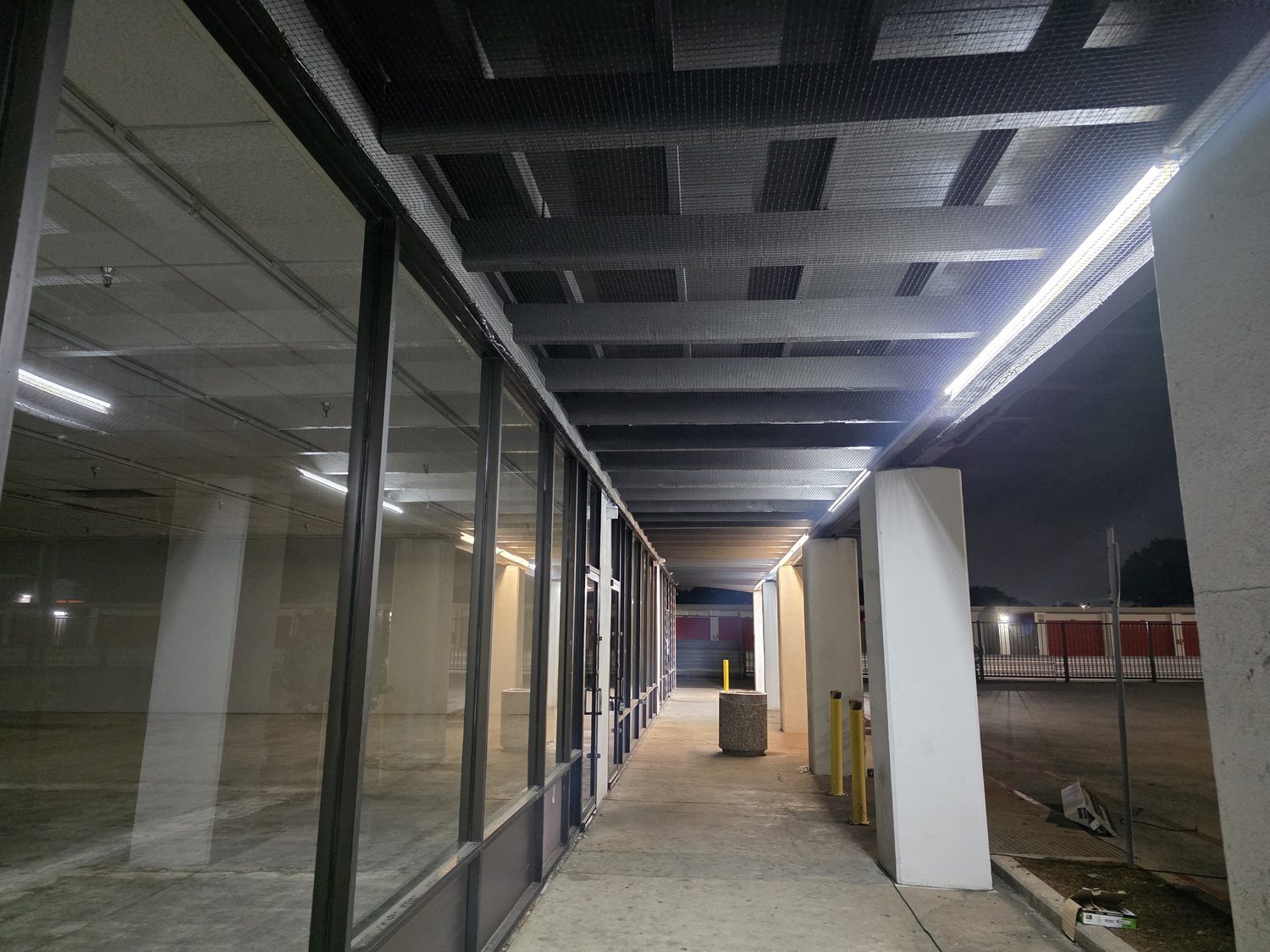
We do not clean droppings. Our bird control work handles the part NIOSH puts first: stopping the accumulation. After an inspection that maps where the birds perch and nest, we install spikes, bird wire, netting, exclusion mesh and sealing so the source is shut off. Commercial accounts also get a written sanitation action list that tells the facility team what needs cleaning, where, and how to do it without raising dust. Small areas can be handled by your own staff following that list; a large buildup on a garage deck, a roof or inside a warehouse should go to a professional cleanup company.
Cleaning before the birds are excluded is wasted money, because the ledge is coated again within weeks.
By bird
- Pigeons leave the heaviest deposits, on garage beams, rooftop units and warehouse racking. See pigeon control.
- Grackles soil parking lot islands, cars and sidewalks under roost trees. See grackle control.
- House sparrows concentrate droppings below sign cabinets, light fixtures and dock steel. See sparrow control.
If the droppings are in an attic and look like crumbly pellets, the animal may be a bat rather than a bird; see bats in the attic. Rodent and bat waste in an attic is covered on our attic cleanup and decontamination page. For a free inspection of a bird problem, contact us.
Frequently asked questions
Can you get sick from bird droppings?
It is possible. The CDC says people get histoplasmosis by breathing in spores of a fungus that spreads in bird and bat droppings mixed into soil, and that psittacosis is most often caught by breathing dust from dried bird droppings or secretions. Most exposure happens when dry deposits are disturbed.
Who is most at risk from bird droppings?
The CDC lists people with weakened immune systems, including people with HIV/AIDS, organ transplant recipients and people taking corticosteroids or TNF-inhibitors, as at higher risk of severe histoplasmosis. Most cryptococcosis infections also occur in people with weakened immune systems, according to the CDC.
Is it safe to pressure-wash or blow off pigeon droppings?
Not dry. NIOSH says to avoid shoveling or sweeping dry, dusty material and to spray it carefully first to cut down on what gets into the air. A leaf blower or dry broom does the opposite. Wet the deposits, then remove them.
Does Sasquatch clean up bird droppings?
No. Our bird control work stops the source, and we hand the facility a written sanitation action list saying what needs cleaning and how. The cleaning is done by your own staff for small areas, or by a professional cleanup company for large accumulations.
Do bird droppings spread disease from person to person?
Not for the main fungal infections. The CDC says histoplasmosis does not spread between people or between people and pets, and that cryptococcal infections cannot spread between people or between people and animals. The risk comes from the environment, not from another sick person.
Bird Control in north Houston?
No long-term contracts, and service agreements are backed by our 100% Service Guarantee.
Because we are based in Spring, we can often come out the same or next day for urgent problems. Call before noon, Monday through Friday, for the best chance at next-day service.
Last updated