
House Sparrow Control
House sparrow control comes down to closing the small openings the birds nest in: sign cabinets, light fixtures, dock steel and dryer or bath vents. House sparrows are non-native and not protected by the Migratory Bird Treaty Act or Texas law, so nests can be removed. Screening, sealing and spikes keep them from rebuilding in the same spot.
Call 281-627-4810 Request a free inspection
Year-round protection plans from $70 Core · Premium · Legendary See the plans

What to do, in order
- Confirm the bird is a house sparrow: the male has a gray crown, chestnut back and black bib; native sparrows and finches are protected.
- Find every nest site, including sign cabinets, fixture housings, vent hoods and gaps behind wall-mounted units.
- Clear out nests and nesting material, since house sparrow nests can legally be removed at any time of year.
- Screen or block openings larger than three-quarters of an inch, per Texas A&M AgriLife's sparrow leaflet.
- Close the space behind signs and AC units, and use mesh, netting or hardware cloth over remaining crevices.
- Fit spikes on ledges and sills where sparrows perch, and recheck in spring when they try to nest again.
The small bird with the big nest
The house sparrow, also called the English sparrow, is the chirping brown bird hopping under the tables outside a fast food restaurant. Texas A&M AgriLife’s leaflet on controlling house sparrows describes it as an introduced, aggressive and adaptable bird found almost everywhere in Texas, and says it does not migrate. That last point matters: the same birds work the same building all year.
The Missouri Department of Conservation’s house sparrow field guide calls them cavity nesters that usually prefer human-made spots to natural holes, and mentions the crannies of signs in strip malls specifically. Their nests are untidy wads of grass, twigs, feathers and trash, and a pair can raise up to four broods a year.
Where sparrows nest on Houston buildings
- Signs. Channel letters, the open back of a sign cabinet, and the gap between a sign and the wall. This is the classic commercial sparrow call.
- Light fixtures. Wall packs, gooseneck lights and fixture housings with a gap at the top give a warm, sheltered shelf.
- Loading docks. Steel over the dock doors, the inside of dock canopies, and gaps around dock seals and shelters, usually close to spilled feed or food waste.
- Dryer and bath vents. On homes, a vent hood whose flap is stuck open or missing is an invitation, and the nest material can fill the duct.
- Gaps behind wall-mounted equipment. AgriLife points to signs and air conditioning units installed with space between them and the wall.
Why sparrows are worth dealing with
AgriLife lists the problems plainly. Sparrows often create unsanitary or odorous conditions around buildings, their droppings kill ornamental plants and damage car finishes, and they can play a part in spreading diseases including salmonellosis, chlamydiosis and toxoplasmosis. The leaflet adds that sparrows can be a source of parasites and insect pests, naming bed bugs, chiggers, fowl ticks, fleas and mites. Under a sign over a store entrance or above a food dock, those are the kinds of findings a manager does not want.
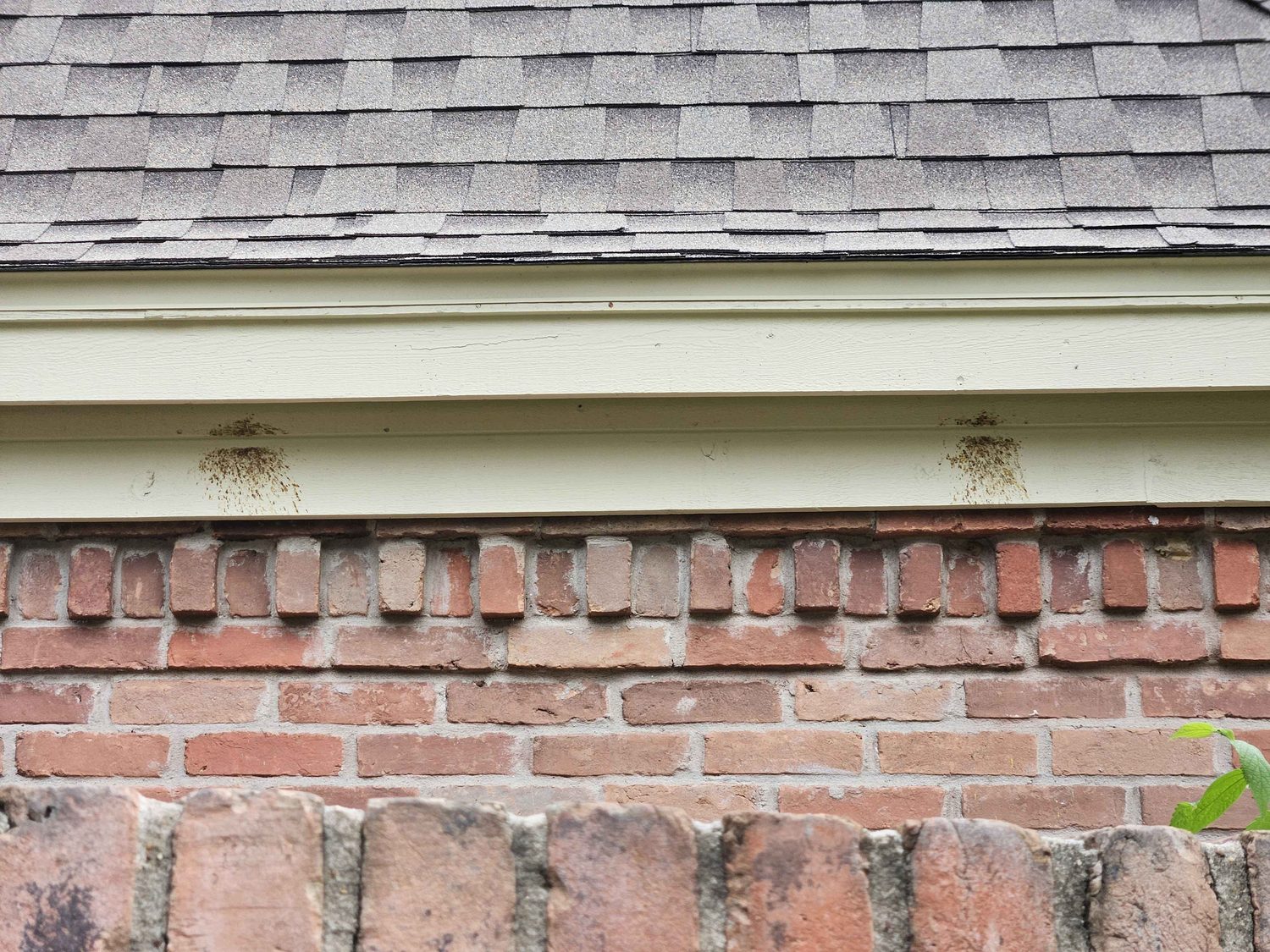
They also push out native birds. The Missouri Department of Conservation notes that house sparrows, along with European starlings, oust bluebirds, purple martins, tree swallows and woodpeckers from nest boxes and cavities.
What the law allows
House sparrows sit on the short list of birds the law does not protect. The U.S. Fish and Wildlife Service’s depredation permit FAQ names house sparrows among the nonnative species that are not protected under the Migratory Bird Treaty Act, and the species does not appear on the federal list of protected birds. Texas Parks and Wildlife’s protected wildlife page says English sparrows may be killed at any time and their nests and eggs destroyed.
The risk is misidentifying the bird. The house finch, a small brown native bird people often lump in with sparrows, is on the federal protected list. A house finch nest with eggs in it stays put until the young have left. Our guide to bats, birds and wildlife law in Texas explains the difference.
How sparrow control is done
Sparrows need smaller openings than pigeons, so sparrow work is mostly sealing. AgriLife’s exclusion advice is specific: screen or block every building opening larger than three-quarters of an inch, mount signs and AC units with no open space against the wall, and cover remaining crevices with bird mesh, netting or hardware cloth. For ledges and sills, the leaflet describes metal prongs, which it calls expensive but extremely effective.
On a job, our bird control service follows that line. The inspection identifies the species and finds each nest cavity and perch. Nests are cleared, then:
- sign cabinets, fixture gaps, vent openings and wall gaps get structural sealing;
- open dock structures and canopies get netting;
- ledges and sills where the birds perch get spikes or bird wire.
Commercial accounts get a written record of what was installed, plus monitoring and re-inspection visits. For vents and soffit openings on a house that need carpentry rather than mesh, see exclusion and repairs and our page on roofline and soffit gaps.
What does not hold up
AgriLife is skeptical of scaring sparrows. Its leaflet says sparrows adapt quickly to noisemakers and distress tapes, that most cities restrict noise-making devices, and that visual scares such as fake owls only work until the birds get used to them. Removing nests alone, without closing the cavity, means the pair simply rebuilds. That is why the opening gets sealed the same day the nest comes out.
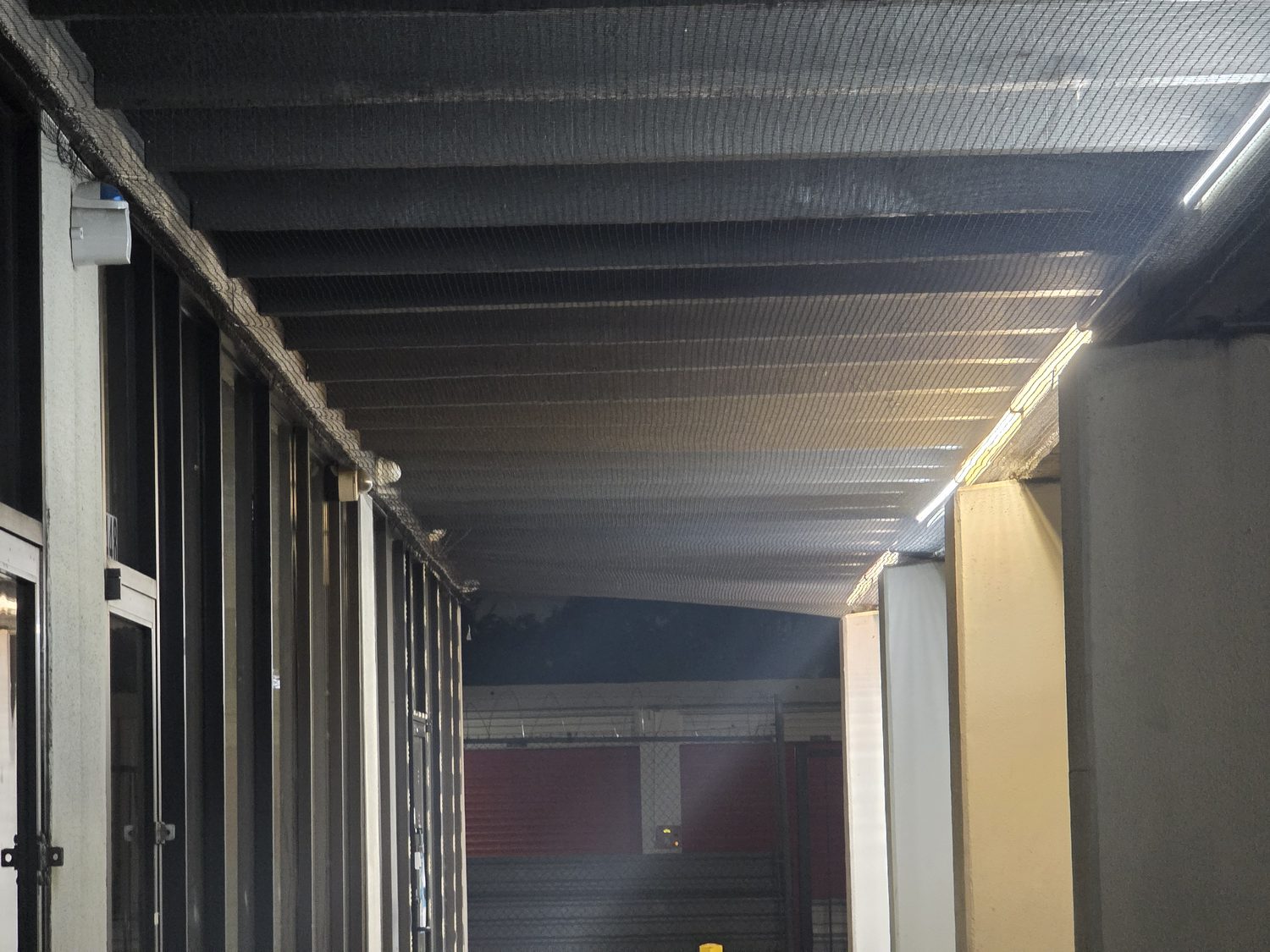
Around the building
- Keep dumpster lids shut and sweep up spilled feed or food at the dock.
- Replace broken vent flaps with sturdy covers.
- Use larger seed such as sunflower in feeders and keep seed off the ground; AgriLife notes sparrows prefer small seeds like millet.
- Trim dense shrubs next to the building, which AgriLife says makes nesting and roosting less attractive.
Related pages
The bird’s biology and legal status are on our house sparrow profile. For pigeons on the same building, see pigeon control, and for blackbirds roosting over the parking lot, see grackle control. Droppings under a sign or dock are covered on our bird droppings cleanup page. To book a free inspection of the nest sites, contact us.
Frequently asked questions
Are house sparrows protected?
No. The U.S. Fish and Wildlife Service says house sparrows are a nonnative species not protected under the Migratory Bird Treaty Act, and they do not appear on the federal list of protected birds. Texas Parks and Wildlife says English sparrows may be killed at any time and their nests and eggs destroyed.
Why do sparrows nest in my dryer vent?
House sparrows are cavity nesters that favor holes in buildings over natural ones. A vent hood with a missing or broken flap is a dry, sheltered cavity, and the bulky nest of grass, feathers and trash they pack into it can block the duct. A sturdy vent cover keeps them out.
Will a fake owl keep sparrows away from my storefront?
Only briefly. Texas A&M AgriLife's sparrow leaflet says decoy owls, rubber snakes and foil strips may deter sparrows for a short time but the birds eventually get used to them, and that no truly successful alarm call has been found for this species.
How many times a year do house sparrows nest?
Several. The Missouri Department of Conservation says house sparrows can raise up to four broods a year with up to eight eggs per clutch. A sign cabinet or light fixture left open after one nest is cleared will usually be reused the same season.
Bird Control in north Houston?
No long-term contracts, and service agreements are backed by our 100% Service Guarantee.
Because we are based in Spring, we can often come out the same or next day for urgent problems. Call before noon, Monday through Friday, for the best chance at next-day service.
Last updated