
Spider Control in Spring and North Houston
Most spiders around Spring homes are harmless hunters following the insects that gather at lights and eaves. The two worth real attention are recluse spiders and black widows, which hide in garages, closets and stored boxes. Control means clearing webs, treating the perimeter and entry points, catching spiders with glue boards, and cutting the insects they feed on.
Call 281-627-4810 Request a free inspection
Year-round protection plans from $70 Core · Premium · Legendary See the plans
Spiders: the job at a glance
| What it covers | House spiders, orb weavers, recluse spiders and black widows in and around homes and buildings in Harris and Montgomery counties |
|---|---|
| Included | Inspection inside and out, web sweeping, exterior treatment of foundations, eaves, lights, doors and windows, baseboard work and glue boards |
| Not included | Medical advice on bites, decluttering garages or attics, and repairs of any kind |
| How long it takes | Inspection and first treatment in one visit; spider work then runs on a quarterly schedule |
| Best timing | Spring, as insect activity picks up, and any time recluses or widows are found indoors |
| What it costs | Free inspection, then a written price; house size, eaves and garage clutter, and the species involved set it |
Most spiders are a symptom
A spider in the corner is usually there because something it eats is there too. That is the most useful thing to understand about spider work around north Houston. Spiders are predators. They set up where insects gather: under porch lights, along eaves above flower beds, in garage corners where crickets come in under the door. More insects means more spiders, and a house that draws a lot of bugs at night will draw spiders all year.
So spider control here is two jobs at once. We deal with the spiders and their webs, and we deal with the insect traffic that keeps them fed. Skip the second part and the first part has to be repeated.
What the climate does
Long warm seasons keep insect populations up for much of the year, and spiders follow. Texas A&M AgriLife’s Wizzie Brown notes in a brown recluse fact vs. fiction piece that recluses are active outdoors from spring through fall but can stay active year-round inside climate-controlled homes. An air-conditioned garage, closet or attic storage area in Spring or Tomball is exactly that kind of space.
In our experience, yards with mature trees and deep beds of ground cover see more orb weavers strung across the porch. Newer subdivisions with young landscaping still get plenty of spiders in the garage, where the door seal rarely meets the slab evenly.
The two spiders worth taking seriously
Recluse spiders. Texas A&M’s Urban Entomology program describes the brown recluse in its recluse profile as a quarter to half an inch in body length, orange-yellow to dark brown, with a violin-shaped mark on the back and six eyes arranged in three pairs. The violin can be faint, so the six eyes and the uniform color are better clues. The same page lists garages, firewood piles, cluttered storage, closets, the space under furniture and the gap behind baseboards as typical places to find them. Texas has more than one recluse, too. Texas A&M’s insect field guide notes that the Texas recluse is often mistaken for the brown recluse and may be the most common species in the state.
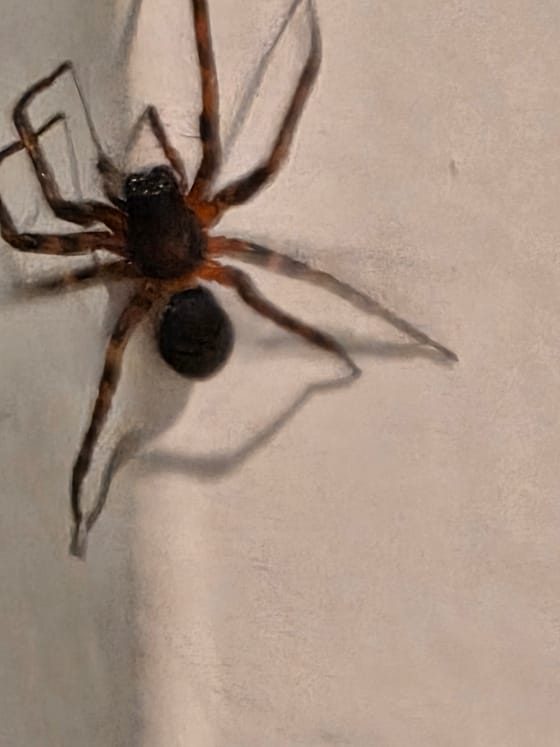
They are shy. Bites tend to happen when a spider gets pressed against skin, inside a shoe, a glove or a shirt pulled from a box in the closet. The AgriLife article is also blunt about the internet version of this spider: it states there has never been a confirmed death attributed to the brown recluse, and that many frightening wound photos are something else. Our page on brown recluse spiders covers inspections and what to do with stored items.
Black widows. Texas A&M’s black widow profile describes the female as typically jet black with reddish markings on the underside of the abdomen, living in protected spots outdoors or in structures open to the outdoors. Around homes that means garages, sheds, shrubbery, rain spouts, and gas and electric meters. The profile notes that bites usually happen when someone disturbs a hidden spider or its web, and that pain can become intense within one to three hours. Anyone bitten should get medical care. More on finding and handling them is on black widows in the garage.
The harmless ones you will see more often
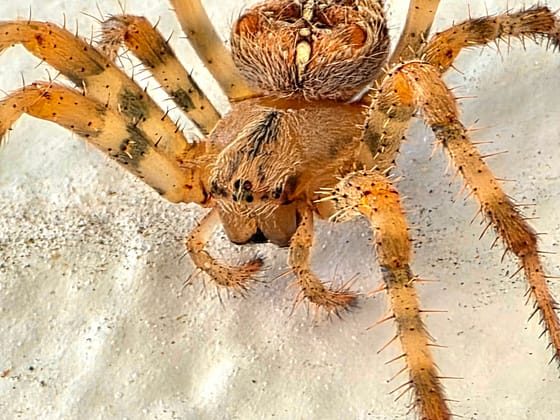
Orb weavers spin the big wheel-shaped webs across walkways and between shrubs in late summer and fall. Wolf spiders hunt on the ground and wander inside under doors. Jumping spiders sit on window frames and fences. Cellar spiders hang in loose, messy webs in garage and closet corners. None of these is a medical concern, and some people prefer to leave a few in the garden. Inside the house, most people do not, and that is a reasonable call.
How we handle a spider job
The steps below come from the company’s own description of the service.
- Inspect inside and out. We walk the interior and exterior to judge how heavy the activity is, what conditions are drawing spiders, and which other pests are present. If crickets, roaches or ants are what the spiders are eating, those may need their own treatment, and treating them the wrong way can make things worse.
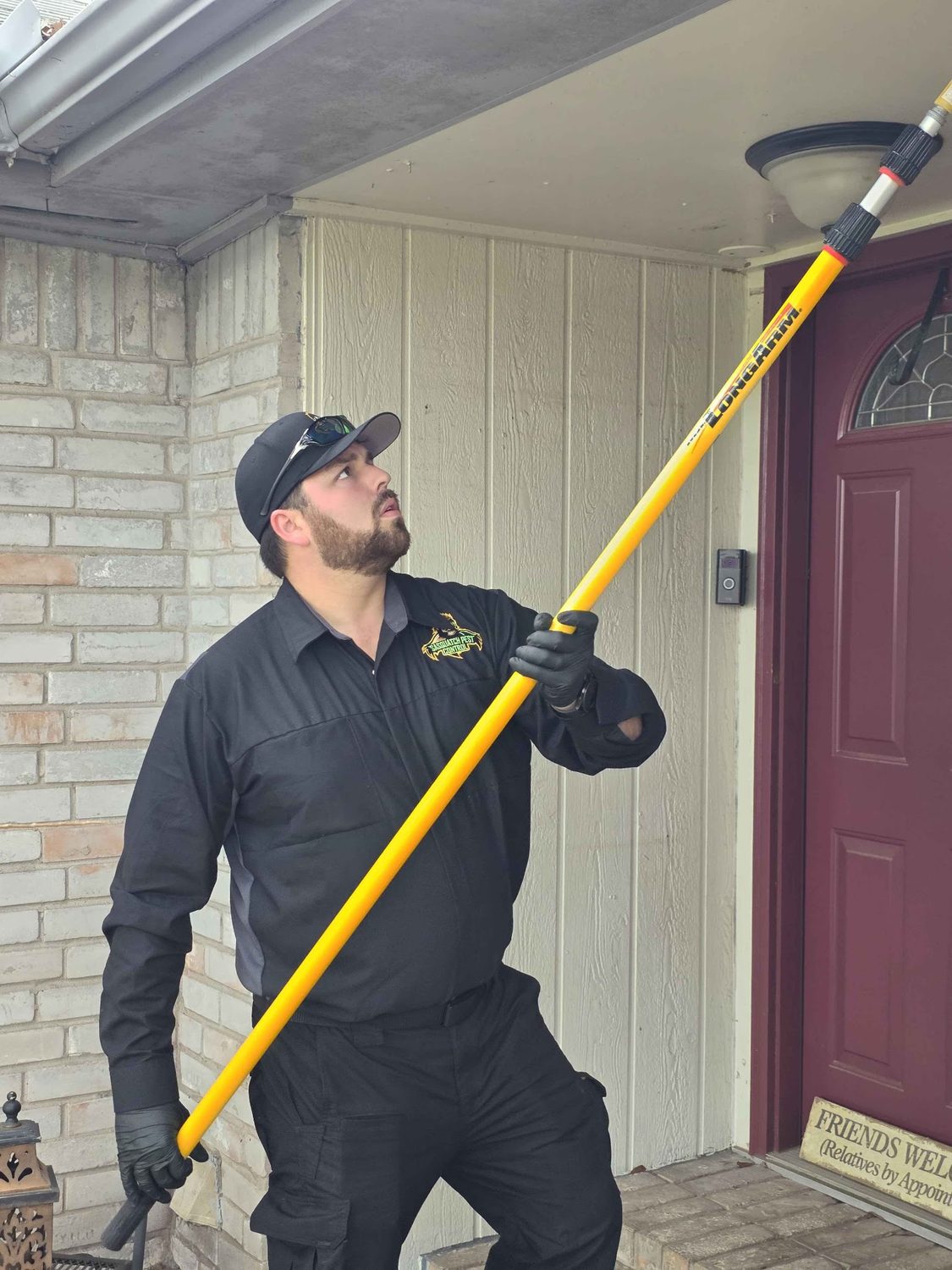
- Sweep the webs. Outside, webs and egg sacs come down from eaves, soffits, window frames, light fixtures and garage door tracks.
- Treat the exterior. We apply a repellent barrier treatment to the foundation, cracks and crevices, gutters, light fixtures, and around doors and windows, the routes spiders and their prey use.
- Treat the interior. Inside, baseboards are treated through the home, and glue boards go down in spots like the edges of garage doors to catch spiders coming in.
- Keep it on a schedule. Spider service runs on a quarterly program, with treatment between visits if activity returns. That is backed by our 100% Service Guarantee, with no long-term contract.
Why glue boards earn their place
Glue boards are low-tech, and they work for spiders because of how spiders move. The AgriLife recluse article explains that spiders and insects tend to travel along edges, so sticky traps placed against walls catch them passively. They are also a monitoring tool. A board in the garage that fills with recluses tells us something very different from one that catches a couple of wolf spiders, and it tells you whether the work is holding.
If someone is bitten
We are a pest control company, not a clinic, so the advice here is short: see a doctor. What we can add is what the extension literature says to expect, because it helps people describe a bite accurately.
Texas A&M’s recluse profile describes a reaction that is often delayed, with a stinging sensation or intense pain appearing a day or more after the bite, sometimes with fever and weakness, and tissue damage that can take six to eight weeks to heal and leave a scar. The black widow profile describes almost the opposite pattern: little to feel at first, then pain that builds over one to three hours, with possible cramps, tremors, nausea and trouble breathing.
If you can trap the spider under a jar without touching it, or photograph it, do. A clear picture settles a lot of guesswork for the doctor, and for us. If there was no spider seen at all, keep an open mind. Many wounds blamed on spiders turn out to be infections or other insects.
What the first visit looks like
Plan on the technician spending more time looking than spraying the first time out. We start with what you have seen and where, then walk the garage, utility closets, attic access, storage areas and the outside of the house. In the garage we look along the base of the walls, behind shelving and around the door tracks. Outside, we check eaves, window frames, the meter and hose bib area, shrubs touching the siding, and woodpiles. If we find recluses, we will talk through which stored items need checking, because no treatment reaches the inside of a closed cardboard box.
It helps to clear a path along the garage walls before we arrive and to leave attic access open. If you have pets, tell us where they spend time, so glue boards go where curious noses cannot reach them.
Signs and what they mean
| What you see | What it usually means |
|---|---|
| Dense webs around porch lights and eaves | Heavy night-flying insect traffic around the house |
| Small, irregular white or gray webs in closets and storage | Possible recluse activity; worth an inspection |
| Messy, tangled webs low in garages, meters or shrubs | Common widow habitat |
| Wheel-shaped webs across walkways in fall | Orb weavers; a nuisance, not a hazard |
| Spiders on glue boards near the garage door | The garage door seal is the main way in |
| Shed spider skins in boxes or under furniture | An established population in an undisturbed spot |
What waiting costs
With harmless spiders, waiting mostly costs a cleaner-looking house. With recluses, it is different. A recluse population in a closet or garage grows quietly, because nobody is disturbing the boxes. The longer they settle in, the more stored items need to be checked, and the more chances someone has of reaching into the wrong box. Widows around meters and in the garage are a specific risk for whoever reads the meter or grabs a tool from the shelf without looking.
Homes and commercial buildings
Residential spider work centers on the garage, the eaves and the stored items people handle. Commercial buildings shift the focus. Warehouses and storage facilities have long, dark stretches of shelving and dock doors that stay open. Retail and office buildings with bright signage pull in insects every night, and the webs follow. Those properties run through our commercial program, usually with exterior web removal and perimeter work on a set schedule.
What you can do yourself
- Keep stored items in sealed plastic bins instead of cardboard boxes, and get boxes off the floor.
- Shake out shoes, gloves and clothes that have been stored. AgriLife suggests running stored clothing through a hot dryer and wearing gloves when handling stored items.
- Switch porch and garage lights to yellow bulbs, which draw fewer insects.
- Replace worn door sweeps and the rubber seal at the bottom of the garage door.
- Keep firewood, lumber and rock piles away from the house walls.
- Vacuum webs and egg sacs indoors and empty the canister outside.
- Pull beds away from walls in rooms where recluses have been found, and keep bedding off the floor.
Problem pages under spider control
Related services
Spiders eat what the house attracts, so the insects matter. Crickets and other wanderers under the garage door are covered on occasional invaders. Roaches are a common spider food source; see cockroach control. Scorpions turn up in the same garages and stored boxes as recluses, and scorpion control explains that work.
For a broader look at the species around the state, read spiders in Texas, and if a large, fast hunter ran across the floor, are wolf spiders dangerous? answers the question most people ask next.
We handle spider service in Spring, Cypress, Porter, New Caney, Klein and across Harris County and Montgomery County. Arrange a free inspection on the contact page.
Frequently asked questions
Is the spider in my garage dangerous?
Probably not, but two kinds are worth knowing. Recluse spiders are tan to brown with six eyes and a violin shape that is often faint. Female black widows are shiny black with red on the underside. Do not handle either one. Most other spiders around Texas homes are harmless to people.
I have a wound my friends say is a spider bite. Is it?
It may not be. A Texas A&M entomologist has pointed out that antibiotic-resistant staph infections can look like spider bites. A wound that spreads, darkens or comes with fever needs a doctor whatever caused it. If a spider was caught or seen, bring it along or photograph it.
Why do I keep getting spiders even after you spray?
Spiders follow food. If lights, landscape beds and gaps under doors keep drawing insects, new spiders keep arriving. The quarterly service handles the spiders and many of the insects they eat, but switching porch lights to yellow bulbs and sealing door sweeps is what shrinks the supply.
What happens between quarterly visits if spiders come back?
Our program includes treating between scheduled services when it is needed. Call us, describe where the activity is, and we will set a time to come back. The terms are spelled out on our 100% Service Guarantee page.
Do you treat spiders at businesses?
Yes. Warehouses, storage units, offices and storefronts with big lit signs tend to collect webs along eaves and dock doors. Those properties are handled through our commercial program, with exterior web removal and treatment on a schedule that suits the building.
Our largest service areas
From the blog
Spider Control in north Houston?
No long-term contracts, and service agreements are backed by our 100% Service Guarantee.
Because we are based in Spring, we can often come out the same or next day for urgent problems. Call before noon, Monday through Friday, for the best chance at next-day service.
Last updated