
Flea Control in Spring and North Houston
Fleas on the dog are the small part of the problem. Most of the population lives as eggs, larvae and cocoons in carpet, furniture and shaded yard spots. We treat baseboards, apply a growth regulator to carpets and upholstery so new fleas cannot develop, and treat the outside, while your veterinarian handles the pets.
Call 281-627-4810 Request a free inspection
Year-round protection plans from $70 Core · Premium · Legendary See the plans

Fleas: the job at a glance
| What it covers | Cat fleas, the species behind nearly every household flea problem in Texas, inside homes and in yards across Harris and Montgomery counties |
|---|---|
| Included | Inspection with a flea sample, an emailed prep list, baseboard treatment, growth regulator on carpets and furniture, and an exterior treatment |
| Not included | Treating pets themselves, which belongs to your veterinarian, and dealing with wildlife living under the house |
| How long it takes | Treatment is one visit; expect some newly hatched fleas for a short stretch afterward as cocoons open |
| Best timing | Spring, before adult numbers build, or as soon as bites and scratching start |
| What it costs | Free inspection, then a written price; home size, yard size and how many pets live there set it |
Why the fleas keep coming back
Almost everyone who calls about fleas has already treated the pet, often more than once. The fleas come back anyway, and the reason is that the adults on the animal are a small slice of the whole population. Behind every flea you see on the dog, there are eggs, larvae and cocoons scattered through the carpet, the couch, the dog bed and the dirt under the deck.
Texas A&M AgriLife’s Controlling Fleas guidance lays out how quickly that builds. A female starts laying eggs within about two days of her first blood meal and averages 27 eggs a day. The eggs fall off the pet wherever it rests. Larvae develop for 5 to 11 days, feeding on dried flea droppings, then spin cocoons. The adult inside can stay in that cocoon for up to five months and emerge within seconds when an animal walks by.
That last detail explains the common complaint that the house “had fleas again” after a family came back from a long trip. The cocoons were waiting.
What north Houston gives fleas
Mild winters mean fleas around here do not get the cold-weather reset that northern states get. Humidity matters too. The same AgriLife guidance says relative humidity under 50 percent, or soil temperatures over 95 degrees, kills flea larvae, and that moist, shaded spots near pet resting areas are where fleas develop. A sunny, open lawn in August is rough on larvae. The shady strip along a fence, the dirt under a raised deck, a dog run beneath a live oak and the crawl space under a pier-and-beam house are not.
Wildlife is the other half of the local picture. Opossums, raccoons, stray cats and rats all carry cat fleas, and all of them are common across Harris and Montgomery counties.
What you are looking at
The cat flea, Ctenocephalides felis, causes most flea problems in Texas, according to AgriLife, and it feeds on dogs, cats and wildlife alike. Adults are about an eighth of an inch long or less, brownish-black, flattened from side to side and wingless. They jump.
Things that get confused with fleas:
- Flea dirt vs. dirt. Brush a pet over a white paper towel and dampen the specks. Flea droppings turn reddish-brown, because they are dried blood.
- Bed bugs. Bed bugs do not jump and stay near where people sleep. Bites in a line on the arms or shoulders point there; see bed bug control.
- Ticks. Ticks crawl rather than jump and attach for long periods. Our tick control page covers yard work for those.
- Springtails. Tiny jumpers around damp potting soil, drains and slab edges. They do not bite.
Where fleas build up in a typical house
Fleas are not spread evenly. They concentrate where the pet spends its downtime, because that is where eggs drop and where larvae find the droppings they eat. When we inspect, these are the places that usually turn up the most:
- The dog bed, the cat tree and the corner of the couch a pet claims.
- Carpet along the wall beside the bed, if the pet sleeps on the floor there.
- Under furniture where the vacuum rarely reaches, and the gap between a sofa cushion and its frame.
- Car seats and cargo areas, if the dog rides along.
- Outside: under the deck, along the shaded side of the house, the dog’s dig spots, and the strip under shrubs where a cat naps.
Hard floors help, but they do not end a flea problem. Larvae settle into the gaps between boards and tiles and under the edges of area rugs.
Moving into a house that already has fleas
A surprising number of flea calls come from people who just moved. The previous owner’s pets left, the house sat empty, and the cocoons stayed. The new family walks in, the movers carry furniture through every room, and a wave of adults hatches all at once. AgriLife’s note that adults can sit in cocoons for up to five months and emerge in seconds explains it. If you are moving into a home where pets lived, and especially one that has been empty for a while, having the carpets vacuumed and the house treated before the furniture goes in is the easier order of operations.
Fleas and disease in Texas
Flea control is not only about itching. Texas DSHS explains on its flea-borne typhus page that Texas reports more flea-borne typhus than any other state, and that rats, opossums and domestic cats and their fleas are the main reservoirs. The agency notes that while South Texas has historically carried most of the cases, new areas have emerged in the Greater Houston area, among others. Infection usually happens when infected flea droppings get scratched into a bite or a break in the skin.
DSHS’s prevention advice lines up with flea control: clear yard debris and brush, keep pet food indoors at night, and control fleas on pets before starting rodent control, so fleas leaving dead rodents do not move to people or pets. If anyone in the house develops fever, headache, body aches and a rash after a flea problem, tell the doctor about the fleas.
How we handle a flea job
The steps below follow the company’s own description of the service.
- Inspect and take a sample. We confirm the problem is fleas by collecting a sample, look at where pets sleep and spend time, and check the yard for the shaded, moist spots where larvae develop.
- Go over the prep list. We walk through prep with you and email the list before treatment. This step matters more for fleas than for most pests: skipping the prep can cause the treatment to fail.
- Treat the interior. Baseboards are treated throughout the home. Then all carpeted areas, couches and chairs are treated with an insect growth regulator, which keeps eggs and larvae from developing into breeding adults.
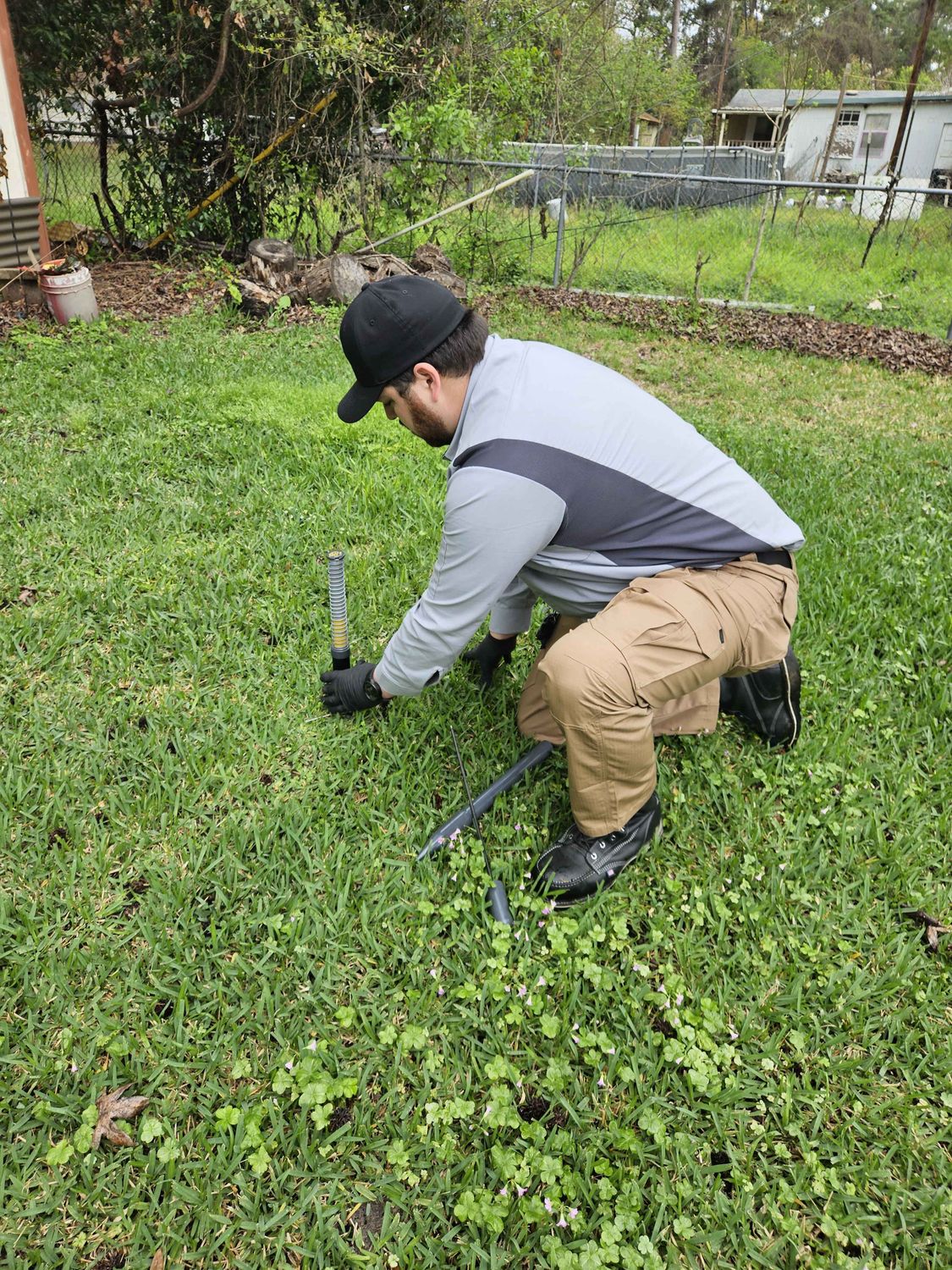
- Treat the exterior. Outside, we apply a barrier treatment around the house to keep fleas from moving in from the yard, with attention to the shaded resting spots pets and wildlife use.
- Plan for the warm months. Pet medication alone leaves the yard as a source. During the warmer months, we recommend two or three flea treatments to go along with the preventive your vet prescribes.
There is no long-term contract, and every visit is covered by our 100% Service Guarantee.
Getting the house ready
Your emailed list is the version to follow, but plan on these:
- Vacuum every carpet, rug and upholstered seat thoroughly the day of treatment, including under furniture and along baseboards. AgriLife notes vacuuming alone removes a large share of flea eggs. Empty the canister or toss the bag outside.
- Wash pet bedding, throw blankets and any fabric pets sleep on in hot water.
- Pick up toys, shoes and clutter from the floors so carpets can be treated edge to edge.
- Get pets treated by your veterinarian on the same schedule, so the animals and the house are dealt with together.
- Plan to keep people and pets off treated areas until they dry.
After treatment
Keep vacuuming. It does two useful things: it removes fleas, eggs and larvae, and the movement and disturbance mimic a passing animal, which is the cue AgriLife says brings adults out of their cocoons onto the treated carpet. Some biting for a short time afterward is normal. Steady or rising numbers after a couple of weeks are not, and you should call us.
Signs and what they mean
| What you notice | What it usually means |
|---|---|
| Pets scratching, chewing or licking their back and tail | Adult fleas on the animal |
| Specks on the pet bed that turn red when damp | Flea droppings, so larvae are feeding nearby |
| Bites around ankles and lower legs | Fleas jumping from carpet or lawn |
| Fleas on white socks after crossing a room | Active adults hatching in that room |
| Fleas in a home with no pets | Wildlife under the house or in the attic, or cocoons left behind |
| Problems that start after a stray cat moved under the deck | A new outdoor source the yard treatment must cover |
What waiting costs
With 27 eggs a day from each female, a flea problem that is a nuisance in May is a houseful by July. Pets suffer most: heavy infestations cause skin irritation and, in small or young animals, blood loss. Fleas can also carry tapeworms to pets. Add flea-borne typhus to that list in Greater Houston, and waiting has a real cost.
Homes, not businesses
This service is written for houses and yards, which is where flea problems almost always are. If fleas are turning up at a property you manage, such as a rental between tenants, a boarding facility or an office where someone brought in a pet, start with our commercial page and we will scope the work for the building.
Prevention you can handle
- Keep pets on a year-round preventive from your veterinarian.
- Vacuum often where pets rest, and wash their bedding regularly.
- Keep the lawn mowed and let sunlight reach the ground; thin dense shrubs where pets lie in the shade.
- Close off the space under decks and porches so opossums and stray cats cannot move in.
- Do not leave pet food outside overnight. It feeds the wildlife that brings fleas.
- Move in quickly when you see the first fleas, rather than after a month.
Where people go next
Fleas often arrive with animals. If an opossum or raccoon is living under the house, see opossum control or raccoon control, and if rats are the source, rodent control. Ticks share the same shaded yard spots; see tick control. Bites in bed with no pets nearby are a reason to read bed bug control.
We treat fleas in Spring, Tomball, Magnolia, Cypress, The Woodlands and the rest of Harris County and Montgomery County. Start with a free inspection on the contact page.
Frequently asked questions
My pets are on flea medicine. Why do I still need the house treated?
Pet treatments kill fleas that get on the animal, but they do not touch the eggs, larvae and cocoons already in the carpet and yard. Those keep producing new adults for weeks. Treating the house and the shaded outdoor spots alongside the pet medicine closes the loop from both ends.
Why am I still seeing fleas a week after treatment?
Flea cocoons are the stage treatments struggle to reach. Texas A&M notes adults can wait inside cocoons for months and emerge within seconds when an animal passes. Fleas hatching after treatment land on treated surfaces, so keep vacuuming, which helps them emerge and pulls them out.
Can I have fleas if I do not own a pet?
Yes. Opossums, stray cats, raccoons and rats carry cat fleas, and a crawl space or an empty house can hold cocoons from a previous owner's pets for months. When fleas show up in a pet-free home, we look for wildlife under the house or in the attic.
How soon can my family and pets go back into the yard?
Once the treated areas have dried. The technician will tell you on the day, because drying time depends on the weather and where the product went. Keep children and pets off treated areas until then, and follow any other instructions on your prep list.
Can fleas make people sick here?
They can. Texas DSHS lists cat fleas and rat fleas as the main carriers of flea-borne typhus and says new areas of the disease have appeared around Greater Houston. Fever, headache and rash after flea exposure are worth mentioning to a doctor.
Our largest service areas
Guides
From the blog
Flea Control in north Houston?
No long-term contracts, and service agreements are backed by our 100% Service Guarantee.
Because we are based in Spring, we can often come out the same or next day for urgent problems. Call before noon, Monday through Friday, for the best chance at next-day service.
Last updated