
Opossum Removal and Exclusion in Spring and North Houston
Opossums in north Houston usually den under a deck, shed, porch or the edge of a slab, and sometimes in a garage or attic. We find the den, the entry and any young, remove the animals, seal or screen the space so it cannot be reused, and point out the food sources keeping opossums on the property.
Call 281-627-4810 Request a free inspection
Year-round protection plans from $70 Core · Premium · Legendary See the plans
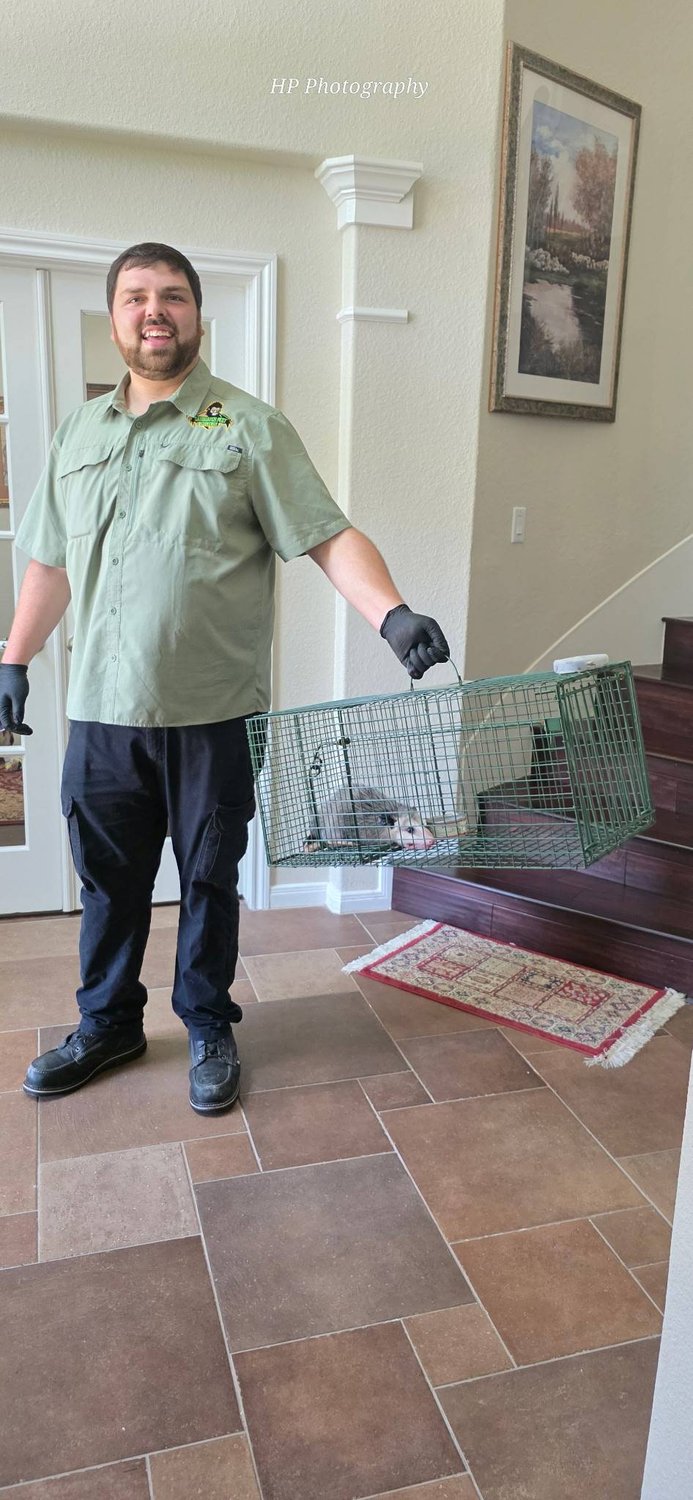
Opossums: the job at a glance
| What it covers | Opossums under decks, sheds, porches and slab edges, and in garages, crawl areas and attics, in Harris and Montgomery counties |
|---|---|
| Included | Inspection for den sites, entry and young; removal; sealing or screening the entry; habitat advice; addressing droppings where needed |
| Not included | Rebuilding a deck or shed, or repairing insulation and wiring the animal already damaged |
| How long it takes | Set by what the inspection finds: how many openings, whether young are present, and how large an area needs screening |
| Best timing | Any time of year; Texas A&M notes opossum litters are born year-round, so young are always a possibility |
| What it costs | Free inspection, then a written price; the deck, shed or slab area to close off and the mesh needed set it |
Why opossums settle in north Houston yards
The Virginia opossum is the only marsupial in North America, and it does well in the creek-and-greenbelt neighborhoods around Spring, Cypress and Tomball. Texas A&M AgriLife’s leaflet on controlling opossum damage says opossums are most commonly found around streams and wetland areas, and that in urban areas they seek shelter in attics, garages, chimneys, under houses, or anywhere else that offers protection.
That last part is the whole story of an opossum call. They do not dig much and they do not chew their way in. They take what is already there: the open side of a low deck, a gap under a storage shed, the void under a porch slab where fill has washed out, a garage door that stays cracked at night, a torn foundation vent on an older pier-and-beam section.
They are rarely seen, because they are out at night. AgriLife notes that they are very common in towns but nocturnal, so the first sign is usually a smell, a dog going frantic at the deck, or an animal frozen in the headlights by the trash cans.
What you are actually looking at
An adult opossum weighs four to fifteen pounds and runs two to nearly three feet long, tail included, according to AgriLife. It has a pointed white face, round hairless ears, short legs and a bare, rat-like tail. Color runs from nearly black to light gray.
The lookalikes that come up on calls:
- A very large rat. A young opossum is sometimes taken for one. Opossums have five-toed, hand-like feet and a much bigger head. Rat problems are on the rodent control page.
- A raccoon. Raccoons are stockier, with a masked face and ringed, furred tail, and they tear into rooflines. Raccoon work is under raccoon removal.
- An armadillo. Also active at night and digging around foundations, but armored and almost always a lawn and bed problem rather than a denning one.
Tracks help too. Each foot leaves five spread toes, which is why people say opossum prints in mud or dust look like small handprints.
How we handle an opossum job
Our process for opossums starts with a free inspection and comes with no long-term contract.
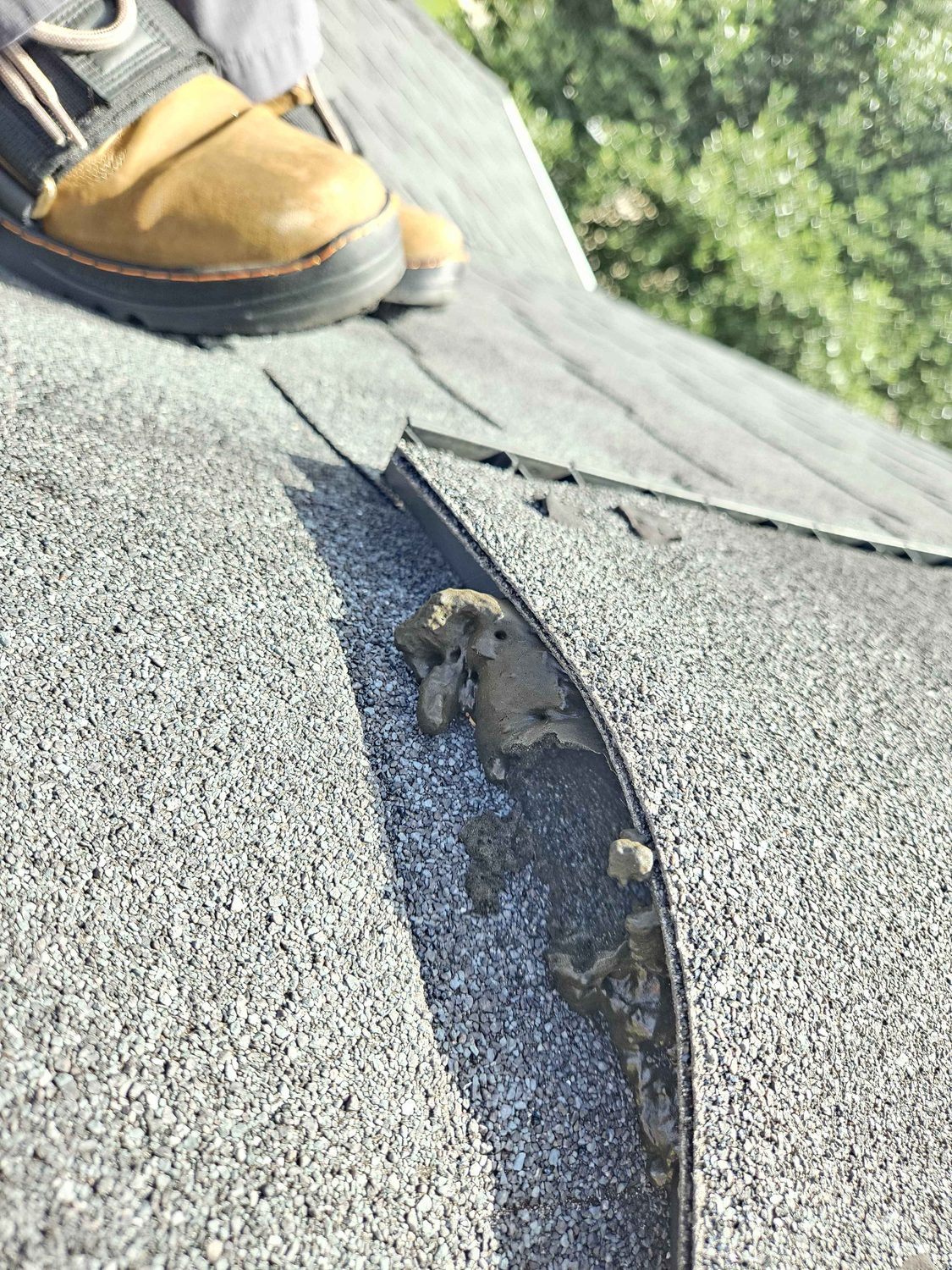
- Inspection. We find the den sites and the way in, look for signs of young, and identify the attractants drawing opossums to the property: pet food, open trash, fallen fruit, a compost pile, a bird feeder.
- A plan for the space. The removal and exclusion plan is built around the property and any wildlife regulations that apply.
- Removal. We remove the animal, and any young, from the space it was using. Opossums we catch are relocated, following the state rules covered further down this page.
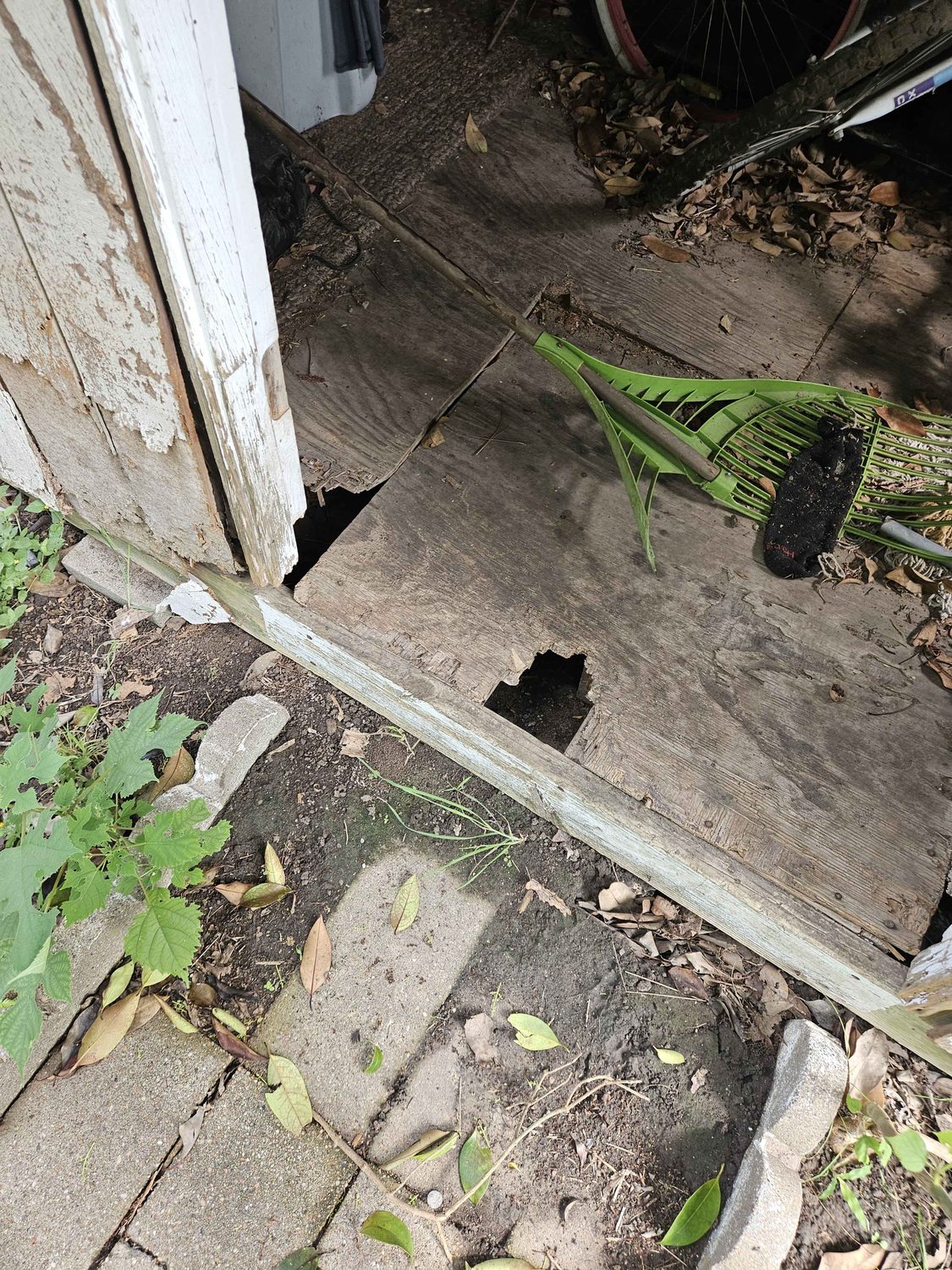
- Exclusion. The openings it used are sealed so opossums cannot return. Under decks, sheds and porches this usually means screening the open sides, set into the ground so the gap cannot be pushed under.
- Cleanup and prevention. We address droppings and damage where needed, and go over the habitat changes that make the yard less attractive.
If the den was inside the house, in a garage wall or an attic, the entry repair may fall under exclusion and repairs.
Closing off a deck, shed or porch
Most opossum exclusion is not roof work. It is closing the open space under something built low to the ground, and the details matter because an opossum will push, squeeze and dig at a loose edge.
- Material. Galvanized wire mesh holds up to Gulf Coast humidity and lets air through, which matters under a wood deck. Lattice alone does not stop an opossum; the gaps are too wide and the slats snap.
- The footing. The mesh is set into the soil and turned outward along the bottom, so an animal digging at the edge meets wire instead of open ground.
- The attachment. It is fastened to the framing or the slab edge, not tucked behind a skirt board where it can be shoved aside.
- The last opening. The final section is closed only once the space is confirmed empty, so no animal is sealed inside.
Sheds on blocks, playhouses, hot tub surrounds and AC pads get the same treatment. A gap of a few inches under a shed floor is all an adult needs, so the low, easy-to-miss edges get as much attention as the obvious holes. On older homes with a pier-and-beam addition, the crawlspace vents and access door are part of the list as well.
When the opossum is inside the house
Less often, the den is in the structure itself. Garages are the usual case: a door left up overnight, a pet door into the garage, or a gap at the bottom corner of a worn door seal. Once in, opossums settle behind stored boxes, under a workbench or inside the space above a garage ceiling. Attics happen too, usually by way of a climbable tree or trellis and a torn soffit or vent.
Inside the house, the job leans harder on finding every opening, because pushing an opossum out of one corner of a garage only works if it cannot come back through another. Damaged insulation over a garage is replaced as attic insulation work if it needs it.
Young opossums change the plan
Opossum reproduction is the reason the inspection looks so hard for young. According to AgriLife, a female averages seven or eight young and can have up to thirteen, they are born about 13 days after mating, and they then develop in her pouch for seven to eight weeks. She can have two litters a year, and they can be born at any time of year. Weaning comes at about four months.
What that means in practice: there is no season when you can be sure an opossum under your deck is alone. Sealing a den with half-grown young still inside produces exactly the smell problem you were trying to avoid, which is why the opening is closed only after the space is confirmed empty.
What Texas says about opossums
Texas Parks and Wildlife classifies the opossum as a fur-bearing animal on its page of protected wildlife species, and a license or permit is needed to take, trap, possess or sell one. AgriLife’s leaflet adds that homeowners who want to trap and relocate an opossum should notify their local Texas Parks and Wildlife representatives first. In short, moving an opossum is not a do-it-yourself errand, and dropping one off at a nearby park is not a legal shortcut.
Does the city handle opossum removal in Houston?
Usually not. The City of Houston’s animal agency, BARC, rates opossums as low risk for rabies and does not take service requests for common wild animals living outside a home’s living areas, such as under a deck or in a garage. Removing and excluding a denning opossum is work for a licensed private company.
BARC’s wild animals page gives the reason opossums sit low on its rabies list: their unusually low body temperature. That matches what the inspection usually finds, which is an animal that hisses and drools but mostly wants to be left alone in a dry hole. It is also why a drooling opossum under the porch is not, by itself, an emergency for the city.
There are exceptions. BARC’s page on wild animals on private property says it will respond when a wild animal is inside a living room or bedroom, or when someone may have been exposed to rabies. For an opossum behind the water heater in the garage or under the back steps, the city points residents to a licensed pest control company. BARC also warns people not to trap and relocate wild animals unless they are authorized and licensed by the State of Texas. Its jurisdiction is the city itself, so a home in unincorporated Spring or Klein is outside that policy.
Texas A&M AgriLife’s leaflet on controlling opossum damage recommends screening attic and foundation vents so opossums cannot take up residence, which is the part of the job that keeps the next one out. Our Virginia opossum profile covers the animal’s habits, and flea control picks up where an opossum has left fleas behind.
Signs, and what each one means
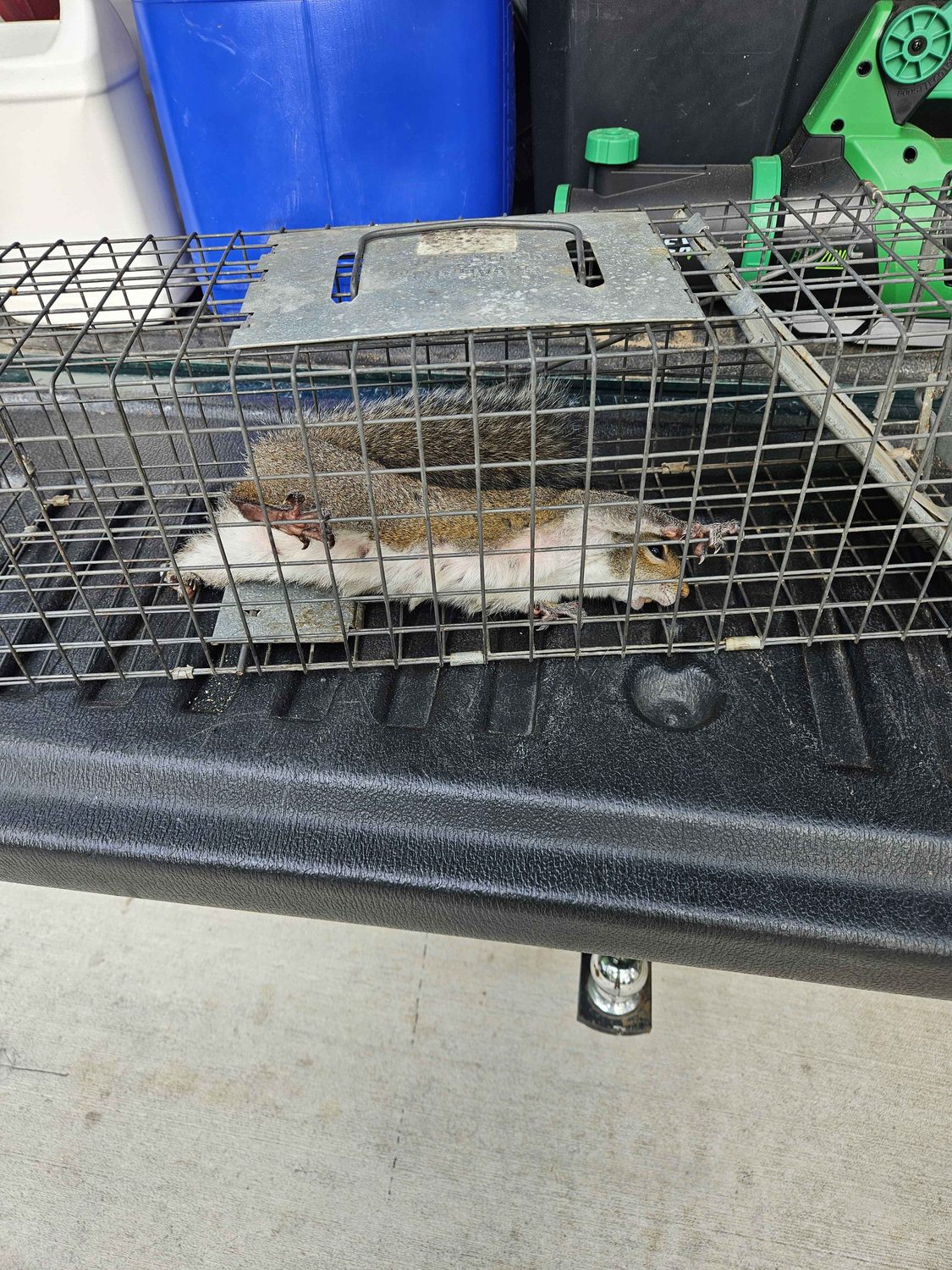
- A musky, sour smell near a deck or under the house. An animal is denning there now.
- Trash knocked over and pet food gone overnight. Nightly foraging; the food source is what keeps the animal around.
- Shuffling, hissing or clicking under the floor or in a garage wall. An occupied den close to living space.
- Droppings along a fence, deck edge or garage floor. Regular travel. Clean them the way you would rodent droppings, wet and gloved, never swept dry.
- Loose soil or a bare path at the edge of a deck skirt. The doorway.
- Torn foundation vent screen or insulation pulled down in a crawl space. A den inside the structure rather than beside it.
What waiting costs
Opossums are mild-tempered, but living with one under the house still has costs. In crawl areas and attics they flatten and soil insulation and tear vent screens. Under a deck or porch the droppings and nest material build up where kids and pets spend time.
The flea problem is the one to take seriously. Texas DSHS’s murine typhus fact sheet says that rats and their fleas are the natural reservoir for the disease and that other animals, such as opossums and domestic cats, may also be involved in spreading it. AgriLife’s opossum leaflet makes the same point and tells pet owners to be diligent about flea control where opossums are common. If fleas have already reached the house, flea control is the next call.
On rabies, the picture is calmer than people assume. AgriLife describes opossums as very resistant to the disease, and Texas DSHS’s 2024 animal rabies report lists the high-risk animals under Texas law as bats, skunks, foxes, raccoons and coyotes. Opossums are not on that list. Any bite from a wild animal still deserves a call to your doctor.
Pets, and the pet door
A lot of opossum calls start with a pet. The dog finds the opossum under the deck at two in the morning, or the cat food on the back porch keeps an animal coming back every night. Pet doors are the other common thread: an opossum that finds cat food inside the laundry room through an unlocked flap will come back for it. If you have a pet door, lock it at night until the animal is dealt with, and move feeding indoors. Opossums rarely pick fights, but a dog that corners one can get bitten, and the fleas travel either way. If an opossum is frozen in the yard, give it room, bring the dog inside and let it move off on its own once the yard goes quiet, rather than prodding it along.
Homes and commercial properties
At a house, opossum work is usually one den and a fix to the space under a deck, shed or porch. On commercial sites the draw is food at scale: restaurant grease bins, dumpster corrals with a gap at the bottom of the gate, and loading docks with pallets stacked against the wall. Apartment communities see opossums under ground-floor stair landings and in storage closets. For a business, the work is organized through our commercial program.
Prevention you can do yourself
Most of this comes straight from AgriLife and DSHS, and it costs little:
- Keep lids on trash cans, ideally locking ones, and store them in the garage.
- Feed pets in the morning and clean up leftovers right away; bring water bowls in at night.
- Pick up fallen fruit and pecans, and keep compost in a closed bin.
- Put bird feeders on tall metal poles away from trees.
- Clear brush and trash piles, keep the grass mowed and stack firewood off the ground.
- Screen attic and foundation vents, and skirt the open sides of decks and sheds with wire mesh buried a few inches into the soil.
- Scrub the grill after use; a greasy drip pan draws opossums every night.
Where people go next
If what is under the house turns out to be rats rather than an opossum, head to rodent control. If the animal is on the roof instead, see raccoon removal or squirrel removal. Opossum work is covered by our 100% Service Guarantee, with the terms on that page. We handle opossum calls in Cypress, Tomball, Champions and New Caney, and across both Harris and Montgomery counties. To book the free inspection, contact us.
Frequently asked questions
Is the opossum under my deck rabid if it is drooling?
Probably not. Texas A&M AgriLife notes that opossums salivate heavily, so people assume they are rabid, but the species appears to be very resistant to rabies. Leave it alone anyway; a cornered opossum will bite.
Aren't opossums good to have around because they eat ticks?
They do eat insects, snails and small rodents, and out in the greenbelt they are welcome. The trouble starts when one dens under your house, brings fleas onto the property and fouls the space. Exclusion lets it keep foraging somewhere other than under your floor.
Will the opossum just move on by itself?
Opossums do wander, but if the food and the den stay available, another one usually takes the spot. Lasting control comes from removing the attractants and closing the opening, not from waiting for one animal to leave.
My dog keeps getting fleas. Could the opossum be the reason?
It can be. Texas DSHS lists opossums among the animals involved in spreading murine typhus through their fleas, and recommends regular flea control on pets. An opossum denning under a deck the dog lies on is a common source.
Can you use a repellent instead of removing it?
Texas A&M AgriLife says there are no toxicants, fumigants or repellents registered for opossum control. The reliable route is removing the animal and closing the space, plus taking away the pet food and trash that brought it in.
Who do I call if an opossum gets inside my Houston home?
If it is loose in a bedroom or living room, BARC says it responds to wild animals inside those living areas of a home. If it is in the garage, attic or under the house, the city refers residents to a licensed pest control company, since those spaces fall outside what BARC handles.
Our largest service areas
Guides
Opossum Removal & Exclusion in north Houston?
No long-term contracts, and service agreements are backed by our 100% Service Guarantee.
Because we are based in Spring, we can often come out the same or next day for urgent problems. Call before noon, Monday through Friday, for the best chance at next-day service.
Last updated