
Attic Insulation Removal and Replacement in Spring and North Houston
When rats, squirrels or raccoons have lived in an attic, the insulation is soiled, matted and no longer doing its job. We inspect it for free, remove and dispose of what is contaminated, close the openings the animals used, clean the space, then blow in TAP, a borate-treated cellulose registered with the EPA as an insect control product.
Call 281-627-4810 Request a free inspection
Year-round protection plans from $70 Core · Premium · Legendary See the plans

Insulation: the job at a glance
| What it covers | Attic insulation in homes and commercial buildings across Harris and Montgomery counties, usually after rodents or wildlife have nested in it |
|---|---|
| Included | Free inspection, removal and disposal of soiled insulation, sealing the entry points, cleanup of the space, and new TAP insulation |
| Not included | Repairing wiring, ductwork, drywall or framing that animals already damaged; the guarantee terms exclude past pest damage |
| How long it takes | Set by attic size and how much has to come out; a top-up over sound insulation is a shorter job than a full tear-out |
| Best timing | After the animals are out and the openings are closed, so new insulation is not soiled by the same visitors |
| What it costs | Free inspection, then a written price before work starts; attic size and the amount of removal set it |
Why a pest company does insulation work
Most attic insulation calls start as something else. A family hears scratching over the bedroom at night, or a raccoon has torn open the eave over the garage, and by the time the animals are dealt with, the attic floor looks nothing like it did at closing. The insulation is tunneled, packed flat in runways, stained in the corners and smells. That is the point at which this service comes in.
Marcus Scruggs, who owns and runs Sasquatch Pest Control, describes the job in four parts: a free inspection of the insulation and any pest activity, removal and disposal of the soiled or damaged material, exclusion and cleanup of the entry points and the space, then fresh insulation. It is offered for houses and for commercial buildings. The reasoning is simple. If we are the people sealing the roofline and handling the animals, we are also the people standing in the attic looking at what they left behind.
What happens to insulation when animals move in
Insulation works by trapping air. Loose fill and batts both rely on depth and loft, and anything that compresses them cuts the thermal value of the layer. Animals compress it constantly.
- Rats and mice make worn paths through the fill between their entry and their nest, and they leave urine and droppings along those paths and in the nest itself. Roof rats are the usual attic rodent in our area; the rodent control page and the roof rats in the attic page cover how they get up there.
- Squirrels pull insulation into nests, drag in leaves and nut shells, and dig tunnels under the top layer. The daytime noise and the nest sites are covered under squirrel control.
- Raccoons are the heaviest damage. Texas A&M AgriLife’s leaflet on raccoons in urban areas says the damage they cause in towns falls mainly on attics and roofs. A raccoon flattens a whole section of fill where it beds, and it tends to use one corner as a toilet. More on that under raccoon control.
Bats are a separate case with their own timing rules, and the bat exclusion page explains how guano and insulation are handled there.
What all of these share is that the insulation stops being insulation. Matted fill lets attic heat through to the ceiling below, and soaked patches can stain drywall and hold odor long after the animal is gone.
The health side of soiled insulation
This is the part of the job that should not be improvised.
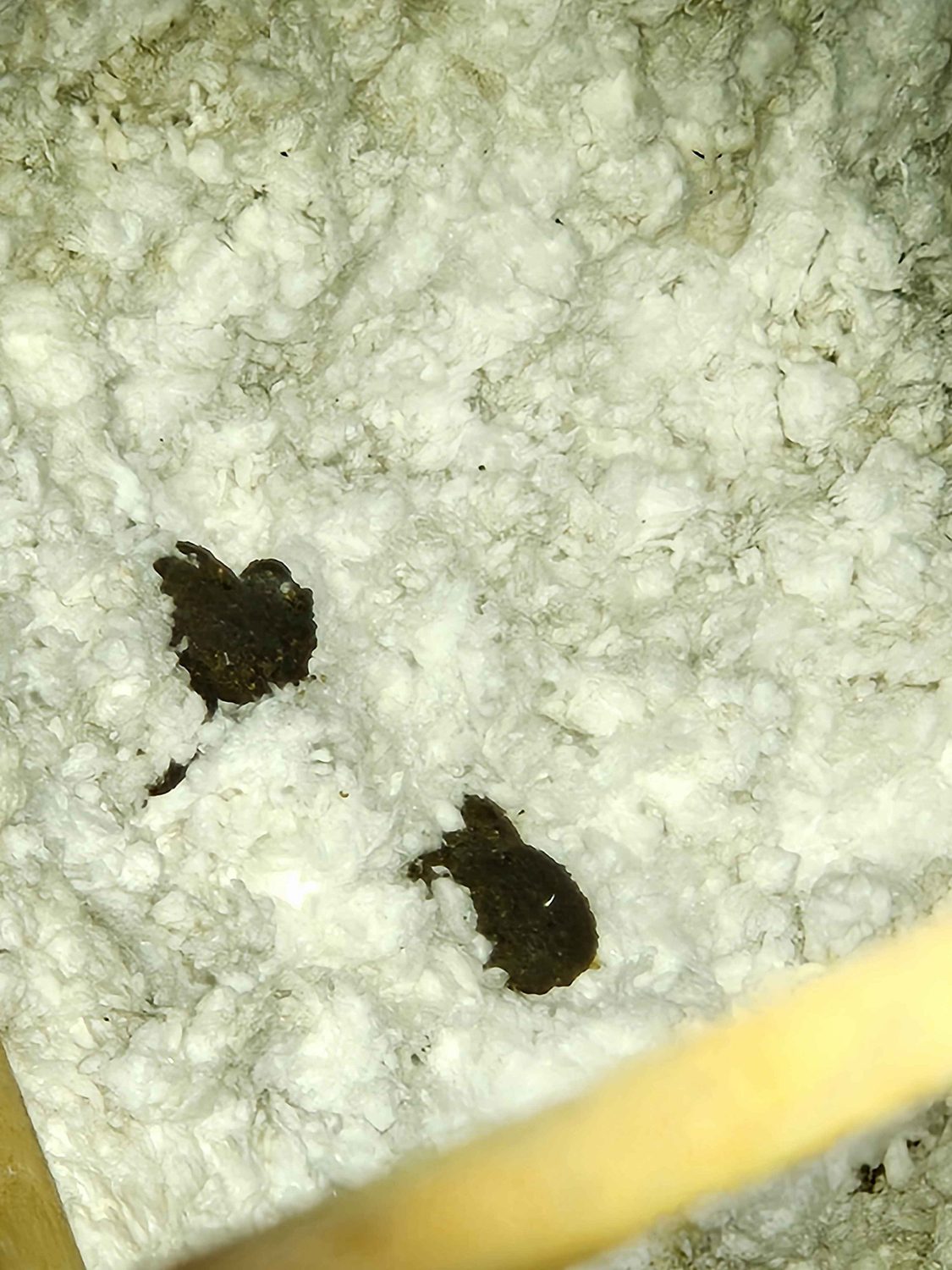
The Texas Department of State Health Services, in its hantavirus FAQ, says people can become sick through contact with the urine, droppings or saliva of infected rats and mice. The same page says that for areas heavily affected by rodents, an N100 mask or a respirator with an N100 or HEPA filter may be needed, where a plain N95 might only give some protection.
The CDC’s rodent cleanup instructions speak directly to insulation. Exposed insulation contaminated with urine and droppings should be placed into plastic bags for removal, and droppings, urine and nest material should not be swept or vacuumed, because that puts virus particles into the air. The CDC also says special precautions apply to homes or buildings with a heavy infestation.
Raccoon contamination carries a different risk. The CDC’s guidance on preventing raccoon roundworm names attics as a place raccoon feces turn up, notes that most chemicals do not kill the roundworm eggs, and recommends an N95 respirator when cleaning in a confined space. Contaminated material is to be removed and burned, buried or taken to a landfill. A raccoon latrine is not something to spray with a cleaner and leave in place under new insulation.
None of this means an attic is a hazard zone forever. It means the soiled layer has to come out deliberately, bagged rather than raked, by someone dressed for it, before anything new goes down.
How the job runs
- Free inspection. We go into the attic and look at the depth and condition of what is there, where the runways and nests are, and how far the soiling has spread. Outside, we find the openings the animals have been using. You get a written price before any work starts.
- Animals out first. If anything is still living in the attic, that is handled under the matching service before insulation work begins. New fill laid over an active nest just gets soiled again.
- Removal and disposal. Soiled, contaminated or damaged insulation is removed and taken out of the house. How much comes out depends on what the inspection found; one fouled corner is a different job from a whole floor.
- Exclusion and cleanup. The entry points get closed, and the attic floor is cleaned once the old material is gone. The sealing work is the same work described under exclusion and repairs.
- New insulation. Fresh TAP insulation is installed across the cleared area, or across the whole attic where the quote calls for it.
The order matters more than any single step. Insulate before sealing and you have built a nicer nest for the next animal through the same hole.
What TAP insulation is
TAP stands for Thermal Acoustical Pest Control. According to its maker’s product overview, it is a cellulose insulation made by grinding up old newspapers, with a specialized borate material applied to the paper fibers during manufacturing. Insects that crawl through it pick up borate particles and swallow them when they groom, which disrupts their digestion.
The product is registered with the U.S. Environmental Protection Agency as a pesticide. The manufacturer’s FAQ page gives the registration as EPA 103652-1 and describes the product as recycled paper plus specially formulated borates, blown in by machine. EPA’s pesticide product label record for that number lists boric acid as the active ingredient, and shows the registration carried over from an earlier number held by Pest Control Insulation, LLC.
The EPA-accepted label on file under that earlier number is worth reading plainly, because it sets the limits of what the product does:
- The active ingredient is orthoboric acid, at 12.5 percent.
- It lists the insects and other arthropods it kills, including cockroaches, ants, silverfish, earwigs, crickets, sowbugs, millipedes and centipedes.
- Control is limited to insects that contact the insulation.
- It carries the CAUTION signal word, and applicators handling it wear gloves, goggles and a particulate respirator.
- Insulation must not cover soffit vents or attic ventilation, and must be kept back from light fixtures and other heat-producing components.
What the label does not list is rodents or wildlife. TAP is an insulation that also works on insects in the attic. It does not keep out a rat, a squirrel or a raccoon. That is the job of the sealing work, and anyone who sells it to you as an animal repellent is overselling it.
How much attic insulation does a Houston home need?
For the Houston area, ENERGY STAR’s target is R49 of attic insulation in an attic that has none, or an added R38 on top of three to four inches already in place. Where rats, squirrels or raccoons have nested, the trampled and soiled sections usually sit well below that level, which is where this service starts.
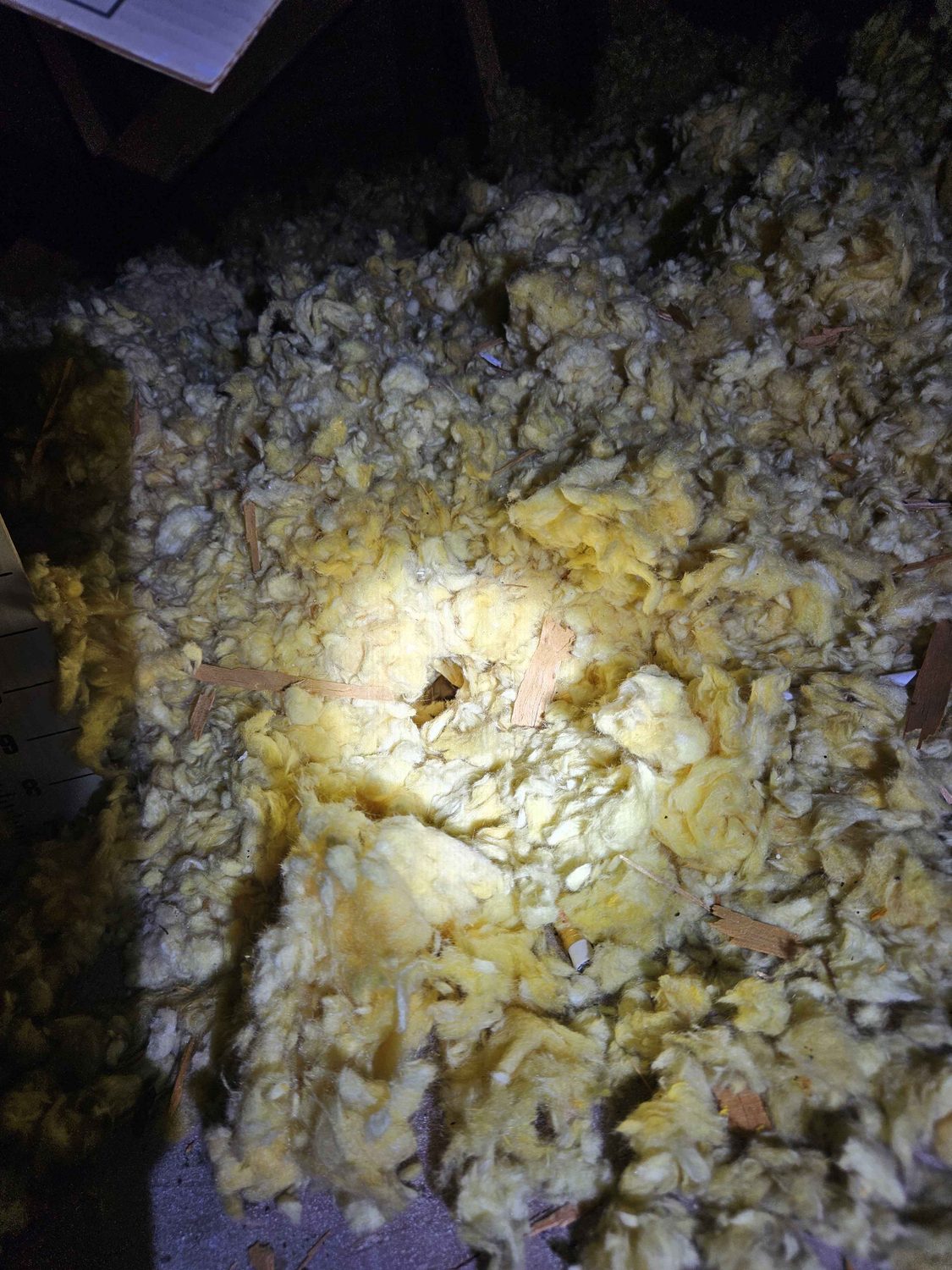
Harris and Montgomery counties are both listed as Hot-Humid, IECC climate zone 2A, in the U.S. Department of Energy’s Building America guide to climate regions by county.
For that zone, ENERGY STAR’s recommended home insulation R-values call for R49 in an uninsulated attic, or adding R38 where an attic already has three to four inches. ENERGY STAR describes R-value as insulation’s ability to resist heat moving through it, and bases those numbers on the 2021 International Energy Conservation Code.
In practice, a lot of attics in Spring, Klein and The Woodlands sit well short of that even before an animal touches them, and the soiled section is often the thinnest part of the floor. When you get a quote for replacement, it is a fair question to ask what depth and R-value it is written to, and how that compares with the ENERGY STAR figure for this zone.
The heat is the reason this matters here. A north Houston attic in August is the hottest room in the house, sitting right on top of the ceiling you are trying to keep cool, often with ductwork running through it.
Which animal was up there shapes how far short the attic falls. Rats and mice tend to tunnel and leave droppings along their runways, so the damage follows their paths; see roof rat for the usual attic culprit. A raccoon flattens and soaks a wide patch around its den, and squirrels drag material into nests near the entry. The inspection maps those areas so the new depth is measured against the ENERGY STAR figure across the whole attic floor, not only where the old layer still looks fine.
Signs your insulation needs a closer look
- A smell from the attic hatch or ceiling fixtures that gets worse on hot days. Urine-soaked fill gives off odor as the attic heats.
- Ceiling stains with no roof leak above them, particularly in a corner or over a garage.
- Rooms that will not cool, or a second floor that runs much warmer than it used to, after a season of animal noise.
- Visible trails and dips in the fill when you look in with a flashlight, or insulation pulled away from the eaves.
- Droppings on top of the insulation near the hatch, the air handler, or along the top plates.
One of these on its own is a reason for an inspection, not proof of a replacement. Several together usually mean removal.
What waiting costs
The longer soiled insulation stays, the more of the attic floor it spreads across. Animals keep using the same runways, so contamination follows their routes outward from the entry. Odor works into the ceiling drywall. And the energy loss runs every month the air conditioner is on, which in this climate is most of the year.
There is also the question of damage nobody can see from the hatch. Animals that live in insulation also chew wire and tear duct wrap, and that repair work sits outside the insulation quote. Our 100% Service Guarantee is clear that it does not make us responsible for past pest damage, which is one more reason to get the openings closed and the attic assessed sooner rather than later.
Homes and commercial buildings
On a house, the job usually means a single attic over a slab, with the air handler and ducts up there too. Commercial work changes the logistics more than the method: larger attic or plenum areas, access that has to be scheduled around business hours, and sometimes several tenants under one roof. The sequence stays the same. Our commercial page covers how we work with businesses and property managers more broadly.
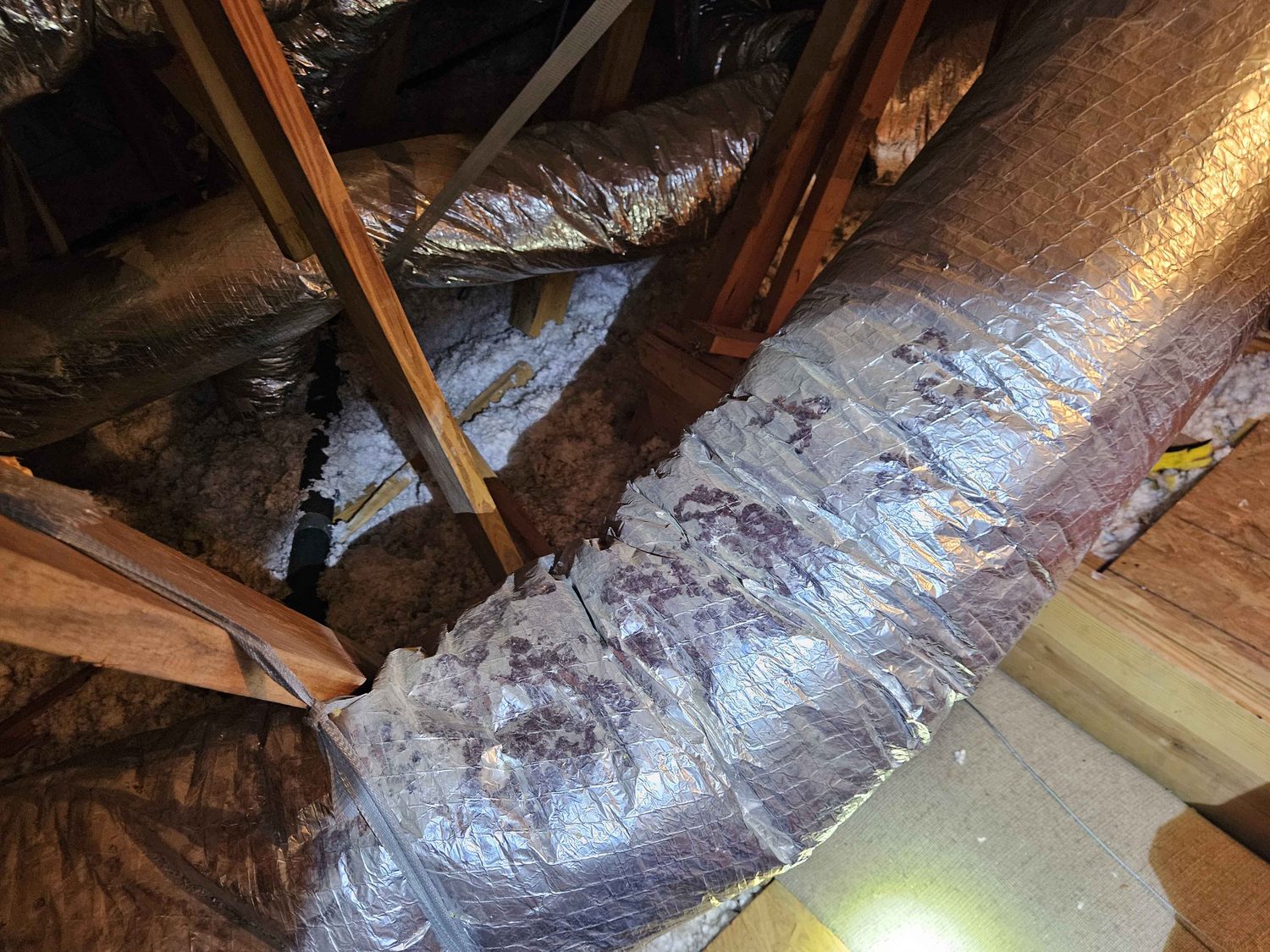
What you can do in the meantime
- Keep tree limbs trimmed back from the roofline so climbers lose their bridge.
- Look at gable and soffit vents from the ground for torn or missing screen.
- Do not store food, birdseed or pet food in the attic or garage rafters.
- If you go up to look, do not stir up droppings or nest material. Note what you see and leave the cleanup for the right equipment.
- Keep the attic hatch closed and weatherstripped so attic air is not pulled into the living space.
If you are not sure what has been living over your ceiling, start with a free inspection. You can contact us and we will look at the insulation, the entry points and the animals together, then put the price in writing.
Frequently asked questions
Can you just add new insulation on top of the dirty layer?
Sometimes, if the old layer is dry, clean and simply thin. Where it holds droppings, urine or a nest, it comes out first. The manufacturer of TAP says it can go over existing insulation but that removal may be the better call where pests have damaged what is there.
Does TAP insulation keep rats and squirrels out?
No, and nobody should tell you it does. Its EPA-accepted label lists insects and other arthropods such as cockroaches, ants, silverfish and crickets. Rodents and wildlife are kept out by sealing the openings they use, which is why that step comes before the new insulation goes down.
Is it worth replacing insulation if I only had mice for a few weeks?
Not always. A short visit can leave a few droppings near one entry that clean up without a tear-out. The inspection shows whether the soiling is local or spread across the attic, and the written price reflects which one you have.
Should I pull the old insulation out myself?
We would not suggest it. Texas health officials warn that rodent urine and droppings can carry hantavirus, and that heavily affected areas may call for an N100 or HEPA-filtered respirator. Dragging soiled insulation through a hot attic and across the house is the exposure that guidance is written to prevent.
Who does the work on a large insulation job?
Our own crew handles most attic jobs. When a project is bigger than a small team can do well, such as a large commercial attic or a full tear-out across a big house, we bring in a local insulation subcontractor we work with. Ask at the inspection who will be on your job.
Do you install spray foam?
No. We do basic attic insulation work: removing soiled insulation and blowing in new loose fill, with TAP as our usual material. Spray foam, radiant barriers and wall insulation are separate trades, and our comparison page explains them so you can decide whether you need one.
Does the 100% Service Guarantee cover the new insulation?
The insulation work is backed by our 100% Service Guarantee, and the terms are published on our guarantee page. Those terms do not cover repairing damage pests did before or after the job, so anything outside the insulation itself is quoted on its own line.
What R-value should attic insulation be in Houston?
ENERGY STAR's recommendation for this climate zone is R49 when an attic starts with no insulation, or adding R38 where three to four inches is already down. Ask that any quote state the R-value and depth it is written to, so you can hold it up against that figure.
Our largest service areas
Attic Insulation in north Houston?
No long-term contracts, and service agreements are backed by our 100% Service Guarantee.
Because we are based in Spring, we can often come out the same or next day for urgent problems. Call before noon, Monday through Friday, for the best chance at next-day service.
Last updated