
TAP vs Cellulose vs Fiberglass for Attics in Spring and North Houston
For an open attic floor in north Houston, blown loose fill usually beats batts because it fills around wiring and framing. TAP is cellulose with an EPA-registered borate that kills insects it touches; plain cellulose and fiberglass insulate without that label claim. None of them stop rodents. Spray foam and radiant barriers are different jobs entirely.
Call 281-627-4810 Request a free inspection
Year-round protection plans from $70 Core · Premium · Legendary See the plans

The question behind the question
When someone in Klein or The Woodlands asks which insulation is best, they usually mean one of three things. They want the attic to stop cooking the ceiling. They want to stop paying to cool an attic. Or they have just had rats, squirrels or raccoons up there and need to know what goes back down. The right material depends on which of those is driving you, and on what the attic looks like today.
We are a pest company that installs TAP insulation, usually after a rodent or wildlife cleanup. We do not install spray foam, radiant barriers, wall insulation or ductwork. This page explains those options anyway, because people ask about them and a fair comparison has to include them.
Start with the target, not the material
Every material on this page is measured the same way: R-value, the resistance to heat moving through it. The U.S. Department of Energy’s Building America climate guide places both Harris and Montgomery counties in the Hot-Humid region, IECC zone 2A. For that zone, ENERGY STAR’s recommended R-values are R49 in an attic with no insulation, or an added R38 where three to four inches already sit on the joists.
That number is the same whichever product you choose. What changes is how many inches it takes to get there, how well it fills the space, and what else the material does or does not do.
The comparison at a glance
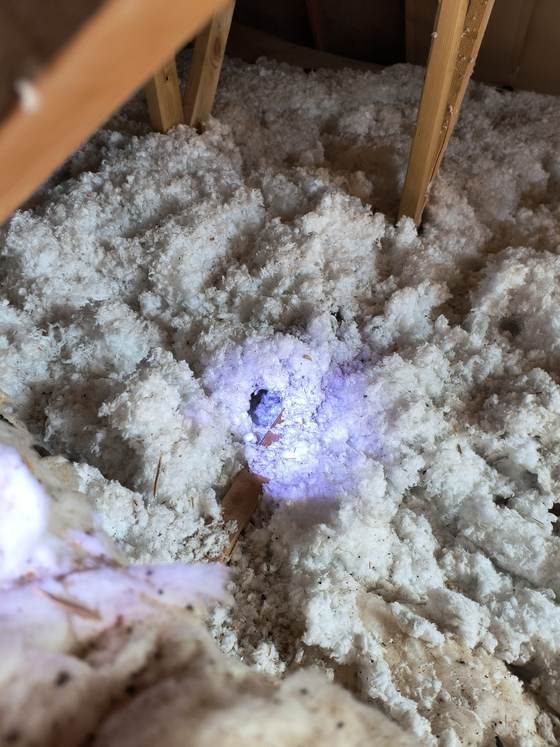
| Material | How it goes in | Coverage on an attic floor | Insect effect | Our take for north Houston |
|---|---|---|---|---|
| TAP pest control insulation | Blown by machine as loose fill | Fills around wiring, pipes and odd framing | EPA-registered; kills listed insects that contact it | What we install after cleanup and sealing |
| Plain cellulose | Blown by machine as loose fill | Same blown coverage as TAP | No pesticide registration or insect claim | A sound insulation without the insect label |
| Loose-fill fiberglass | Blown by machine as loose fill | Fills irregular spaces; needs depth to reach target | None | A sound insulation; common in builder attics |
| Fiberglass batts | Rolled or laid between joists by hand | Leaves gaps where wiring and blocking interrupt it | None | Fine when fitted well, often poorly fitted |
| Spray foam | Sprayed as liquid that expands in place | Sprayed into cavities or onto framing | None | Different project; we do not install it |
| Radiant barrier | Foil sheet or coating under the roof | Not floor insulation at all | None | Add-on; we do not install it |
TAP
TAP is a cellulose, so it behaves like cellulose on the thermal side. Its maker’s product page describes it as ground newspaper with a borate bonded to the fibers during manufacturing. What separates it from the bag next to it at a supply house is the federal paperwork. EPA’s registration record for 103652-1 lists boric acid as the active ingredient, and the accepted label under its earlier number names cockroaches, ants, silverfish, earwigs, crickets, sowbugs, millipedes and centipedes as targets, with control limited to insects that touch the material.
Texas A&M AgriLife put TAP into its IPM Experience House in 2017, and its write-up of that installation is careful to say AgriLife has not thoroughly tested how well it controls pests. We repeat that here because it is the honest position: the borate chemistry is known, the whole-house effect is not well measured. The full story is on our TAP pest control insulation page.
Plain cellulose
Ordinary cellulose is also made largely from recycled paper and goes in with the same blowing machine. The practical difference is that ordinary cellulose is not registered as a pesticide, so it carries no label telling you which insects it controls. If an installer tells you their regular cellulose “kills bugs,” ask to see the EPA number. If there is none, the claim has nothing behind it.
On the thermal side, plain cellulose and TAP should perform alike at the same settled depth.
Loose-fill fiberglass
Blown fiberglass turns up in a lot of builder-grade attics around Spring and Cypress. The DOE’s Guide to Home Insulation groups fiberglass, cellulose and mineral wool as the loose-fill materials, says they reach R30 at somewhere between 8 and 23 inches depending on which one you use, and notes that loose fill can conform to any space. That flexibility is the main reason we prefer blown material of any kind on an open attic floor.
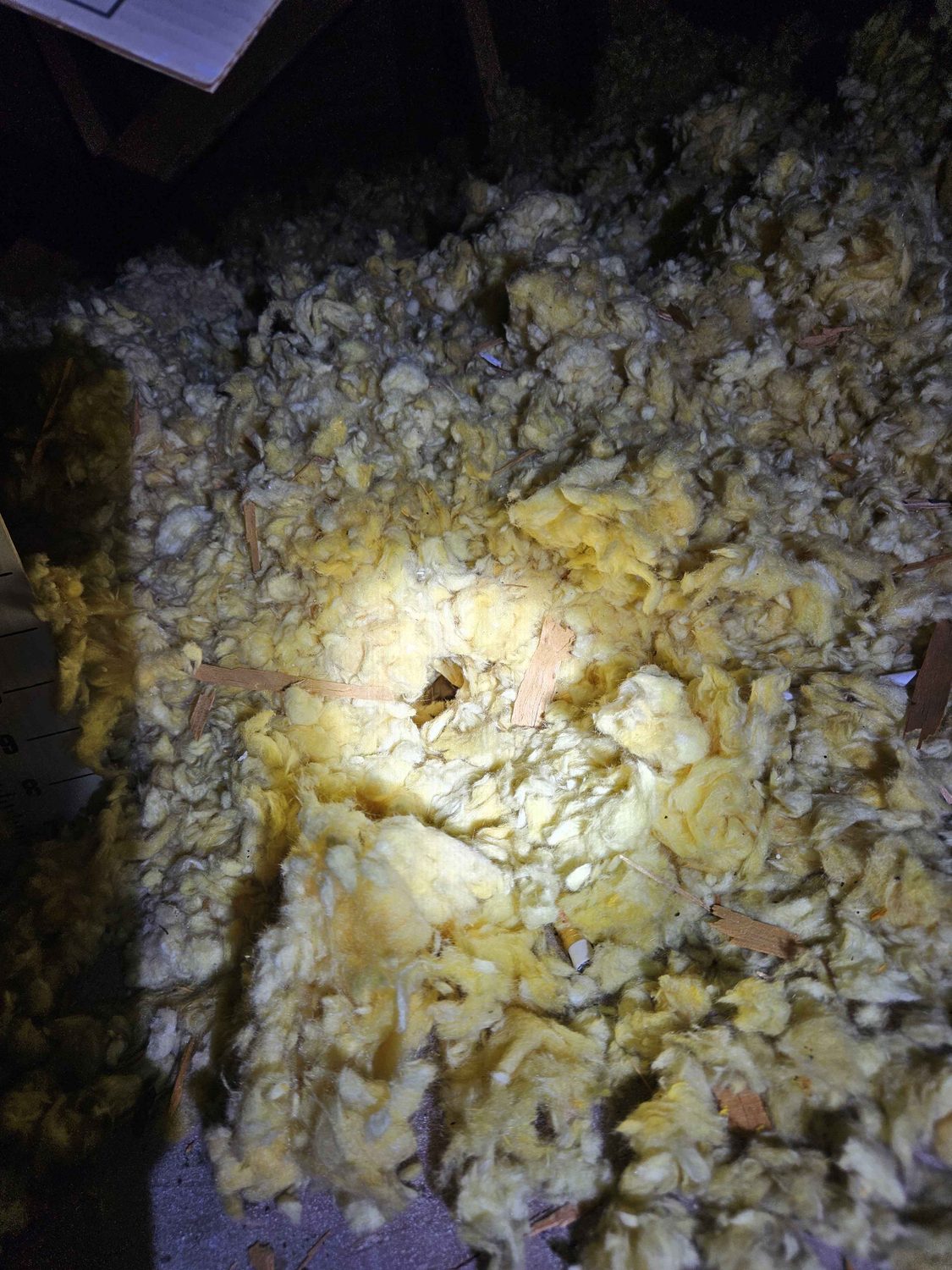
Because the depth needed varies by material, compare quotes by the R-value and settled depth written on them, not by the number of bags or the name of the product.
Fiberglass has no pest effect. Like every material here, rodents nest in it readily.
Batts
The same DOE guide says blankets, meaning batts and rolls, are the most common insulation type in American homes. They work when they are cut to fit snugly, with no gaps, no compression and nothing stuffed behind wiring. In a real north Houston attic, with an air handler platform, duct runs, can lights and blocking every few feet, that fit is hard to achieve, and the gaps add up.
Batts also make a good nest. Rats can hollow out a row of them from the underside, where the damage stays invisible from the hatch. The IPM Experience House is a useful example: its old fiberglass batting was removed before TAP went in.
Spray foam, explained but not offered
Spray foam goes on as a liquid and expands to fill the space it is sprayed into. In many retrofit attics it is applied to the underside of the roof deck rather than the attic floor, which brings the attic inside the conditioned part of the house. That changes how the attic is vented and how the HVAC system is sized, so it is a design decision as much as an insulation one.
People choose it for good reasons, especially when ducts run through a hot attic. It is also a specialized trade with its own equipment and its own installation risks, and we do not do it. If it interests you, get an assessment from a contractor who does foam every day. Spray foam does not stop a determined rodent from chewing in, so roofline gaps still need closing.
Radiant barriers, explained but not offered
A radiant barrier is a reflective foil or coating attached under the roof deck to reflect heat coming off the hot roof. The DOE’s insulation guide says radiant barriers are especially useful in hot, sunny climates, which is why they come up often in Houston.
A radiant barrier is not a substitute for floor insulation, because it works on a different kind of heat movement. Think of it as something that can sit alongside a properly insulated attic floor, not something that replaces one. We do not install them; a roofing or energy contractor is the right call.
Layering new fill over what is already there
Few attics in this area start from bare drywall. More often there is a thin, settled layer of builder fiberglass, a few old batts, or a patchwork from an earlier repair. Blowing a different material over the top is normal practice, and the TAP manufacturer’s FAQ says its product can be installed over existing insulation. The same FAQ adds that pulling the old layer may be the better route where pests have damaged it.
That gives a simple test. If the existing material is dry, clean and merely thin, count its R-value toward the target and add the difference. If it is matted into runways, stained, or smells when the attic heats up, it is not insulation anymore, and counting it toward anything just hides a problem under a fresh blanket.
One more local factor: many attics here hold the air handler and long duct runs. Whatever material goes down, the crew has to work around that equipment without crushing duct wrap or burying service access, so ask how they plan to handle the platform and the return.
What matters more than the material
Three things decide whether an attic insulation job works, and the product name is not one of them.
- The animals are out and the gaps are closed. New fill over an open soffit return is a new nest. That sealing is covered under exclusion and repairs.
- The old layer was judged honestly. Dry, clean, thin insulation can often be topped up; see blown-in insulation top-up. Soiled material should come out, as described under contaminated insulation removal.
- Vents and heat sources stay clear. Soffit vents need open air paths, and lights and flues need clearance. A bigger number on the quote means nothing if the attic cannot breathe.
If you are not sure whether your current insulation is doing its job, our page on signs attic insulation needs replacing walks through what to look for from the hatch.
Our honest recommendation
For a typical open attic over a slab in Spring, Tomball or Humble, blown loose fill to the ENERGY STAR target is the sensible choice, and among the blown options we install TAP because it adds an insect label at no penalty to the insulating job. If the attic is clean and well insulated already, you may not need anything. If spray foam or a radiant barrier fits your plans, those are worth pursuing with a specialist.
For pricing factors, see attic insulation cost, and for incentives, our insulation rebates and tax credits page. The overall service is on the attic insulation page, and you can contact us to have the attic looked at for free.
Frequently asked questions
Which insulation is best for an attic in Spring, Texas?
For most open attic floors here, a blown loose fill to the ENERGY STAR target is the practical answer. Between cellulose and fiberglass loose fill, both reach the target with enough depth. TAP adds an insect label on top, which is why it is the material we install.
Is TAP just cellulose with a different name?
It is cellulose, but the borate treatment is registered with the EPA as a pesticide and the bag carries a label listing the insects it kills. Ordinary cellulose is sold as insulation only, so it makes no pest claim you can hold anyone to.
Does fiberglass attract fewer rats than cellulose?
Rats and squirrels nest in both and tunnel through both. No insulation material keeps them out. What changes the outcome is finding and sealing the gaps they use to reach the attic in the first place.
Should I get spray foam instead of blown-in insulation?
It depends on goals and budget, and it is a different project that moves the insulation to the roofline. We do not install spray foam. If you are seriously considering it, get an assessment from a contractor who specializes in it.
Do I need a radiant barrier in a Houston attic?
It is an add-on rather than a replacement for floor insulation. The DOE notes radiant barriers are especially useful in hot, sunny climates, but they do a different job. We do not install them, so ask a roofing or energy contractor.
Attic Insulation in north Houston?
No long-term contracts, and service agreements are backed by our 100% Service Guarantee.
Because we are based in Spring, we can often come out the same or next day for urgent problems. Call before noon, Monday through Friday, for the best chance at next-day service.
Last updated