
What Sets the Cost of Attic Insulation in Spring and North Houston
Attic insulation cannot be priced fairly over the phone. The number depends on attic square footage, whether old insulation must be removed or only topped up, how soiled it is, how hard the attic is to work in, the target R-value, and any sealing or repairs found. We inspect for free and put the price in writing first.
Call 281-627-4810 Request a free inspection
Year-round protection plans from $70 Core · Premium · Legendary See the plans
What to do, in order
| Biggest single factor | Whether the old insulation has to be removed and hauled away, or can stay in place under a top-up |
|---|---|
| Size | Square footage of the attic floor being cleared or covered, not the home's total living area |
| Condition | How far droppings, urine, nesting or water damage have spread across the existing layer |
| Working conditions | Hatch size, roof pitch, headroom, ductwork in the way, and summer attic heat all affect labor |
| Separate lines | Sealing entry points, and any wiring, duct or drywall repair, are quoted on their own lines |
| Rebates and credits | The federal credit covered work placed in service before the end of 2025; utility programs run through approved contractors |
| What it costs | Free inspection, then a written price before work starts |
- Get every bid after someone has actually been in your attic, not from a phone call or a satellite photo.
- Check that each quote names the product, the target R-value, the settled depth and the square footage covered.
- Confirm whether removal, disposal, cleanup and sealing are included or priced as separate lines.
- Ask what happens to the price if hidden damage turns up, and get that answer in writing.
- Line the quotes up side by side on the same scope before comparing the totals.
Why there is no number on this page
People search “attic insulation cost Houston” hoping for a per-square-foot figure they can multiply out. We understand the appeal, and we are not going to give one. The honest reason is that the same three-bedroom house in Spring can need a light top-up or a full tear-out, and the gap between those two jobs is larger than any average could cover. A figure quoted without seeing the attic is either padded to cover the worst case or low enough to win the call and climb later.
What we can do is explain exactly what moves the price, so that when you get a quote from us or anyone else, you know what you are looking at. The service itself is described on our attic insulation page.
What sets the price
Attic square footage
The area that gets insulated is the attic floor over conditioned space, and it is not always the same as the home’s listed size. A two-story house has a smaller attic floor than a ranch with the same living area. Vaulted ceilings, bonus rooms and a garage that is or is not included all change the measurement. A quote should state the square footage it covers.
Removal or top-up
This is usually the largest single swing. A top-up leaves the old layer in place and adds depth over it. Removal means the existing fill is vacuumed out, bagged, carried through the house and hauled away before the new layer goes in. That is more labor, more equipment, more disposal and more time. Our page on contaminated insulation removal describes that side of the work.
How soiled the old layer is
One fouled corner near a soffit entry is a partial removal. Rat runways from one end of the attic to the other, a raccoon latrine, or a squirrel nest packed with leaves usually mean the whole floor. Contaminated material also calls for more protective gear and slower handling. The CDC’s rodent cleanup guidance says insulation exposed to urine and droppings should be bagged rather than swept or vacuumed in the open, and that heavy infestations need extra precautions. Work done to that standard takes longer than scooping and dumping. If the attic needs cleaning and treatment once the old material is out, that is the attic cleanup and decontamination step.
Access, attic height and heat
A walk-up attic with a full-size hatch and plenty of headroom is a different day from a low-pitch roof where the crew crawls on joists the whole time. Ductwork snaking across the floor, an air handler blocking the middle, or a hatch tucked into a closet ceiling all slow the job. In a north Houston summer, attic heat also limits how long anyone can work up there at a stretch, which affects scheduling on bigger removals.
Target R-value and depth
More depth means more material. ENERGY STAR’s R-value recommendations for zones 2 and 3 are R49 for an empty attic and R38 added where three to four inches already exist. Harris and Montgomery counties fall in zone 2A, according to the DOE’s Building America climate guide. A bid written to a lower target will naturally come in under one written to the ENERGY STAR figure, so check which target each quote assumes before comparing them.
Material choice
Loose-fill fiberglass, plain cellulose and TAP each have their own price per bag and their own coverage per bag at a given depth. The DOE’s Guide to Home Insulation shows loose-fill materials reaching R30 anywhere from 8 to 23 inches thick, which is part of why bag counts differ from one product to another. TAP carries a borate treatment registered with the EPA for insect control, and the TAP vs cellulose vs fiberglass comparison covers what that adds and what it does not.
Sealing and exclusion work
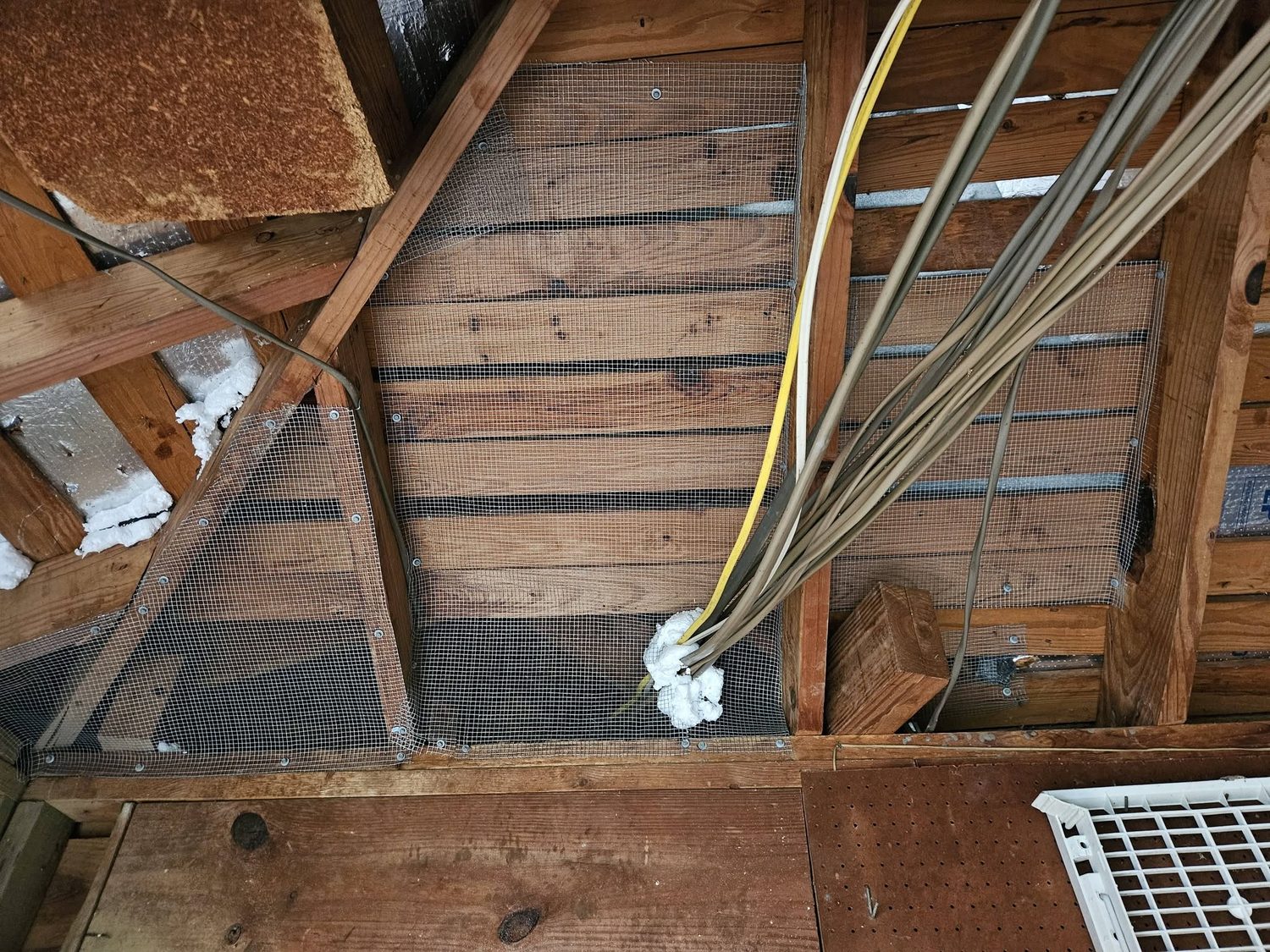
If animals got in, the openings have to be closed before new insulation goes down. That work depends on the roofline: a couple of screened vents is small, while several soffit returns and a torn gable vent are more. It is priced under exclusion and repairs, and the common gaps are described on roofline and soffit gaps.
Damage found along the way
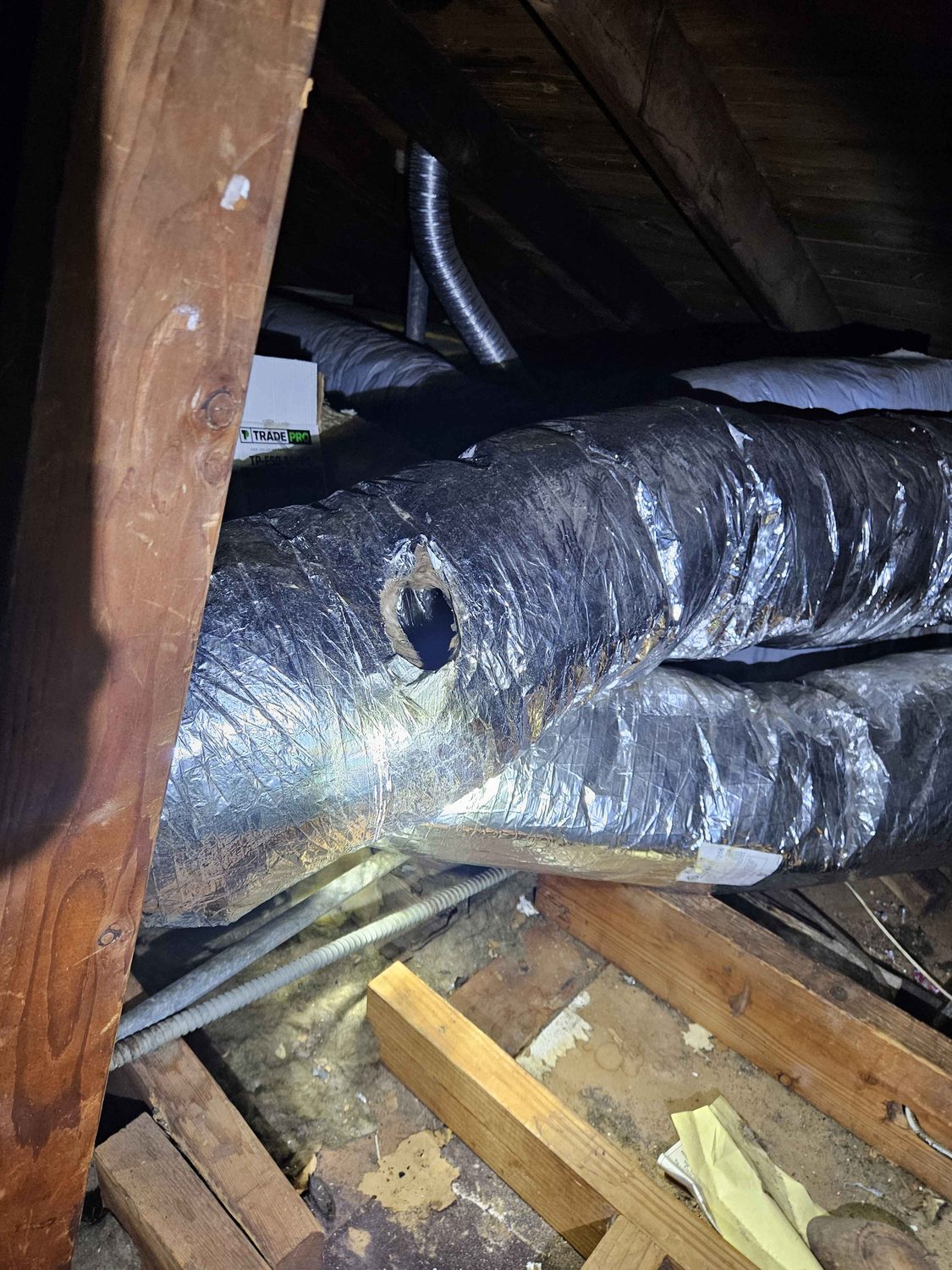
Animals that live in insulation also chew wire sheathing and tear into duct wrap, and some of that only shows once the old fill is gone. That repair work is not part of the insulation price. It goes on a separate line, and some of it, such as electrical repair, belongs to a different trade entirely. Our 100% Service Guarantee does not extend to damage pests caused before the job, which is spelled out in its terms.
Homes versus commercial buildings
Commercial attics and plenum spaces tend to be larger, and the work often has to be scheduled around tenants, business hours or building access rules. Those logistics affect labor more than materials. See our commercial page for how we handle business properties.
What a written quote should list
A quote worth comparing puts the following in writing:
- The square footage being insulated, and the areas excluded, if any.
- Whether existing insulation is being removed, partly removed or left in place, and how disposal is handled.
- The product by name, the target R-value, and the settled depth that product needs to reach it.
- Air sealing at the attic floor, baffles at the eaves, and clearances at light fixtures and vents.
- Exclusion or sealing work, priced on its own line.
- How hidden damage is handled if it turns up during the job.
- What the guarantee covers and where its terms are published.
If a bid leaves any of these out, ask before you sign. A vague quote is not necessarily dishonest, but it is impossible to hold anyone to.
Red flags in insulation quotes
- A price given before anyone has looked in the attic. It is a guess dressed up as a number.
- Depth in inches with no R-value or product named. Ten inches of two different fills are not the same insulation.
- “We’ll just blow over it” on a soiled attic. Burying droppings and nests under new material locks in the odor and contamination.
- No mention of the soffit vents. Fill blown into the eaves can block attic ventilation.
- Claims that the insulation keeps rats or raccoons away. The TAP label lists insects such as cockroaches, ants and silverfish. It does not list rodents or wildlife, and no insulation stops them on its own.
- Pressure to sign today. A real quote stays good long enough for you to get a second one.
Why the low bid over a live rodent problem ends up costing more
Here is the pattern we see. An attic has roof rats. The homeowner gets a low bid to blow new insulation over the top, takes it, and the rats keep coming in through the same soffit gap. Within months they have runways through the new layer, nests in it, and urine soaking down into both layers at once. Now there are two layers to remove instead of one, the animals still have to be dealt with, and the entry points still have to be sealed. The homeowner ends up paying for insulation twice, plus a bigger removal than the first one would have been.
That is why our sequence never changes: animals handled, openings closed, soiled material out, then new insulation. If rats are the issue, the roof rats in the attic page and our rodent control program come first. The lowest number on paper only stays low if the job it describes is the job the attic actually needs.
When a partial job is the sensible spend
Not every attic needs the whole floor redone. If the inspection shows the soiling is confined to one area, say the strip between a soffit opening and the nest a few feet inside it, the quote can cover pulling and replacing that section and topping up the rest to an even depth. That keeps removal to the part that actually needs it. The opposite also happens: an owner asks for a patch, and the flashlight shows runways crossing the entire attic. In that case a patch would leave most of the contamination in place, and we will say so rather than quote a job that does not solve the problem. Either way, the written price shows which areas come out, which stay, and why, so you can see the reasoning instead of taking it on trust. A page on the signs your attic insulation needs replacing can help you form your own view before the visit.
Rebates and tax credits
The federal energy efficient home improvement credit, according to the IRS credit page, applies to qualifying property placed in service from January 1, 2023 and before December 31, 2025, so insulation installed in 2026 falls outside it. On the utility side, CenterPoint runs a ceiling insulation program for existing homes with too little insulation, but the incentive is paid to a participating contractor from CenterPoint’s approved list rather than to the homeowner, so ask any contractor whether they participate and check that list yourself. Our page on insulation rebates and tax credits goes into the details.
How we price it
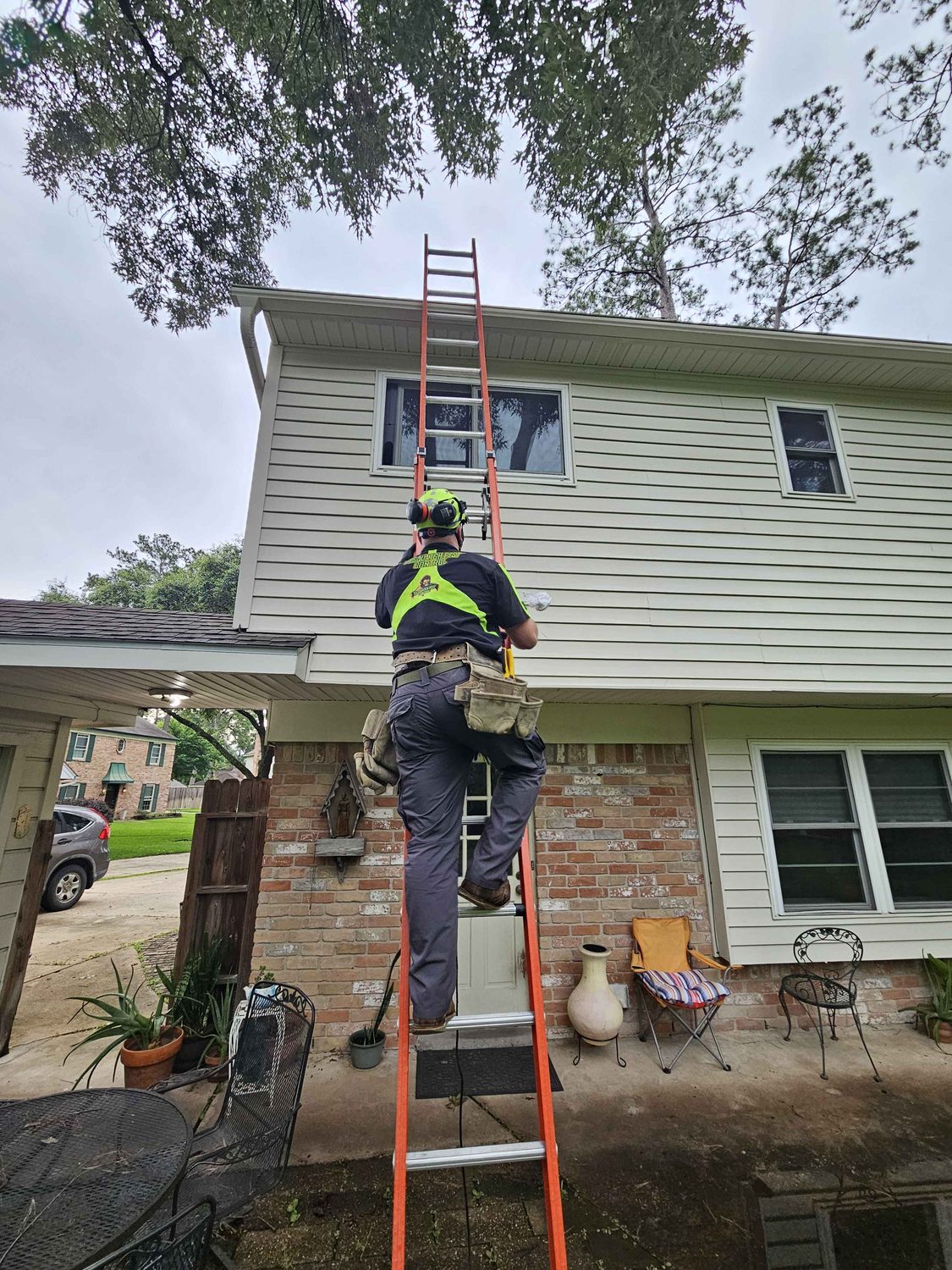
Every insulation job we do starts with a free inspection. We look at the depth and condition of what is there, the animal activity, the entry points and the working conditions in the attic, then hand you a written price before any work starts. No long-term contract comes with it, and you are free to compare it against anyone else’s. If you live in Spring, The Woodlands or elsewhere in Harris and Montgomery counties, contact us to set up the visit.
Frequently asked questions
How much does it cost to replace attic insulation in Houston?
It swings widely from one house to the next, which is why we do not publish a figure. A small attic that only needs a top-up is a very different job from a large one with rat runways from end to end. The free inspection gives you a written price for your attic specifically.
Why is insulation removal so much more than adding new insulation?
Removal is the slow, dirty part. Soiled fill is vacuumed out through a hose, bagged and hauled off, the crew works in protective gear in a hot space, and the attic floor is cleaned before anything new goes down. A top-up skips all of that.
Will the price change once the work starts?
Not for the scope on the written quote. If we uncover something nobody could see during the inspection, such as chewed wiring under the fill, we stop, show you, and price it separately so you can decide before anything else is done.
Can I still get a federal tax credit for new attic insulation?
The IRS energy efficient home improvement credit applied to work placed in service from 2023 through 2025, so insulation installed in 2026 does not qualify. Utility programs are a separate question; our rebates page explains how the CenterPoint program works.
Is there a charge for the inspection itself?
No. The inspection is free, and you receive a written price before any work begins. There is no long-term contract to sign, and you are under no obligation to go ahead once you have the quote in hand.
Attic Insulation in north Houston?
No long-term contracts, and service agreements are backed by our 100% Service Guarantee.
Because we are based in Spring, we can often come out the same or next day for urgent problems. Call before noon, Monday through Friday, for the best chance at next-day service.
Last updated