
Signs Your Attic Insulation Needs Replacing in Spring and North Houston
Attic insulation needs replacing when it is soiled by animals, soaked, crushed into runways, or far thinner than the R49 ENERGY STAR recommends for north Houston's climate zone. Odor on hot days, ceiling stains, a hot second floor and droppings on the fill are the common signs. Thin but clean insulation can usually be topped up instead.
Call 281-627-4810 Request a free inspection
Year-round protection plans from $70 Core · Premium · Legendary See the plans
What to do, in order
| Climate zone | IECC climate zone 2A, hot and humid, covering every town in our Harris and Montgomery county area |
|---|---|
| Target, uninsulated attic | R49, per ENERGY STAR's recommendations based on the 2021 IECC |
| Target, attic with 3 to 4 inches | Add R38 on top of what is there |
| Loose fill depth for R30 | 8 to 23 inches depending on the material, per the DOE home insulation guide |
| Top-up is usually enough when | The existing fill is dry, clean and level, just too thin |
| Removal is usually needed when | The fill holds droppings, urine, nests or guano, or animals have crushed it into runways |
- Plan the look for early morning, before the attic heats up, and let someone in the house know you are going up.
- Wear gloves and long sleeves, stay on the ladder or a floored area, and never step between the joists.
- Sweep a flashlight across the insulation surface for trails, dips, nests and droppings, and do not touch any waste you find.
- Push a ruler straight down through clean fill to the drywall in two or three spots within reach and note each depth.
- Check whether the tops of the ceiling joists show above the insulation; if they do, the layer is shallower than the joists.
- Write down the depths and anything odd you saw, then compare them with the ENERGY STAR targets for zone 2A.
Start with what you can see from below
Most people do not go looking at their insulation until something makes them. The house will usually give you a few hints first, and several of the signs below can be noticed without leaving the hallway. The rest need a look from the attic hatch, which most homeowners can do safely if they keep it to a look.
The checklist runs from the clues you notice in the living space to the ones only the attic shows. One sign alone is a reason to look closer. Three or four together usually mean the insulation is not doing its job.
How to look from the hatch without making things worse
Pick a cool morning. A north Houston attic in summer gets hot enough by midafternoon to be dangerous for anyone who stays up there long. Take a strong flashlight, gloves and long sleeves, and tell someone in the house where you are.
Stay on the ladder or on a section of floored decking. The insulation hides the ceiling joists, and the drywall between them will not hold your weight. Do not reach into nests, droppings or stained fill. The CDC’s guidance on rodent cleanup warns against stirring droppings and nest material into the air by sweeping or vacuuming, and a curious hand does much the same thing on a smaller scale. If you see waste, note it and come down.
The ten signs
1. A smell that gets worse on hot days
Urine-soaked insulation gives off more odor as the attic heats. If the upstairs hallway, the hatch or the can lights smell sharp or musky in the afternoon and fade at night, something has been living in the fill. This is the sign people most often ignore because it comes and goes.
2. Ceiling stains with no roof leak above them
A yellow or brown ring on the ceiling, especially in a corner or over the garage, can be a roof leak. If the roof checks out, the next suspect is a latrine or a nest soaking through from the attic side. Either way, the insulation over that stain is wet or soiled and should be looked at.
3. Rooms that never match the thermostat
When one bedroom stays warmer than the rest no matter where the vents are set, the insulation over that room is often thin, tunneled or pulled away. Animals pick favorite spots, so the damage is rarely even across the attic.
4. A second floor that runs much hotter than the first
Some difference is normal in a two-story home. A gap that has grown over the last few summers suggests the layer over the upstairs ceiling has lost depth. In this climate that matters for most of the year, not just August.
5. Visible trails or tunnels in the fill
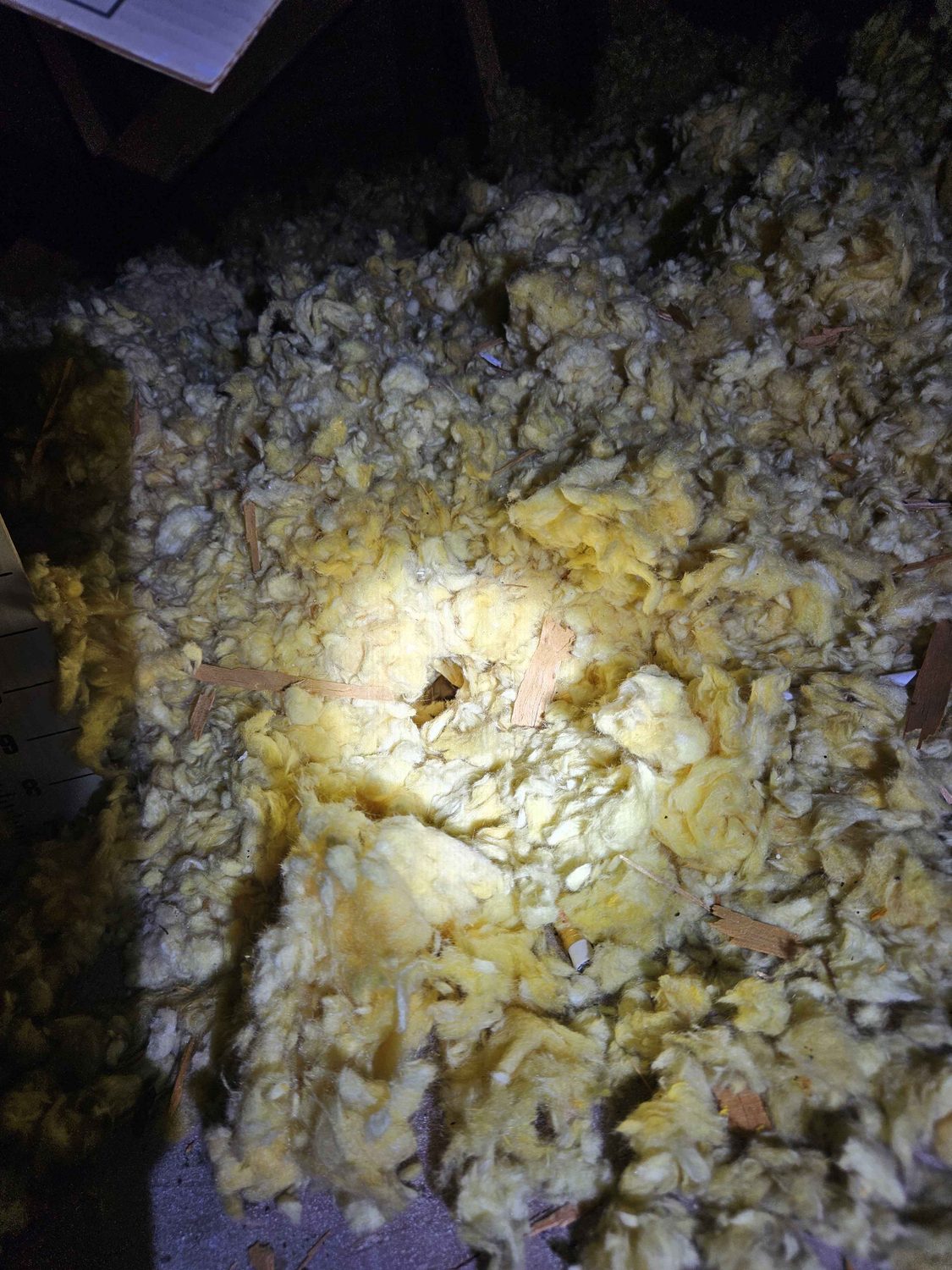
From the hatch, look across the surface. Narrow, worn paths running from the eaves toward the middle of the attic are rodent runways. Tunnels or lumps under the top layer are often squirrel work. Both mean animals have been moving through the insulation, not just over it.
6. Flattened or matted areas
A wide, crushed patch, often near ductwork or the air handler, is where a larger animal has been sleeping. Raccoons do this most. Insulation pressed flat has lost most of the air pockets that slow heat, so that section is barely insulating at all.
7. Droppings, nests or debris on top of the insulation
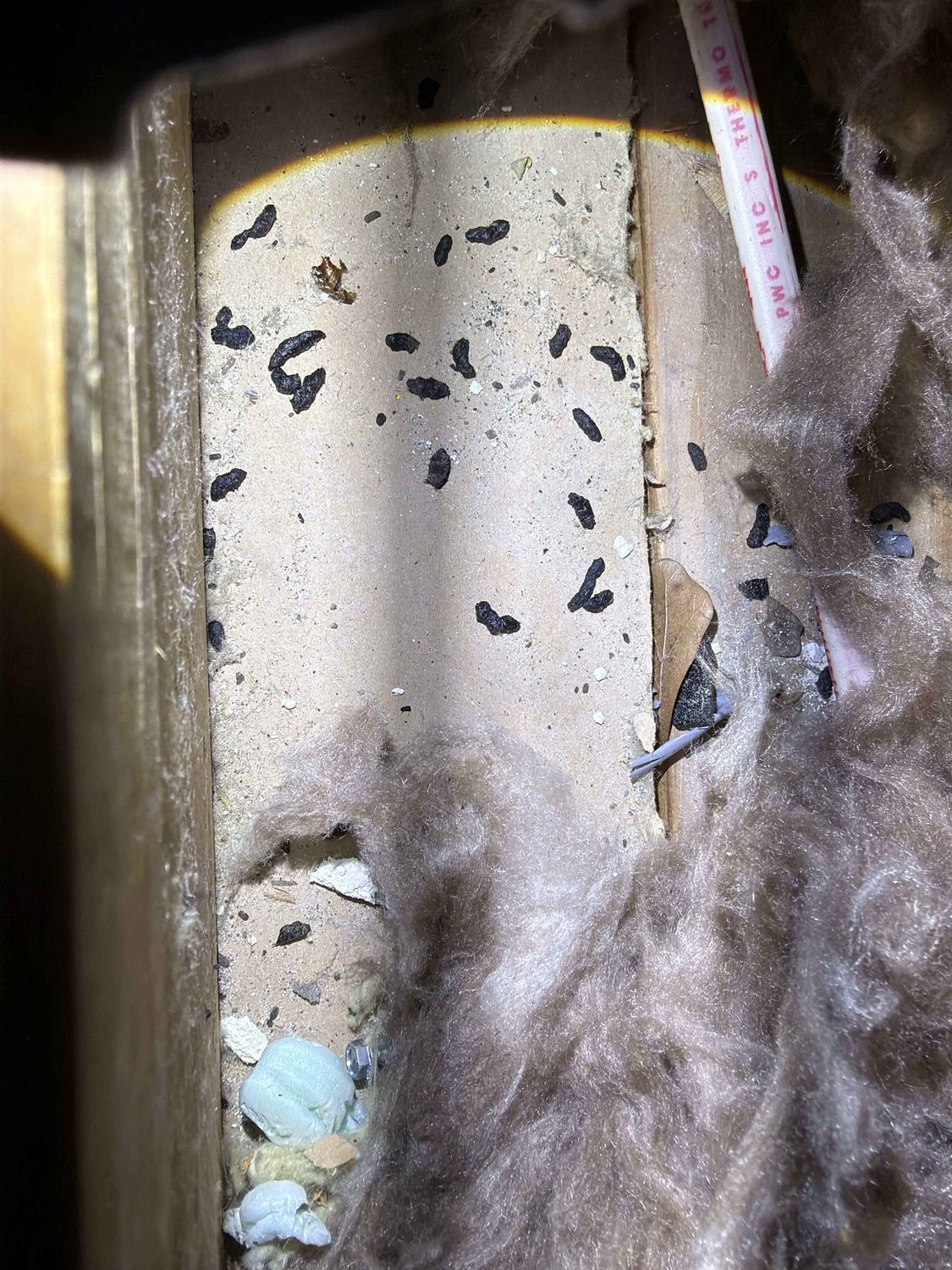
Pellets near the hatch or along the top plates, shredded nesting material, leaves, nut shells or piles of guano are direct evidence. Anything soiled this way is a removal question, not a top-up question. Our page on contaminated insulation removal explains how that material comes out, and attic cleanup and decontamination covers what each animal leaves and the health risks attached.
8. Depth well under the zone 2A target
Even clean insulation can be the problem if there is not enough of it. Harris and Montgomery counties are Hot-Humid, IECC zone 2A, in the DOE’s Building America climate region guide. For that zone, ENERGY STAR’s recommended R-values are R49 for an attic starting from nothing, or R38 added where three to four inches are already in place. Many older attics in Klein, Spring and Champions are nowhere near that.
9. Cooling bills that keep climbing
A bill that rises summer after summer with no change in how you live is worth investigating. The DOE’s Guide to Home Insulation says homeowners can save up to 20 percent on heating and cooling costs by adding insulation and cutting air leaks. Your attic will not necessarily hit that figure, but a thin or damaged layer is one of the usual places that money goes.
10. Old, settled or gray-looking fill
Loose fill that went in when the house was built may have settled lower than it started, and fill that looks gray, dusty or clumped has often been through roof leaks or years of attic dust. Age alone is not a reason to replace it. Age plus thin, compacted or discolored fill usually is.
When the insulation is not the whole story
Some of these signs have other causes, and it is worth ruling them out so you do not replace good insulation for nothing.
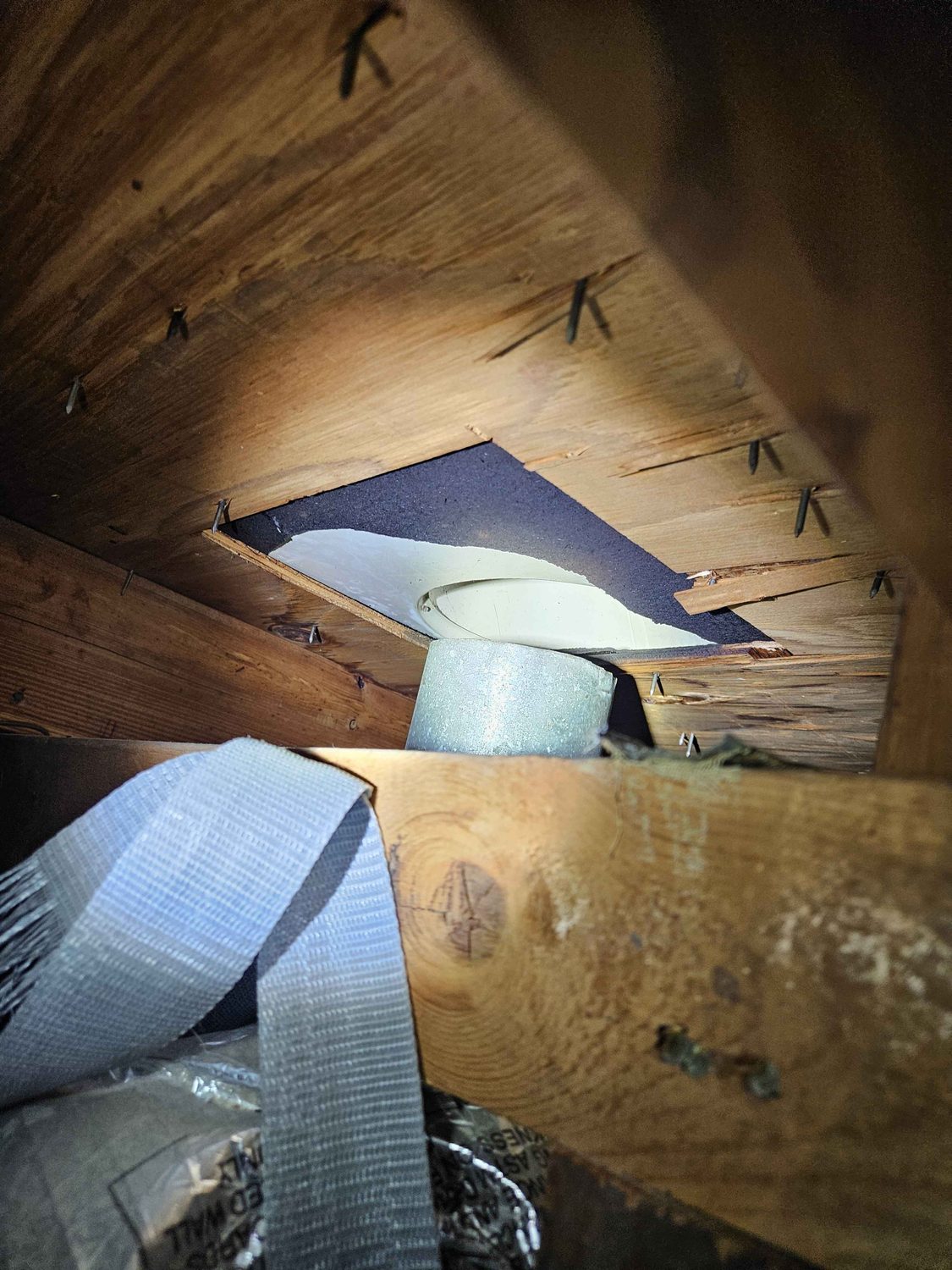
- A hot room can come from a disconnected or crushed supply duct in the attic, which pours cooled air into the attic instead of the bedroom.
- High bills can trace back to an aging air conditioner, leaky ducts or air slipping around the attic hatch and recessed lights. The DOE savings figure above pairs more insulation with sealing those leaks, not one without the other.
- A ceiling stain can be a true roof leak or a sweating duct or air handler drain line, not animal urine.
A good inspection looks at the ducts, the hatch and the roof deck while it is looking at the insulation, so the fix matches the real cause.
Measuring depth against the R49 target
R-value is what matters, and depth is how you estimate it. Different materials give different R-values per inch. The DOE guide lists loose fill fiberglass, cellulose and mineral wool as reaching R30 at anywhere from 8 to 23 inches depending on the material, and says batts and blankets are the most common type in American homes.
To check yours, push a ruler down through clean fill until it touches the drywall, in two or three places you can reach from the hatch, and average them. A quick rule from the framing: if you can see the tops of the joists, the insulation is shallower than the joists, which in most homes is only a handful of inches. Scale the DOE figures up and R49 works out to well over a foot of even the best-performing loose fill.
Batts are easier to read because the R-value is usually printed on the paper facing, if you can see it without disturbing anything. For loose fill, depth is only an estimate, and the DOE guide notes that in existing homes a contractor evaluates the current R-value as part of sizing the job. That is part of our free inspection.
Top-up or full removal?
This is the real question behind most of these signs.
A top-up is usually enough when the existing insulation is dry, clean and fairly level, and the only problem is that there is not enough of it. New fill goes on top to bring the attic up to the target. Our page on a blown-in insulation top-up covers that job.
Removal is usually needed when signs 1, 2, 5, 6 or 7 show up, because the old layer is soiled, soaked or crushed. TAP’s manufacturer says in its FAQ that the product can be installed over existing insulation, but that taking the old material out may be the better choice where pests have damaged it. Putting new fill over a latrine or a nest buries the problem; it does not fix it.
Mixed attics are common. A garage attic may need a tear-out while the main attic needs only more depth, and the quote can treat them separately.
What comes next
If the signs point to animals, they come first. The openings get sealed under exclusion and repairs before any new insulation goes in, because TAP works on insects that contact it, not on rats, squirrels or raccoons. How TAP compares with plain cellulose and fiberglass is on our TAP vs cellulose vs fiberglass page, and the factors behind a price are on attic insulation cost.
On incentives, the IRS energy efficient home improvement credit applies to property placed in service from 2023 through the end of 2025, so insulation installed in 2026 does not qualify. Utility programs are a separate matter, covered on insulation rebates and tax credits.
We work across north Houston, from Magnolia and Conroe to Atascocita and Champions. If two or three of these signs sound familiar, contact us for a free look at the attic and a written price before any work starts. The full service is on our attic insulation page.
Frequently asked questions
How often does attic insulation need to be replaced?
There is no fixed schedule. Insulation that stays dry, clean and deep can last as long as the house. What ends its life in north Houston attics is usually animals, roof leaks or settling that has left it well short of the depth this climate calls for.
Can I tell if my insulation is bad without going into the attic?
Partly. A smell from the hatch or ceiling fixtures on hot afternoons, stains on the ceiling with no leak above, and an upstairs that will not cool are all clues from below. To know the depth and whether animals have used it, someone has to look from the hatch.
How many inches of insulation should a Houston attic have?
It depends on the material, because each type gives a different R-value per inch. The DOE guide puts loose fill at 8 to 23 inches for R30, and ENERGY STAR's target for this zone is R49, so most attics need well over a foot of loose fill to reach it.
Is it a bad sign if I can see the ceiling joists?
It means the insulation is shallower than the joists are tall, which in most homes is only a handful of inches. That is a long way under the ENERGY STAR target for zone 2A, so it is a strong sign the attic needs more insulation, even if what is there is clean.
Should old insulation be removed before adding new?
Only if something is wrong with it. The maker of TAP says it can be installed over existing insulation but that taking the old layer out may be better where pests have damaged it. Clean, dry fill stays; soiled or soaked fill comes out first.
Attic Insulation in north Houston?
No long-term contracts, and service agreements are backed by our 100% Service Guarantee.
Because we are based in Spring, we can often come out the same or next day for urgent problems. Call before noon, Monday through Friday, for the best chance at next-day service.
Last updated