
Adding Blown-In Insulation to an Attic in Spring and North Houston
A top-up means blowing new loose-fill insulation over the layer already in your attic. It works when that layer is dry, clean and simply too thin. For north Houston's zone 2A, ENERGY STAR suggests adding R38 over three to four inches; soiled, wet or nested insulation should come out before anything new goes on top.
Call 281-627-4810 Request a free inspection
Year-round protection plans from $70 Core · Premium · Legendary See the plans
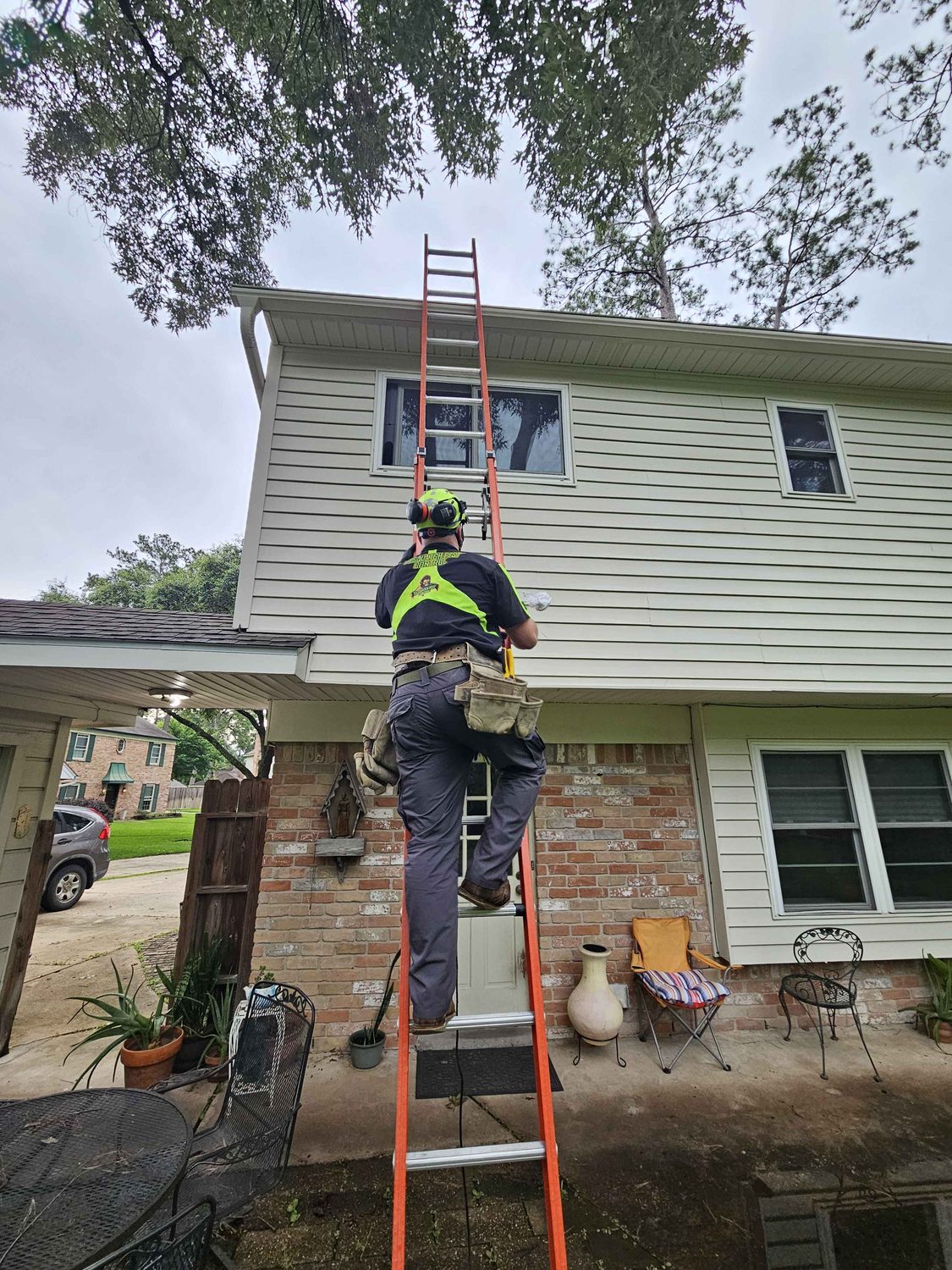
What to do, in order
| Climate zone | Harris and Montgomery counties are Hot-Humid, IECC zone 2A, per the DOE Building America county guide |
|---|---|
| Target over 3 to 4 inches | Add about R38, per ENERGY STAR's recommendations built on the 2021 IECC |
| Target with no insulation | R49 for an attic floor starting from nothing, per ENERGY STAR |
| Loose fill depth for R30 | Roughly 8 to 23 inches depending on the material, per the DOE Guide to Home Insulation |
| When a top-up fits | The existing layer is dry, evenly spread, free of droppings and nests, and just too shallow |
| When removal comes first | Urine-soaked, nested, tunneled, moldy or water-damaged fill, or a raccoon latrine anywhere on the floor |
| What it costs | Free inspection, then a written price before work starts, tied to attic size and target depth |
- From the attic ladder, push a tape measure or ruler straight down through the fill to the drywall in three or four spots and write down each depth.
- Look for low spots, bare ceiling joists, and fill that has been pushed away from the eaves or around the hatch.
- Check for droppings, tunnels, nest material, water stains or a urine smell; any of these means the layer needs a closer look before anything is added.
- Note every recessed light, bath fan and soffit vent you can see so the installer knows what must be kept clear.
- Book a free inspection so the depth, condition and air leaks are checked together and the written price names a target R-value.
What a top-up actually is
A top-up is the simplest insulation job there is on paper. Nothing gets torn out. An installer feeds loose fill into a blowing machine parked outside, runs a hose up into the attic, and lays a new blanket of material evenly over whatever is already on the ceiling. The old layer stays put and keeps doing its share; the new layer adds depth until the attic reaches a target R-value.
Most of the requests we get for “blown in insulation Houston” are really this question: the attic has something in it, the upstairs is hot, and the owner wants to know whether more on top will fix it. Often it will. Sometimes the honest answer is that the old layer has to go first, and blowing new fill over it would only bury the problem. The rest of this page is about telling those two situations apart, and about what a good top-up looks like when it is the right call. The full insulation service, including removal, is laid out on our attic insulation page.
When adding on top works
A top-up is a good fit when the existing insulation passes four checks:
- It is dry. No water stains on the drywall below, no damp or crusted patches near a roof penetration, no musty smell.
- It is clean. No droppings, no urine trails, no shredded nest material, no raccoon latrine in a corner.
- It is spread fairly evenly. A few low spots are normal and get filled. Deep trenches worn by animals point to a different problem.
- It is simply thin. Many older homes around Spring, Klein and Champions were built with a few inches of fill that has settled over the years. That is exactly the attic a top-up was made for.
The maker of TAP says in its product FAQ that the material can be installed over existing insulation, which is how most of our top-ups are done. Batts, older fiberglass loose fill and cellulose can all sit underneath, provided they pass the checks above. If you are weighing materials before you decide, our comparison of TAP vs cellulose vs fiberglass walks through the differences.
When the old layer has to come out first
The same FAQ also says removal may be the better option where pests have damaged what is there. In our experience that covers more attics than people expect, because the animals that cause insulation problems are usually the reason someone finally climbs the ladder.
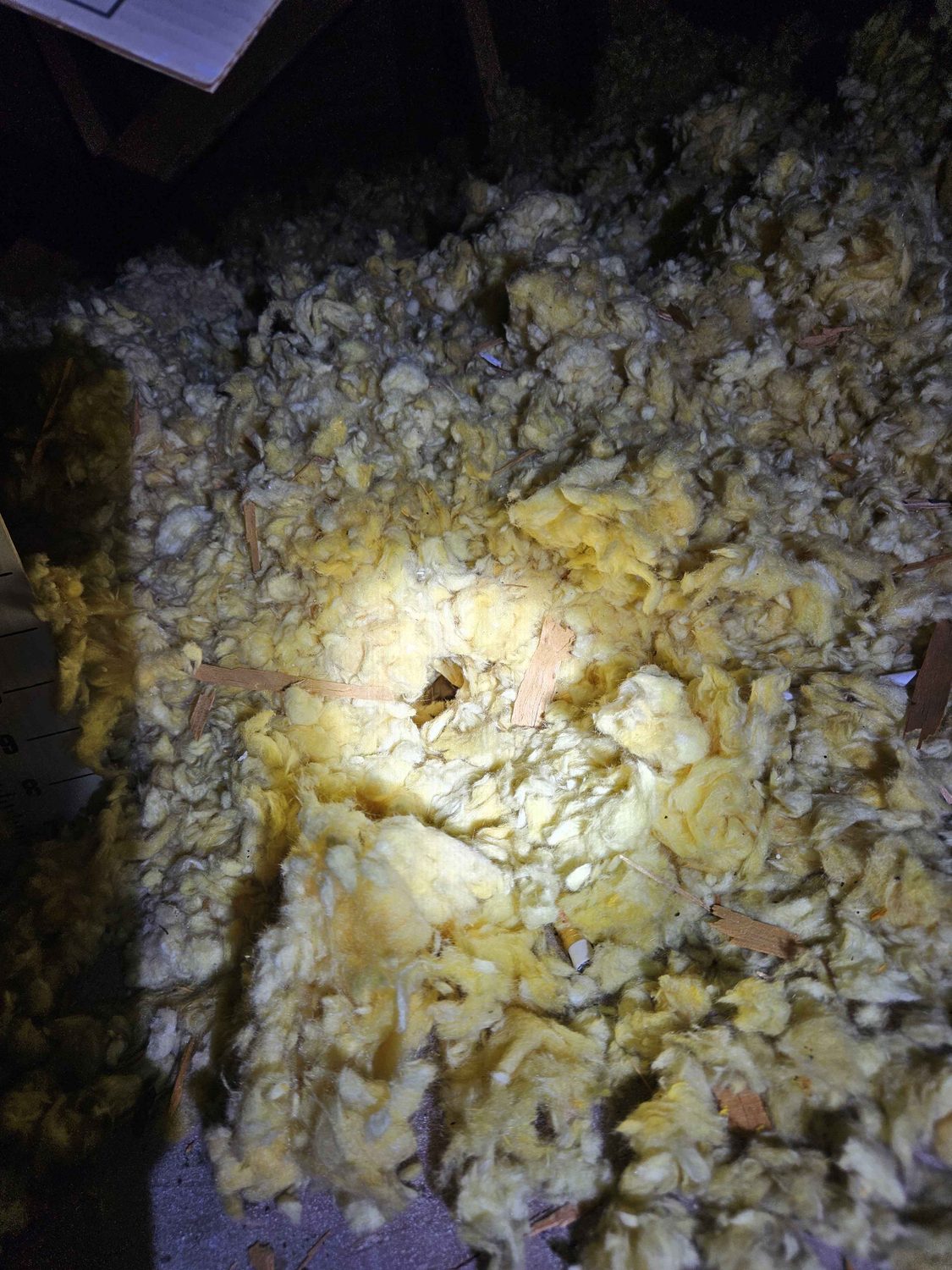
Removal comes first when you find:
- Rodent runways and nests. Packed-down trails, urine staining and droppings along the top plates mean contamination travels with the fill. Roof rats are the usual culprit here; see roof rats in the attic.
- Squirrel or raccoon nesting. Squirrels haul in leaves and dig tunnels; raccoons flatten whole sections and leave latrines. The CDC’s raccoon roundworm prevention page says contaminated material should be removed and burned, buried or taken to a landfill, not covered over.
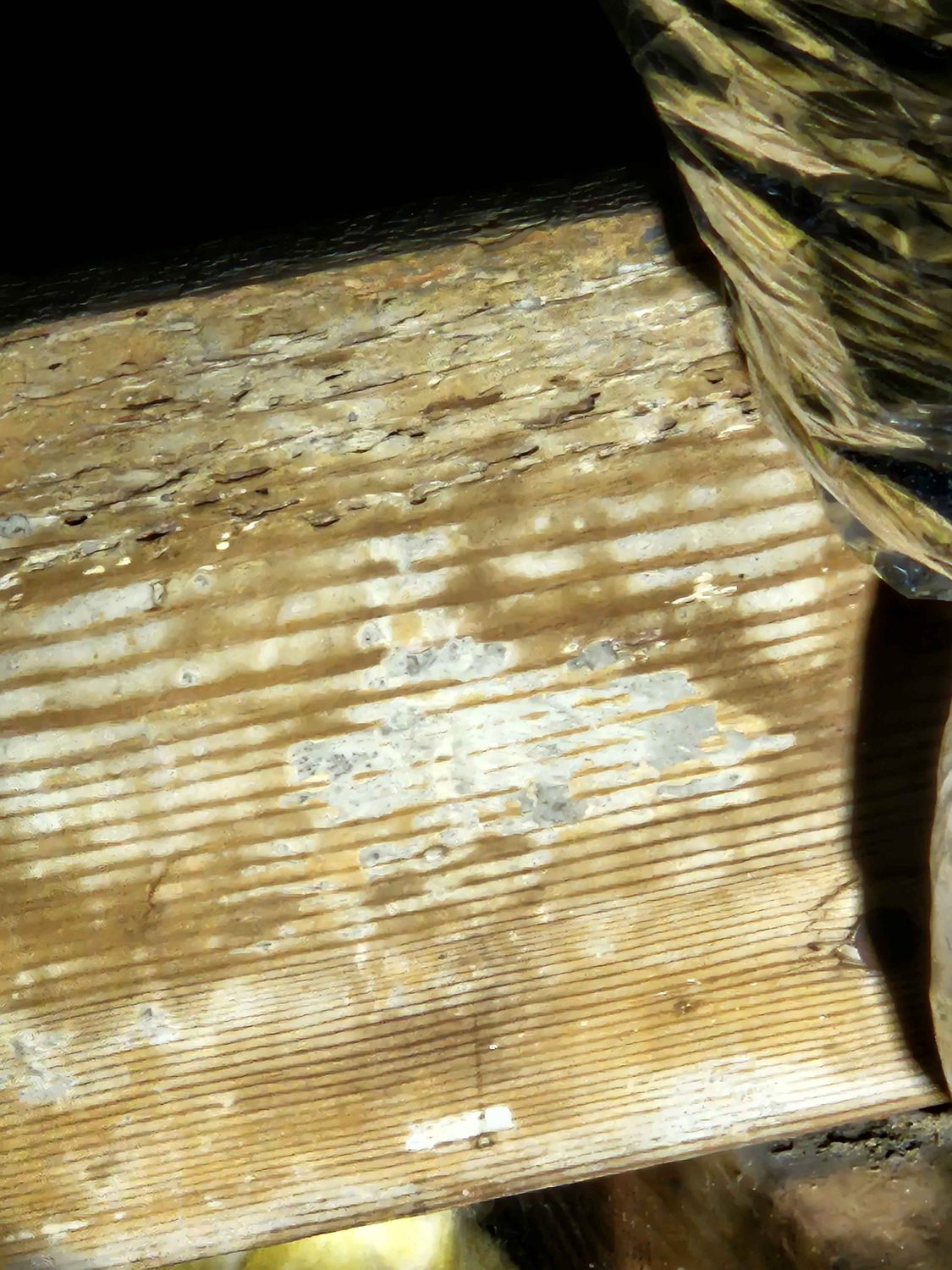
- Water damage or mold. Wet insulation loses loft and holds moisture against the drywall. Fix the roof leak, then replace the wet section.
- Bat guano. That job has its own timing rules and cleanup; see bat exclusion.
Covering any of these with a fresh layer traps the odor and the mess under a foot of new material, where nobody will find it until a ceiling stain shows up. The removal side is explained on contaminated insulation removal, and the cleaning that follows is on attic cleanup and decontamination. If you are still unsure which side of the line your attic falls on, the signs your attic insulation needs replacing page goes through what to look for.
How much attic insulation you need in Houston
The Department of Energy’s Building America climate region guide lists both Harris and Montgomery counties as Hot-Humid, zone 2A. That zone label is what every R-value recommendation for our area is keyed to.
ENERGY STAR’s insulation R-value table gives two numbers for an attic in zones 2 and 3. An attic with no insulation should reach R49. An attic that already holds three to four inches should have R38 added on top. Those figures follow the 2021 International Energy Conservation Code. For a typical top-up in north Houston, the second number is the one that applies.
R-value is a measure, not a depth, and different loose fills reach it at different thicknesses. The DOE’s Guide to Home Insulation shows loose-fill fiberglass, cellulose and mineral wool reaching R30 at anywhere from 8 to 23 inches, depending on which material is used. That spread is why a quote that only says “add 10 inches” tells you very little. Ten inches of one product and ten inches of another are not the same R-value. A useful quote names the product, the target R-value, and the settled depth that product needs to hit it.
The same DOE guide, which is older than the ENERGY STAR table, also notes that for an existing home a contractor should evaluate the R-value already in place before recommending how much to add. That is what the inspection is for.
Why depth matters in Houston heat
On a July afternoon in Tomball or Cypress, the roof deck bakes and the attic air climbs far past anything you would tolerate indoors. All of that heat is pressing down on the ceiling over your bedrooms, and often around the air handler and duct runs too. Insulation is the only thing slowing it down.
A thin or patchy layer lets that heat soak through to the rooms below, so the air conditioner runs longer and the upstairs never quite catches up by evening. Low spots matter as much as average depth. A wide, bare strip along the eaves or a hollow around the hatch is a path of least resistance, and the heat takes it. Getting the whole floor to an even, adequate depth is what a top-up is supposed to accomplish.
Seal the air leaks before adding depth
Insulation slows heat moving through the ceiling. It does very little about air moving through holes in it. The DOE guide says homeowners can save up to 20 percent on heating and cooling costs by adding insulation and reducing air leaks together, and it treats the two as a pair for a reason.
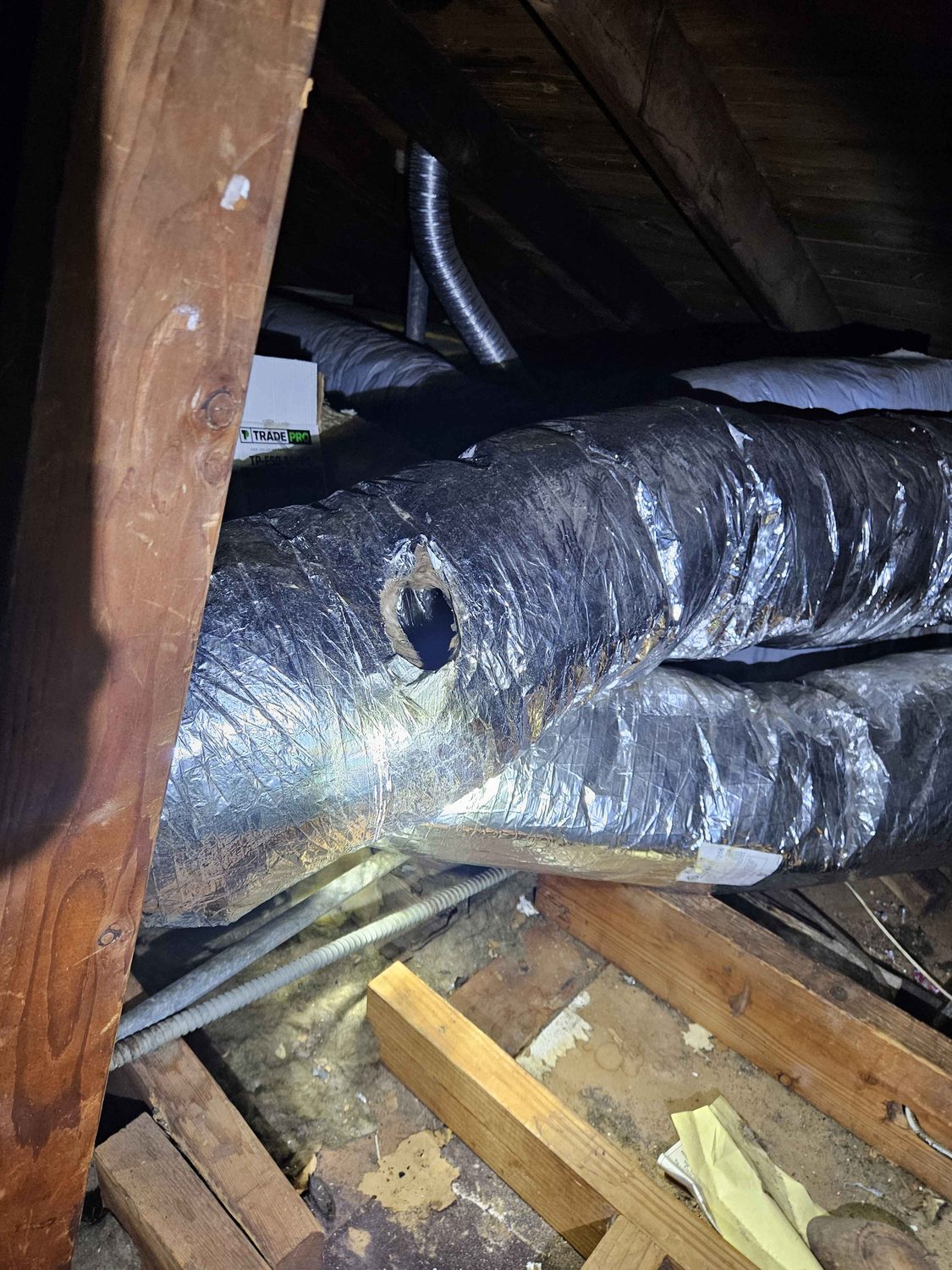
Typical leaks in an attic floor are the gaps around plumbing stacks, wiring holes drilled through the top plates, the edges of the attic hatch, bath fan housings, and the chases where ducts or flues pass through. Once another foot of fill is blown over them, they are buried and much harder to reach. So the sequence on a well-run top-up is to find and close those gaps first, then blow. The same goes for gaps to the outside: if the roofline has openings an animal can use, those get sealed as part of our exclusion and repairs work before any new insulation goes in.
Keeping vents and light fixtures clear
Loose fill goes down quickly, and it is easy to overdo in the wrong places. The EPA-accepted label for TAP spells out two limits we follow on every attic:
- The insulation must not cover soffit vents or other attic ventilation. Air has to come in at the eaves and leave higher up, or the attic holds heat and moisture. Baffles at the eaves keep the fill from spilling into the vent openings as the depth builds.
- It must be kept away from light fixtures and other heat-producing parts. Older recessed lights in particular get a clearance or a cover so fill does not pile against the housing.
The label also has applicators wearing gloves, goggles and a particulate respirator while handling the product, which is one reason we keep the homeowner out of the attic while the hose is running.
How a top-up job runs
- Inspection. We measure the existing depth in several places, check condition, look for animal activity and leaks, and map the vents, fixtures and air handler. You get a written price that names the target.
- Pests first. If anything is living up there, that is dealt with and the entry points are closed before a single bag is opened. A rodent control or squirrel control job may come first.
- Prep. Gaps in the attic floor are sealed, baffles go in at the eaves, and depth markers are attached to the framing at intervals across the attic so the target line is visible.
- Blowing. TAP is loaded into the machine outside and blown in through a hose, working from the far corners back toward the hatch so nobody has to walk through fresh fill.
- Finish. The hatch gets insulated and weatherstripped, and the vents and fixtures are rechecked for clearance.
How to check the result
The simplest proof is the depth markers. These are rulers or printed cards stapled upright to the trusses before blowing starts, marked in inches. When the job is done, the top of the new fill should sit at or above the line written on the quote across the whole floor, not just near the hatch. Look from the ladder with a flashlight: the surface should be level, with no bare joists showing and no dips along the eaves.
Ask for the bag count and the product’s coverage chart as well. Loose fill is rated to reach a given R-value at a given settled depth using a given number of bags per area, and those three numbers should line up with each other and with the quote.
What a top-up does not do
TAP is a borate-treated cellulose, and its label covers insects that crawl through it, such as cockroaches, ants and silverfish. It does nothing to keep a rat, squirrel or raccoon out of the attic. Sealing does that. More on the product itself is on our TAP pest control insulation page.
Next steps
If you are wondering what the job will run, our page on attic insulation cost explains what moves the price. The current status of credits and utility programs is covered under insulation rebates and tax credits. Our 100% Service Guarantee applies to top-ups like any other insulation job, and the inspection is free. Contact us to have someone measure what is in your attic now.
Frequently asked questions
How many inches of blown-in insulation does a Houston attic need?
It depends on the material, because R-value per inch varies. The DOE guide puts R30 of loose fill somewhere between 8 and 23 inches. Ask the installer to write the target R-value and the matching depth for the product on the quote, then check the markers afterward.
Can new insulation go over old fiberglass batts?
Yes, as long as the batts are dry, intact and lying flat against the ceiling. Loose fill blown over batts fills the seams and gaps between them. Batts that are wet, crushed by foot traffic or full of nesting material should be pulled first.
Will adding insulation make my attic hotter?
The attic space above the insulation may run a little warmer, since less of its heat soaks down into the house. That is the point. What matters is that the soffit vents stay open so the attic can still breathe, which is why baffles and clear eaves are part of the job.
Do I need to air seal before a top-up?
It is the right order. Gaps around wiring, plumbing, the hatch and light fixtures let attic air into the house no matter how deep the fill is, and they are much harder to reach once another foot of insulation covers them.
Does topping up with TAP keep rats out of the attic?
No. TAP is labeled for insects that crawl through it, not for rodents or wildlife. If rats or squirrels are getting in, the openings have to be sealed first, or the new layer becomes their next nest and runway.
Attic Insulation in north Houston?
No long-term contracts, and service agreements are backed by our 100% Service Guarantee.
Because we are based in Spring, we can often come out the same or next day for urgent problems. Call before noon, Monday through Friday, for the best chance at next-day service.
Last updated