
Roof Rats in the Attic in Spring and North Houston
Running and gnawing in the attic after dark, in a tree-shaded north Houston neighborhood, is most often roof rats that climbed a limb or fence to a roofline gap. Confirm it with droppings and rub marks near the eaves, keep stored food sealed, and get the entries found and closed while traps work the runways inside.
Call 281-627-4810 Request a free inspection
Year-round protection plans from $70 Core · Premium · Legendary See the plans
What to do, in order
- Note the time of the noise for three or four nights; activity in the first hours after dark points to rats, daytime noise to squirrels.
- From the attic hatch, use a flashlight to look for dark pellets, greasy rub marks on rafters and trails flattened through the insulation.
- Move pet food, birdseed and pantry goods in the garage into lidded metal or glass containers tonight.
- Walk the roofline from the ground and list every limb, vine or utility line that touches or hangs over the roof.
- Do not foam or patch holes until you know whether rats are still inside; a sealed-in rat chews a new way out.
- Book an inspection of the attic, garage and exterior so every entry is mapped before trapping and sealing start.
What the noise usually turns out to be
When someone in Spring, Klein or The Woodlands calls about something running across the ceiling at night, the answer is roof rats more often than anything else. These are slim, dark rats with a tail longer than the body, and they are climbers by nature. Texas A&M AgriLife’s leaflet on controlling rats and mice says the roof rat seldom burrows and normally nests in double walls and attics, while a nest underground is almost always a Norway rat. The same leaflet notes that a hundred or more roof rats can live together peaceably, so a single pair that finds a soffit gap has room to become a crowd.
Three other things get mistaken for roof rats:
- Squirrels. Loud, thumping and active in daylight, especially early and late in the day. That job lives under squirrel removal.
- House mice. Lighter, quicker scratching, and usually lower in the house: kitchen cabinets, the garage, the bottom of walls.
- Flying squirrels. Rare, but they move at night like rats do. If there is plenty of noise and no rat droppings at all, keep this one in mind.
Why the attic, and why here
Texas A&M’s rodent IPM training describes roof rats as preferring mature vegetation, vines and trees for cover, and nesting above ground more often than not. That reads like a description of a north Houston subdivision. Water oaks and pines lean over the shingles, fences run up to the eaves, and cable lines cross from the pole to the fascia. A roof rat can travel from the neighbor’s yard to your roof without touching the ground.
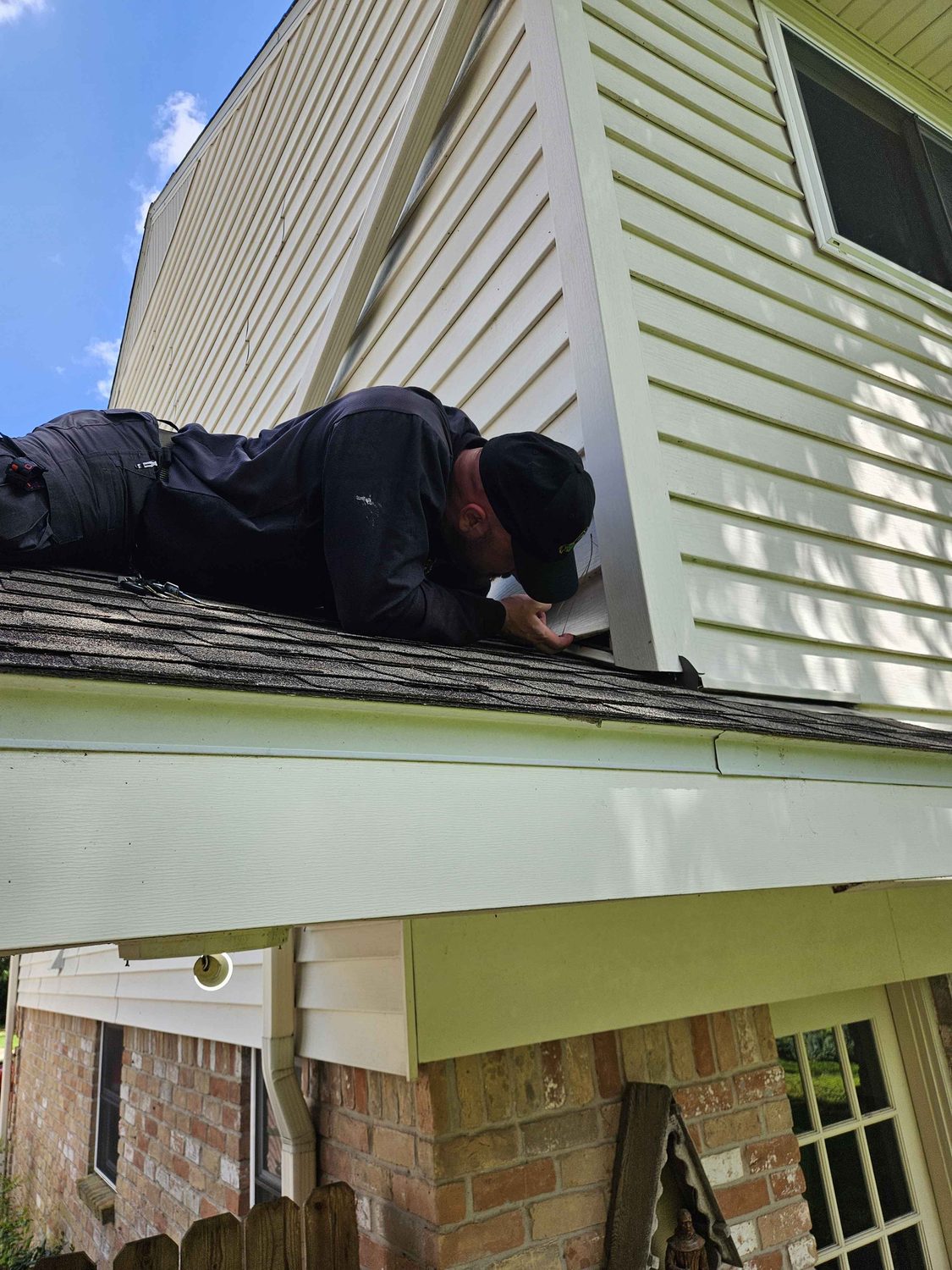
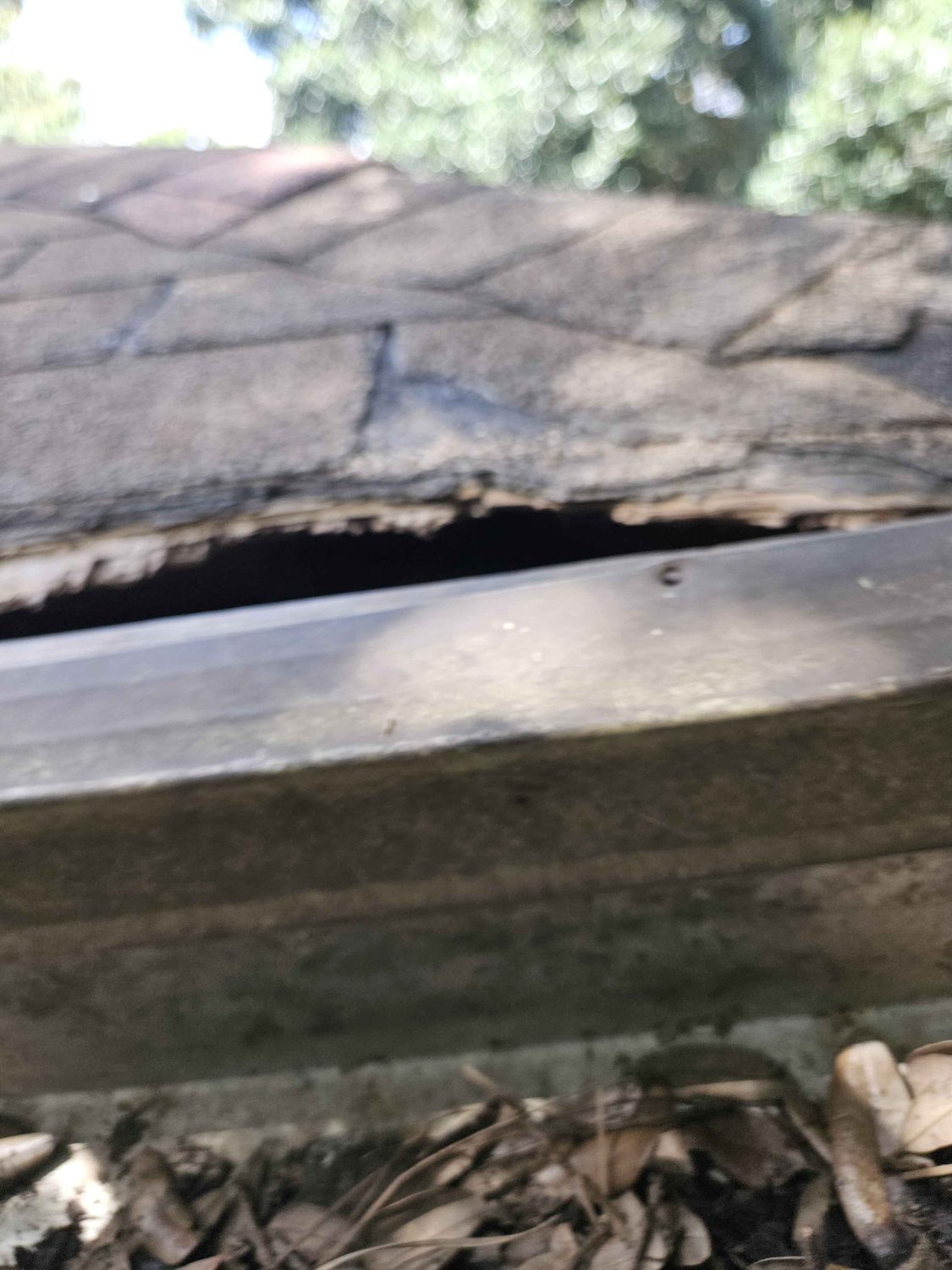
Once on the roof, it needs a gap about the size of a quarter. Those turn up where a lower roof meets a two-story wall, at soffit returns, around plumbing vent boots and behind gable vent screens that have rusted through. Pecans, fallen fruit, birdseed and dog food stored in the garage keep the colony fed.
How to tell at home
You can learn a lot without crawling across joists. Stand on the attic ladder with a good flashlight and look along the top plates and the edges of the insulation nearest the eaves.
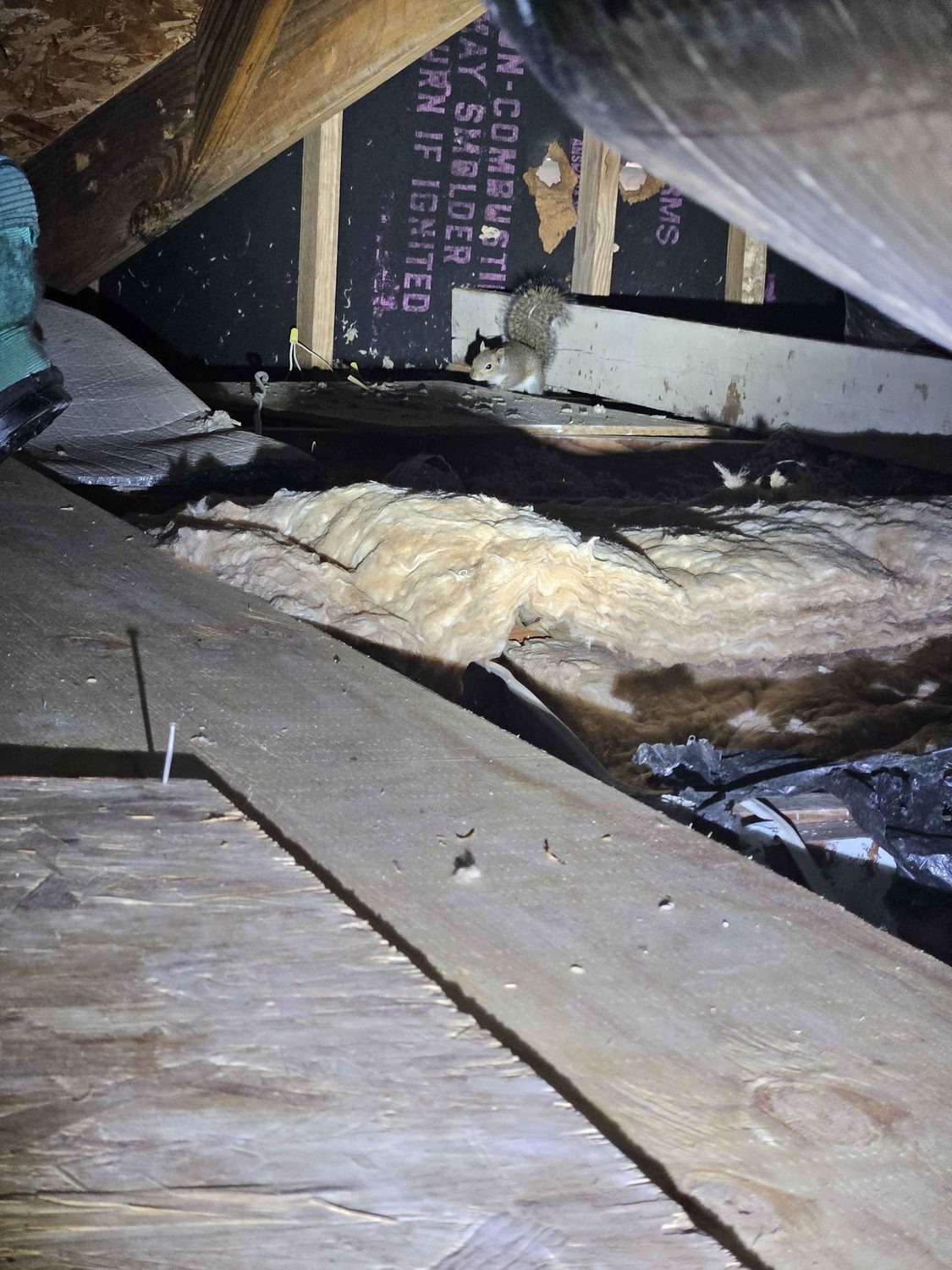
- Droppings. Dark, spindle-shaped pellets, often in clusters along a travel route. Shiny, soft ones are fresh.
- Rub marks. Gray-black greasy smudges on rafters and wood where bodies brush the same spot every trip.
- Trails. Paths worn into the insulation, sometimes ending at a hole in the soffit or a gap over the garage.
- Chewing. Gnawed wire sheathing, ductwork wrap or the edge of a vent. Bare wire is a reason to call an electrician as well.
- Timing. The training material notes rodents are busiest in the first two hours after dusk. Noise that peaks after dinner and again before dawn fits.
From outside, watch the roofline at dusk for a few evenings. A rat dropping along a fence top or a power line toward the eave shows you the route.
What we do about it
The job follows the company’s rodent program, starting with a free inspection and no long-term contract.
- Map the house. The technician checks the attic, the garage, the exterior and the roofline, looking for where the rats live, where they enter and what they eat.
- Trap where they travel. Traps go on the runways the inspection found, in forms suited to an attic. Outside, tamper-resistant bait stations sit in active areas around the home.
- Close the small gaps. Screening vents and sealing around small pipes are part of the program. Bigger carpentry, like a rotted soffit section, is priced separately after the inspection.
- Check back. A follow-up about a week after setup, then a monthly, every-other-month or quarterly schedule based on what we keep finding.
For roofline repairs beyond small seal work, the exclusion and repairs team handles it, and our page on roofline and soffit gaps explains the openings in detail.
While you wait for the visit
Keep people out of the attic for anything but a quick look. Do not sweep or vacuum droppings; the CDC’s rodent cleanup guidance says that can send droplets carrying viruses into the air, and it gives a wet-cleaning method with gloves and a bleach solution instead. Leave the holes open for now, because plugging an active entry traps rats inside, where they gnaw somewhere new. Trimming limbs back from the roof is the one exterior change that helps right away.
When to call
Call once you have heard it on more than one night, or found droppings, or spotted a rat on the fence line. Call the same day if you find chewed wiring. Waiting through winter is the expensive choice here: AgriLife lists roof rats as producing three or more litters a year, heaviest in winter and spring.
Related rodent problems
If the sounds come from inside a wall rather than overhead, read scratching in the walls at night. If the evidence is piling up on the garage floor, see droppings in the garage. The full program is on our rodent control page, and the work is covered by the 100% Service Guarantee. To book the free look at your attic, contact us.
Frequently asked questions
How do I know it is roof rats and not mice or squirrels?
The clock and the droppings tell you most of it. Squirrels are active in daylight. Roof rats move after dark and leave pellets far bigger than a mouse's. Where the nest sits matters too, because roof rats nest high and seldom burrow.
Will the rats leave on their own once it cools down?
Not in this climate. An attic stays sheltered and dry all year, and roof rats breed through winter and spring here. A quiet week usually means they shifted to another part of the house, not that they moved out.
Can I put poison bait in the attic?
We advise against it. A rat that eats bait in an attic can die inside a wall or soffit where you cannot reach it, and the odor lasts. Our program uses traps inside along the runways and keeps bait in tamper-resistant stations outside the house.
Do I need to replace the attic insulation afterward?
Sometimes. A short-lived problem may only need the droppings and nests cleaned out. Insulation that is heavily tunneled, soaked with urine or full of nesting material is usually better replaced, and that is quoted as separate work so you can decide.
Guides
From the blog
Rodent Control in north Houston?
No long-term contracts, and service agreements are backed by our 100% Service Guarantee.
Because we are based in Spring, we can often come out the same or next day for urgent problems. Call before noon, Monday through Friday, for the best chance at next-day service.
Last updated