
Droppings in the Garage in Spring and North Houston
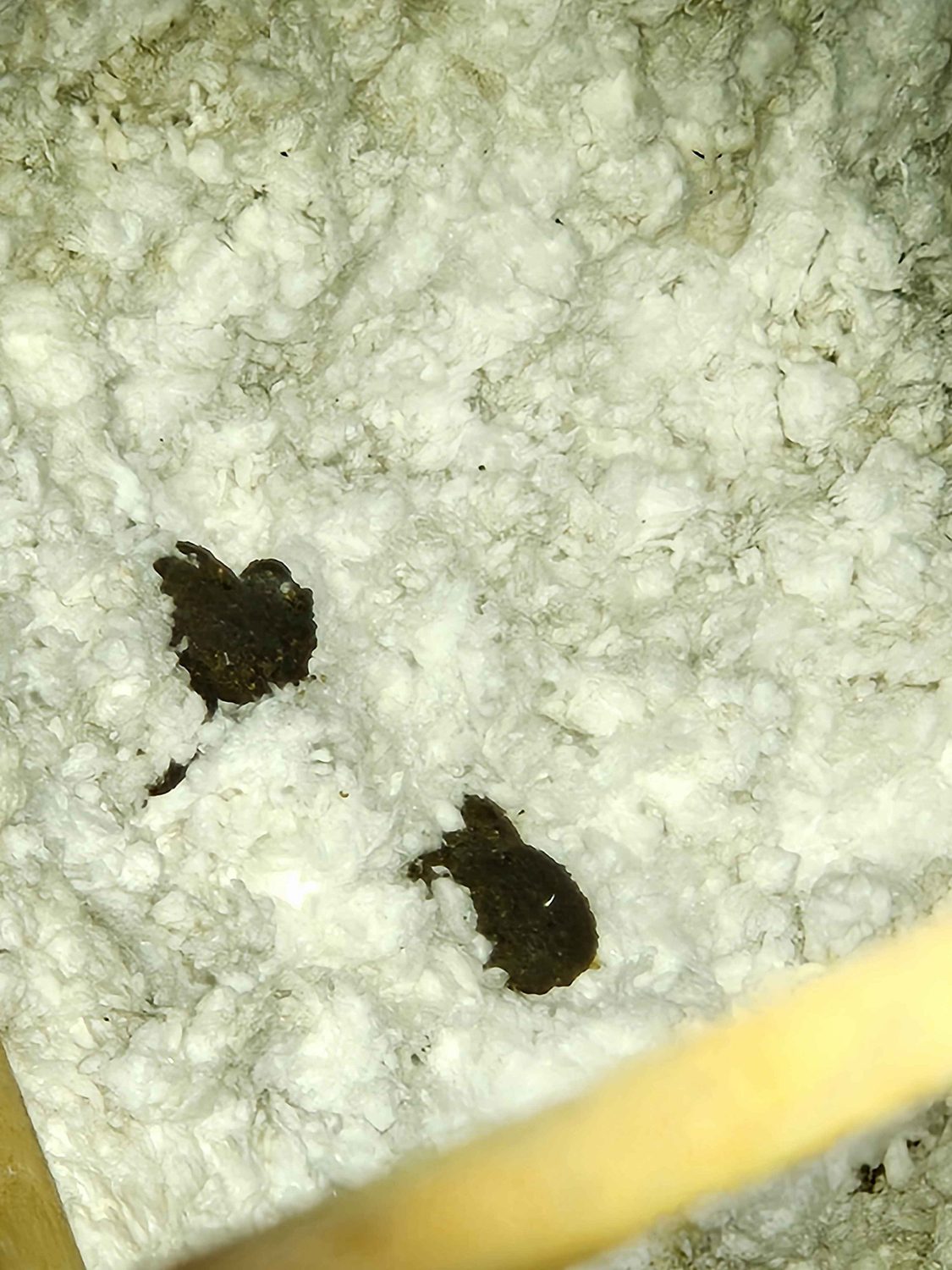
Small dark pellets along a north Houston garage wall are usually house mice, and larger ones near stored feed are often rats. Both typically enter at the corners of the garage door. Do not sweep them up dry. Wet them with disinfectant, wipe up with gloves, then find and close the gap they are using.
Call 281-627-4810 Request a free inspection
Year-round protection plans from $70 Core · Premium · Legendary See the plans
What to do, in order
- Photograph a few pellets next to a coin before cleaning, so the size can be judged later.
- Open the garage door and any windows for 30 minutes and stay out while it airs.
- Wearing rubber gloves, soak the droppings with one part bleach to nine parts water and leave it five minutes.
- Wipe up with paper towels, bag them, and put the bag in a covered trash can.
- Move pet food, birdseed and grass seed off the floor into sealed metal or glass bins.
- With the door closed and the lights off, look for daylight at the bottom corners and along the seal.
What it usually turns out to be
A garage is where many north Houston homeowners first find out they have rodents. It is cooler than outdoors in August, dry in a storm, full of cardboard boxes, and often stocked with a forty-pound bag of dog food. The droppings are the evidence, and they can usually tell you which animal left them.
- House mice. Small, dark, pointed pellets scattered along the base of a wall, under shelves and around stored food. This is the most common finding.
- Rats. Larger, thicker droppings, often near feed bags, the water heater closet or a gap into the attic over the garage. Roof rats often use the garage as a stair to the attic.
- Lizards and geckos. Dark pellets with a white tip. Harmless, and a sign of insects rather than rodents.
- Cockroaches. Tiny black specks or smears, usually in corners and near drains. That is a cockroach control question.
- Bats. Pellets that crumble to a glittery dust, under a high gap. Bat exclusion covers it.
How to tell at home
Before you clean, take a minute to read the scene. Texas A&M AgriLife’s leaflet on controlling rats and mice judges how heavy an infestation is by a few plain questions: are there just a few droppings or many, are they scattered or everywhere, and are they fresh or old? Fresh pellets are dark and soft; old ones turn gray and crumble.
Look at the rest of the garage the same way:
- Chewed bags and boxes. Holes in the corner of a feed bag, shredded paper, chewed seed packets.
- Nests. A mouse nest is a neat ball of shredded paper, insulation or fabric, often in a box nobody has opened in a year.
- Smears. Greasy dark marks along the bottom of the wall or the door track where bodies rub on the same route.
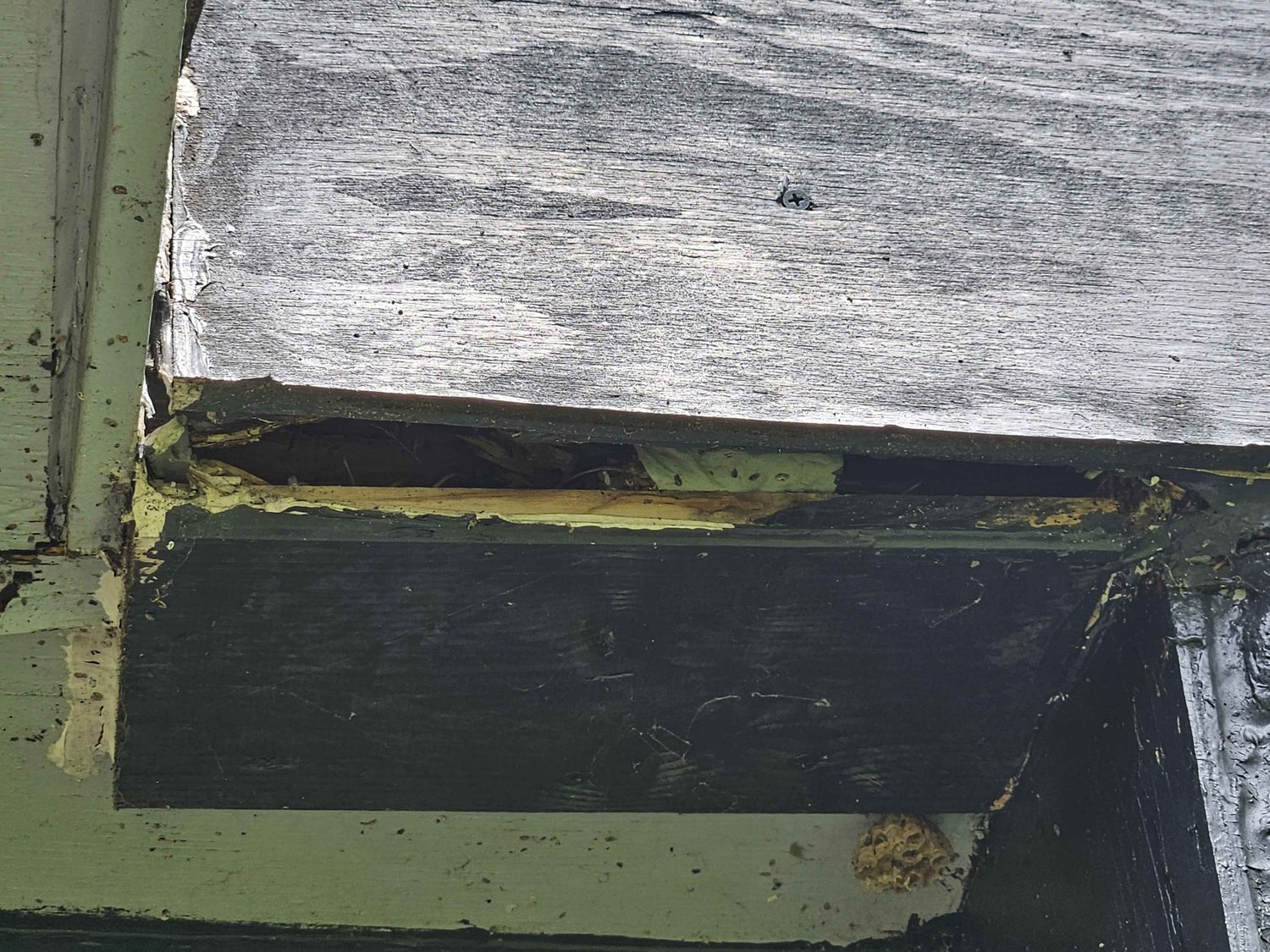
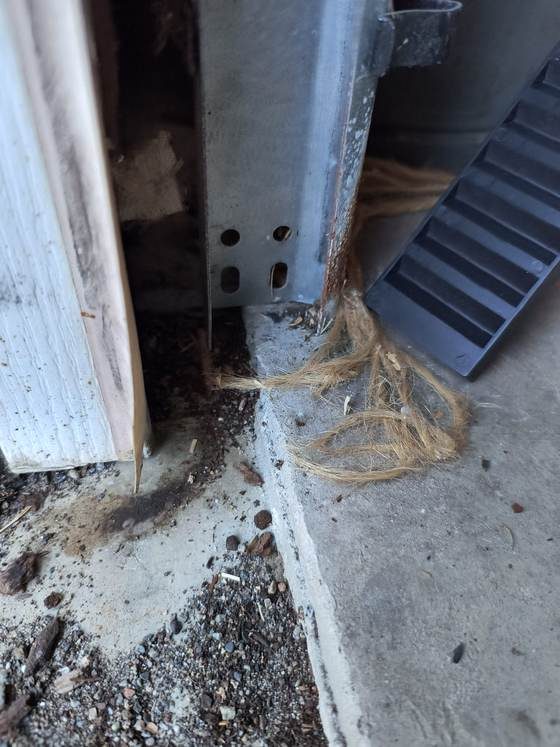
- The door. Close the garage door at midday and turn off the lights. Daylight at the bottom corners, where the seal meets the jamb, is the most common way in.
Texas A&M’s rodent IPM training says a mouse needs only a quarter-inch crack beneath a door to get in, and a rat about a half inch. A flattened seal clears both easily.
Cleaning up the right way
This is the part people get wrong. The CDC’s rodent cleanup steps say not to vacuum or sweep droppings, urine or nesting material, because that can put tiny droplets containing viruses into the air. Instead:
- Open the garage and leave for 30 minutes so it airs out.
- Put on rubber or plastic gloves.
- Spray the droppings until very wet with a fresh mix of one part household bleach to nine parts water, or a registered disinfectant, and let it soak five minutes.
- Pick everything up with paper towels and throw them out in a covered can.
- Disinfect the floor and any item the rodents soiled.
For a dead mouse in a trap, the CDC says to spray it as well, place it and the trap in a plastic bag, then put that bag into a second bag before it goes in the trash. Heavy contamination, such as a box full of nesting material, is a good place to stop and ask for help.
What we do about it
Garage droppings are a symptom; the plan targets the cause. Our rodent work starts with a free inspection and carries no long-term contract.
- Inspection. The technician looks at the garage, the attic above it, the exterior walls and any outbuildings to find where the rodents live, where they get in and what is feeding them.
- Traps and exterior bait stations. Traps go along the garage routes the droppings reveal. Outside, tamper-resistant stations are placed in active areas around the home.
- Small exclusion. Gaps around small pipes and screened vents are part of the program. A garage door seal or a bigger repair is quoted separately.
- A sanitation checklist for the garage, and a follow-up about a week after setup.
The door itself is often the fix. Our page on gaps under the garage door goes through the seal, the corners and the side jambs.
When to call
Call if you find droppings again within a week of cleaning, if the pellets are rat-sized, or if you find chewing on wires or a nest. A handful of droppings once a year near the door may be one mouse that wandered in. Fresh droppings every few days means an active route, and AgriLife notes that a house mouse can reach breeding age in six to ten weeks.
Related rodent problems
Droppings in the garage often go with sounds overhead; see roof rats in the attic if the noise is in the ceiling. The full program, including how often we come back, is on the rodent control page. The work is backed by our 100% Service Guarantee. To set up an inspection, contact us.
Frequently asked questions
Are these mouse droppings or rat droppings?
Size is the quick test. Mouse pellets are about the size of a grain of rice; rat droppings are clearly bigger and blunter. A photo beside a coin helps us tell on the phone, and the number and freshness tell us how large the problem is.
Is it dangerous to clean them up myself?
It is fine with the right method. The CDC warns against sweeping or vacuuming, because that puts contaminated particles in the air. Air the garage out, wear gloves, soak the droppings with a bleach solution, then wipe and bag them.
Why do they keep showing up in the same spot?
Rodents follow the same paths night after night, close to walls and under cover. A repeat pile is usually on a travel route between the way in and a food source, which makes it a good place to look for the entry and to set traps.
Will a new garage door seal fix it?
Often it fixes most of it. The bottom seal and the side corners are the common ways in. If droppings keep appearing after a new seal, there is another opening, often around a pipe or where the garage wall meets the house.
Rodent Control in north Houston?
No long-term contracts, and service agreements are backed by our 100% Service Guarantee.
Because we are based in Spring, we can often come out the same or next day for urgent problems. Call before noon, Monday through Friday, for the best chance at next-day service.
Last updated