
Gaps Under the Garage Door in Spring and North Houston
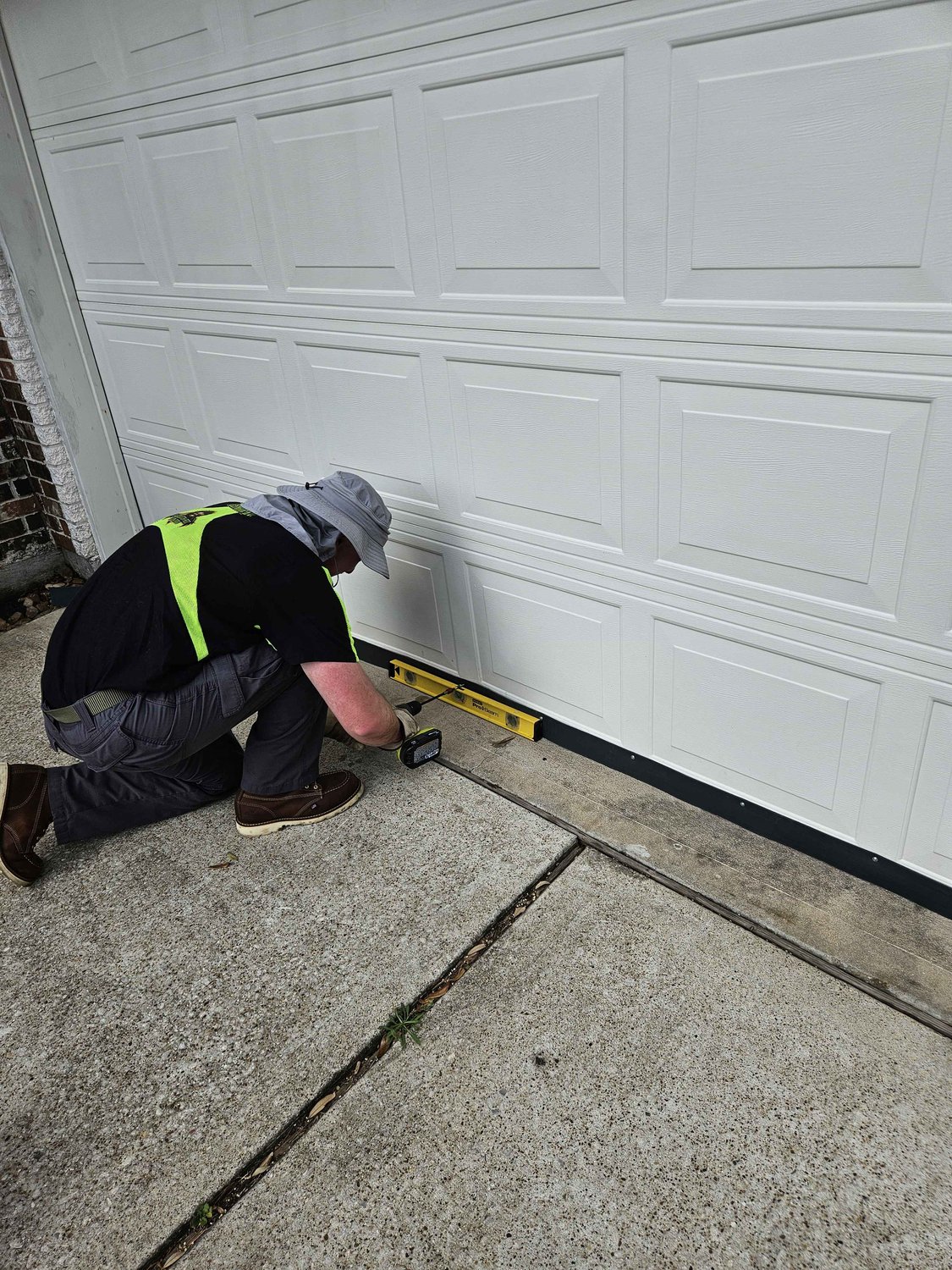
A garage door that looks closed can still leave a gap at the corners or under a worn seal that a mouse or rat walks straight through. Check from inside with the lights off for daylight at the bottom and sides. The fix is a new bottom seal, sealed corners and jamb weatherstrip, with any rodents inside dealt with first.
Call 281-627-4810 Request a free inspection
Year-round protection plans from $70 Core · Premium · Legendary See the plans
What to do, in order
- Close the door on a sunny day, turn off the garage lights and look for daylight along the bottom and up both sides.
- Slide a pencil under the seal at the corners; if it passes, a mouse can too.
- Check the bottom seal for cracks, flattening or chewed sections.
- Look for droppings, rub marks or chewed bags along the walls nearest the door.
- If you find rodent signs, set up trapping before closing the gap so nothing is shut inside.
- Keep the door down when the garage is not in use, especially at dusk.
What it usually turns out to be
On a typical north Houston slab home, the garage door is the single most common place rodents get into the house. The panel looks shut, and the middle of the seal touches the concrete. The trouble is at the edges.
Three gaps show up again and again:
- The bottom corners. Where the door meets the jamb, the seal often ends short, curls up or rides above a dip in the slab. That leaves a triangle of daylight on one or both sides.
- A worn bottom seal. Rubber flattens, cracks in the Texas sun, and gets chewed. A seal with a bite out of it is a sign something has already been through.
- The side jambs. The weatherstrip on the stop molding pulls away or was never fitted, leaving a slot up the side of the door.
Uneven slabs make it worse. A garage floor that has settled a little, or was poured with a slope toward the driveway, leaves the door touching in one spot and floating over the rest.
What uses the gap? House mice most often, then roof rats and Norway rats, then a long list of insects: crickets in late summer, American cockroaches, scorpions and centipedes.
How to tell at home
Texas A&M’s rodent IPM training gives the number that matters: a mouse needs a hole the size of a dime, or a quarter-inch crack beneath a door, and a rat a hole the size of a quarter, or a half-inch crack. You can test for that in ten minutes.
- The daylight test. Close the door on a bright day, switch off the lights and look along the bottom and sides from inside.
- The pencil test. A standard pencil is roughly a quarter inch thick. If it slides under the seal at a corner, that corner is open to mice.
- The seal itself. Run a hand along it. Cracks, hard spots and missing chunks mean it is due.
- The evidence. Droppings, rub marks or chewed bags near the door confirm the gap is in use. Our page on droppings in the garage explains how to read and clean them.
The same training notes rodents travel the same paths nightly and stay close to walls. A rodent running along the front of the house runs straight into the garage door corner.
What we do about it
Exclusion work follows one method: find every opening, make sure nothing is shut in, write up the repairs, then seal with material that holds. It starts with a free visit, and there is no long-term contract.
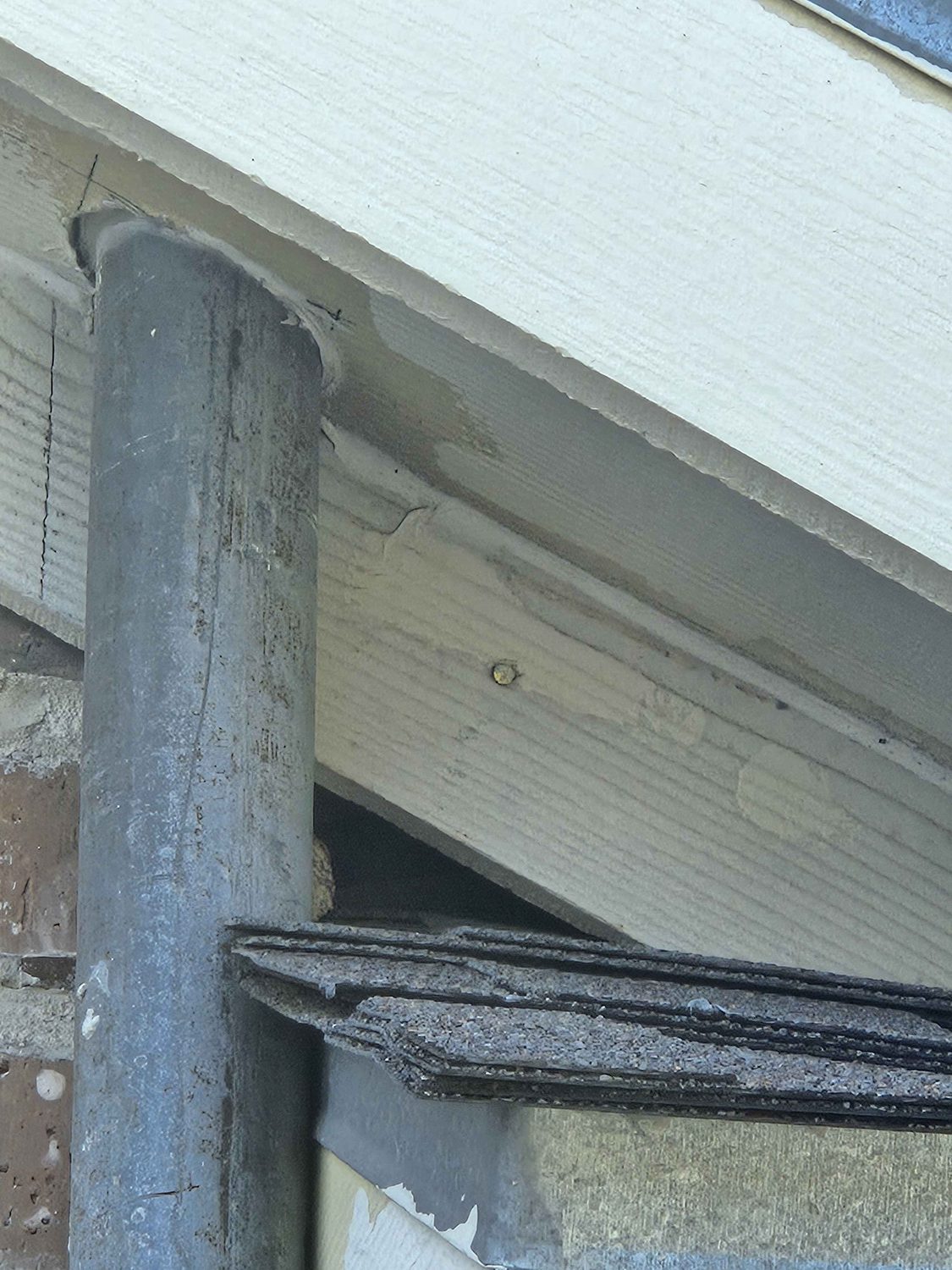
- Look at the whole garage, not just the door. Weep holes, pipe and line penetrations, the wall where the garage meets the house and the attic access above all get checked.
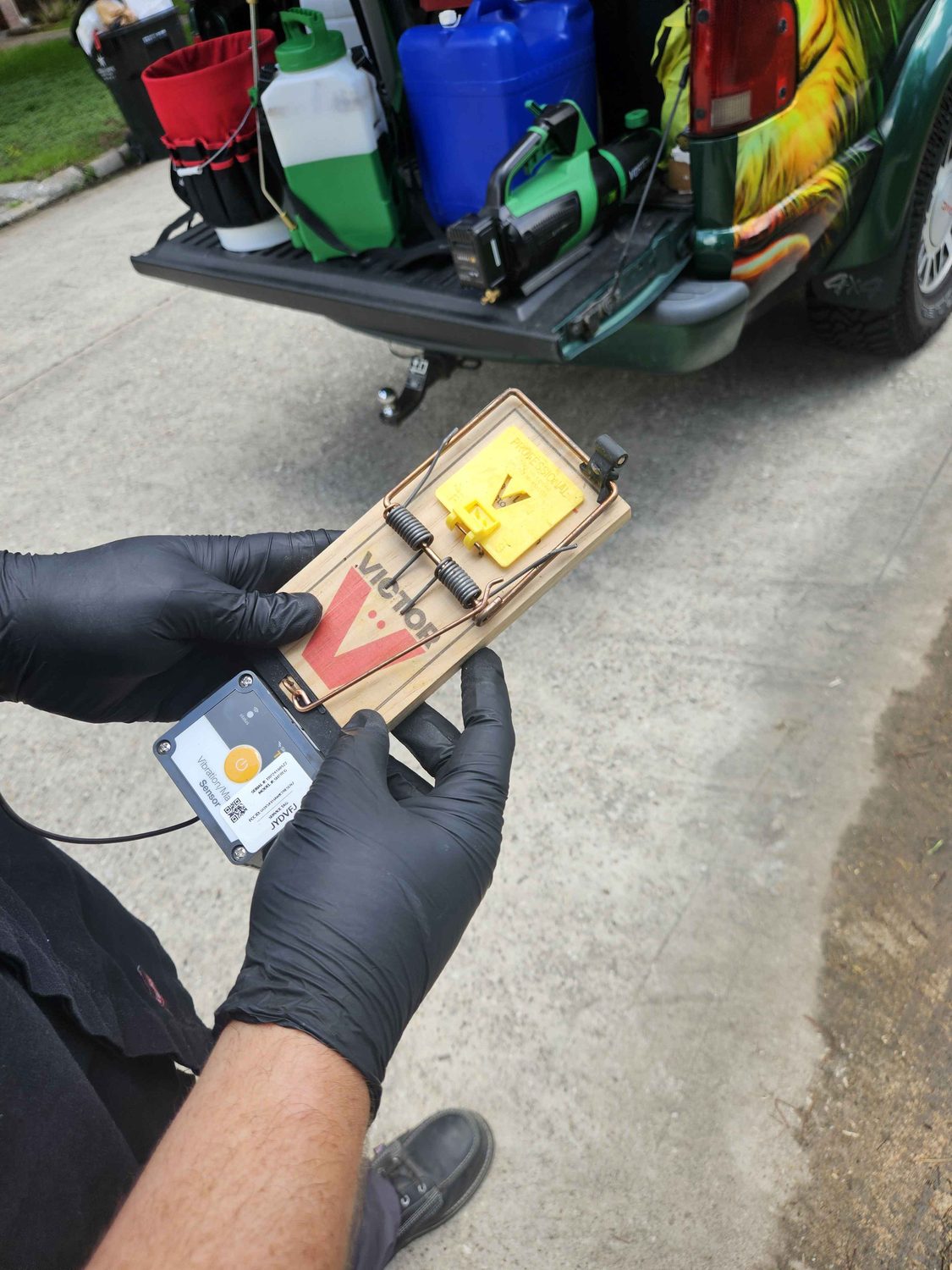
- Clear it first. If rodents are active, the gap is closed after trapping has started, usually paired with rodent control, so nothing gets sealed in.
- A written scope. Each opening and its repair is listed with the price before any work starts.
- Seal it. Replace or upgrade the bottom seal, close the corners and fit jamb weatherstrip or brush seals so the door seats properly. Nearby pipe gaps get packed and sealed.
- Check it. Follow-up looks for fresh droppings or chewing at the new seal.
Texas A&M AgriLife’s cold-weather advice from entomologist Janet Hurley runs the same direction: brush-type or baffle-style sweeps on exterior doors, and steel wool or expanding foam for gaps of a quarter inch or more.
Things that make the gap matter more
- Pet food, birdseed or grass seed stored on the garage floor.
- Cardboard boxes stacked against the walls, which give rodents cover.
- A door left open in the evening while someone works inside.
- A side door from the garage to the yard with no sweep.
Fix those alongside the seal and the garage stops being the easiest room on the lot.
When to call
Call if you find daylight and droppings together, if a new seal has been chewed, or if the corners will not close no matter how the seal is set. Heavy chewing on the door, signs in the attic above the garage, or droppings inside the house mean the garage was a doorway, not the whole problem.
Related problems
The other half of most entry problems is overhead; see roofline and soffit gaps. The full service, including materials and what the repairs cover, is on our exclusion and repairs page. The 100% Service Guarantee page sets out what that covers. To have the garage walked, contact us.
Frequently asked questions
How big a gap is too big?
Smaller than it looks. Texas A&M AgriLife training material says a mouse needs only a quarter-inch crack beneath a door to get in, and a rat about a half inch. A flattened seal or a curled corner often leaves that much.
Can I replace the bottom seal myself?
Many homeowners can, and it is a reasonable weekend job on most doors. The corners and the side jambs are where a DIY seal tends to fall short, because the door, the slab and the frame rarely meet square.
Why do rodents use the garage door instead of somewhere else?
It is at ground level, it leads to a dry room full of stored food and boxes, and the gap is usually right where a rodent running along the wall of the house arrives. Rodents travel along walls and follow the same route each night.
Does sealing the garage door stop insects too?
It helps a great deal with crickets, roaches, scorpions and other crawling insects that come in at ground level. Flying insects still get in when the door is open, and other gaps, like weep holes and pipe holes, need attention too.
Guides
Exclusion & Repairs in north Houston?
No long-term contracts, and service agreements are backed by our 100% Service Guarantee.
Because we are based in Spring, we can often come out the same or next day for urgent problems. Call before noon, Monday through Friday, for the best chance at next-day service.
Last updated