
Squirrel Removal and Exclusion in Spring and North Houston
Squirrels in a north Houston attic are almost always fox squirrels coming off an overhanging limb and in through a soffit corner or vent. We find every entry and any nest of young, remove the squirrels, then seal the openings with chew-resistant material and recommend trimming the limbs that serve as their bridge to the roof.
Call 281-627-4810 Request a free inspection
Year-round protection plans from $70 Core · Premium · Legendary See the plans
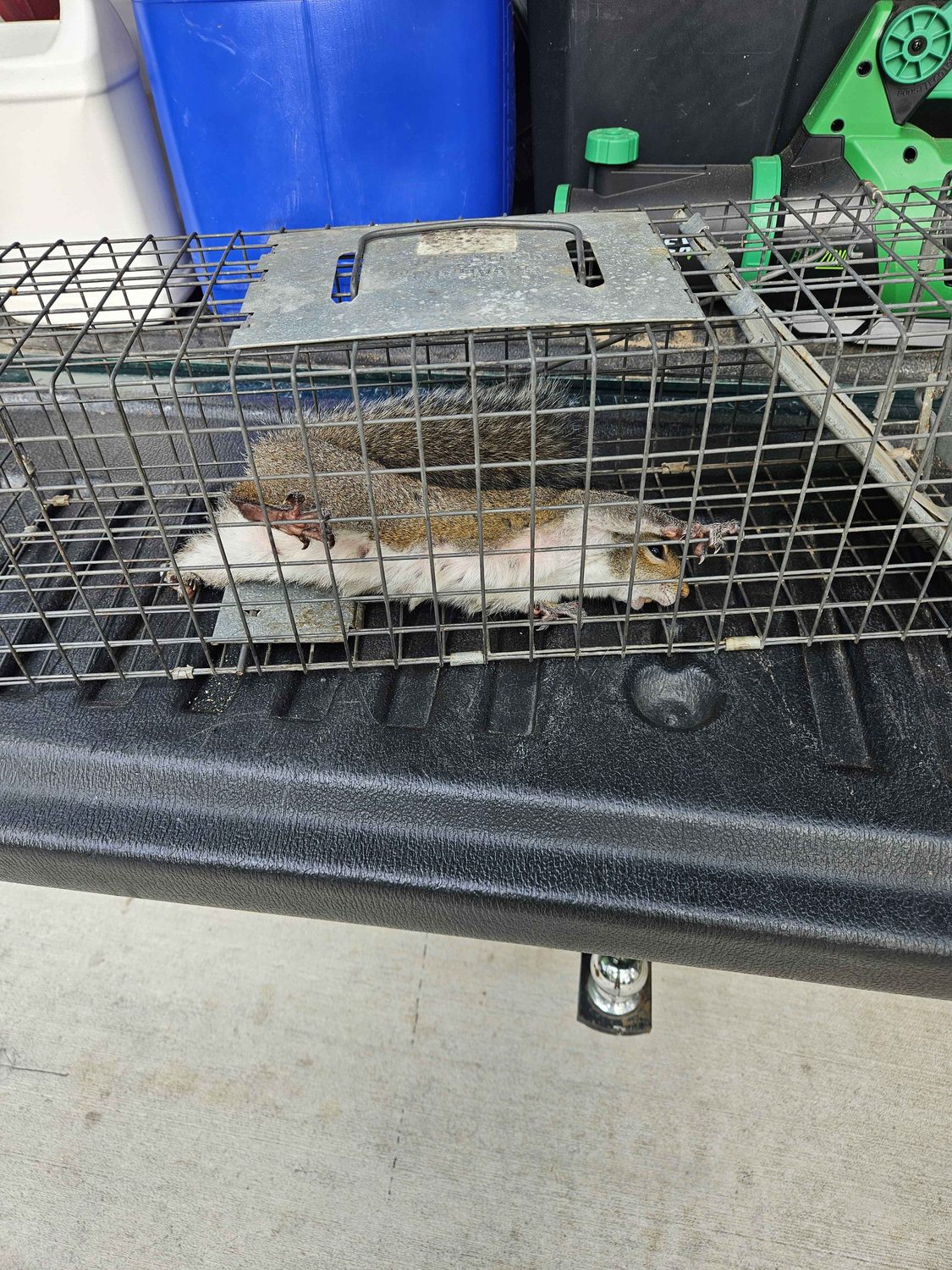
Squirrels: the job at a glance
| What it covers | Fox, gray and flying squirrels in attics, soffits, walls and chimneys at homes and businesses in Harris and Montgomery counties |
|---|---|
| Included | Attic and roofline inspection, removal of squirrels and young, chew-resistant sealing of entries, follow-up checks, and habitat advice |
| Not included | Tree trimming, rewiring chewed electrical runs, and replacing insulation; we point out what needs doing |
| How long it takes | Depends on the number of entry points and whether a litter is present; follow-up checks confirm the attic is empty |
| Best timing | Before the spring and late-summer litters; Texas A&M puts fox squirrel births in March–April and August–September |
| What it costs | Free inspection, then a written price; the roofline openings, tree access and any attic cleanup set it |
The squirrels on a north Houston roof
Three tree squirrels live in Texas, and the eastern side of the state, where Spring, Kingwood and The Woodlands sit, has all three. Texas A&M AgriLife’s leaflet on controlling tree squirrels in urban areas describes them:
- Fox squirrel. The most common of the three, found in east and central Texas. Brownish-gray on top with an orange underside, one and a half to two and a half pounds. This is the squirrel in most of our attic jobs.
- Gray squirrel. Also called the cat squirrel, found in the eastern part of the state. Grayer and a little smaller, more common in heavier pine and hardwood stands toward Kingwood and New Caney.
- Flying squirrel. The smallest and the only nocturnal tree squirrel, pinkish-gray with a white belly. Rarely seen, and easy to mistake for a rat because it moves at night.
AgriLife lists tree cavities, old woodpecker holes and attics among their nesting sites. When none of those are on offer, squirrels build leafy nests in the branches. A warm, dry attic beats a leaf nest every time.
Why they end up in the attic
Neighborhoods here were built into the trees. Water oaks, live oaks and loblolly pines lean over most rooflines, and pecans and acorns drop into every yard. That gives squirrels food on the ground and a road straight onto the shingles.
According to AgriLife, squirrels usually get into attics from the roof, especially where limbs overlap the roofline, and they usually enter through vents that are not adequately screened. When there is no ready opening, they gnaw one. The soft spots we find over and over:
- The corner where a soffit return meets the fascia.
- Gable vents with thin or rusted screen.
- Gaps along the roof-to-wall junction over a garage.
- Ridge vent ends and plumbing boot flashing.
- Chimney chases with an open top.
Squirrel timing through the year
Litters drive the calendar. AgriLife lists fox squirrel litters as usually born in March or April and again in August or September, averaging three young, with weaning at ten to twelve weeks. Gray squirrels run a different schedule, with litters usually in September or October and again in February or March. Flying squirrels have theirs in April or May and in September.
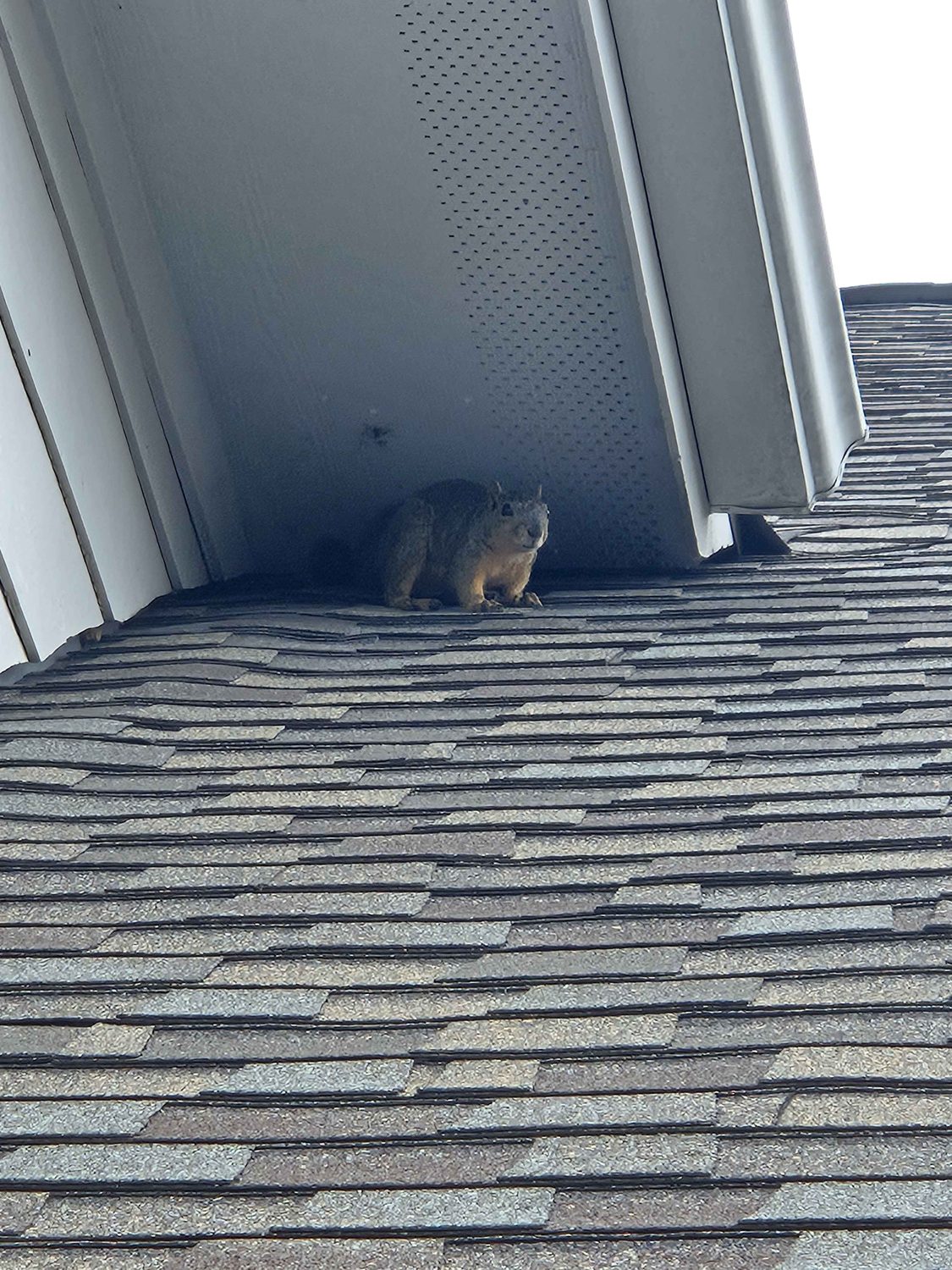
Put that together and a north Houston attic can hold a nest of young squirrels in almost any season. Late winter and midsummer, just before the fox squirrel litters, are the best windows to get an attic sealed before a mother sets up inside. During winter, AgriLife notes, squirrels may also strip bark from tree limbs and ornamentals.
How squirrel removal in Houston works
Our process for squirrels starts with a free inspection and has no long-term contract.
- Inspection. We go through the attic and around the roofline to find entry points, nests, droppings, damage, and any young, and to see which limbs, lines or fences the squirrels use to reach the roof.
- A plan for the house and the season. Whether a litter is likely, how many openings there are, and how the roof is built all shape the plan.
- Removal. We remove the squirrels, and any young, from the structure. Squirrels we trap are relocated in line with the TPWD rules on game animals below.
- Exclusion. Every current and likely entry is sealed with heavy-duty, chew-resistant material. AgriLife names sheet metal, hardware cloth and steel wool as effective for this, and seal work is done only once the squirrels are out.
- Follow-up and advice. Squirrels are persistent, so we offer follow-up checks. We also go over the limbs to trim and the feeders and food sources to move or remove.
Roofline carpentry beyond sealing, like replacing a rotted fascia board, is scoped under exclusion and repairs.
What the attic inspection checks
A squirrel inspection is half roofline and half attic. Inside, we look at:
- Wiring. Runs of electrical cable along the top plates and across the joists near the entry are checked for bare copper or chewed sheathing.
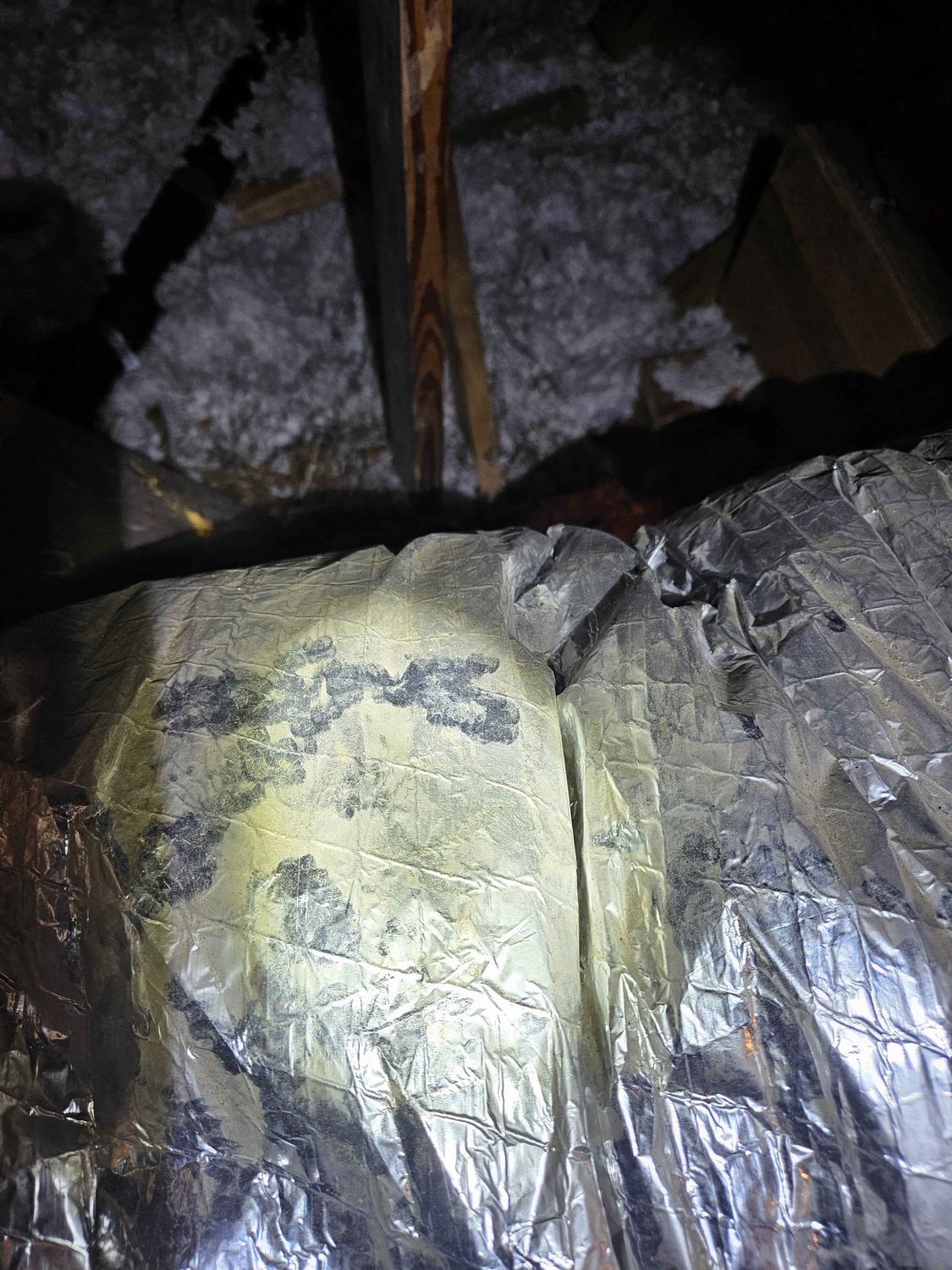
- Insulation. Tunnels, flattened areas and nest material show where the squirrels have been living and how long.
- Ductwork. Flexible duct wrap is a favorite chew and nesting material, and a torn duct loses cooled air into the attic all summer.
- Stored food. Caches of acorns and pecans, which tell us the attic is a home base rather than a stopover.
- Light. With the attic dark, daylight showing through the roof deck or soffit marks every opening, including ones not yet in use.
Outside, the inspection follows the route up: which limbs touch or overhang the roof, whether a power or cable line runs to the eave, and which fences or downspouts give a climbing start.
Flying squirrels, the quiet exception
Flying squirrels are worth a separate word, because they break the usual rules. AgriLife describes them as the only nocturnal tree squirrel, so the noise comes at night, the way rat noise does. At about five ounces, per AgriLife, they can use openings a fox squirrel could not. When the night sounds point to rats but the inspection turns up no rat droppings and no rodent runways, a flying squirrel colony is a real possibility, and the exclusion has to account for smaller gaps.
Why trapping alone does not solve it
Removing the squirrels without closing the house treats the symptom. The attic still smells like a nest, the hole is still open, and the trees are still full of squirrels. In a neighborhood with dense canopy, a vacant, unsealed attic tends to have a new tenant within the season. Exclusion is what turns removal into a lasting fix, and it is why sealing is part of every squirrel job rather than an option.
What Texas law says about squirrels
People are often surprised that squirrels are regulated at all. Texas Parks and Wildlife’s page of protected wildlife species classifies gray and fox squirrels as game animals, and says a license or permit is required to take, trap, transport, possess, propagate or sell one. AgriLife’s leaflet adds that they can be cage-trapped where they are causing damage, but anyone wanting to relocate them should notify TPWD representatives.
AgriLife also makes a point worth repeating: squirrel-proofing trees, attics and buildings is a permanent solution, does not harm the squirrels and presents no legal difficulties. That is why exclusion is the core of the job.
Signs, and what each one means
- Scampering, scratching or rolling sounds overhead in daylight. Squirrels, not rats. Nuts being rolled or stored make a distinct sound.
- A squirrel going in and out of the roofline. Watch the same spot at sunrise; the active entry is usually obvious.
- A chewed, rounded hole in a soffit corner or vent. The entry. Fresh chew marks are pale.
- Shredded insulation, droppings and nut shells in the attic. A nest site, usually close to the entry.
- High-pitched chatter from one corner in spring or late summer. Young. This changes how the removal is done.
- Chewed wire. Stop and get the wiring checked.
- Branches touching the roof. Not a sign of squirrels on its own, but almost always part of how they are getting up.
Our page on squirrels in the attic goes deeper on what to listen for and what to do in the meantime.
What should I do first about squirrels in the attic?
Confirm it is squirrels and find where they get in, but do not seal anything yet. Note when the noise happens, watch the roofline at sunrise for the active hole, keep people out of the attic, and leave the opening alone until you know whether young are inside. Closing it early traps them.
A short log helps more than people expect. Write down the times you hear movement over a few days, whether it comes from one corner or wanders, and any spot on the eaves where you saw an animal disappear. That is the first thing a technician will ask, and it usually separates a squirrel from the roof rats that keep night hours in the same attics.
Skip the poison and the gun. Texas A&M AgriLife’s leaflet on controlling tree squirrels states that no toxicants or fumigants are registered for tree squirrels in Texas, and it advises against shooting them in urban areas because of the risk to people and other animals, adding that most cities ban firing a gun inside city limits.
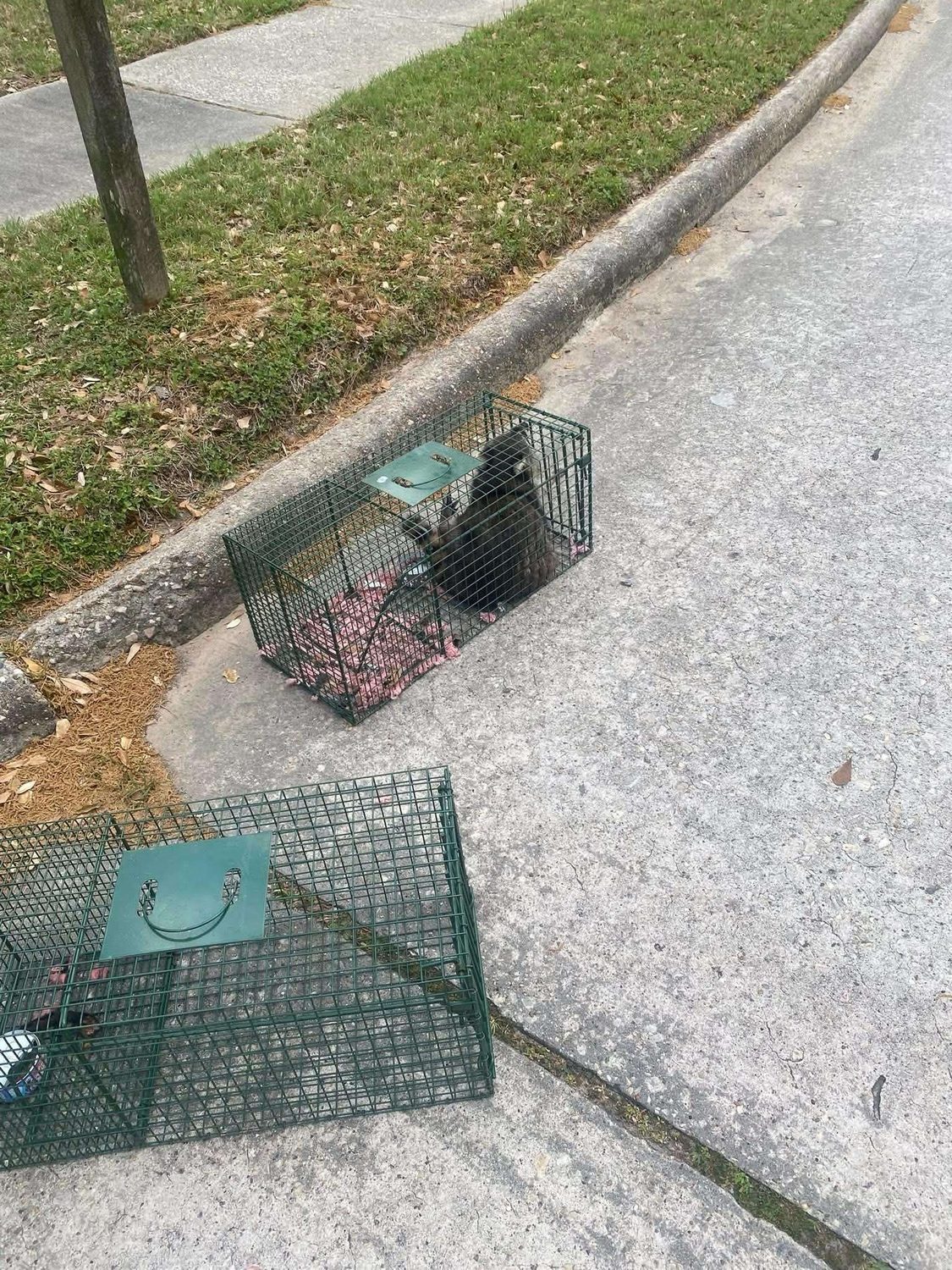
Inside the City of Houston there is a further point. BARC’s guidance on wild animals in Houston tells residents to call a licensed pest control company when animals are in garages or attics, and warns against trapping and relocating wild animals unless you are authorized and licensed by the State of Texas. The same page cites City Code Sec. 6-6, which makes catching or impounding animals unlawful for anyone not authorized to do it. Our library page on tree squirrels covers the three species you might be hearing.
What waiting costs
AgriLife’s damage list is short and expensive: squirrels can do extensive damage to the insulation in attics or walls, and they may gnaw and damage electrical wiring. Add chewed soffits, a torn vent that lets rain in, and droppings and urine in the insulation, and a squirrel that has been in an attic for a year makes for a real repair bill.
There is a second cost to waiting. Every litter raised in your attic produces young squirrels that know the house as home. A roofline left open through a spring litter often has a second family by fall. If the insulation has been torn up or soiled, replacing it is handled under attic insulation.
The first weeks after sealing
Once the attic is sealed, the squirrels outside do not simply give up on it. Expect to see them on the roof for a while, sniffing and testing the patched spots, especially at the old entry. That is normal and it is why the patches are chew-resistant metal rather than foam or caulk. What is not normal is new chewing at a fresh spot, scratching inside the attic again, or daylight through a vent screen. Any of those means a call for a follow-up check, which is part of why ongoing checkups are offered with this work.
What squirrels in the attic usually cost to ignore
If you are deciding whether this can wait, consider the timeline. A single squirrel in the attic in January is a short job and a few patches. The same attic in June may hold a mother and her litter, nesting material packed into the eave, and a second chewed opening she made when the first one felt crowded. Each month adds droppings to the insulation and gives the litter more time to learn the roofline as home territory.
Homes and commercial properties
Most squirrel work is residential, but commercial buildings get them too: office parks with mature trees beside the building, churches with steeples and decorative vents, schools with long soffit runs. A flat commercial roof with rooftop units and unscreened curbs is easy access. For business properties, the work is arranged through our commercial program.
Prevention you can do yourself
Most of these come from AgriLife, adjusted for a north Houston lot:
- Trim limbs back at least 8 to 10 feet from the roof. If one tree is the only route, a sheet metal band about two feet wide, set six to eight feet up the trunk, can stop them climbing it.
- Move bird feeders well away from the house, or take them down for a season.
- Rake up acorns and pecans near the foundation.
- Store birdseed and pet food in metal bins in the garage.
- Walk the roofline from the ground every few months, looking for new chew marks at soffit corners and vents.
- Skip the ultrasonic plug-ins and mothballs. AgriLife notes that no toxicants or fumigants are registered for tree squirrels in Texas, and the reliable fix is a sealed house.
Where people go next
If the noise turns out to be at night and the droppings are pellets, see rodent control. A much heavier animal tearing at the roof is more likely a raccoon; see raccoon removal. Colonies flying out at dusk are bats, covered under bat exclusion. Squirrel work carries our 100% Service Guarantee, and the terms are on that page. We handle squirrel jobs in Kingwood, Porter, The Woodlands and Spring. To book a free inspection, contact us.
Frequently asked questions
How do I know it is squirrels and not rats?
Listen to the clock. Texas A&M AgriLife says running or gnawing from the attic during the day often means squirrels, while running, squealing and gnawing at night generally means rats. Squirrels are loudest early morning and late afternoon.
Can I just close the hole after I see the squirrel leave?
It is a gamble. If there are young inside, the mother will chew a new hole to get back to them, often somewhere worse. AgriLife's guidance is that openings should not be sealed until the squirrels are out of the building, which is why we check for a litter first.
Are squirrels in the attic really a fire risk?
They can be. AgriLife notes that squirrels may gnaw and damage electrical wiring, and attic wiring is often run loose over the joists where they travel. If we find chewed wire, have an electrician look at it before the attic is closed up.
Is it legal to trap squirrels in Texas?
Fox and gray squirrels are game animals in Texas. Texas Parks and Wildlife lists a license or permit as required to take, trap, transport or possess them, and AgriLife says anyone wanting to relocate one should notify TPWD first.
Will cutting back the trees fix it?
It helps a lot, and sometimes it is enough. AgriLife recommends trimming limbs at least 8 to 10 feet back from the roof. If squirrels can still jump from tree to tree or climb a downspout, the attic openings still have to be sealed.
Should I put poison bait in the attic for squirrels?
No. AgriLife's guidance is that Texas has no registered toxicant or fumigant for tree squirrels, so poison is not a labeled option for them. It also risks an animal dying out of reach under the insulation, which swaps the scratching for a smell. Finding the entry and sealing it after they leave is the fix.
Our largest service areas
Guides
Squirrel Removal & Exclusion in north Houston?
No long-term contracts, and service agreements are backed by our 100% Service Guarantee.
Because we are based in Spring, we can often come out the same or next day for urgent problems. Call before noon, Monday through Friday, for the best chance at next-day service.
Last updated