
Roofline and Soffit Gaps in Spring and North Houston
Roof rats, squirrels, bats and birds reach a north Houston attic through a handful of roofline openings: soffit corners, gable and ridge vents, the pocket where a lower roof meets a wall, and gaps around plumbing boots. Spot them from the ground, keep animals out of the living space, and have them sealed with metal once the attic is empty.
Call 281-627-4810 Request a free inspection
Year-round protection plans from $70 Core · Premium · Legendary See the plans
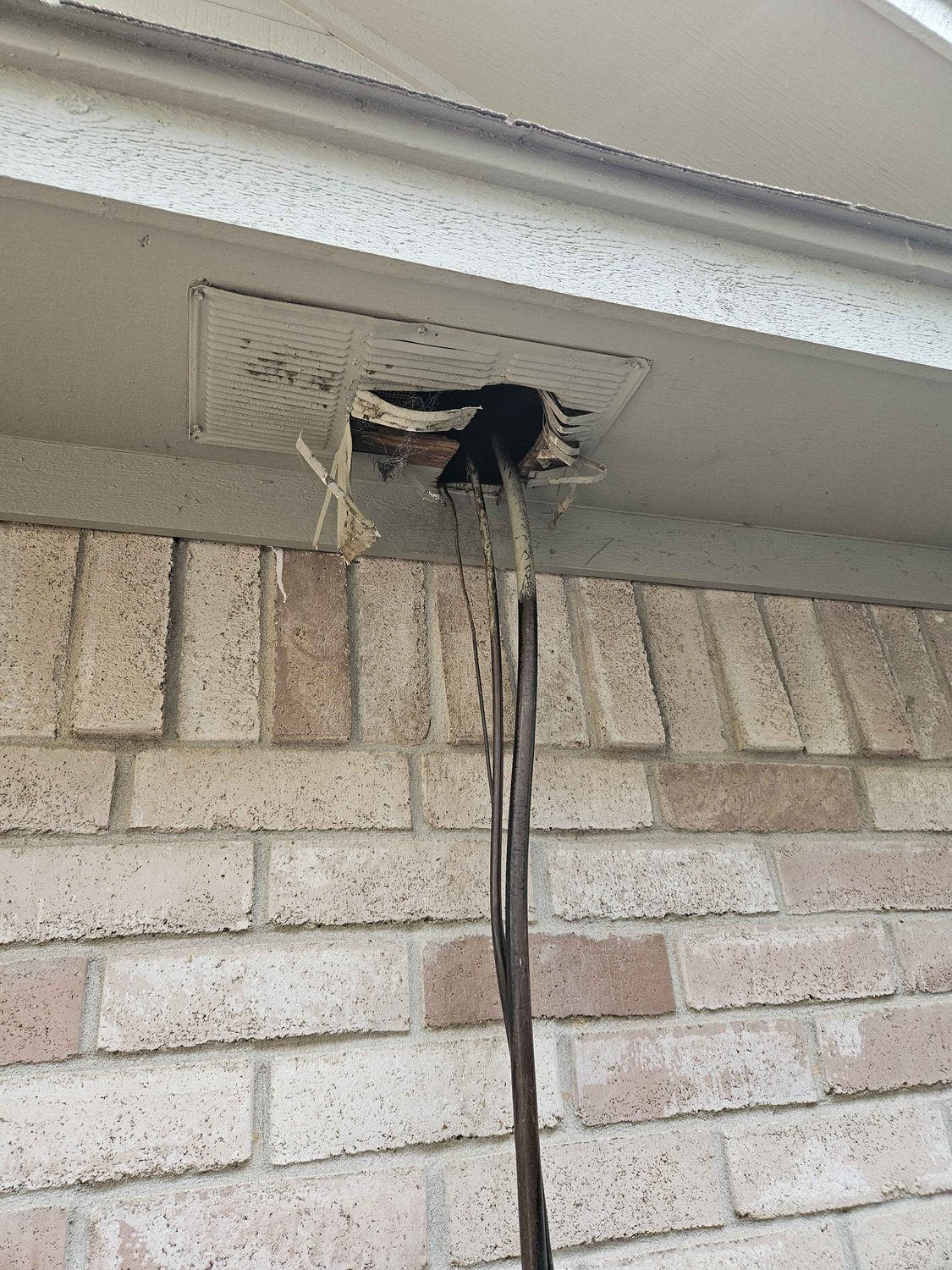
What to do, in order
- Walk around the house with binoculars and look at each soffit corner, vent and roof-to-wall junction.
- Look for chewed or pushed-in edges, brown staining, droppings on the siding below and sagging soffit panels.
- Watch the roofline at sunrise and dusk to catch anything going in or out.
- Note every limb, vine or wire within reach of the roof; those are the routes up.
- Do not close a gap that something is using until you know the attic is empty.
- Check again after any storm with high wind, which loosens vents and soffit panels.
What it usually turns out to be
Almost every attic animal call in north Houston traces back to the roofline. Heat and humidity work on wood trim year after year. Joints open, paint fails and soffit panels sag. Tree limbs bring animals to roof level, and the first soft spot they find becomes the way in.
The openings we find most often:
- Soffit returns. The boxed corner where the soffit wraps to meet the fascia. These are often hollow behind, and the joint opens as the wood moves.
- Roof-to-wall junctions. Where a single-story roof over the garage or a porch meets a two-story wall, builders often leave a pocket behind the fascia that leads straight into the attic.
- Gable vents. The screen behind the louvers rusts, tears or was never installed.
- Ridge vent ends. The cap at the end of a ridge vent pulls loose, leaving a gap under it.
- Plumbing boots and roof jacks. Flashing that has lifted or a rubber collar that has cracked.
- Fascia and soffit panel seams. Vinyl and aluminum soffit can pull out of its channel, especially after a storm.
Which animal uses which gap
Each species leaves its own signature at the roofline, and identifying it changes what happens next.
Roof rats need a hole about the size of a quarter. Texas A&M AgriLife’s rodent IPM training describes roof rats as preferring mature vegetation and trees and nesting above ground, which is why the roofline is their usual entry. Look for a small slot with a dark, greasy edge.
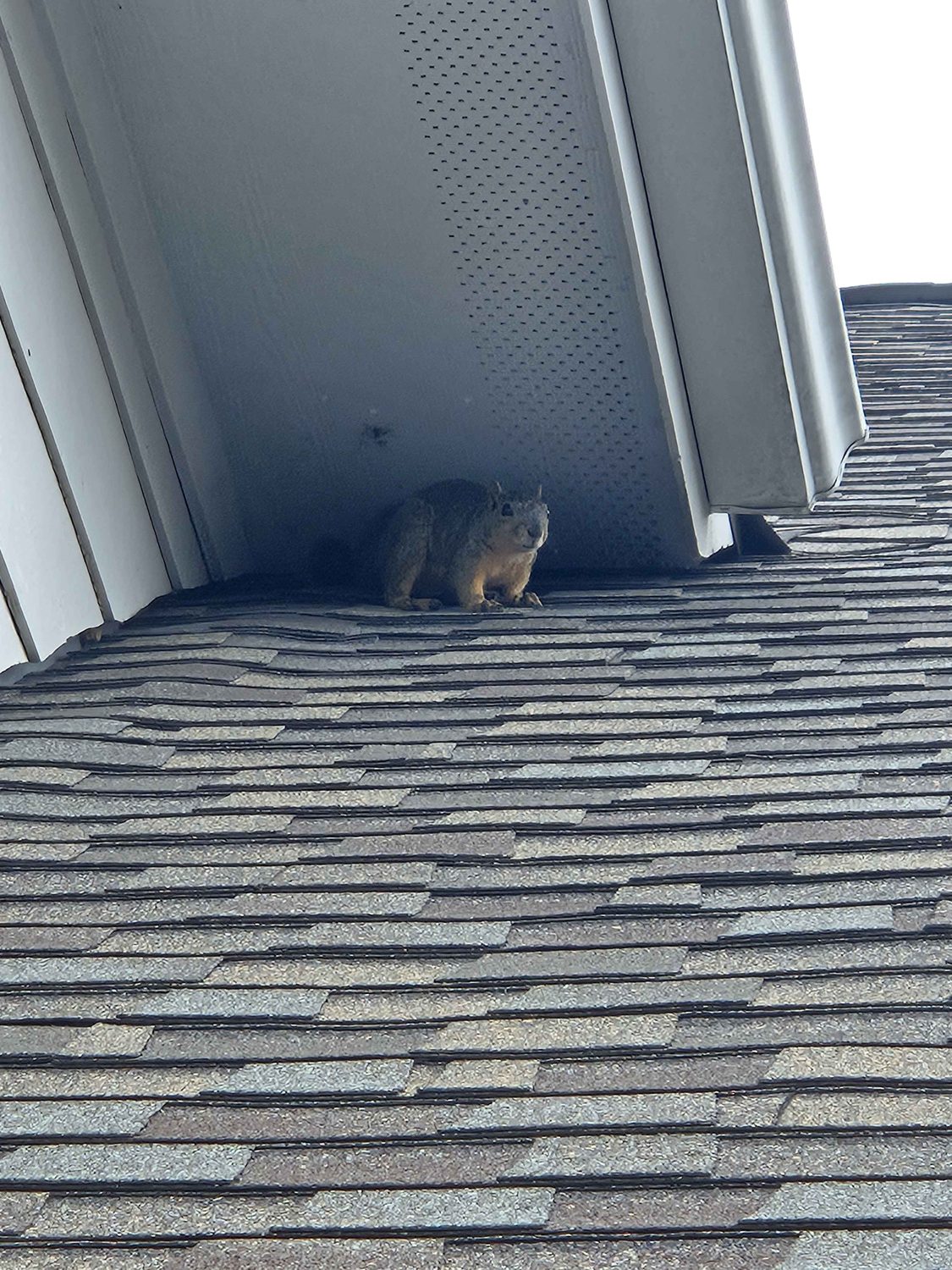
Squirrels chew rounded holes, usually at soffit corners and vents. Texas A&M AgriLife’s squirrel leaflet says squirrels usually reach attics from the roof, especially where limbs overlap the roofline, and enter through vents that are not adequately screened or gnaw their own opening.
Bats use narrow cracks: the top of a soffit along a brick wall, a ridge vent end, a shrunken fascia joint. Brown rub marks and crumbly droppings below are the signs. Bats come with their own rules and calendar, covered on bats in the attic.
Birds push into gable vents, soffit gaps and the space behind gutters, leaving nesting material showing.
How to tell at home
You do not need a ladder to do most of the looking. A pair of binoculars and a slow walk around the house will show most problems.
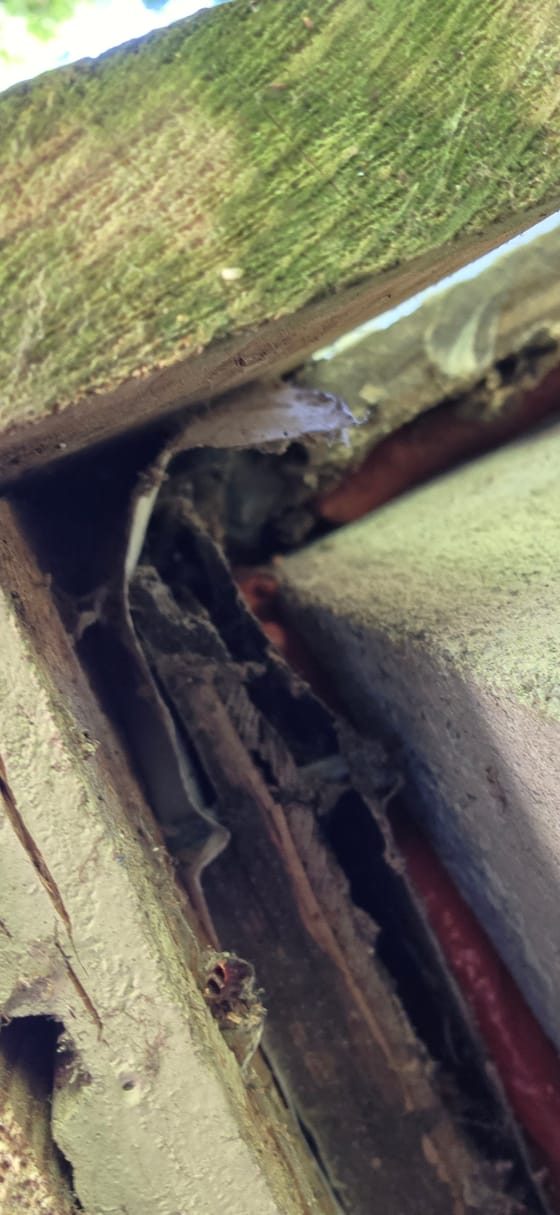
- Shape and color. Fresh chewing is pale wood; old damage has weathered gray. Rub marks are dark and smooth.
- What is below. Droppings on a windowsill, patio or siding under the roofline. Insulation fibers or nesting material on the ground.
- Daylight from inside. From the attic hatch, with the attic lights off, daylight at the eaves marks an opening.
- Timing. Watch at sunrise for squirrels and at dusk for bats and rats.
What we do about it
Our exclusion work begins with a free visit to scope it. There is no long-term contract.
- Check the whole structure. Exterior, roofline, attic and garage, noting each opening, what is using it and what it is made of. Openings you cannot see easily are photographed for you.
- Get the animals out first. An active opening is not sealed until the animal is out. Depending on what is there, that runs through rodent control, squirrel removal or bat exclusion.
- Write it up. The quote lists every opening and the repair for it, with the price set before work starts.
- Seal with the right material. Metal flashing, hardware cloth and proper soffit repairs on openings animals use, with sealant only as a filler. Vents are re-screened and bird blocking replaced.
- Follow up. A check for fresh chewing, rub marks or droppings at the new repairs.
Texas A&M’s advice in an AgriLife Today piece on fall invaders includes sealing gaps around eaves and around the frames of screens and louvers, and trimming branches that touch or overhang the house. Both apply to every roofline we work on.
When to call
Call when you see a hole, staining or droppings below the roofline, hear anything in the attic, or after a storm has visibly moved a vent or soffit panel. The longer an opening stays open, the more animals learn it, and squirrels and raccoons widen the holes they use.
Related problems
The ground-level counterpart to this page is gaps under the garage door. If you already know what is up there, see roof rats in the attic or squirrels in the attic. The full service is on our exclusion and repairs page, and the 100% Service Guarantee page lays out its terms. To have the roofline walked, contact us.
Frequently asked questions
Can I just fill soffit gaps with expanding foam?
Foam alone does not stop a rat or a squirrel, which chew through it in a night. It works as a filler behind something tougher. Roofline openings that animals use need metal flashing, hardware cloth or a proper soffit repair.
Which animal is using my gap?
The hole often tells you. A rounded, chewed hole in a soffit corner is typical of squirrels. A small, greasy-edged slot is rats. A narrow crack with brown staining and crumbly droppings below is bats. Pushed-in vent screens with twigs are birds.
Do you replace rotten fascia and soffit?
Repairing the openings animals use, re-screening vents and replacing bird blocking are part of exclusion work. Where wood is rotted beyond a patch, we tell you what we found and price the repair before any work starts, so nothing is a surprise.
Why seal gaps nobody is using yet?
Because the animals will find them. Bats move to an unused gap when the busy one is closed, and squirrels test the roofline for soft spots. Sealing only the active opening tends to move the problem a few feet down the roof.
Guides
Exclusion & Repairs in north Houston?
No long-term contracts, and service agreements are backed by our 100% Service Guarantee.
Because we are based in Spring, we can often come out the same or next day for urgent problems. Call before noon, Monday through Friday, for the best chance at next-day service.
Last updated