
Brown Recluse Spiders in Spring and North Houston Homes
A brown recluse is an evenly tan to brown spider, a quarter to half an inch long, with six eyes in three pairs and an often faint violin mark. Around Spring it hides in garages, closets and stored boxes. Anyone who may have been bitten should see a doctor. Control combines inspection, glue boards, targeted treatment and sealed storage.
Call 281-627-4810 Request a free inspection
Year-round protection plans from $70 Core · Premium · Legendary See the plans

What to do, in order
- Do not handle the spider. Trap it under a jar or photograph it close up so the eyes can be checked.
- If someone may have been bitten, wash the area with soap and water, apply a cold cloth, and see a doctor.
- Shake out stored shoes, gloves and clothing, or run clothes through a hot dryer before wearing them.
- Set glue boards flat against the walls in the garage, closets and under beds, and check them weekly.
- Book an inspection so we can find where they are living and talk through which stored items need checking.
What you probably found
Most “brown recluse” calls start with a brown spider in a garage or closet. Some are recluses. Many are wolf spiders, grass spiders or cellar spiders, which are common around Spring homes and harmless to people. Telling them apart is worth a minute before anyone panics.
Texas A&M’s urban entomology program describes the brown recluse in its recluse profile as having a body only ¼ to ½ inch long, a violin-shaped mark on the back, and six eyes arranged in three pairs in a semicircle at the front of the head. Most spiders have eight. That eye pattern is the most dependable check, because the violin can be faint or hard to see on a small spider.
How to tell at home
You need a clear photo or a spider trapped under a glass. Then look for:
- Six eyes in three pairs. Use a phone camera zoomed in. Texas A&M AgriLife notes in a fact versus fiction piece that only one other spider group in Texas shares that eye arrangement, and it is not venomous.
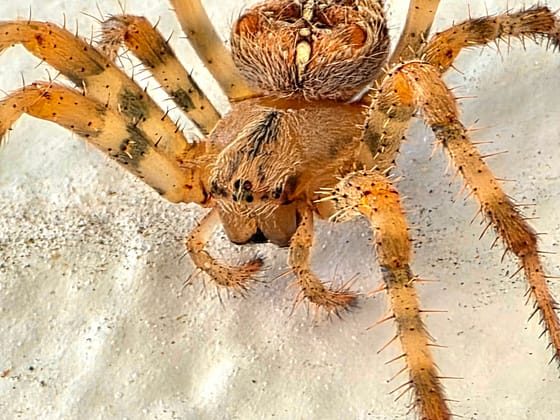
- Even color. A recluse is the same tan to brown over the body and legs, with no stripes or bands on the legs.
- The violin. A darker shape on the front part of the body with the neck pointing back toward the abdomen. Helpful when it shows, not proof on its own.
- Where it was. The Texas A&M profile lists garages, firewood piles, cluttered storage and stacked boards, plus closets, bathrooms, bedrooms and the space under furniture.
If you are not sure, keep the spider or the photo. We will look at it on the visit.
If someone may have been bitten
See a doctor. That is the advice for any suspected recluse bite, and it is the advice for any wound that spreads, darkens or comes with fever whatever caused it. The CDC’s guidance on venomous spiders lists simple first steps while you arrange care: stay calm, wash the bite with soap and water, apply a cloth dampened with cold water or filled with ice, and seek medical attention.
It helps the doctor to know what to watch for. Texas A&M’s profile says a recluse bite may barely be noticed at first and later bring a stinging sensation or intense pain. Within 24 to 36 hours some people develop fever, chills, nausea, weakness or joint pain, and tissue damage can take six to eight weeks to heal and leave a scar. The CDC adds that a small white blister usually develops at the site.
Bring the spider or the photo if you have one. And keep an open mind if you never saw a spider at all; the AgriLife piece points out that antibiotic-resistant staph infections can look very similar.
What we do
These steps come from the company’s own spider service.
- Inspect inside and out. We walk the house and the outside to judge how heavy the activity is, what is drawing spiders, and what other insects are feeding them.
- Sweep webs and egg sacs from the exterior and the garage.
- Treat the outside. A repellent barrier treatment goes on the foundation, cracks and crevices, gutters, light fixtures, doors and windows.
- Treat the inside. Baseboards are treated through the home.
- Place glue boards along the edges of the garage door and other spots where spiders travel. The AgriLife article notes that sticky traps placed along a wall capture recluses passively.
- Stay on a schedule. Spider work runs quarterly, with treatment between services if it is needed.
Our 100% Service Guarantee covers that quarterly program, and you are not signing a long-term contract. The spider control page explains the full service.
Your part
No treatment reaches the inside of a closed cardboard box. Move stored items into sealed plastic bins, get them off the floor, and pull beds a few inches from the wall with bedding kept off the floor. Texas A&M AgriLife suggests shaking stored clothing well or running it through a dryer on high heat for about 45 minutes before wearing it, and checking shoes before putting them on. Wear gloves when you sort through the garage.
When to call
Call when you find a spider with six eyes, when glue boards keep catching brown spiders with plain legs, or when you find shed skins in boxes and closets. If you are also seeing black, shiny spiders around meters and the garage, read black widows in the garage. Arrange a free inspection on the contact page.
Frequently asked questions
How can I tell a brown recluse from a wolf spider?
Count the eyes if you can get a clear photo. Texas A&M describes recluses as having six eyes in three pairs arranged in a semicircle. Wolf spiders have eight, with two large ones facing forward. Recluses also have a plain, evenly colored body and legs, while wolf spiders are usually striped or mottled.
Is the wound on my leg a brown recluse bite?
Only a doctor can sort that out. Texas A&M has noted that antibiotic-resistant staph infections can look like spider bites, and its bug-bite fact sheet says spider bites are rare enough to rule out when someone has many lesions. If a wound is spreading, darkening or comes with fever, get it seen.
Can brown recluse spiders kill you?
Texas A&M AgriLife states there has never been a confirmed death attributed to the brown recluse. Bites can still cause pain, fever and slow-healing tissue damage, so they deserve a doctor's attention, but the frightening photos online are often something else.
Will spraying get rid of recluses?
Spraying alone rarely does. Recluses live inside boxes, behind baseboards and under furniture where a spray never lands. Treatment works alongside glue boards, sealed plastic storage and less clutter, and the quarterly schedule keeps checking that the numbers are falling.
Spider Control in north Houston?
No long-term contracts, and service agreements are backed by our 100% Service Guarantee.
Because we are based in Spring, we can often come out the same or next day for urgent problems. Call before noon, Monday through Friday, for the best chance at next-day service.
Last updated