
American Cockroaches (Palmetto Bugs) in North Houston Homes
The large reddish-brown roach that turns up in a north Houston bathroom, garage or floor drain is usually an American cockroach, the palmetto bug. It lives in sewers, mulch and drains and wanders indoors, often after rain. One or two rarely means it is breeding inside. Control works from the outside in: drains, perimeter, baits and sealing.
Call 281-627-4810 Request a free inspection
Year-round protection plans from $70 Core · Premium · Legendary See the plans

What to do, in order
- Check the size and color. Over an inch and a half, reddish brown with a pale band behind the head, points to an American cockroach.
- Note where it appeared: a floor drain, tub, garage door or water heater closet tells you which route it used.
- Pour water into floor drains and unused sinks so the traps stay full and block the sewer line.
- Pull mulch and leaf litter back from the slab and check that the garage door seal meets the concrete.
- If they keep coming, book an inspection of the perimeter, drains and plumbing penetrations.
A big roach, usually from outside
The roach that makes people jump in north Houston is the American cockroach. Texas A&M AgriLife’s Cockroach Biology and Management (ENTO-037) calls it the largest cockroach in Texas, at 1½ to 2 inches, reddish brown, with tan to light-yellow bands outlining the plate behind the head. Locally it goes by palmetto bug or waterbug. Both sexes can fly.
The same publication explains that American cockroaches live mostly outdoors and come inside looking for food or water. They are slow to grow, reaching adulthood in an average of 600 days, and adults live one to two years. That pace is why a single one in the tub is usually a visitor, not a sign of a nest in the walls.
The lookalikes
Smokybrown cockroach. Also large, at 1¼ to 1½ inches, but dark brown to nearly black, with wings that extend past the end of the body. ENTO-037 lists mulch, palm fronds, soffits, attic eaves and tree holes as its usual spots. In practice it shows up in the same places and gets handled the same way.
Oriental cockroach. About 1¼ inches, dark brown to black, with short wings that never let it fly. It prefers cooler, wet, ground-level spots. We see far fewer of these than either of the others.
German cockroach. Far smaller and tan, with two stripes behind the head, and it lives indoors. If what you are finding is small and in the kitchen, read German cockroaches in the kitchen instead, because the treatment is completely different.
How to tell at home
Size and color answer most of it. Beyond that, look at where they appear.
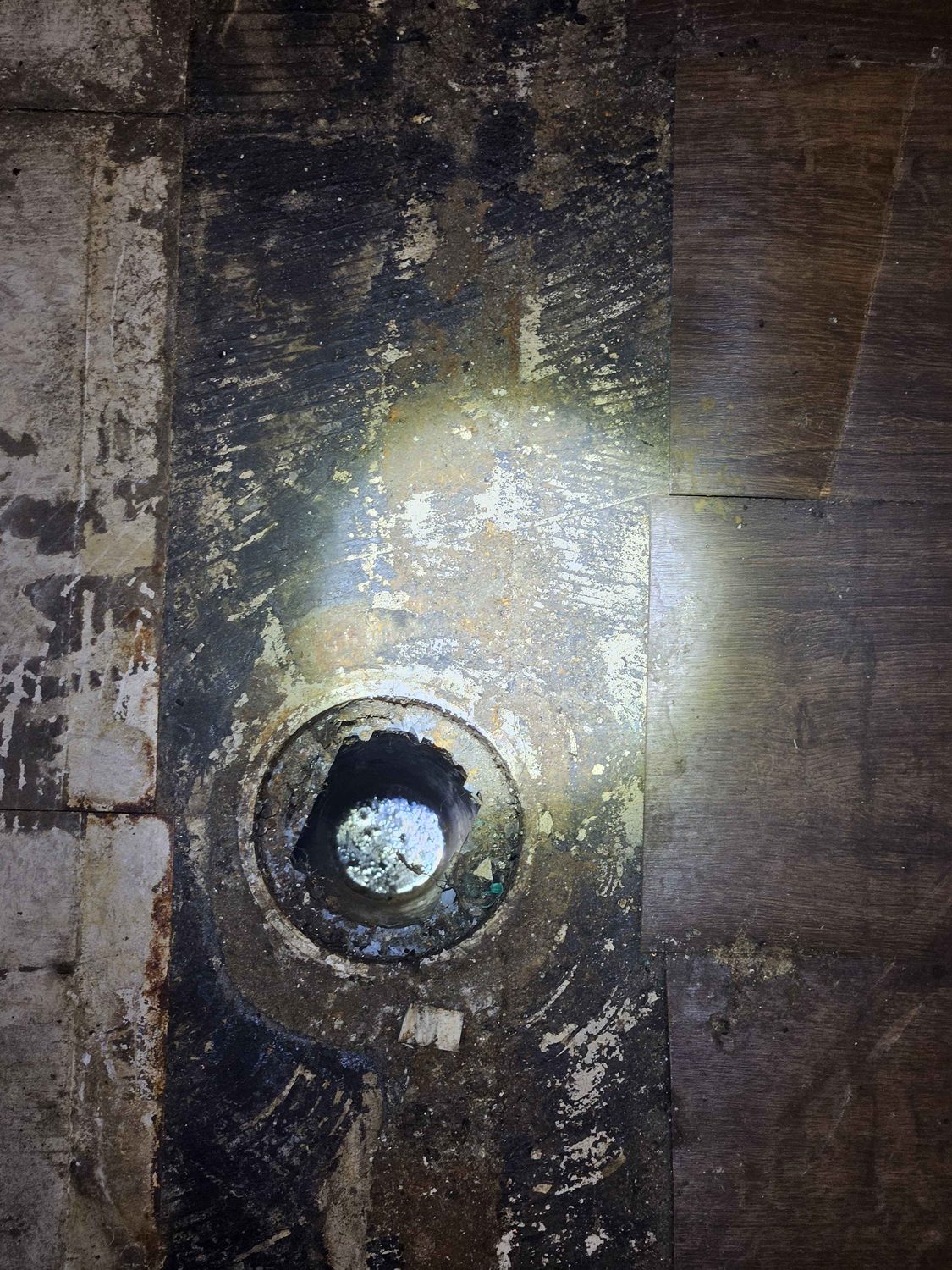
- Floor drains and tubs. ENTO-037 names floor drains as a common way in for American and oriental cockroaches. A roach in a shower or laundry drain probably came up the line.
- Garage and back doors. The publication also lists poorly sealed doors and roof soffits as entry routes. Daylight under the garage door is an open invitation.
- After storms. A run of sightings after heavy rain fits a roach pushed out of flooded drains and beds.
- Egg cases. Dark, bean-shaped capsules glued near baseboards or inside cabinets suggest a larger roach is laying eggs indoors, which is worth calling about.
What we do
Our approach for American cockroaches works from the outside in.
- Inspect the routes. The technician checks the perimeter, drains, garage, water heater closet and plumbing penetrations to find where they live and how they get in.
- Treat the exterior. A targeted barrier treatment goes around the foundation and the harborage outside.
- Dust the voids and drain lines. Wall voids and drain lines get dust where the roaches travel and shelter.
- Bait entry points and damp zones. Baits go where roaches enter and where moisture draws them.
- Seal and advise. We seal what makes sense on the visit and give you a list of the remaining gaps.
- Follow up. A return visit catches stragglers and confirms the outside work is holding.
Each visit falls under our 100% Service Guarantee, with no long-term contract to sign. The parent page on cockroach control explains how this fits beside the indoor work.
What helps from your side
Texas A&M recommends keeping the P-traps in floor drains full of water, since the water forms a barrier between the sewer and the house. Guest bathrooms and garage drains dry out first, so run water in them every week or two. The publication also suggests checking the threshold seals under doors and screening soffits. Outside, keep mulch thin against the slab, move firewood and debris away from the walls, and fix leaky hose bibs that keep the beds wet.
Why storms bring them in
Heavy rain is the trigger we hear about most. When storm drains and sewer lines run full, the roaches living in them climb toward air, and a dry floor drain or an uncapped cleanout gives them a way into the house. Long hot, dry stretches push them the other direction, toward the damp under a sink or behind a water heater. In both cases the house is a stopover rather than a home, as long as those routes stay closed.
When to call
Call when the sightings are weekly rather than seasonal, when you find egg cases indoors, or when they keep coming up the same drain after you have filled the trap. Restaurants, warehouses and other commercial buildings see more of this species than homes do, and those sites are handled through our commercial program. Book a free inspection through the contact page.
Frequently asked questions
Is a palmetto bug the same as a cockroach?
Yes. Palmetto bug and waterbug are local names for the American cockroach, and Texas A&M AgriLife uses both names in its cockroach publication. It is the largest cockroach in Texas and one of the most common ones living in sewer systems.
Does one in the bathroom mean my house is infested?
Usually not. American cockroaches live mostly outdoors and take around 600 days to reach adulthood, so a few indoors are usually visitors rather than a colony. Steady sightings in the same room, or egg cases glued behind cabinets, are a different story and worth an inspection.
Why do they fly at me?
Both males and females have working wings, and on warm nights they can fly or glide short distances. It feels aimed, but they are usually just trying to get away from light or movement. German cockroaches, the small indoor kind, do not fly at all.
Will cleaning the kitchen solve it?
It helps, but it is not the main fix for this species. American cockroaches come in from drains, mulch beds and sewer lines, so the work centers on the outside of the house, the plumbing and the gaps they use to get in.
Guides
Cockroach Control in north Houston?
No long-term contracts, and service agreements are backed by our 100% Service Guarantee.
Because we are based in Spring, we can often come out the same or next day for urgent problems. Call before noon, Monday through Friday, for the best chance at next-day service.
Last updated