
Bee Control and Removal in Spring and North Houston
A honey bee swarm hanging from a branch is usually gentle and often leaves within a day or two, so it may need nothing more than distance. A colony that has moved into a wall, soffit or chimney is different: it grows defensive, leaves comb behind, and needs the bees, the honeycomb and the entry hole dealt with.
Call 281-627-4810 Request a free inspection
Year-round protection plans from $70 Core · Premium · Legendary See the plans

Bees: the job at a glance
| What it covers | Honey bee swarms and established colonies in walls, soffits, chimneys, sheds, water meter boxes and trees on homes and commercial property |
|---|---|
| Included | Identifying the bees and the colony stage, recommending the most responsible option, dealing with the colony and comb, and sealing the entry |
| Not included | Drywall, siding or masonry repair after comb is cut out, and staining a colony already caused; carpenter bees are a separate service |
| How long it takes | A swarm assessment is short; an established wall colony can take a long visit plus a return to seal the cavity |
| Best timing | As soon as you see bees going in and out of one spot on the house, before the colony settles in for weeks |
| What it costs | Free inspection, then a written price before work starts; height, access and whether the wall must be opened set it |
Swarm or colony: the question that decides everything
Many bee calls in north Houston start the same way: a dark, buzzing mass hanging from a crape myrtle, a fence post or the corner of a garage. That is a swarm. It looks alarming, and it is usually the calmest bees you will ever see.
A swarm is part of an existing colony that has split off with a queen to find a new home. The cluster rests while scouts search, and it moves on once they find a cavity. Texas A&M AgriLife’s School IPM newsletter on bees says swarming honey bees are usually gentle and unlikely to sting, and that a swarm left undisturbed will typically leave within days. The same article explains the change that matters: once bees have settled into a nest, they become defensive of it after about four weeks and are more likely to sting.
So the first thing we sort out is which one you have.
- A cluster in the open on a branch, a shrub, a mailbox or a fence: a swarm. Keep people and pets back. It may be gone tomorrow.
- A stream of bees going in and out of one small opening in a wall, an eave, a chimney chase, a water meter box or a hollow tree: a colony that has moved in. That one will not leave on its own.
AgriLife’s Fort Bend County office makes the same split in its swarm season article, noting that a swarm trap may prevent a new infestation but cannot lure bees out of an existing nest.
What lives in walls around here
The bees that cause structural problems in this area are honey bees. They choose a dry, dark cavity with a small entrance: the space behind brick veneer reached through a weep hole, the inside of a soffit, the gap around a chimney, the box over a water meter, an empty birdhouse, a stack of old tires in the back of the lot. Texas A&M’s Honey Bee Lab notes on its bee-proofing page that bees will settle in containers holding as little as 2 to 10 gallons, as well as in sheds, vehicles, fences and ground cavities.
Inside that space they build sheets of wax comb and store honey. A colony that has been in a wall since spring can hold thousands of bees and a heavy load of comb by midsummer. That comb is the reason a wall colony is never just a matter of the bees.
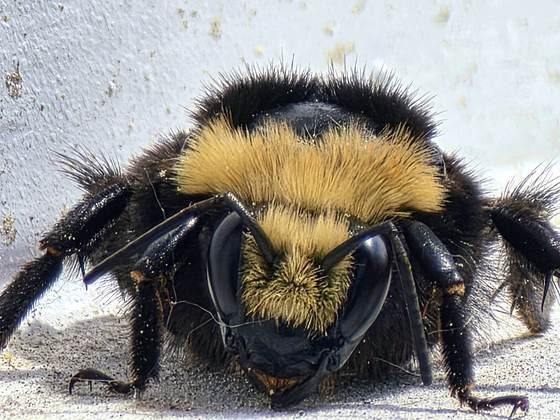
Lookalikes. Bees drilling perfectly round holes in fascia boards, deck rails or eaves are carpenter bees, a different insect with a different fix, covered on our carpenter bee control page. Yellow-and-black insects pouring out of a hole in the lawn are almost always yellowjackets, which are wasps; see wasp and yellowjacket control. A honey bee is fuzzy and golden-brown and carries pollen on its back legs. A yellowjacket is smooth and shiny.
Africanized bees in Texas
Africanized honey bees are part of the Texas bee population now. AgriLife reports they have spread to more than half of Texas counties and look the same as European honey bees, and that they tend to be more defensive when provoked. In practice that means two things for a homeowner. You cannot judge a colony’s temper by looking at it, and you should not test it with a garden hose, a can of wasp spray or a string trimmer.
What Texas experts advise, and where we fit
The state’s guidance is clear on a few points, and we follow it.
Leave it alone and do not spray it. The Texas Apiary Inspection Service’s honey bee removal guide tells homeowners not to try removing a hive themselves and not to spray chemicals into it, because the colony becomes defensive and endangers everyone nearby.
Do not seal bees in. The same guide warns that bees sealed into a structure will hunt for another way out, possibly into the living space.
Beekeepers are an option, with conditions. The Texas Apiary Inspection Service explains that beekeepers registered with it are excluded from the Texas Structural Pest Control Act for bee removal, and it posts a list of registered beekeepers who intend to do live removals. It also states that it does not issue permits to remove honey bees and has no information on a listed beekeeper’s training. Its guide adds that most beekeepers are not allowed to use any chemicals during a removal. For a swarm in the open, a beekeeper is often exactly the right call. AgriLife county offices, including Fort Bend’s, will provide a list of removal providers on request.
The comb has to come out. TAIS says that all wax comb should be extracted before a structural cavity is closed, and that every entrance to the cavity should be sealed at the end so another colony does not move into the same spot. AgriLife’s School IPM article gives the reason: honey and wax left behind attract secondary invaders such as rodents and wax moths.
How we handle it
Our approach treats bees very differently from wasps.
- Inspect and identify. We confirm these are honey bees, find the colony or swarm, and judge how established it is and how far inside the structure the comb runs.
- Recommend the responsible option. When it is practical, we favor removal over killing the bees. When a swarm in the open is better handled by a beekeeper, we say so. A colony that is highly defensive, sits beside a busy doorway, or occupies a space that cannot be opened may need a different approach, and we explain the reasons.
- Deal with the colony and the comb. Wearing full protective gear, we address the colony and, where it is needed, the honeycomb, so melting wax and honey do not stain the wall or invite other pests in later.
- Seal the way in. Once the cavity is empty, we help close the entry points that let bees settle there. Sealing an occupied cavity is the one thing we never do.
Work is covered by our 100% Service Guarantee, which sets out what a return visit includes. Repairs to drywall, siding or masonry that had to be opened to reach comb are not part of it, and we will tell you before work starts whether opening the wall is likely.
Signs and what each one means
- A football-sized cluster on a branch or fence. A resting swarm. Keep clear and watch for a day; it may leave.
- Steady traffic at one gap in the siding, soffit or chimney. An established colony. It will not leave by itself.
- Buzzing inside a wall or ceiling. Comb is being built behind the surface.
- Dark stains, sticky drips or a sweet smell on drywall. Honey is leaking from comb, often after the colony has died or left. The comb needs to come out.
- More bees each day around the same spot. Scouts recruiting the swarm to a cavity on your house. That is the best moment to call.
What waiting costs
A swarm costs nothing to wait out. A colony is the opposite. Every week inside a wall adds comb, honey and bees, and after about a month the colony is defending its home. The Honey Bee Lab notes that colonies grow more defensive and more costly to remove the longer they stay in a structure. If a colony dies or leaves on its own, the comb stays, and abandoned comb is what brings roaches, ants, rodents and wax moths into the wall.
Homes, schools and businesses
At a house the usual sites are soffits, brick weep holes, chimney chases and sheds. At a commercial property we see colonies in signs, light poles, irrigation boxes, utility cabinets, block walls and the roofs of covered walkways. Schools, daycares, parks and apartment courtyards have the added problem of foot traffic next to the colony, which can change which option is reasonable. Our commercial pest control page explains how we schedule work around a business.
Bee-proofing you can do yourself
- Seal openings larger than one-eighth inch in walls, around chimneys, masonry and plumbing, which is the size the Honey Bee Lab gives, but only where no bees are active.
- Screen weep holes and attic vents instead of caulking them, so walls can still drain and breathe.
- Cap chimneys and screen flues.
- Get rid of empty containers, stacked tires, old appliances and boxes in the yard.
- Put tight lids on water meter and irrigation boxes.
- Walk the outside of the house each spring, listening for buzzing and watching for bees using the same opening.
- Paint or seal bare exterior wood, which mostly discourages carpenter bees.
Related services
Spring bee calls tend to involve one of three insects: honey bees, carpenter bees or yellowjackets. If yours is either of the other two, go to carpenter bee control or wasp and yellowjacket control. Gaps that let bees into a soffit are often shared with rodents and wildlife; see exclusion and repairs. We handle bee calls across Harris County and Montgomery County, including The Woodlands, Conroe, Champions and Cypress. For a free inspection, contact us.
Frequently asked questions
Do you kill honey bees?
Not as a first choice. Honey bees are pollinators, and when it is practical we favor removing them over killing them. Some colonies, such as a highly defensive one next to a school entrance or one in a cavity that cannot be opened, call for a different approach, and we explain why before anything is done.
Can I just seal the hole the bees are using?
Please do not. The Texas Apiary Inspection Service warns that bees sealed into a structure will look for another way out, and that can put them loose inside the house. Sealing comes last, once the bees and the comb are gone.
How do I know if they are Africanized?
You cannot tell by looking. Texas A&M AgriLife notes that Africanized bees resemble European honey bees, so even an experienced eye cannot judge a colony from the outside. Africanized bees have spread across more than half of Texas counties, so treat every colony in this area as one that could defend itself hard.
Should I call a beekeeper instead of a pest control company?
For a swarm on a fence or branch, a beekeeper may be glad to collect it, and the Texas Apiary Inspection Service lists beekeepers by county. For a colony inside a structure, the work is partly carpentry and partly pest control. We will tell you honestly which kind of help your situation needs.
What should I tell you when I call?
Tell us where the bees are, how high off the ground, whether you see a hanging cluster or bees flying in and out of a hole, how long you have noticed them, and whether anyone in the house is allergic. A photo taken from a distance helps a lot.
The bees are gone but there is a stain on the ceiling. Why?
That is usually comb left in the cavity. Honey and wax that stay behind can soften, leak and stain, and AgriLife advises removing them to avoid rodents and wax moths moving in. The comb has to come out before the cavity is closed up.
Our largest service areas
From the blog
Bee Control in north Houston?
No long-term contracts, and service agreements are backed by our 100% Service Guarantee.
Because we are based in Spring, we can often come out the same or next day for urgent problems. Call before noon, Monday through Friday, for the best chance at next-day service.
Last updated