
Pest Control in Audubon, Magnolia
Audubon is a new master-planned community on Highway 249 and FM 1488, in unincorporated Montgomery County outside Magnolia city limits, about 20 road miles from our office. Mill Creek runs beside it and stormwater ponds sit between the sections, so mosquitoes, fire ants in fresh sod, and rats or raccoons along the wooded edges lead the work.
Call 281-627-4810 Request a free inspection
Year-round protection plans from $70 Core · Premium · Legendary See the plans
Audubon, Magnolia on the map
Audubon on the map
Audubon straddles the Highway 249 tollway where it meets FM 1488. Community Impact reported in 2021 that the project covers about 3,000 acres, is planned for 4,000 to 5,000 homes, and opened its first phase in two districts, Audubon Park and Creekside North. OpenStreetMap carries Audubon Parkway through the middle of it.
The address says Magnolia, but the city line does not reach this far. A Census TIGERweb place check at Audubon Park returns no incorporated city, while the county layer returns Montgomery County and the CDP layer returns the Pinehurst CDP. We drive it from Dornoch Drive in Spring: the OSRM route to that point is 20.4 miles, close to half an hour.
A neighborhood still being built
Most of Audubon is brand new, and the county’s records show it. Montgomery County’s subdivision layer, sourced from the Montgomery Central Appraisal District, lists more than 30 recorded sections under the Audubon name, from Creekside North and Creekside South to Audubon Park and Heron Run. In the matching tax parcel layer, we counted roughly 840 parcels carrying a house, every one with a recorded build year between 2020 and 2025, alongside about 930 lots still vacant. The median homesite in those sections is a little over 7,000 square feet.
That stage of growth shapes the pest picture more than anything else. Lots next to raw land get whatever was living in the brush before the bulldozers. Fresh sod has no established ant population of its own yet. Garage door seals and weep holes on a first-year house have not been checked by anyone.
Mill Creek and the ponds
The community’s trails follow water. Community Impact’s report describes 8-foot trails along Mill Creek, and the OpenStreetMap line for Mill Creek passes within about a quarter mile of both Audubon Park and Creekside North. Two mapped stormwater ponds sit inside the sections, one west of Audubon Parkway and another to the east, and a web of small unnamed streams drains Heron Run toward the creek.
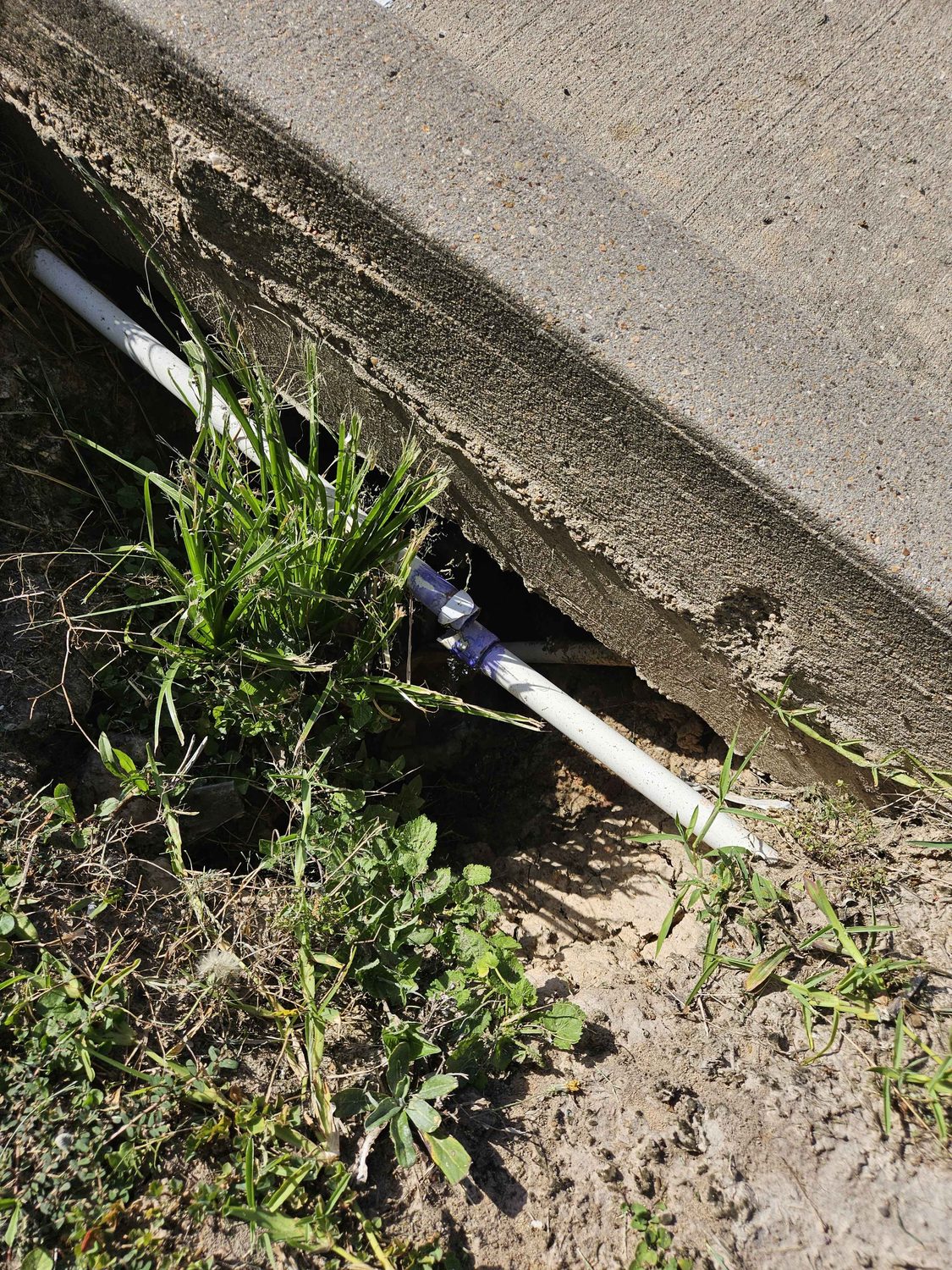
Moving creek water is not the issue so much as what is left behind when it drops. Texas A&M AgriLife’s summary of post-rain mosquito waves says Culex breed in stagnant, bacteria-heavy pools such as bogs and pooled creek beds, while container species lay eggs in buckets, gutters and pet dishes and reach the biting stage in a matter of days. A new yard has plenty of the second kind: leftover construction buckets, a downspout that empties onto flat ground, a recycling bin with a dent in the lid.
Montgomery County Mosquito Control traps and tests mosquitoes in neighborhoods, runs truck-mounted spraying, and larvicides breeding spots on county right-of-way and public property between May and the end of October. Backyards are not part of that program. Our mosquito control treats the shrubs and shady corners on your lot where adults rest.
Fire ants in new turf
Texas A&M’s fire ant program notes that mounds turn up most in open, sunny ground, that frequent mowing pushes colonies to undisturbed spots nearby, and that ants nesting in turf can get into electrical equipment and utility housings. The same page records a Montgomery County pasture averaging about 72 mounds per hectare. In Audubon, the undisturbed spots tend to be mulched beds by the front walk and the strip beside the fence. Our ant control uses a broadcast bait across the lawn with direct mound work near the places people stand.
The wooded edge
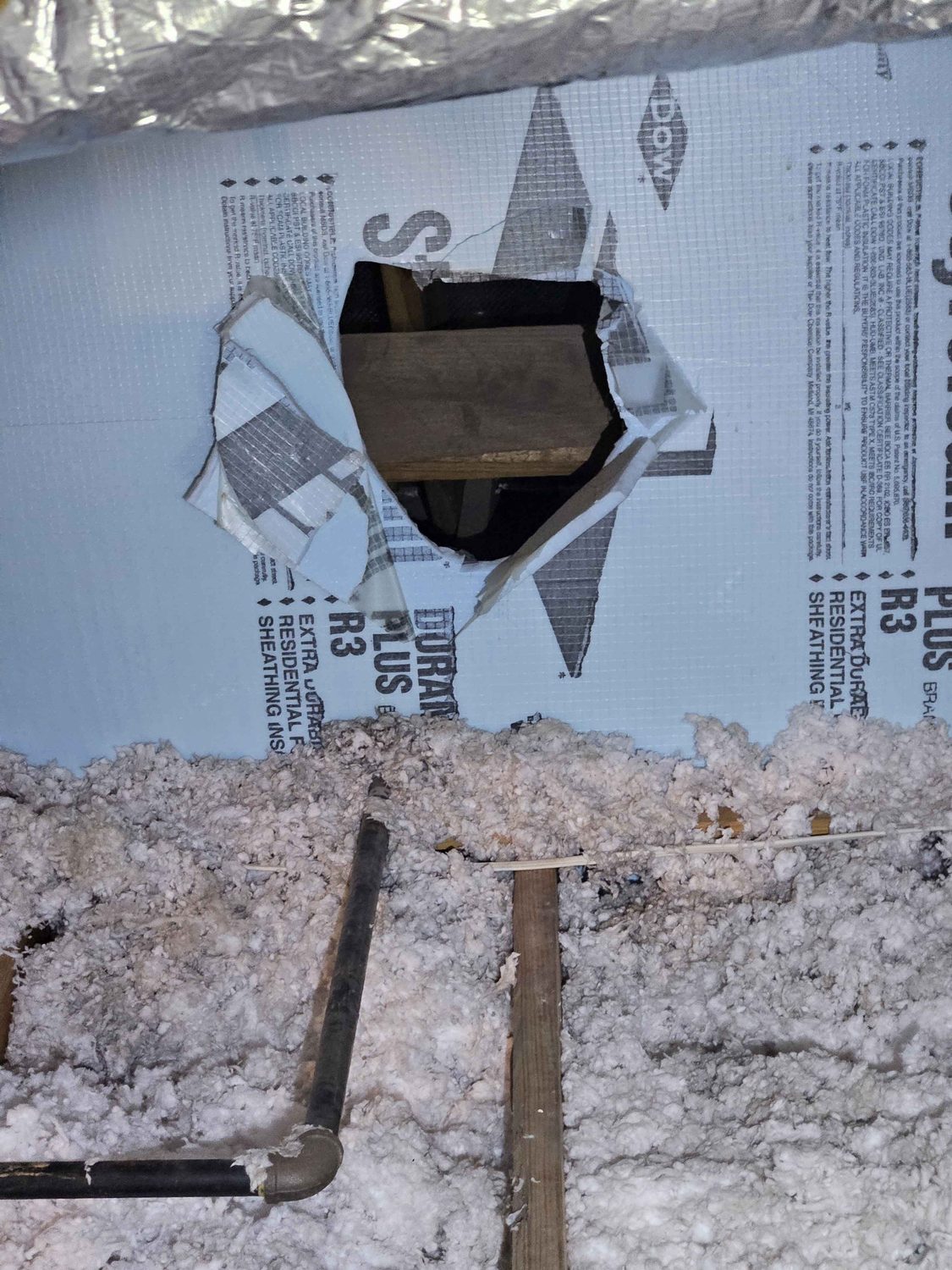
Lots that back onto the creek woods or uncleared tracts see more animals. The lone star tick, per Texas A&M, lives in wooded areas with underbrush near creeks and is most active from March through May and again in July and August. An AgriLife raccoon leaflet says that in towns, raccoons cause damage mainly to attics and roofs and feed readily on pet food and trash. Texas A&M’s rodent IPM slides add that roof rats favor trees and vines and usually nest above ground, and that a rat gets in through a hole the size of a quarter. On a new house, that can be a gap where a cable line enters. We do rodent control and close those gaps through exclusion work.
How we work in Audubon
It starts with a free inspection of the house, attic and yard, followed by a written price. We do not sign anyone to a long-term contract, and our 100% Service Guarantee covers the work. Homeowners who want steady ant and mosquito coverage can compare our year-round plans.
More on the area is on our Magnolia page. Other neighborhoods we cover nearby include High Meadow Ranch to the south and Lake Windcrest.
Frequently asked questions
Our Audubon house was finished last year. Why are fire ants already all over the yard?
New sod and graded soil are exactly the open, sunny ground fire ants like, and colonies move in from the lots and fields around a young section. Treating the whole yard with bait, then hitting mounds near walkways and the AC pad, works better than chasing each mound.
Is Audubon inside the City of Magnolia?
No. A Census TIGERweb check at the Audubon Park section finds no incorporated city, only Montgomery County and the Pinehurst Census designated place. Homes carry Magnolia mailing addresses, and we schedule them with the rest of our Magnolia route.
Do Formosan termites matter for a new build in Audubon?
Texas A&M's list of counties with confirmed Formosan termites includes Harris County but not Montgomery County, so that species is not the main concern here today. Any sign of termites, such as mud tubes on the slab, is still worth a call, and our termite control page explains our approach.
We back up to the trail along Mill Creek. Will that mean more mosquitoes and ticks?
Usually somewhat more. Pooled creek water feeds some mosquito species, and Texas A&M places lone star ticks in wooded underbrush along creeks. Keeping the fence line trimmed and treating shady resting spots in your yard cuts down what crosses over.
What happens at the first visit?
We look over the house, attic and yard at no charge and put the price in writing before any work starts. Nobody signs a long-term contract, and our 100% Service Guarantee backs whatever we do.
Pest problem in Audubon?
No long-term contracts, and service agreements are backed by our 100% Service Guarantee.
Because we are based in Spring, we can often come out the same or next day for urgent problems. Call before noon, Monday through Friday, for the best chance at next-day service.
Last updated