
Restaurant and Food Service Pest Control in North Houston
Texas food establishments are inspected against the 2017 FDA Food Code, which Texas adopts by reference. It asks that the premises be kept free of pests, that deliveries and the building be inspected for them, and that harborage be removed. Our restaurant program works back-of-house on your timing and leaves a service log on site.
Call 281-627-4810 Request a free inspection
What gets checked, at a glance
| Evidence of pests on the premises | A dated service log kept on site, showing what each visit found in prep, storage, dish and dry goods areas |
|---|---|
| Incoming deliveries | Notes on where deliveries are checked in, and anything found at the back door or in dry storage that points to a shipment |
| Harborage | Findings on clutter, unused equipment, wall voids and gaps behind equipment, listed with who is expected to fix each one |
| Outer openings | Exclusion work and findings at back doors, dock doors, door sweeps and utility penetrations |
| Dead pests in devices | Each device checked and cleared at every visit, so carcasses do not accumulate and draw more pests |
| Pesticides used | Product and application records, using only labels that permit use in a food establishment |
| Small flies | The breeding source found and named, whether a drain, a floor crack, a soda line or a mop sink |
The rule your inspector works from
The Texas Food Establishment Rules live in 25 TAC Chapter 228, and since 2021 they work differently from how most kitchen managers learned them. According to the Texas Department of State Health Services’ summary of the 2021 changes, the department now adopts the 2017 FDA Food Code by reference instead of copying its text into the Texas rule, and Chapter 228 keeps only the rules specific to Texas. DSHS lists both side by side on its retail food statutes and laws page. So the pest provisions your inspector reads are in the 2017 Food Code itself.
Section 6-501.111 says the premises shall be kept free of insects, rodents and other pests, and it names four ways to get there: routinely inspecting incoming shipments of food and supplies, routinely inspecting the premises for evidence of pests, using trapping devices or other control methods when pests are found, and eliminating harborage. Section 6-501.112 asks that dead or trapped pests be removed from devices often enough that they do not pile up or attract more.
Section 6-202.15 covers the building. Outer openings are protected by filling holes and gaps along floors, walls and ceilings, keeping windows closed and tight-fitting, and using solid, self-closing, tight-fitting doors. A propped back door on a hot afternoon is the most common way a kitchen breaks that rule without anyone deciding to. Section 6-202.13 adds that electric fly devices must hold the insects they kill and may not hang over a food prep area.
One correction to what restaurant pest pages often say: the Food Code does not, in those sections, require a service log. It requires that pests be controlled. A log is how you show an inspector what has been done between visits, which is useful, but it is evidence of the work rather than a rule of its own.
Who walks in
Which agency inspects you depends on the address. A city health department, a county health department or DSHS itself may hold jurisdiction, and DSHS publishes a jurisdiction map on its retail food establishments page so an operator can check. Across Spring, Klein, Tomball, The Woodlands, Conroe and Houston, that means neighboring kitchens a few miles apart can answer to different inspectors. The pest questions they ask are much the same, because they all start from the same Food Code sections.
What an auditor looks for
Health inspectors are not the only people who check a kitchen. Franchise brands and multi-unit groups often send their own food safety auditor or hire a third-party firm, and those visits can go further into the paperwork than a routine health visit. The first thing such an auditor usually opens is the service log, and the test is whether it matches the room. A fresh dropping under the dish machine next to last week’s entry reading “no activity” is the kind of gap that gets written up, so our technicians record what they saw, including small findings.
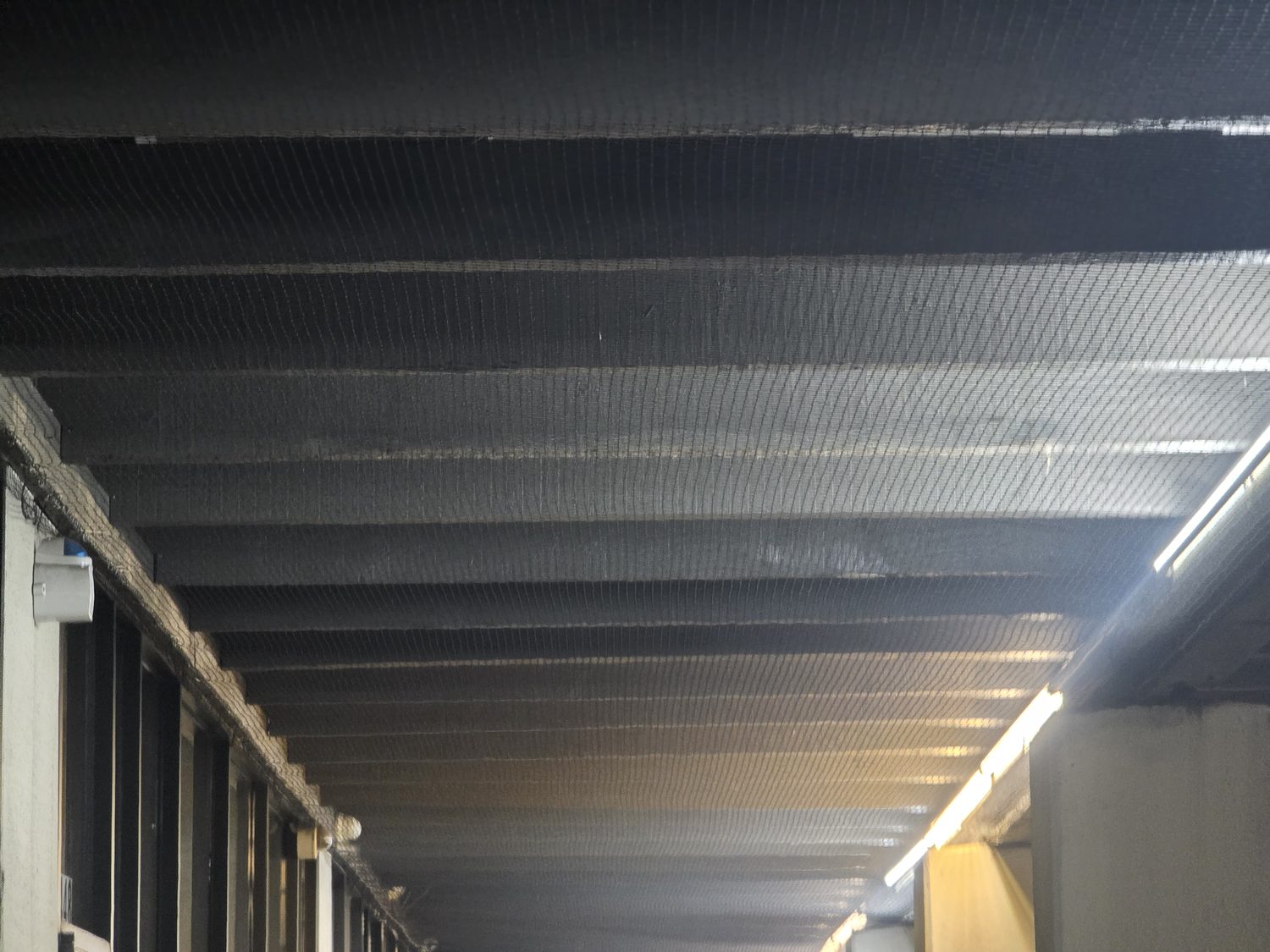
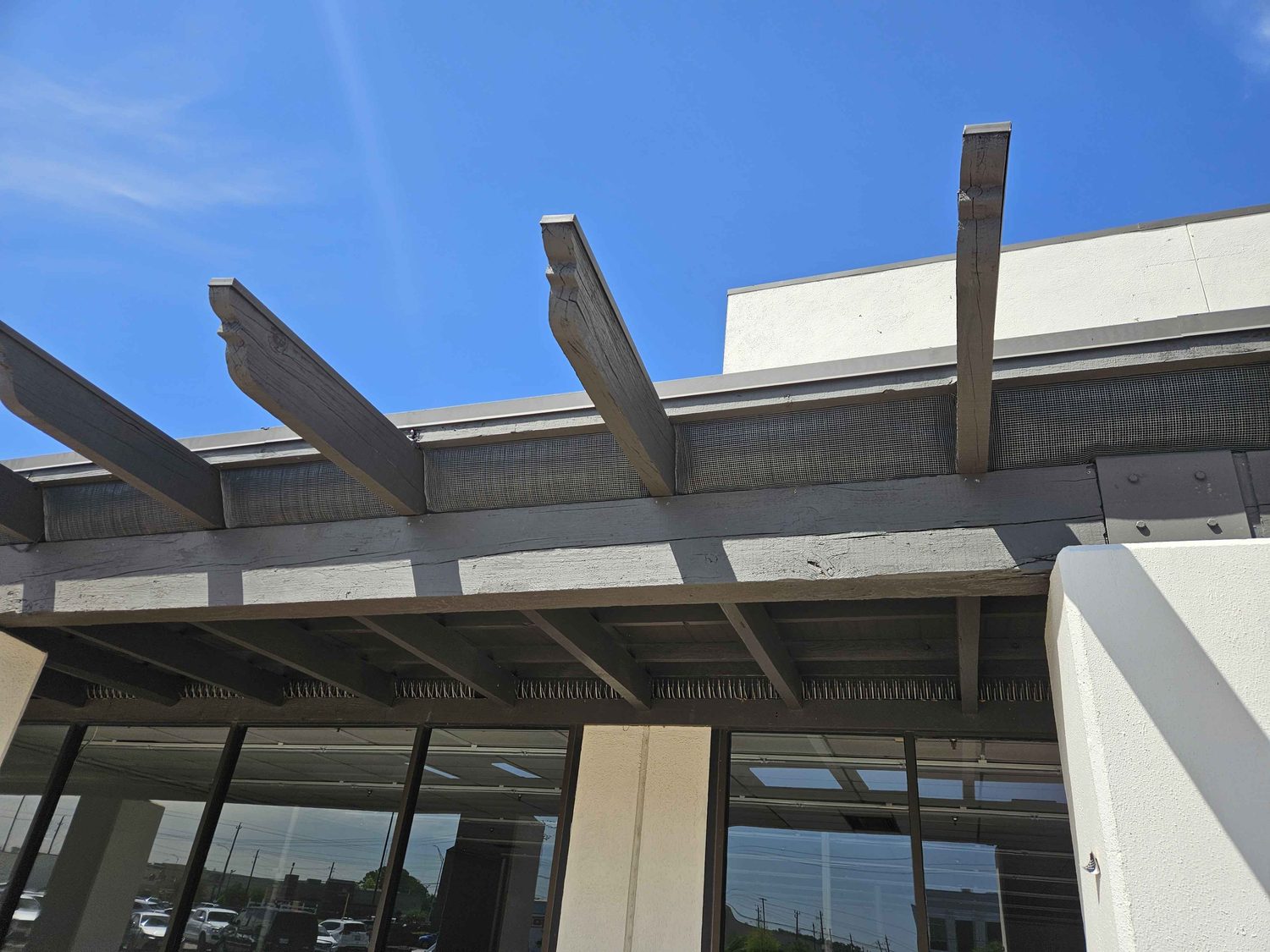
Monitors are dated and numbered, so an auditor can pull one from under the prep line and find it on the map. Outside, the patio and the roofline over the back door get a look too, since sparrows nesting in a sign or pigeons on a ledge above food traffic are hard to miss; that work is on our bird control and sparrow control pages. The Food Code sections behind all of this are explained in our guide to Texas food establishment pest rules.
German cockroaches are the main event
In most commercial kitchens, the pest that turns into a citation is the German cockroach. Texas A&M’s cockroach guide explains why a kitchen suits them: they spend about 75 percent of their lives in cracks from 1/32 to 3/16 of an inch wide, they prefer warm spots near water and food, and their droppings look like crushed pepper stuck to the surfaces where they gather. In a commercial kitchen that describes the gaskets on a reach-in, the motor compartment under a prep cooler, the seam where a stainless backsplash meets the wall, and the hollow tube legs on work tables.
The same guide says total-release foggers do not reach cockroaches in cracks, that sprays are not nearly as effective as baits for German cockroach infestations, and that pyrethroids repel them. That is why our work here is baits and non-repellent materials placed into harborage, applied according to labels that allow use in a food establishment as Food Code section 7-202.12 requires, with nothing applied where it can reach food or clean equipment. Sticky monitors placed under equipment tell us whether counts are falling. Our German cockroach page covers the method in detail.
Small flies come from somewhere specific
Texas A&M’s indoor flies publication is the best plain-language reference we know on this. Fruit flies breed in spilled syrups, wine and beer, especially under commercial kitchen equipment, behind bars, around soda dispensers and in cracked tile. Drain flies breed in the thin microbial film inside floor and sink drains. Phorid flies breed in moist decaying material, and a heavy indoor infestation can trace back to a leaking sewer line under the slab. The publication also says health departments consider fruit flies and house flies in a food service business to be unsanitary.
So the job is detective work: catch a few, identify them, and find the drain, floor crack, bar mat, soda line or mop sink they are coming from. We name that source in writing and treat it where treatment helps; cleaning it is up to your staff or a drain contractor. Our pages on drain flies and fruit flies go further. For house flies, which breed outdoors and come in through open doors, the same publication notes that commercial restaurants usually rely on insect light traps and that air curtains help at entryways.
Rodents and the dumpster pad
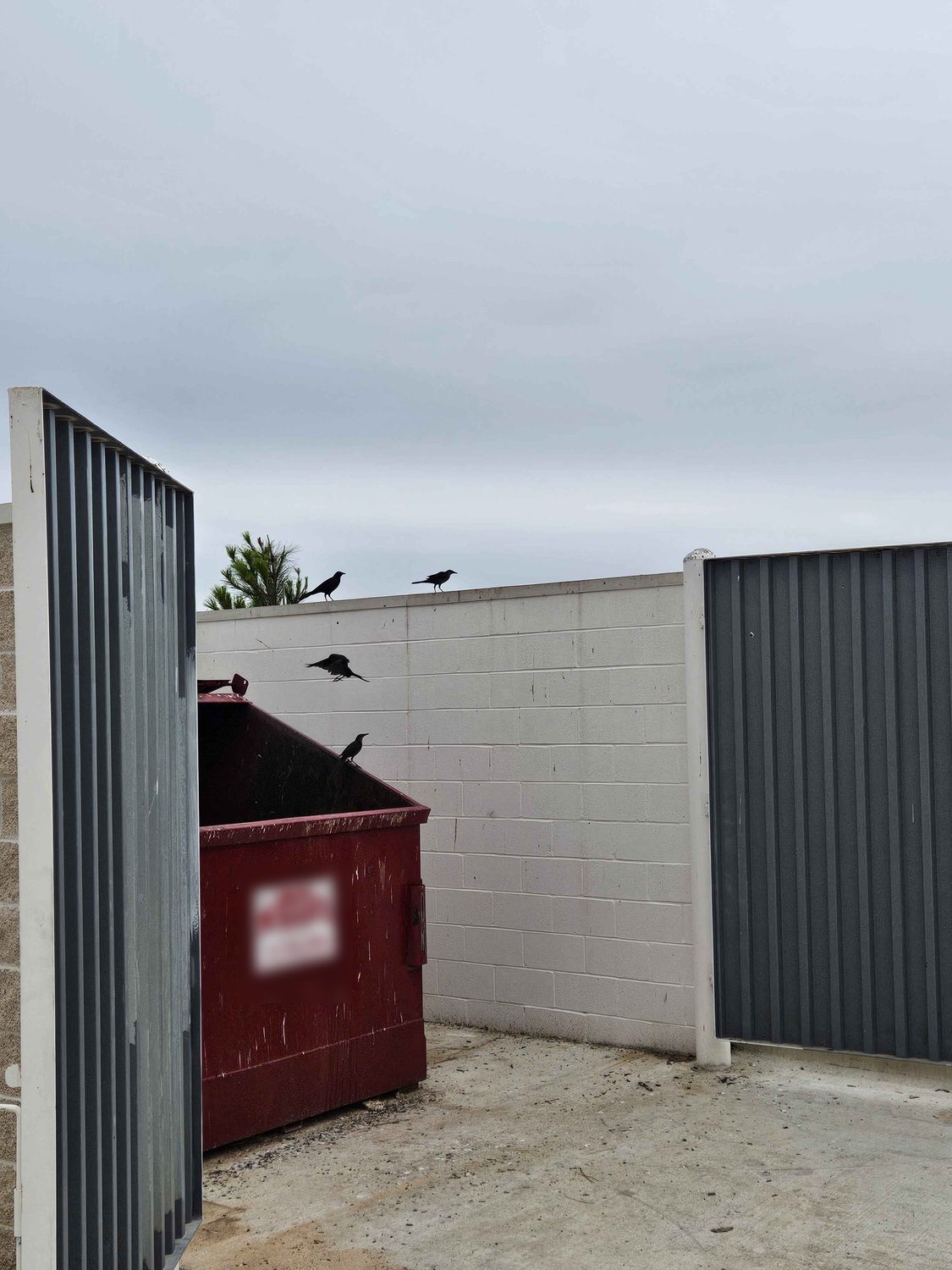
Rats in a restaurant almost always start outside. The Texas A&M AgriLife rodent course material lists poor dumpster sanitation among the conditions that favor Norway rats, and says a rat needs only a hole the size of a quarter to get in. Mice get by with a dime-sized hole. We check exterior stations around the pad and the back of the building, then follow the trail to where it meets the wall: the gap under the back door, the conduit entering beside the walk-in, the grease line penetration. Those openings go on the exclusion list. Our rodent control page explains the full approach.
The delivery door is a pest door
Food Code section 6-501.111 lists routinely inspecting incoming shipments of food and supplies as the first method of control, ahead of anything a pest company does. German cockroaches ride in on corrugated cases and produce boxes, and stored-product beetles arrive inside bags of flour, rice and spices. The habit that helps most costs nothing: break down cardboard at the back door instead of carrying it into dry storage, look at the bottom seams of a case before shelving it, and rotate dry goods so nothing sits long enough to host a moth population. Our technician checks the receiving area and dry storage on every visit and notes anything that suggests a shipment brought something with it, so you can raise it with the supplier.
Shared walls in strip centers
Many north Houston restaurants sit in strip centers along FM 1960, Kuykendahl, Louetta, Rayford and the Grand Parkway, sharing walls, an attic plenum and sometimes a grease trap with other tenants. In a building like that, a German cockroach population next door is your problem too, and a program scoped only to your suite will keep being reinfested through the wall voids and the plumbing chase. When the evidence says the source is outside your four walls, we will say so in writing. That record is what you take to the property manager when asking for the whole building to be treated, and it is a harder conversation than treating your own kitchen again.
Closing time is when the evidence shows
Cockroaches, mice and rats are active at night, which means the kitchen at 11 p.m. tells a truer story than the kitchen at 10 a.m. A close-down routine helps more than most managers expect: food covered or put away, the floor drains flushed and the drain covers clean, the dish area left dry, trash out to the dumpster with the lid closed, and the back door shut and checked. Monitors placed under the line catch what moves overnight, and their counts, read at each visit, are how both of us know whether the routine is working.
What the restaurant program includes
Our restaurant program is back-of-house service on your schedule covering cockroaches, rodents and flies; drain and fruit fly source work; exclusion at doors, dock and utility penetrations; monitoring in prep, storage and dish areas; sanitation and harborage findings for your team; an on-site service log; and a corrective-action history showing what was found and what changed. Ants, including tawny crazy ants that trail in from landscaping, are handled inside the same program.
After a bad inspection
If an inspection went badly, bring the inspector’s notes to the walk. We start with what was cited, find the source rather than just the evidence, do the corrective exclusion and treatment, and document each step so you can show what changed when the inspector returns. We will not promise the result of a re-inspection; nobody honest can.
Every restaurant program starts with a free inspection and a written price. The work carries our 100% Service Guarantee, and a walk can be booked from the contact page.
Frequently asked questions
Will your technician be in the kitchen during service?
Not if we plan it properly. Visits are set before opening, between lunch and dinner, or after close, and the work stays behind the line and in storage. If a problem forces a daytime visit, we work back-of-house first and keep anything in a guest area to a quick look.
We have an inspection coming up. What should we do first?
Clear out unused equipment and boxes from storage, pull equipment off the walls where you can, and look under the dish machine and the soda station for standing water and sticky residue. Then call us for a walk-through. We check devices, look for droppings and live activity, and bring the on-site log up to date.
Why do the small flies keep coming back after a treatment?
Because they are breeding somewhere in the building. Texas A&M notes that fruit flies breed under commercial kitchen equipment, in bars, soda dispensers and cracked tile, while drain flies live in the slime film inside drains. Spraying adults buys a day. Finding and cleaning the source is what ends it, and we name that source in writing.
Do you clean the drains or the kitchen?
No. We find the breeding site or the residue feeding the problem, treat where a treatment helps, and leave a written list for your staff or your drain contractor. The next visit records whether each item was handled. Cleaning is your crew's job; directing it is ours.
How often should a restaurant have service?
Most restaurants run on a monthly or every-other-week schedule, with a walk-through added ahead of an expected inspection. Kitchens with heavy volume, an older building, a shared wall with another food tenant or an active German cockroach problem usually need the shorter interval, at least until counts drop.
This is one of the programs described on our commercial pest control page, which covers how a program is built, what the record looks like, and the compliance surface it contributes to. For a site walk, call or text 281-627-4810.
Commercial pest control in north Houston?
No long-term contracts, and service agreements are backed by our 100% Service Guarantee.
Because we are based in Spring, we can often come out the same or next day for urgent problems. Call before noon, Monday through Friday, for the best chance at next-day service.
Last updated