
Hotel and Hospitality Pest Control in North Houston
Bed bugs drive most hotel pest work, because a single guest's luggage can bring them in. Our hospitality program rotates proactive visual room inspections, places monitors in higher-risk rooms, isolates and inspects a reported room and its neighbors, and keeps room-by-room records. Kitchens, bars and laundry get their own cockroach, rodent and fly service.
Call 281-627-4810 Request a free inspection
What gets checked, at a glance
| Room inspection coverage | A rotation schedule and a room-by-room log showing which rooms were inspected on which date and what was seen |
|---|---|
| Response to a guest report | A record of the reported room, the adjoining rooms inspected, the treatment done and each follow-up visit |
| Monitoring | A placement map for monitors and interceptors in higher-risk rooms, with what each one held at each check |
| Staff reporting | Training for housekeeping and front desk on early signs, and a record of each report they make |
| Kitchen and bar | Back-of-house cockroach, rodent and fly service recorded separately, since those areas answer to the food rules |
| Exterior and entries | Exclusion findings and work at service doors, loading areas, trash enclosures and utility penetrations |
| Materials used | Product and application records for every treatment, room by room |
How bed bugs get into a hotel
Texas A&M AgriLife entomologist Mike Merchant put it simply in an AgriLife Today piece on bed bugs and travel: one traveler carrying bed bugs in their luggage is enough to infest a hotel. No amount of housekeeping keeps that from happening, because the infestation walks in through the front door with a paying guest. That changes the goal. A hotel cannot aim to never get bed bugs. It can aim to find them in the first room, before they spread to the next.
The same article says the most common hiding places in hotels are around headboards and upholstered furniture rather than in the bed itself, because linens are changed so often. It adds cushions, the backs of picture frames, baseboards and electrical switch plates. The EPA’s guide to finding bed bugs fills in the rest: rusty or reddish stains on sheets and mattresses, dark spots of excrement that bleed into fabric like a marker, tiny pale eggs and shed skins, and in heavier infestations, drawer joints, curtain folds, electrical receptacles and the junction of wall and ceiling. EPA also notes a bed bug can fit into any gap the thickness of a credit card.
That list is the inspection. A wall-mounted headboard in a hotel hides the seam between board and wall, which is where a technician starts, not the sheets.
What the room program does
The hospitality program, as the company has described it, is built from a short list of parts:
- Rotating proactive room inspections. A share of rooms is inspected on each visit on a schedule that works through the whole property, so a room no guest has complained about still gets looked at.
- Monitors and interceptors in higher-risk rooms. Rooms with past activity, rooms beside them, and rooms with heavy turnover get monitoring devices, checked and recorded each visit.
- Visual and manual inspection only. No canine inspections.
- A room isolation and treatment protocol. A reported room comes out of inventory, the room and its neighbors are inspected, and treatment and follow-up are recorded room by room.
- Staff training on early detection and reporting. Housekeepers strip and remake beds every day. They will see spots on a mattress seam long before a technician on a monthly rotation does, if they know what they are looking at and who to tell.
- Back-of-house and kitchen service, plus exterior and entry exclusion.
The EPA’s prevention guidance recommends encasing mattresses and box springs to remove hiding places, and choosing light-colored, tear-resistant covers that make bed bugs easier to see. Many properties already use encasements for hygiene. Inspecting them for tears is part of a room check.
Our bed bug control page covers how treatment itself works, and bed bugs after travel is the page to send a guest or employee who is worried about taking them home.
Neighbors matter more than the reported room
Bed bugs move between rooms through wall voids, along pipe chases and under connecting doors. A reported room is a starting point. Our protocol inspects the rooms that share its walls, the room above and the room below, and records each one, including the ones where nothing was found. That record of negatives is what tells a general manager how far a problem reached and when the search can reasonably end.
Suites with a sofa bed, connecting rooms and rooms beside a housekeeping closet get extra attention in that search. Sofa beds hide bed bugs in the frame and the fold of the mattress, connecting doors leave a gap at the floor, and a housekeeping closet is where linens from several rooms meet on one cart. If the reported room is on a corner or at the end of a hall, the inspection follows the plumbing chase to the rooms stacked above and below it.
Kitchens, bars and laundry
A hotel restaurant, bar, banquet kitchen or breakfast area is a food establishment, inspected under the Texas food rules like any freestanding restaurant. Those areas get the back-of-house approach described on our restaurant and food service page, with their own records kept apart from the guest-room log so a health inspector and a brand auditor each find what they need without reading the other’s paperwork.
German cockroaches are the usual problem back there. Texas A&M’s German cockroach profile notes they hide in dark spots near moisture and food, travel in groceries and luggage, and can spread into less likely places once populations are large. In a hotel, the less likely place is a guest floor. Laundry rooms and housekeeping closets, warm and humid with linen carts moving between floors, deserve the same attention. Our cockroach control page explains the method.
Rodents start at the trash enclosure and the loading door. Flies follow the same route: Texas A&M’s indoor flies publication notes that house flies rarely breed indoors and get in through poorly screened or open doors, and that air curtains help at commercial entries. See house flies and rodent control for more.
What housekeeping training covers
The staff training in this program is practical and short. Housekeepers learn what the EPA’s signs look like on a white sheet and on a mattress seam, where to look when stripping a bed, and what not to do when they find something: do not strip the room, do not move the furniture into the hall, do not carry the linens to the next room on the same cart. Front desk staff learn what to ask a guest who reports bites, how to move the guest without moving their luggage into a fresh room unchecked, and who to call. Engineering staff learn to look behind headboards and outlet covers when they are already in a room for a repair. Each report goes into the log with a room number and a time, whether or not bed bugs are confirmed.
Extended-stay rooms and staff areas
Extended-stay properties, and hotels that house crews on long work assignments, carry a different risk. A guest who stays three weeks has time to let a small infestation grow before anyone sees it, and the room may not be fully turned over until checkout. Those rooms sit higher in the inspection rotation. Staff break rooms, lockers and the lost-and-found shelf belong on the list too, since employees and forgotten belongings move between floors every day.
Records a general manager actually uses
A log only helps if someone reads it. Each visit’s record shows which rooms were inspected, which were found active, which were treated and which follow-ups are due, so a general manager can see at a glance whether a problem is shrinking or moving. Over a year, the same records show which floors, wings or room types keep coming up, and that pattern is often the most useful thing in the file. It tells you where to focus encasement replacement, furniture changes and staff refresher training.
Furniture moves, renovations and the luggage rack
Bed bugs travel with furniture as readily as with guests. Headboards, upholstered chairs and mattresses pulled from one room during a renovation and parked in another, or stored in a back room and brought out later, can carry a hidden population across the property. Before a floor is renovated, the program inspects the rooms being cleared, so furniture leaving an active room is identified and handled before it moves. Replacement furniture bought secondhand gets checked before it goes into a room.
The EPA’s bed bug prevention page tells travelers to inspect the luggage rack in their room. That is worth knowing from the property’s side, because a careful guest will look there, at the headboard and at the mattress seams within minutes of arriving. A metal rack set away from the wall and the bed gives luggage a place that is easy to inspect and hard for bed bugs to reach, and it belongs on the room checklist.
What an auditor looks for
Flagged properties are visited by brand quality-assurance inspectors and, for some brands, third-party auditors. Each brand writes its own standard, so the program does not claim to meet any particular one. It provides the records they generally ask for: room-by-room inspection logs, treatment and follow-up records, monitor placement maps and a service history for the property. If your brand standard asks for something specific, bring it to the walk and we will tell you whether the program covers it.
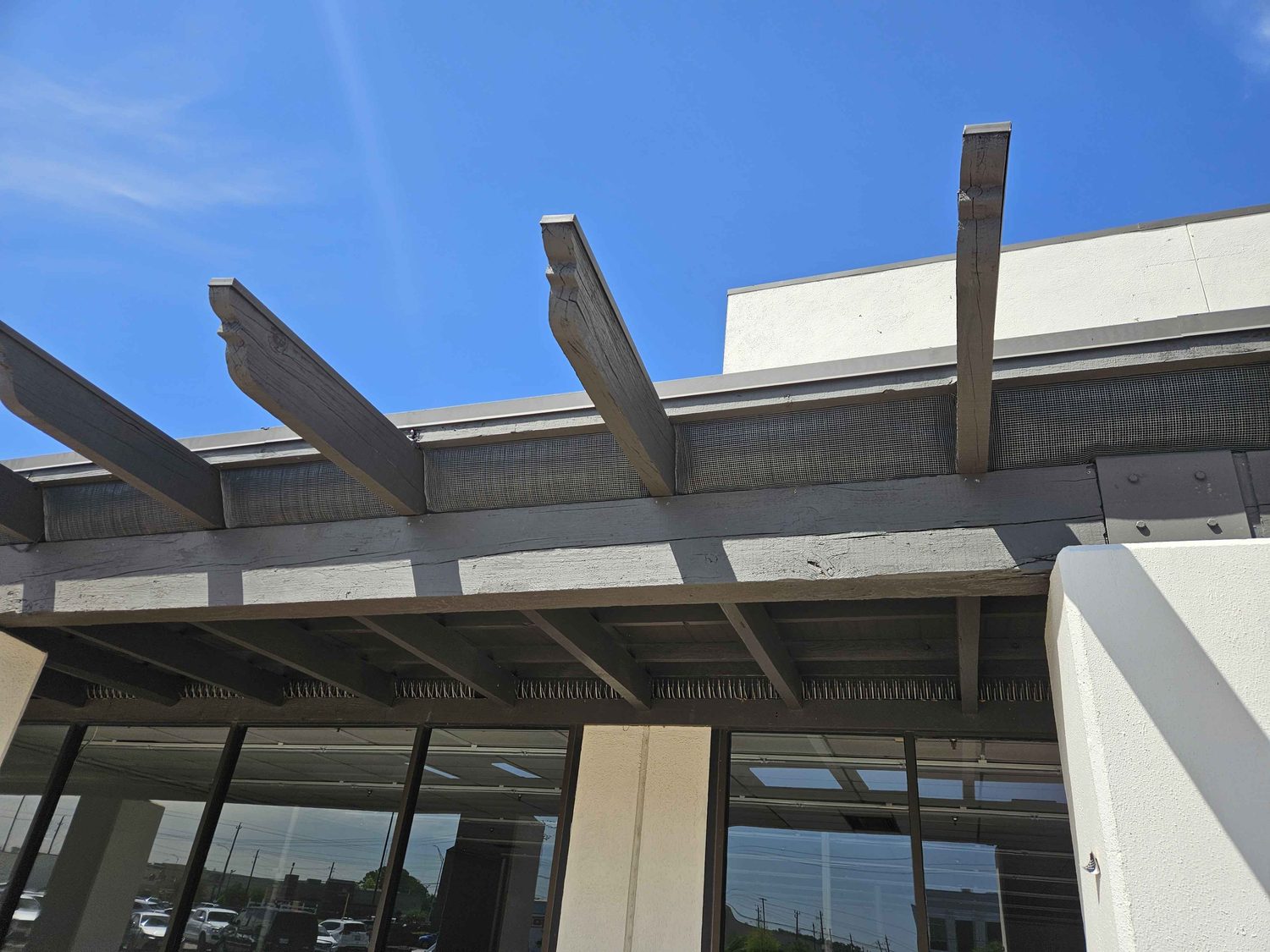
A brand auditor rarely stops at the guest floors. The hotel restaurant, banquet kitchen and breakfast bar answer to the same Food Code pest provisions as any restaurant, which our guide to Texas food establishment pest rules walks through, and their records belong in a separate file from the room log. The arrival experience counts as well: droppings under the porte-cochere, on the pool deck or below a sign are something any visitor notices, auditor included. Sparrows in signage and pigeons on rooflines are handled through bird control, with the pigeon side covered on pigeon control.
Getting started
Every hotel program begins with a free inspection: a sample of guest rooms, the kitchen and bar, laundry, housekeeping storage, the trash enclosure and the exterior. You receive a written scope, rotation plan and price before any work starts. The program carries our 100% Service Guarantee. Use the contact page to set up the walk.
Frequently asked questions
Do you use bed bug dogs?
No. Our bed bug inspections are visual and manual, done by a technician working through the bed, headboard, furniture and room edges, supported by monitors and interceptors in higher-risk rooms. We do not offer canine or other scent-detection inspections, and we would rather say so plainly than imply a service we do not provide.
A guest says they were bitten. What happens next?
Take the room out of inventory and leave the bedding as it is so the evidence is not stripped away. We inspect the reported room and the rooms that share its walls, ceiling and floor, treat any room where bed bugs are found, and record every room checked. Follow-up visits are scheduled and logged the same way.
When can a treated room go back on sale?
That decision is yours, made with the follow-up records in front of you. We will tell you what the follow-up inspections found and whether we still see activity. We will not stamp a room clear on a single visit, because bed bug eggs and hidden adults are exactly what a single visit can miss.
Will guests see your technicians?
Rarely, if the visits are planned with your front desk and housekeeping. Room inspections follow checkout and housekeeping's own schedule, back-of-house work is timed around meal service, and technicians use service corridors and back entrances. The goal is to fit into your operation rather than to stage a disappearance.
Does the documentation protect us if a guest makes a claim?
We cannot tell you that, and you should be skeptical of any pest company that does. What the program provides is a dated record of which rooms were inspected, what was found and what was done. What that record is worth in a dispute is a question for your insurer or attorney.
This is one of the programs described on our commercial pest control page, which covers how a program is built, what the record looks like, and the compliance surface it contributes to. For a site walk, call or text 281-627-4810.
Commercial pest control in north Houston?
No long-term contracts, and service agreements are backed by our 100% Service Guarantee.
Because we are based in Spring, we can often come out the same or next day for urgent problems. Call before noon, Monday through Friday, for the best chance at next-day service.
Last updated