
Food Processing and Manufacturing Pest Control in North Houston
A food plant's pest program is judged on two things: whether pests are kept out of production, packing and holding areas, and whether the records show it month after month. We map every device, log each visit, trend the counts, and write corrective actions with the cause beside them. Cleaning stays with your sanitation crew.
Call 281-627-4810 Request a free inspection
What gets checked, at a glance
| Device placement | A scaled site map with every interior and exterior station numbered, so an auditor can walk from the map to any device |
|---|---|
| Activity over time | Visit counts per device rolled into trend reports, with the threshold that triggers a closer look written down |
| Response to a finding | A corrective-action entry naming what was found, the likely cause, what we did, and what your team was asked to do |
| Grounds and openings | Exterior findings on litter, weeds, drainage, dock doors and wall penetrations, listed for whoever owns the fix |
| Materials used | Product and application records for anything applied inside or outside the plant |
| Stored-product insects | Pheromone monitor locations and catches, used to narrow where an infestation is rather than to control it |
| Sanitation gaps | A written action list for your crew; we direct and document the cleanup, we do not perform it |
Where the federal rule puts pest control
The pest language that governs a human food plant is short and blunt. Under the current good manufacturing practice rules in 21 CFR Part 117, Subpart B, section 117.35(c) says pests must not be allowed in any area of a food plant, that effective measures must be taken to exclude them from manufacturing, processing, packing and holding areas, and that pesticides may be used in the plant only under precautions that protect food, food-contact surfaces and packaging from contamination.
Section 117.20 reaches past the walls. It asks the operator to remove litter and waste, cut weeds and grass near the plant that could harbor pests, and drain areas that could become a breeding place. Where the neighboring lot is not yours and is not kept that way, the rule expects you to compensate inside your own building by inspection, extermination or other means. The same section asks for screening or other protection against pests where it is needed.
That placement matters, because pest control is often sold as something your food safety plan must prove. The plain reading of the rule is narrower. Pest exclusion is a good manufacturing practice that applies to the whole plant. Whether pests also appear in your hazard analysis as something needing a preventive control is a decision for the person who wrote that plan. We build the pest program to support whichever way you have written it, and we do not tell an auditor otherwise.
What an auditor looks for
Many plants around north Houston answer to a buyer who requires a third-party scheme such as SQF or BRCGS, or an AIB inspection, on top of whatever FDA expects. Each scheme writes its own pest clause and revises it by edition, so the exact wording belongs in your copy of the standard, not on this page. What auditors commonly do on the floor is consistent enough to plan around.
They take the device map and pick stations at random to find. They read a run of visit records and look for gaps in dates. They ask what happened after the last spike in catches and expect to see a written cause and a closed action. They look at the dock doors, the wall penetrations behind equipment, and the grounds along the fence line. Then they ask where the pesticides are kept and who applied what. Every row in the table near the top of this page exists because one of those questions gets asked.
One boundary is worth knowing before the auditor arrives. Part 117 governs the plant itself, while a retail counter or outlet store on the same property that sells food straight to the public usually answers to the Texas Food Establishment Rules and a local health inspector instead. Our guide to Texas food establishment pest rules sets out how those pest provisions read, which helps when one address has to satisfy both.
The pests behind most plant findings
Stored-product insects. Indianmeal moths, sawtoothed grain beetles, red flour beetles, cigarette beetles and warehouse beetles are the usual cast. Texas A&M’s Indianmeal moth profile notes the larvae web food particles together as they feed and that a full life cycle can run anywhere from four weeks to 300 days depending on conditions, which is why a quiet month in winter proves little. AgriLife’s pantry pest publication is direct about the monitoring tool most plants rely on: pheromone traps do not control these insects, but they help detect an infestation and pinpoint the problem area. We place and read them on that understanding. A rising catch on one monitor sends us to the ingredient lot, the bin or the dead spot in the conveyor nearest it.
House mice and rats. The Texas A&M AgriLife rodent course material gives a house mouse a home range of 20 to 50 feet and a Norway rat about 100 feet, and says a mouse needs only a hole the size of a dime and a rat one the size of a quarter. Those numbers drive the map. Interior devices are spaced so a mouse living in a wall void or a racking bay is near one, and exterior stations ring the building where rats travel. The same material says inspections should be three-dimensional, and in a plant that means the tops of walk-in coolers, the cable trays and the pipe chases, not just the floor line.
German cockroaches. In a plant they live in warm motor housings, control panels and the hollow legs of equipment. Texas A&M’s cockroach biology and management guide puts a generation at about 100 days and notes that pyrethroid sprays repel German cockroaches, which pushes them deeper into equipment rather than killing them. Our interior work leans on baits and non-repellent placements applied away from exposed product, and on finding the harborage so maintenance can seal or clean it. See our German cockroach page for how that works in detail.
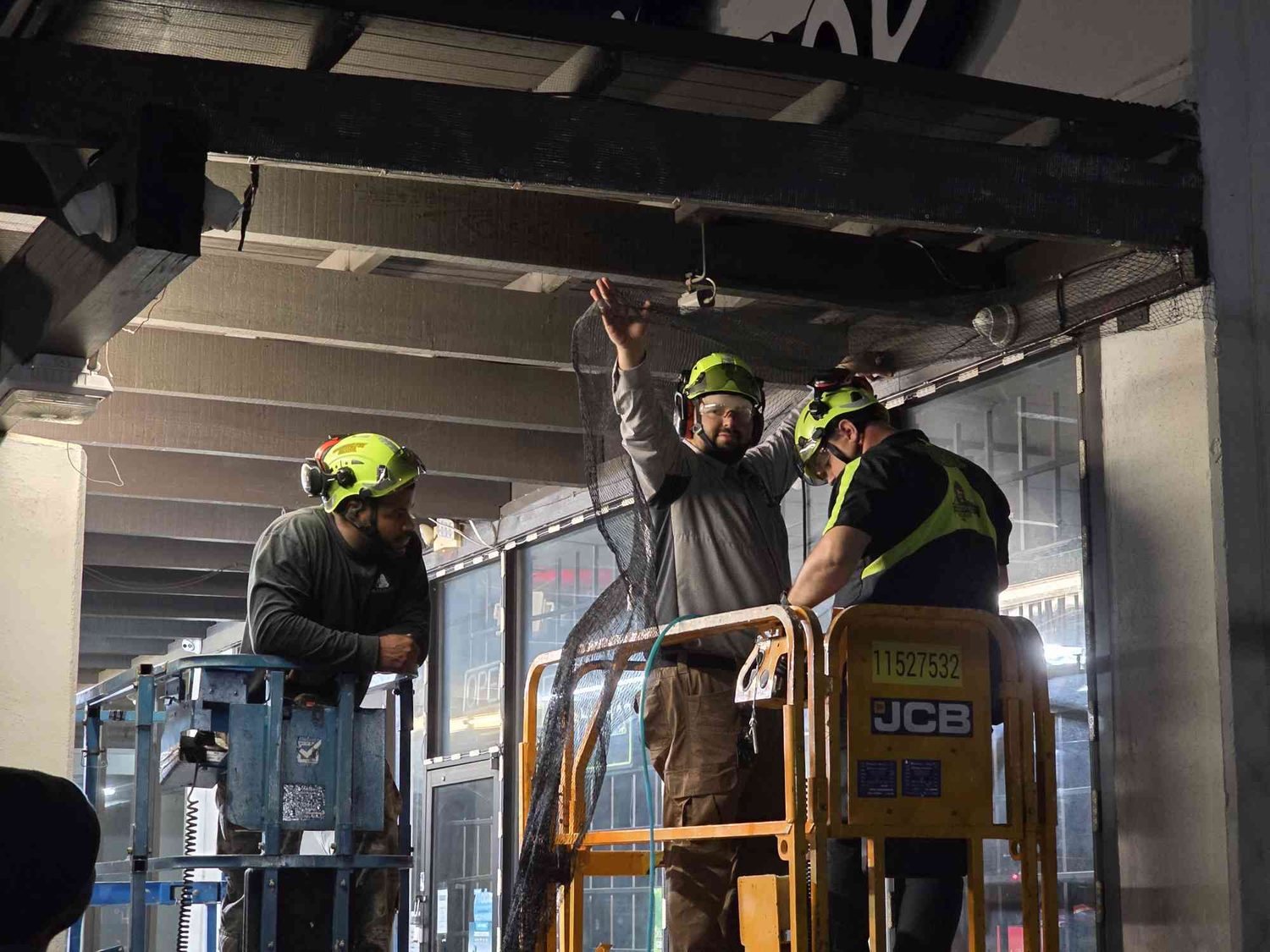
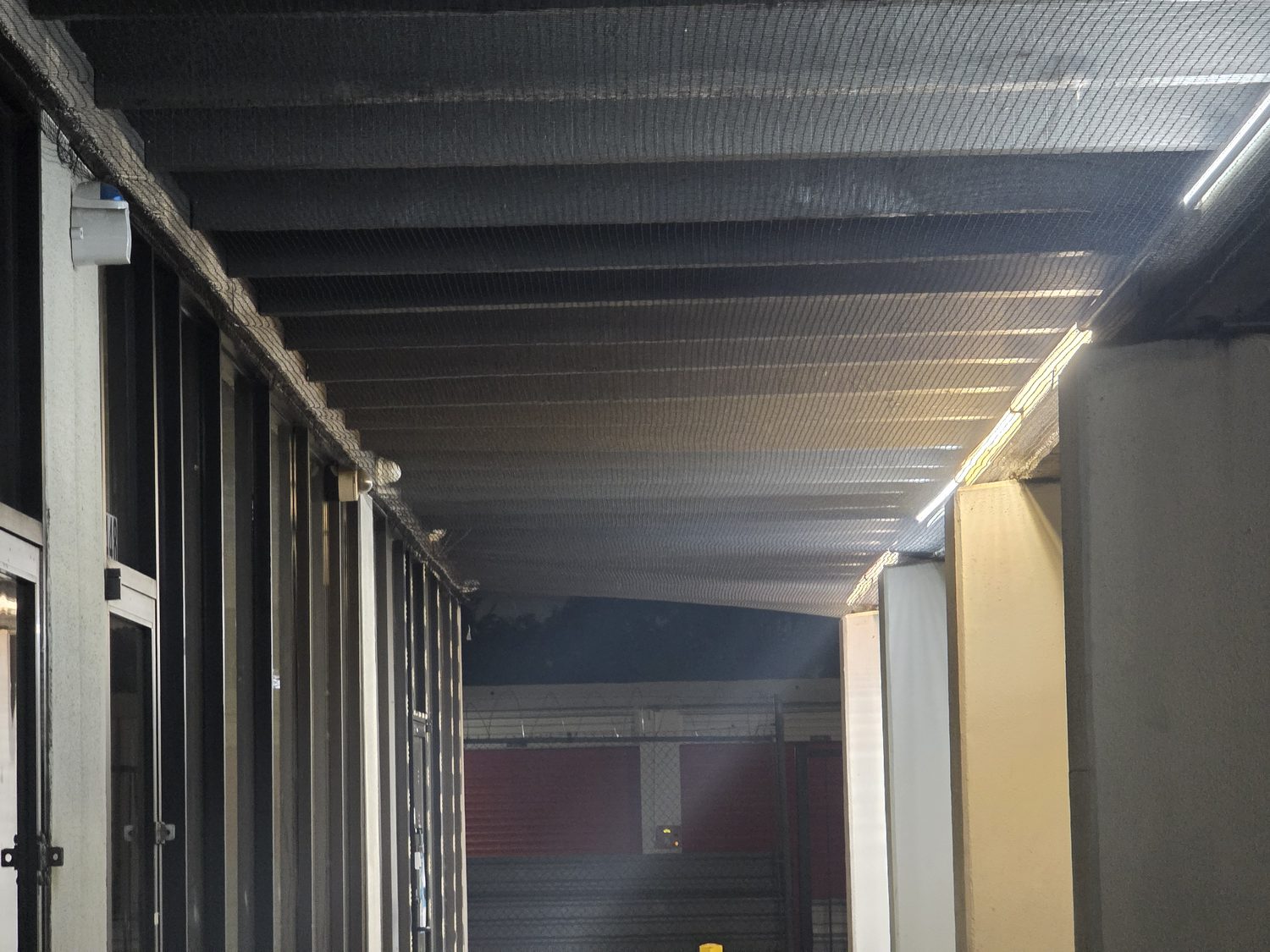
Birds at the dock. Pigeons and sparrows that get into a dock or a high-bay storage area foul whatever sits below the beam they choose. The answer is exclusion at the openings and on the roosts, which our bird control page describes, along with the protections that apply to native species.
What the program puts on paper
Here is what the documentation set contains, described as what you receive rather than as a prediction of how it will score:
- a scaled site map with numbered interior and exterior stations, multi-catch traps, insect light traps and pheromone monitors marked
- a service record for every visit, listing each device checked and what it held
- trend reports built from those counts, with alert thresholds written down
- corrective-action entries that record the finding, the likely root cause, the work done and the follow-up owed
- product and application records for every material used
- a structural exclusion and conducive-condition list, split between what we seal and what your maintenance team or a contractor must fix
- a sanitation action list for your crew
- an audit binder that keeps all of the above in one place, plus a pre-audit walk-through before a scheduled certification date
Ask to see a sample record before you sign anything. It shows you what your auditor will read, and you can judge it for yourself.
Sanitation is yours, direction is ours
We do not provide cleaning services, and a pest program that quietly assumes someone else is cleaning will fail in the same corner every month. So each visit names the specific location: flour dust packed under the second mixer, product spill behind the case packer, standing water at the trench drain by the wash bay. Your crew closes the item and the next record shows it closed. When the same item reappears three visits running, it moves to the corrective-action log with a cause, because by then it is a process problem rather than a missed shift.
Working around a running line
Interior service is planned for sanitation windows, changeovers and off-shift hours. Nothing is applied near open product, and anything applied in a processing room follows the label and the restrictions Part 117 places on pesticide use in a food plant. Exterior perimeter checks, grounds findings and dock exclusion work can usually happen while the line runs. Plants with allergen or hygienic zoning tell us at the walk which zones our technician may enter and in what order, and the route on the device map follows that sequence.
Insect light traps and where they hang
Flying insect light traps are on the program’s device list, and placement is where plants most often get them wrong. A trap glowing at a dock door pulls insects toward the opening as well as catching them, so units belong inside the first room off the dock, aimed away from the door, and never above exposed product, an open line or a packaging station. Catch boards are read and changed on a set interval and their counts go into the same trend reports as the rodent devices. A sudden jump in small flies on one unit usually points to a drain, a floor crack or a sanitation miss in that room, and it is written up as such rather than shrugged off as summer.
The grounds count too
Section 117.20 is easy to forget because it covers the parts of the site nobody thinks of as the plant. Pallets stacked against the back wall, a weedy drainage ditch, a dumpster pad with a broken lid, a retention pond that stays wet into August, or a vacant lot next door all feed the pressure your interior devices then have to catch. Our exterior findings name each of those, with a location, and separate what the plant can fix from what it can only offset. Where the neighboring land is the problem, the program adds exterior stations on that side and tightens exclusion on that wall, which is the compensating step the rule itself describes.
What we will not claim
We will not tell you a program makes a plant immune to findings, that an auditor will have nothing to write, or that a given device count is the number your scheme tolerates. Those are judgments for the auditor and for your own food safety team. What we can say is what each record contains and why it is there.
Where to start
Every program begins with a free inspection of the site: the grounds, the dock, the storage areas, the production rooms you will let us into, and any existing device map and records. From that walk you get a written scope and a written price before any work begins. Rodent work inside the program follows our rodent control approach, sealing follows exclusion and repairs, and stored-product work draws on our pantry pest method scaled up to bins and pallets. The program carries our 100% Service Guarantee, whose written terms explain exactly what it covers. To book the walk, use the contact page.
Frequently asked questions
Does FSMA require pest control to be in our food safety plan?
The pest language in 21 CFR Part 117 sits in the good manufacturing practice rules of Subpart B, which require pests to be excluded from the plant and pesticides to be used without contaminating food. Whether your hazard analysis also names pests as a hazard needing a preventive control is a call for whoever wrote your plan, not for your pest vendor.
Can your program get us through an SQF, BRCGS or AIB audit?
No vendor can promise an audit result, and you should be wary of one who does. What the program gives your auditor is a numbered device map, dated visit records, trend reports, and corrective actions with causes. Whether that satisfies the clause in the edition you are audited to is the auditor's judgment, made on your whole site.
Do you clean up what you find?
No. We find the spilled product under the line, the residue behind the mixer and the debris along the fence, and we write it into an action list with a location for each item. Your sanitation crew or contractor does the cleaning, and the next visit records whether each item was closed.
How often does a processing plant need service?
It is set at the walk, from what you make, how it is stored, what your scheme expects and what the site's history shows. Plants with exposed product and heavy inbound ingredients commonly run weekly or every other week; a plant with sealed finished goods and a quiet record may justify less.
Can you work around our production schedule?
Yes. Interior device checks and any treatment inside are planned for sanitation windows, changeovers or off-shift hours, so no one is servicing a station beside an open line. Exterior perimeter work can usually run during production because it never enters a processing room.
This is one of the programs described on our commercial pest control page, which covers how a program is built, what the record looks like, and the compliance surface it contributes to. For a site walk, call or text 281-627-4810.
Commercial pest control in north Houston?
No long-term contracts, and service agreements are backed by our 100% Service Guarantee.
Because we are based in Spring, we can often come out the same or next day for urgent problems. Call before noon, Monday through Friday, for the best chance at next-day service.
Last updated