
What the Texas Food Establishment Rules Say About Pests
The Texas Food Establishment Rules, 25 TAC Chapter 228, adopt the 2017 FDA Food Code by reference. Its pest provisions require premises free of insects and rodents, protected outer openings, removal of dead pests and harborage, and pesticides used only as labeled for food establishments. Several are priority items an inspector expects corrected on the spot.
Call 281-627-4810 Request a free inspection
Year-round protection plans from $70 Core · Premium · Legendary See the plans
The short version
| The Texas rule | 25 TAC Chapter 228, implementing Health and Safety Code Chapter 437 |
|---|---|
| What it adopts | The FDA Food Code 2017 and its Supplement, by reference, minus a listed set of sections and definitions (§228.1) |
| Pest control on the premises | Food Code 6-501.111: inspect shipments and premises, control pests found, remove harborage; part (C) is a priority foundation item |
| Building openings | 6-202.15: gaps filled, tight windows, solid self-closing doors, or 16-mesh screens where openings stay open |
| Pesticides and bait | 7-202.12 and 7-206.12 are priority items: labeled for food establishments, and rodent bait in covered tamper-resistant stations |
| Tracking powders | 7-206.13: no tracking powder pesticide inside a food establishment; a nontoxic powder only if it cannot contaminate food |
| Correction time | Priority and priority foundation violations corrected at inspection, or within 72 hours or 10 days if the authority agrees (8-405.11) |
How the Texas rule is built
The Texas Food Establishment Rules are short on pest language of their own, and that surprises people who expect a Texas chapter on cockroaches. The reason is structural. 25 TAC §228.1 says the chapter exists “to implement Texas Health and Safety Code, Chapter 437,” and then: “The department adopts by reference the U.S. Food and Drug Administration (FDA) Food Code 2017 (Food Code) and the Supplement to the 2017 Food Code.” The same section lists the Food Code provisions Texas leaves out. None of the pest sections discussed below are on that list, so they apply in Texas as the FDA wrote them.
The Texas Department of State Health Services keeps both documents side by side on its retail food statutes and laws page. This guide reads the pest provisions the way an inspector scores them. It is general information, not legal advice; your regulatory authority’s reading is the one that counts at your address.
How a back-of-house program is run day to day is on our restaurant and food service page. This page is about the rule itself.
Three kinds of violation
The 2017 Food Code does not treat every provision alike. It sorts them into three classes, and the class decides how fast a violation has to be fixed.
- A priority item “contributes directly to the elimination, prevention or reduction to an acceptable level, hazards associated with foodborne illness or injury.” It carries a superscript P in the code.
- A priority foundation item is one whose application “supports, facilitates or enables one or more PRIORITY ITEMS,” such as training, equipment and record keeping. It carries a superscript Pf.
- A core item is everything else, and it “usually relates to general sanitation, operational controls, sanitation standard operating procedures (SSOPs), facilities or structures, equipment design, or general maintenance.”
Most pest provisions are core items. A few are not, and those few are where a kitchen gets into real trouble.
The pest provisions, by class
Core items
Section 6-501.111 opens with the general duty: “The PREMISES shall be maintained free of insects, rodents, and other pests.” Its parts on inspecting shipments, inspecting the premises and “eliminating harborage conditions” are core. So is 6-501.112 on clearing dead and trapped pests from devices, and 6-501.114, which says the premises must be free of “EQUIPMENT that is nonfunctional or no longer used” and of litter. That last one is a pest rule in practice: a dead reach-in in the back corner is a German cockroach apartment block.
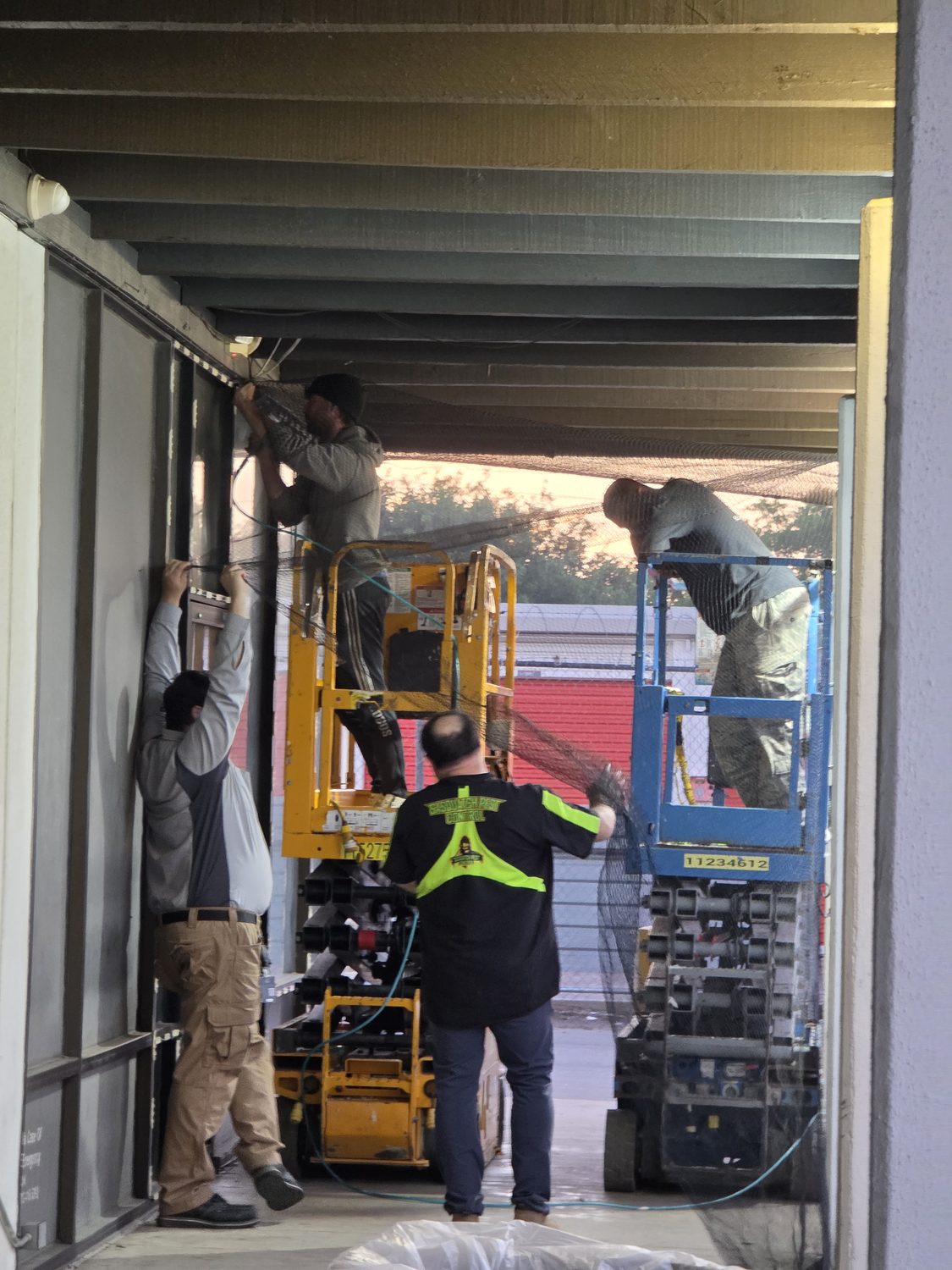
Section 6-202.15 on outer openings is also core. Two details in it get missed. Paragraph (B) exempts a food establishment that opens into a larger structure, such as a mall or office building, if that building’s own outer openings are protected. Paragraph (D) says that where doors or windows are kept open for ventilation, the opening must be protected, including by “16 mesh to 25.4 mm (16 mesh to 1 inch) screens.” A propped kitchen door with no screen breaks the rule, even if it was only propped for an hour.
Priority foundation items
Paragraph (C) of 6-501.111 is the exception inside the general duty. It requires that, “if pests are found,” the establishment use trapping devices or other control methods “as specified under §§ 7-202.12, 7-206.12, and 7-206.13,” and it carries the Pf mark. An inspector who sees live activity and no control in place can cite a priority foundation item, not just a housekeeping lapse.
Section 6-501.115, which keeps live animals off the premises with a list of exceptions such as service animals, is also marked Pf in its main paragraph.
Priority items
The pesticide rules are priority items. Section 7-202.12 requires a pesticide to be used according to “manufacturer’s label instructions that state that use is allowed in a FOOD ESTABLISHMENT,” according to any certification conditions, and so that it does not create a hazard to people or contaminate food, equipment, utensils, linens or single-service articles through “drip, drain, fog, splash or spray.” Section 7-206.12 requires that “Rodent bait shall be contained in a covered, tamper-resistant bait station.” Section 7-206.13 bars tracking powder pesticides inside a food establishment altogether.
That means the most serious pest findings an inspector can write often come from the control work, not the pests. Loose bait blocks under a prep table, a fogger used over open product, or a residential label on a can in the mop closet are priority violations.
How fast it has to be fixed
Food Code 8-405.11 says a permit holder “shall at the time of inspection correct a violation of a PRIORITY ITEM or PRIORITY FOUNDATION ITEM.” The regulatory authority may agree to more time, but not beyond 72 hours for a priority item or 10 calendar days for a priority foundation item. Core items fall under a separate section, 8-406.11, with its own time frame.
At the far end, 8-404.11 requires a permit holder to “immediately discontinue operations and notify the REGULATORY AUTHORITY if an IMMINENT HEALTH HAZARD may exist” because of an emergency such as fire, flood, sewage backup, “misuse of POISONOUS OR TOXIC MATERIALS,” or a “gross insanitary occurrence or condition.” Rodent activity in food storage, or pesticide sprayed onto food contact surfaces, are the pest situations most likely to be argued into that paragraph.
What an inspector actually walks
Put together, the walk-through follows the code’s own order:
- Receiving and dry storage, because 6-501.111(A) names incoming shipments first.
- Under and behind equipment, for droppings, live insects and the harborage 6-501.111(D) asks you to remove.
- Back doors, dock doors and wall penetrations, against 6-202.15.
- Traps, monitors and bait stations, for placement, condition and dead pests left in them.
- The chemical shelf, for labels that allow food establishment use and for any bait or powder that should not be there.
- Unused equipment and clutter, against 6-501.114.
German cockroaches and small flies drive most of those findings in north Houston kitchens. Our German cockroach and fly control pages describe how each is handled, and hotels with their own kitchens will find a program outline on the hotels and hospitality page.
Frequently asked questions
Does Texas still have its own food code?
It has its own chapter, 25 TAC Chapter 228, but the operating rules are now the FDA Food Code 2017 adopted by reference. Section 228.1 lists the Food Code sections and definitions Texas does not adopt and keeps its own Texas-specific rules in the chapter.
Can an inspector close a kitchen over pests?
Food Code 8-404.11 requires a permit holder to stop operations and notify the regulatory authority if an imminent health hazard may exist, including a gross insanitary occurrence or condition. A severe infestation can be argued to fit. Whether a particular kitchen closes is the inspector's decision under local and state procedure.
Are glue boards and snap traps allowed in a Texas kitchen?
Trapping devices are named in 6-501.111 as an accepted control method. What the code restricts is placement and upkeep: devices may not contaminate food or equipment, and 6-501.112 requires dead or trapped pests to be removed often enough that they do not accumulate or attract more.
Do these rules apply to a food manufacturer or warehouse?
Not necessarily. DSHS files Chapter 228 under retail food establishments, and Texas uses its own definition of a food establishment rather than the Food Code's. Manufacturers and warehouses are usually regulated under other food rules with their own pest provisions, so ask DSHS or your regulator which rule binds your site.
Sources
This is information, not legal advice. We are a pest control company, not attorneys. What follows is our reading of published rules, with links so you can check them yourself. For advice on your own situation, talk to a lawyer, to TexasLawHelp, or to your city or county code enforcement office.
- 25 Tex. Admin. Code §228.1 — Purpose and regulations (adoption of the FDA Food Code) — read October 5, 2026
- U.S. FDA — Food Code 2017 — read October 5, 2026
- Texas DSHS — Statutes and laws, retail food establishments — read October 5, 2026
Next scheduled review of this page against its sources: October 5, 2027.
Related guides
Pest problem in north Houston?
No long-term contracts, and service agreements are backed by our 100% Service Guarantee.
Because we are based in Spring, we can often come out the same or next day for urgent problems. Call before noon, Monday through Friday, for the best chance at next-day service.
Last updated