
School Integrated Pest Management Rules in Texas
Texas requires every school district to run an integrated pest management program under 4 TAC §§7.201–7.205. The district appoints a trained IPM Coordinator, keeps pest records for two years, notifies people who ask in writing, and posts signs before indoor applications. The contractor works inside that program and sends its records to the Coordinator.
Call 281-627-4810 Request a free inspection
Year-round protection plans from $70 Core · Premium · Legendary See the plans
The short version
| The statute | Texas Occupations Code §1951.212 tells TDA to set school IPM standards, including use of the least toxic methods available |
|---|---|
| Who is regulated | The school district. TDA's Structural Pest Control Service may investigate a district routinely or after a complaint |
| The program | 4 TAC §7.201: board-approved policy, monitoring, thresholds, lower-risk methods first, records and staff education |
| Notification | A procedure in place by the first week of school for anyone who asks in writing; notice by phone, in writing or electronically |
| Posting | Indoor signs at least 48 hours ahead (§7.204); outdoor areas signed at every entry point or physically secured |
| Records | Kept by the IPM Coordinator for two years and produced for a TDA inspector on request (§7.202) |
| The contractor | Follows the district program, gets written approval where required, and sends pesticide use records within two business days (§7.203) |
Where the rule comes from
School pest control in Texas is not a matter of district preference. The legislature wrote it into the Structural Pest Control Act. Texas Occupations Code §1951.212 directs the Texas Department of Agriculture to set standards for an integrated pest management program at “the school buildings and other facilities of school districts,” and it requires those standards to include “a requirement to use the least toxic methods available to control pests, rodents, insects, and weeds.” The same section tells the department to sort the pesticides a district may apply into categories, each with its own distance and re-entry limits.
The department did that in Division 7 of Subchapter H of its rules, sections 7.201 through 7.205 of Title 4 of the Texas Administrative Code. Those five sections are short, and a facilities director can read all of them in one sitting. This guide walks through what each one asks of the district, then what it asks of the company the district hires. It is general information, not legal advice; the district’s own counsel decides how the rule applies to a particular campus.
What the district owns
The rule is written to the district, not to the vendor. The TDA’s school IPM page says its Structural Pest Control Service “may routinely, or in response to a complaint, investigate a school district.” A district cannot contract its way out of that.
4 TAC §7.201 lists what the district must have. In practice, a district that is ready for a visit can put its hands on:
- an IPM policy approved by the school board;
- a monitoring program and written thresholds that decide when a pest justifies action;
- evidence that lower-risk products and non-chemical methods come first;
- a pest records system;
- a plan for teaching staff their part in the program;
- the name of a current IPM Coordinator, reported to TDA, with no gap in the post longer than 30 days;
- a contract with, or an employee who is, a licensed applicator.
Notification is on request
Parents often assume every family is told before every treatment. The rule is narrower than that. Section 7.201 says the district must “ensure that a procedure is in place to provide prior notification of pesticide applications,” and that the procedure must be in place “prior to or by the first week of school attendance.” The people entitled to notice are those who ask for it in writing, and they “may be notified by telephonic, written or electronic methods.” A district that keeps the request list current and sends notices from the same calendar its contractor works from rarely has trouble here. A district that keeps the list in one office and the treatment schedule in another often does.
The Coordinator holds the paper
§7.202 is the longest section, because almost every duty in the program runs through one person. The Coordinator must finish a department-approved training course within six months of appointment and earn six hours of continuing education every three years. The training requirement and the Coordinator’s role are covered on our schools and childcare page, so here is the part that matters most at audit time: the records.

The Coordinator keeps pest-related work orders, service reports, application records, complaints and incidental use training records, and those documents “are maintained for a period of two (2) years and are made available to a department inspector upon request.” The same section requires current labels and Safety Data Sheets to be available to interested people on request. When a district struggles with an inspection, it is usually because the records exist somewhere but not in the Coordinator’s file.
Posting and product limits
§7.204 is where the statute’s product categories become operating rules. Indoors, signs go up “at least 48 hours prior to a pesticide application inside school district buildings.” Outdoors, the treated area “must be identified at all entry points with a sign, or must be secured using a locking device, a fence or other practical barrier.” No outdoor application may expose students to drift, and mixing has to happen away from areas students use.
Each product category then sets a minimum distance from students and a minimum time before they come back. The schools page lays out the Green, Yellow and Red categories in detail, so the point worth adding here is practical: the category is decided by the product’s label and ingredients, which means the contractor’s product list decides the district’s paperwork. A program built on exclusion, sanitation fixes, traps and baits stays almost entirely in the lightest category.
Incidental use
§7.205 lets trained district staff deal with a real hazard on the spot. The rule says incidental use “is not intended for long term or extensive pest control measures,” and gives fire ants in a transformer box and stinging insects near children as the kind of situation it means. Each use is recorded with its reason and kept for two years. Districts that see incidental use climbing should treat that as a signal the contracted program is missing something, often a wasp nest season or a fire ant problem on athletic fields.
What the contractor owes
§7.203 is the contractor’s whole job description in seven lines. The applicator must use only EPA-labeled products suited to the target pest, follow “the school district’s IPM program and these regulations,” get the Coordinator’s written approval where the category requires it, forward records and pest complaints, and “ensure that pesticide use records are forwarded to the IPM Coordinator within two (2) business days or in a time frame as agreed to.”
From the contractor’s side, three habits keep a district clean:
- Send the planned work before the visit. Dates, buildings and intended products, early enough for the Coordinator to post signs and send notices.
- Leave the record the same day. The two-business-day clock in §7.203 is a ceiling. A service report emailed before the truck leaves the lot is one fewer thing to chase.
- Report conditions, not only treatments. A door sweep missing from a cafeteria exit or a leaking line in a teachers’ lounge belongs in the record, because the program is supposed to fix causes.
Questions a district should ask a bidder
A request for proposals should make the bidder show it understands the rule, not just recite it. Useful questions include which product categories the proposed program would use and why, how the bidder will deliver records to the Coordinator and in what format, how it schedules work around posting and notification, what it will monitor between visits, and the license number and categories of the business and of the applicator who will be on site. The licensing questions apply to every bidder, and the district can check the answers with TDA before signing.
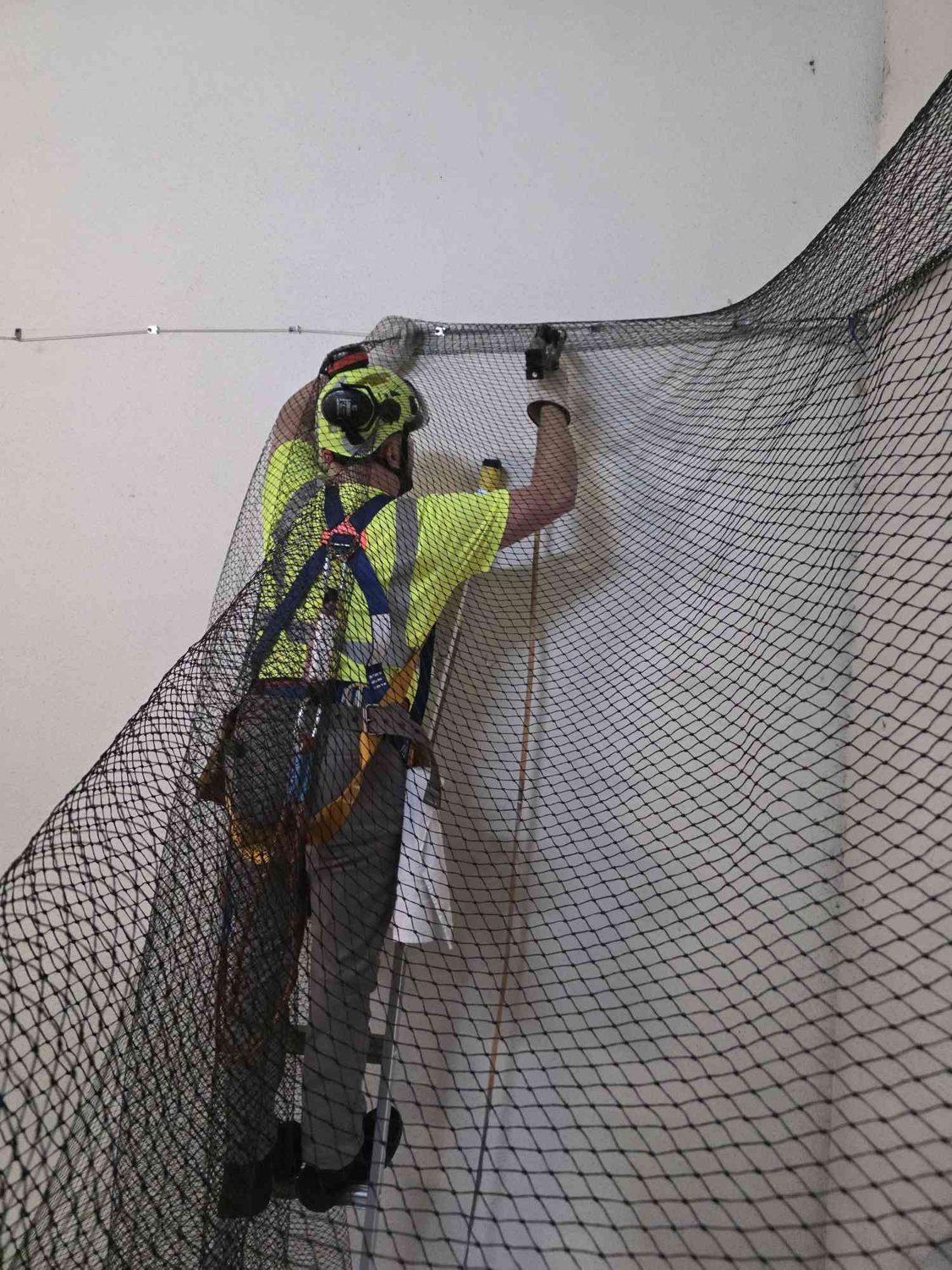
For the pests that drive most campus calls in north Houston, and how a program for them is laid out, see the schools and childcare page and the wider commercial programs overview.
Frequently asked questions
Who gets notified before a pesticide application at a Texas school?
Anyone who has asked the district in writing to be notified. Section 7.201 requires the district to have that procedure in place by the first week of school and lets it notify by phone, in writing or electronically. Separately, indoor applications need posted signs at least 48 hours ahead.
Does the school rule apply to bait stations and traps?
The posting rule in §7.204 exempts non-pesticide tools such as traps and glue boards, which is one reason a well-run campus program leans on them. Bait products still fall into the rule's product categories, and the district's approval steps for each category still apply.
What happens when wasps or fire ants put students at risk before a contractor can get there?
Section 7.205 covers incidental use: a trained district employee may make a limited application in a genuine safety situation, such as fire ants in a transformer box or wasps by a door. The Coordinator distributes a fact sheet to eligible staff, and each use is recorded and kept for two years.
Can a district hand its IPM duties to the pest control company?
No. The rules place the program, the Coordinator and the records on the district. A contractor can do a great deal of the work and much of the paperwork, but §7.201 makes the district the responsible party and requires it to employ or contract with a licensed applicator.
Sources
This is information, not legal advice. We are a pest control company, not attorneys. What follows is our reading of published rules, with links so you can check them yourself. For advice on your own situation, talk to a lawyer, to TexasLawHelp, or to your city or county code enforcement office.
- Texas Occupations Code §1951.212 — Integrated pest management programs for school districts — read October 5, 2026
- 4 Tex. Admin. Code §7.201 — School district responsibilities — read October 5, 2026
- 4 Tex. Admin. Code §7.202 — IPM Coordinator — read October 5, 2026
- 4 Tex. Admin. Code §7.203 — Responsibilities of certified applicators and licensed technicians — read October 5, 2026
- 4 Tex. Admin. Code §7.204 — Pesticide use in school districts — read October 5, 2026
- 4 Tex. Admin. Code §7.205 — Incidental use for schools — read October 5, 2026
- Texas Department of Agriculture — School Integrated Pest Management — read October 5, 2026
Next scheduled review of this page against its sources: October 5, 2027.
Related guides
Pest problem in north Houston?
No long-term contracts, and service agreements are backed by our 100% Service Guarantee.
Because we are based in Spring, we can often come out the same or next day for urgent problems. Call before noon, Monday through Friday, for the best chance at next-day service.
Last updated