
Warehouse and Distribution Center Pest Control in North Houston
A warehouse pest program has to cover a footprint too big for a handful of bait stations. Ours maps numbered rodent stations around the outside and through the racking, seals dock, door and penetration gaps, monitors for stored-product insects, and trends every count so a storage or customer auditor can follow the record visit by visit.
Call 281-627-4810 Request a free inspection
What gets checked, at a glance
| Station coverage | A facility map with every exterior and interior station numbered, spaced to rodent travel distances rather than to round numbers |
|---|---|
| Dock and door condition | Exclusion findings and work at dock doors, levelers, door sweeps, wall penetrations and roofline gaps |
| Stored-product insects | Pheromone monitor locations and catches, trended so a rising count points at a zone, an aisle or a lot |
| Receiving area | Inspection points set at receiving, with your team trained on what a problem load looks like |
| Activity trends | Counts rolled into trend reports, with corrective-action records for each finding that needed a response |
| Bird pressure | Assessment of roosting and entry at docks, eaves and high-bay storage, with exclusion recommendations |
| Materials used | Product and application records for every material, including rodenticide station placement |
What federal food rules actually cover in a warehouse
If your building holds food, two different FDA rules may apply, and pest pages routinely blur them.
The first is the storage rule. Under the current good manufacturing practice regulations in 21 CFR Part 117, Subpart B, section 117.93 says storage and transportation of food must be under conditions that protect against biological, chemical and physical contamination and against deterioration of the food and the container. The pest-control section of the same subpart, 117.35(c), requires effective measures to exclude pests from holding areas as well as from production. That is the standard your racking, your dock and your receiving floor are held to when Part 117 applies to you.
The second is the Sanitary Transportation rule in 21 CFR Part 1, Subpart O. Section 1.900 applies it to shippers, receivers, loaders and carriers engaged in transportation operations. Its pest language is about the vehicle: section 1.906 requires trailers and transportation equipment to be stored so they do not harbor pests, and section 1.908 asks a loader to determine, before loading food that is not fully enclosed in a container, that the vehicle is in sanitary condition and free of visible evidence of pest infestation. It does not stretch to your storage aisles, and older versions of this page were wrong to say it did.
Where the line between those two sits for your building is a question for whoever owns your food safety program. A general merchandise warehouse with no food may fall under neither and still answer to a customer contract that asks for documented pest control.
Rodents: the reason the map matters
A few perimeter bait stations prove that some rodents ate bait. They do not tell you what is living in the racking. The Texas A&M AgriLife rodent course material gives the numbers we design around: a house mouse ranges 20 to 50 feet from its nest, a Norway rat about 100 feet, a mouse fits through a dime-sized hole and a rat through one the size of a quarter. A mouse nesting in palletized product in aisle 14 may never travel to a station on the outside wall. Interior devices along walls, at rack ends and on dock aprons close that gap.
Roof rats need a separate plan. The same material describes them as excellent climbers that nest above ground and can remain undetected for long periods. In a high-bay building that means the top beams of racking, the roof deck, the space above office ceilings and the utility runs along the wall plate. Inspection there needs a lift or a high vantage point, and it is scheduled at the walk.
The course material also notes that rodenticide baits registered for professional use are placed within 100 feet of buildings, and that tamper-resistant stations are required wherever children, pets or non-target wildlife could reach the bait. Exterior stations on this program are locked, anchored and numbered on the map. Inside storage areas the program relies on multi-catch traps and monitoring devices, which keep any catch where it can be found, counted and logged.
Stored-product insects in pallets and bins
Texas A&M’s stored product pests page lists the insects that turn up most in food storage: Indianmeal moths, sawtoothed grain beetles, red flour beetles, cigarette beetles and warehouse beetles among them, and it notes that these pests are most likely introduced inside an already infested package. In a warehouse the package is a pallet, and the problem may spread from the lot it came in on.
AgriLife’s pantry pest publication is clear that pheromone traps do not control these insects; they detect an infestation and help pinpoint it. So monitors are placed in a grid through food storage zones, numbered on the map and read every visit. When one zone’s catches climb, we look at what moved into that zone, what has sat there longest, and whether spilled product under the racking is feeding a population. Our pantry pest control page covers the insects themselves.
The dock is where most of the work is
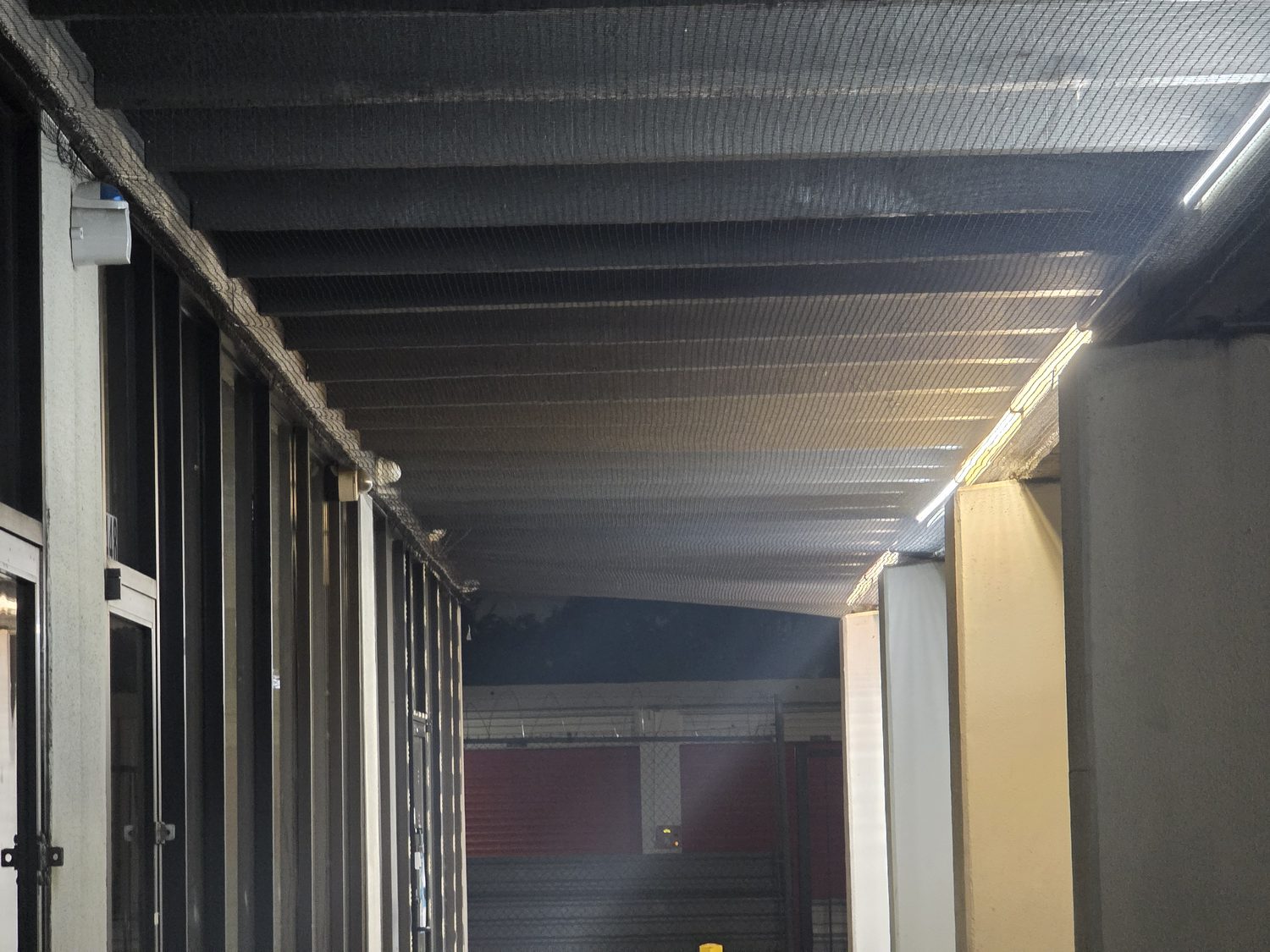
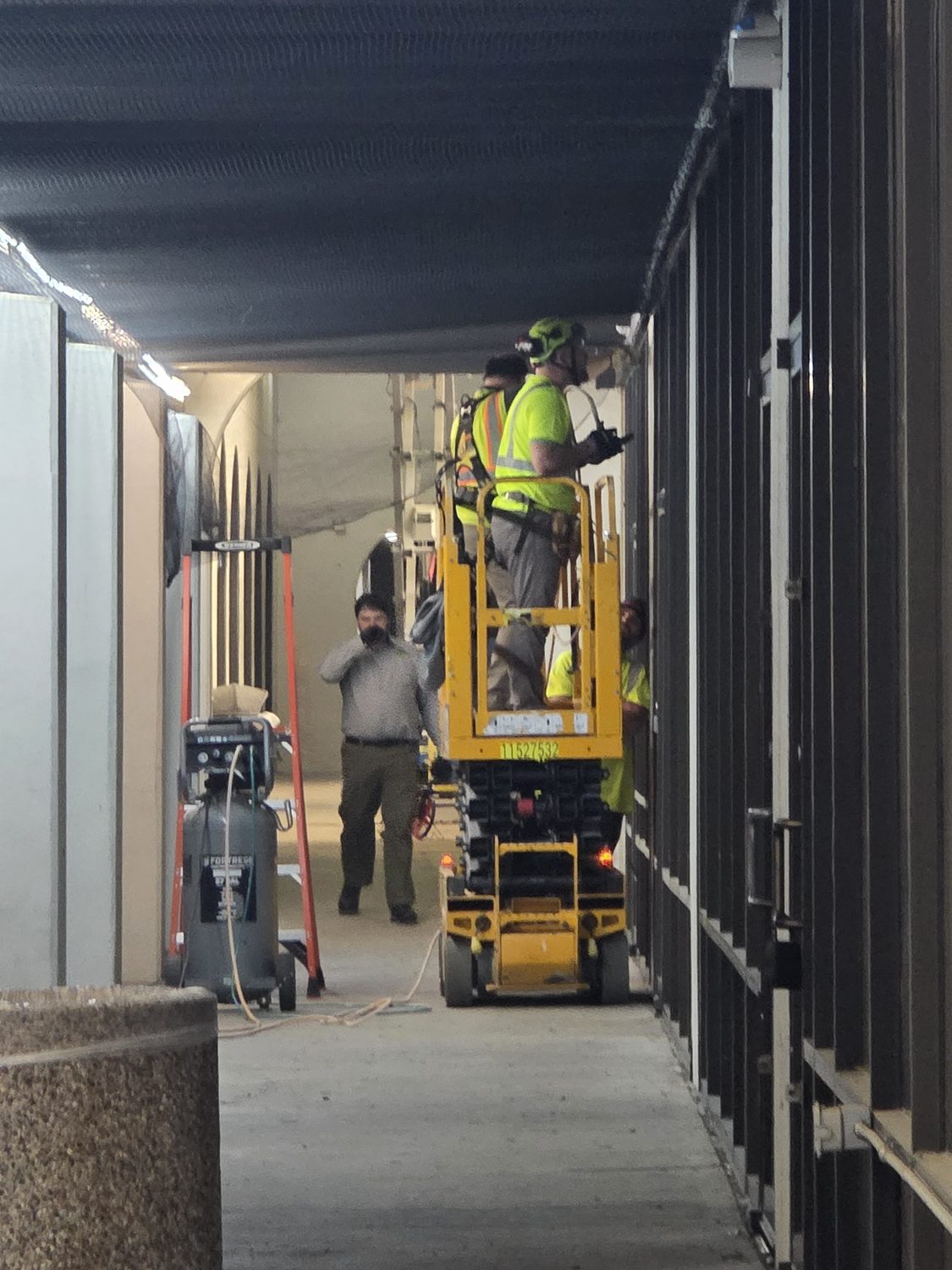
Dock doors spend much of the day open, levelers leave gaps at the sides and the pit, and dock seals wear through at the corners where trailers rub. Exclusion here is unglamorous: brush or rubber seals on levelers, sweeps and side seals on doors, sealed conduit and pipe penetrations, closed gaps where the wall panel meets the slab and the roof. Our exclusion and repairs page shows the methods.
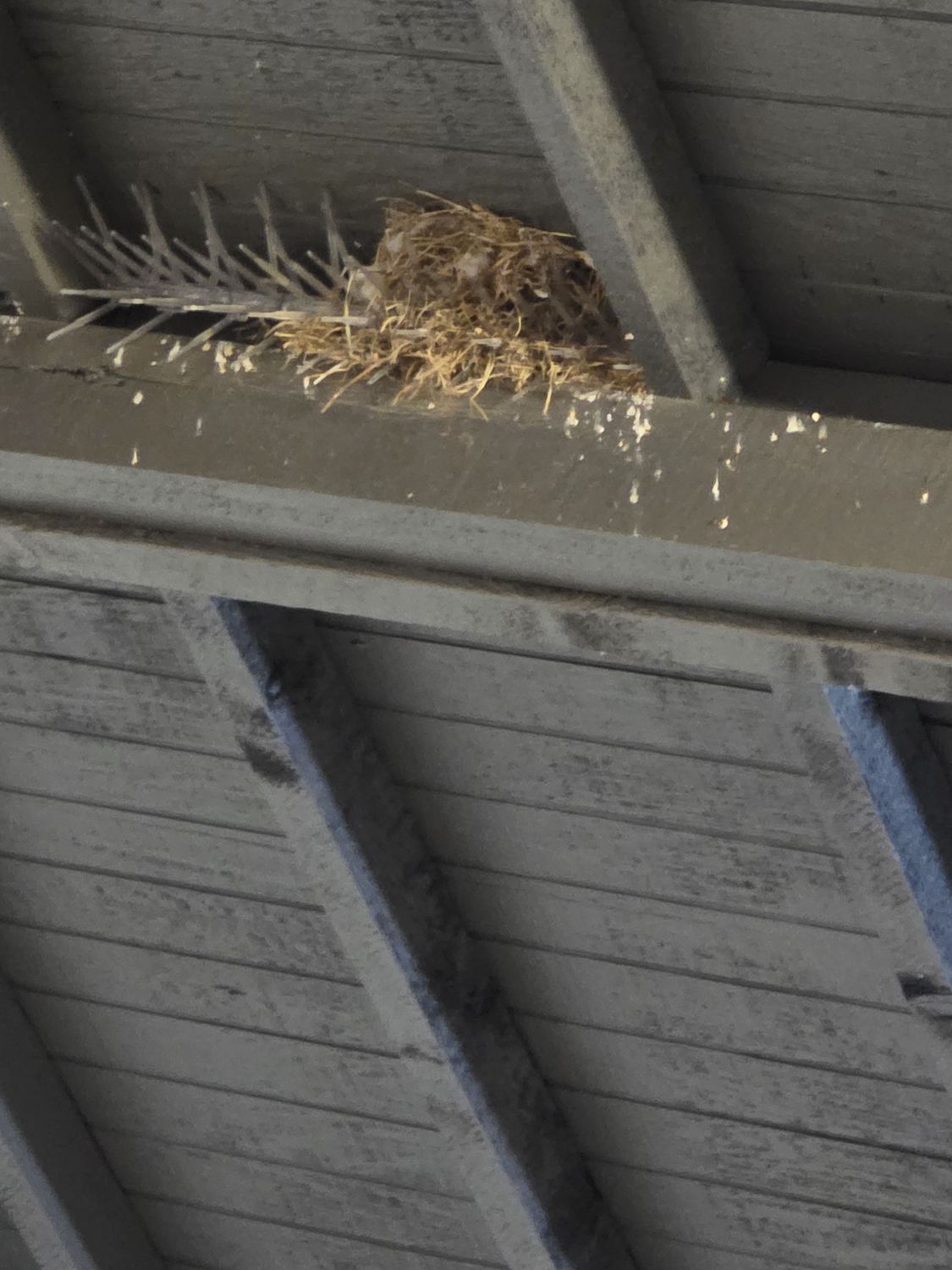
Birds use the same open doors. Sparrows and pigeons that roost on beams above staged freight or nest in the dock canopy create a contamination problem below them. The program includes a bird-pressure assessment at the docks and eaves; the methods, and the federal limits on what may be done to native species, are on our bird control page, with roofline specifics on pigeons on a roofline.
Break rooms and offices
German cockroaches in a warehouse usually live where the people eat: break room refrigerators, microwaves, vending machines and the sink. They are an indoor-only pest in Texas, according to Texas A&M’s German cockroach profile, and they arrive in groceries, bags and boxes. Bait placements and monitors in those rooms are part of the program, and if the problem starts showing up in stored product, it gets its own corrective action. More on the method is on our cockroach control page.
What your receiving team is trained to look for
Receiving inspection points are only as good as the people working them, so the training is specific. Before a trailer is unloaded: droppings, gnaw marks or nesting material on the trailer floor, and live insects or webbing in the corners. On the pallet: shrink wrap with chewed holes, torn bags, fine dust sifting from a bag seam, webbing between cases, or moths flying when a wrap is cut. On the dock: anything that crawled out and stayed. A flagged load is set aside, photographed and reported, and the next visit records what was found and whether the lot was isolated or returned. The decision to reject a shipment belongs to you and the shipper; the program makes sure the evidence is written down.
Grounds, fence lines and the neighbors
Large north Houston distribution buildings tend to sit beside drainage easements, undeveloped acreage and other industrial lots along the Hardy Toll Road, I-45 and the Grand Parkway. That land is outside your control and feeds the rat pressure at your walls. Section 117.20 of Part 117, which governs plant and grounds where the rule applies, expects an operator in that position to compensate by inspection and exclusion on its own side. The program does that with tighter station spacing along the exposed wall, sealing on that side first, and exterior findings on pallet stacks, trailer parking and dumpster pads that are within your control.
Taking over an existing program
Many buildings already have stations from a previous vendor. We start by walking the existing map against the floor, because in practice stations get crushed by forklifts, moved during rack changes or simply lost. Missing and misplaced devices are recorded, the map is redrawn with fresh numbers, and the first trend report states plainly that it starts a new baseline. Mixing two vendors’ numbering in one binder is the quickest way to confuse an auditor.
Cross-docks, cold storage and mixed buildings
Not every warehouse is one big dry box. A cross-dock with doors on both sides has twice the exposure and almost no storage time, so the program weights exclusion and dock monitoring over stored-product work. Cold and frozen rooms slow insects but not rodents, which nest in the insulated panels and around compressor housings where it stays warm. A building with leased bays for several tenants needs its map split by bay, so each tenant’s records stand alone and one tenant’s problem is visible to the landlord.
What an auditor looks for
In a distribution center, an SQF, AIB or customer auditor tends to spend less time among the racking than at the dock and in the binder. Expect them to pick devices off the map and ask to see them on the floor, to compare dates across a run of service records, and to ask what was done after any spike in catches. At the dock they look at leveler gaps, door seals and the beams above staged freight, because birds roosting over open product are a finding in almost any scheme. Our bird control page covers the barriers, and pigeon control deals with the bird most often found on warehouse beams.
Distribution centers that supply restaurants and grocery stores sometimes field questions about the pest standard their customers are held to. Our guide to Texas food establishment pest rules explains that retail side, so your team knows what the store at the end of the route is being asked.
What you receive
The documentation set the program provides: a facility device map with numbered stations; service and monitoring records every visit; stored-product and rodent trend reports; corrective-action records; product and application records; and an audit binder organized for SQF, AIB and customer audits. Before a scheduled audit we walk the facility, check the device map against the floor, tighten dock exclusion and bring the binder current.
Every program starts with a free inspection of the building and its records, followed by a written scope and price. The work carries our 100% Service Guarantee, and you can book the walk through the contact page.
Frequently asked questions
Do your technicians inspect every inbound load?
No, and the program does not pretend otherwise. We set up inspection points at receiving, train your receiving team on what to look for in a trailer and on a pallet, and monitor the receiving area every visit. Your people see every load; we make sure they know what a problem looks like and that anything they flag is followed up.
How do you cover a building this size?
With a map built around how far rodents actually travel. House mice range 20 to 50 feet, so interior devices are spaced to that along walls, racking runs and dock aprons. Exterior stations ring the building for rats. Then the inspection goes three-dimensional: high racking, roof deck, light fixtures and cable trays, not only the floor line.
Can you help us with an SQF or AIB storage audit?
The program provides the material those audits look at: a numbered device map, visit records, stored-product and rodent trend reports, corrective-action records and an audit binder, with a walk-through before a scheduled audit. The auditor decides how the site scores. We will not promise a result, and the clause wording belongs in your copy of the standard.
Do you seal the dock doors yourselves?
Sealing dock-door, leveler, penetration and roofline gaps is part of the program, and the walk will show which gaps are ours to close. Some fixes, such as replacing a damaged dock seal or a door panel, are equipment repairs. Those go on a list for your maintenance team or the door contractor.
How often should a warehouse be serviced?
Most facilities run on monthly service with receiving checks and a walk-through before audits. Buildings holding food or ingredients, those with an active rodent trend, or those with heavy dock traffic in the summer may need more. A general goods warehouse with a clean record can sometimes run on a lighter schedule with monitoring checks between visits.
This is one of the programs described on our commercial pest control page, which covers how a program is built, what the record looks like, and the compliance surface it contributes to. For a site walk, call or text 281-627-4810.
Commercial pest control in north Houston?
No long-term contracts, and service agreements are backed by our 100% Service Guarantee.
Because we are based in Spring, we can often come out the same or next day for urgent problems. Call before noon, Monday through Friday, for the best chance at next-day service.
Last updated