
House Centipedes in Spring and North Houston Homes
The long-legged centipede darting across a north Houston bathroom wall at night is usually a house centipede hunting other insects in a damp room. It is a nuisance, not a structural pest, though it can sting if handled. Getting rid of it means cutting the moisture and the insects it eats, sealing entry points, and treating cracks and the perimeter.
Call 281-627-4810 Request a free inspection
Year-round protection plans from $70 Core · Premium · Legendary See the plans

What to do, in order
- Do not pick it up. Trap it under a cup and slide a card underneath, or let it be if it is in the garage.
- Note where you see them: bathrooms, closets, laundry and the garage edge point to the damp spots they use.
- Put sticky traps along the walls in those rooms to see what other insects are around for them to eat.
- Fix drips, run exhaust fans and dry out closets against exterior walls.
- If you see them most nights, book an inspection for the moisture, the prey insects and the gaps.
What you are seeing
A house centipede is hard to mistake. Texas A&M AgriLife’s publication Centipedes and Millipedes (ENTO-PU-020) describes it as about 1½ inches long with 15 pairs of long, slender legs, found in and around damp places such as closets, bathrooms and the area under the home. It hunts insects at night, catching them with its back legs in what the publication calls a lassoing technique.
The same publication says house centipedes are beneficial, even though many people consider them a nuisance in the home. Both statements are true. One on the garage wall in October is doing pest control for free. One in the shower every night is telling you something about the bathroom.
The other centipedes, and the lookalikes
Stone and soil centipedes. Shorter legs, flatter, brown to reddish, and found under mulch and pots. They wander in under doors after rain and usually die indoors.
Giant centipedes. Scolopendra heros, which Texas A&M says can exceed 9 inches. It is the one to treat with real caution, because its walking legs are clawed as well as its front pair.
Millipedes. Rounded, slow and with two pairs of legs per segment instead of one. If yours curl into a coil, read millipedes on the slab.
Silverfish. Small, silvery and wriggling, with three tail bristles. See silverfish in a bathroom.
How to tell at home
Count pairs of legs per body segment if you can get a photo. One pair per segment means centipede. Then think about what it is eating. Centipedes are predators, so a house with crickets, roaches, silverfish or spiders around the baseboards gives them a reason to stay. A sticky trap in the bathroom that catches one centipede and ten silverfish shows you which problem comes first.
What we do
The company’s centipede work goes after the moisture, the entry points and the prey together.
- Inspect for moisture sources, entry points and the insects that draw centipedes inside.
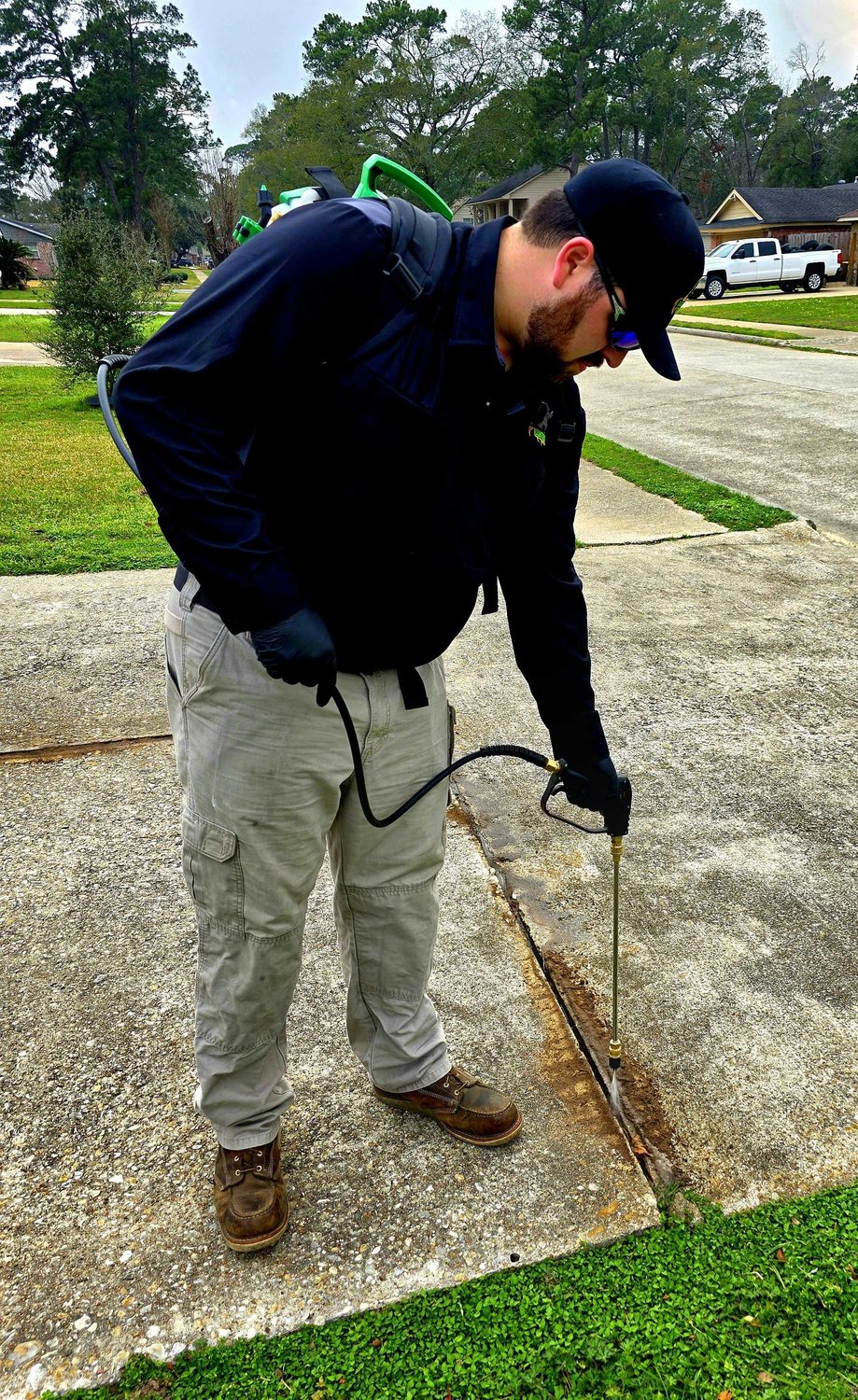
- Apply an exterior perimeter barrier around the foundation.
- Treat interior harborage in cracks, crevices, bath traps, utility penetrations and the garage edges.
- Deal with the food supply, treating the insects that are feeding them.
- Recommend moisture corrections and come back for follow-up as needed.
The program comes with our 100% Service Guarantee and no long-term contract. How centipedes sit within the wider group of moisture pests is on the occasional invaders page.
Your part
ENTO-PU-020 recommends moving compost, firewood and stones away from the house, running a band of gravel between the foundation and any flower bed that touches it, and turning mulch now and then so it dries. It also suggests sealing gaps around doors, windows and pipe penetrations, and fitting weep holes in brick with copper mesh. Indoors, run the bathroom fan, keep laundry off the floor, and fix any slow leak under a sink or around the water heater.
Why bathrooms and closets
House centipedes need damp air and something to eat, and the rooms they pick give them both. The plumbing opening under a tub or shower, often called the bath trap, connects the bathroom to the soil and the slab below. A closet on an exterior wall stays a few degrees cooler and damper than the rest of the house. A laundry room with a dryer vent that does not close fully lets insects in from outside. Those are the first places our technicians look. Garage edges matter too, because the gap where the slab meets the wall gives centipedes and the crickets they chase an easy path from the yard.
If someone is stung
ENTO-PU-020 notes that the injury from larger centipedes may cause discomfort, and that wounds from the giant centipede’s walking legs can become inflamed and irritated. Wash the area with soap and water, and see a doctor if pain, swelling or redness keeps building, or if a child is the one who was stung.
When to call
Call when you see centipedes most nights, when they show up in bedrooms, or when sticky traps reveal plenty of other insects for them to eat. If a giant centipede is turning up around the garage along with scorpions, read scorpion control. Book a free inspection through the contact page.
Frequently asked questions
Are house centipedes poisonous?
They have venom for subduing prey, delivered by the first pair of legs, which are modified into claws. Texas A&M says most centipedes can only give a beelike sting with those claws. House centipedes rarely do even that unless someone grabs one. Do not handle any centipede.
What about the big centipedes in Texas?
That is a different animal. Texas A&M notes that Scolopendra heros, the giant centipede, can pass 9 inches, and that its walking legs carry sharp claws that make tiny cuts into which a poison may drip. It lives under rocks, logs and debris outdoors and sometimes wanders into garages. Leave it alone.
If they eat other bugs, should I just leave them?
In a garage or shed, many people do, and that is reasonable. Texas A&M calls the house centipede beneficial. Inside the house, a steady stream of them means there is a steady supply of insects and moisture, and that is the problem worth fixing.
Will treatment alone get rid of them?
Not if the room stays damp and full of prey. Treatment reduces the centipedes and the insects they hunt, but drying out the bathrooms and closets and sealing gaps is what keeps the numbers down between visits.
Occasional Invader Control in north Houston?
No long-term contracts, and service agreements are backed by our 100% Service Guarantee.
Because we are based in Spring, we can often come out the same or next day for urgent problems. Call before noon, Monday through Friday, for the best chance at next-day service.
Last updated