
Millipedes on the Slab in Spring and North Houston
Waves of brown, curled millipedes on the patio, garage floor or kitchen after rain or a dry spell come from wet or baked soil and mulch against the foundation. They are not poisonous and usually die indoors within days, but their fluid irritates eyes. Control means drying the slab edge, sealing thresholds and weep holes, and a targeted perimeter treatment.
Call 281-627-4810 Request a free inspection
Year-round protection plans from $70 Core · Premium · Legendary See the plans

What to do, in order
- Sweep them up with a broom and dustpan rather than crushing them on the floor.
- Wash your hands with soap and water after touching any, and keep fingers away from your eyes.
- Pull mulch and leaf litter back from the slab and let the soil along the foundation dry.
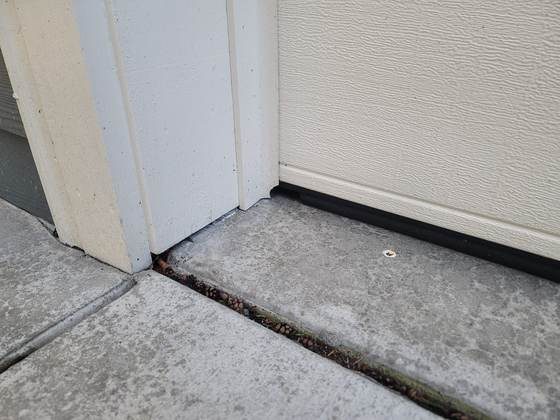
- Check door sweeps, the garage door seal and open weep holes in the brick.
- If every rain brings another wave, book an inspection of the beds, drainage and entry points.
What it usually turns out to be
The call usually goes like this: a storm rolls through Spring or Porter, and the next morning the patio, the garage floor and the back door threshold are covered in small, brown, curled-up creatures. Those are millipedes. Texas A&M AgriLife’s publication Centipedes and Millipedes (ENTO-PU-020) describes them as having a cylindrical body with two pairs of legs on each segment, typically brownish in Texas, and often curling into a spiral when disturbed or when they die.
They live in cool, moist places like mulch, leaf litter and compost, and feed mostly on decaying organic matter. The publication explains that many millipedes may move into a home after heavy rainfall or during drought, and that they tend to die quickly once inside for lack of moisture and food. That is the whole cycle in two sentences.
The lookalikes
Centipedes. Flatter, quicker, with one pair of legs per segment and claws behind the head. They hunt instead of grazing. See house centipedes.
Wireworms and other beetle larvae. Shiny, segmented and tan, but with only three pairs of short legs right behind the head.
Pill bugs. Also roll up, but into a ball, not a flat coil, and they have seven pairs of legs. They come in after rain for the same reasons and respond to the same fixes.
How to tell at home
Look at the pattern, not just the animal.
- One wave after one storm, then nothing. That is weather. Sweep them up.
- A wave after every rain. The beds against the slab are holding water and something along the doors or the garage is open.
- Live ones under the mulch near the doors. Pull back a handful of mulch next to the threshold. Dozens of millipedes there mean the harborage is right at the entry.
- Smell. A crushed millipede has a sharp odor. A lot of dead ones in the garage smells the same way.
What we do
The company’s millipede method starts at the perimeter and the landscape.
- Inspect the perimeter and the beds to find the damp harborage and the entry points.
- Treat a barrier around the foundation, thresholds and weep holes.
- Treat the harborage in mulch beds and similar zones.
- Seal the gaps they are using to get inside.
- Advise on drainage and moisture, and return for follow-up as needed.
Our 100% Service Guarantee applies, and you sign no long-term contract. The occasional invaders page has more on how the five moisture pests are handled together.
Your part
ENTO-PU-020’s prevention list is short and practical. Move compost piles, firewood and stones away from the house. Lay a band of gravel or similar material between the foundation and any bed that touches it. Turn mulch now and then so it can dry. Check the seals around doors, windows and pipes, and stuff weep holes with copper mesh; the publication cautions that steel wool rusts and should not go on light-colored brick or stone.
Add a sprinkler check. Heads that spray the brick keep the slab edge wet every day, and that strip is exactly where millipedes gather. Downspouts that empty against the foundation do the same thing.
Why the slab edge holds them
North Houston slabs usually sit with brick veneer at the foundation line, open weep holes along the bottom row, and a mulched bed tight against the brick. A sprinkler zone soaks that bed every morning. The result is a damp strip of decaying mulch a few inches from a dozen small openings into the wall and the garage. Millipedes do not have to travel far to end up on the kitchen floor.
Cleaning up
A shop vacuum or a broom handles the waves. Empty the vacuum outside, because a canister full of dead millipedes smells strong within a day. Avoid stepping on them on tile or carpet, where the fluid can stain and leave an odor.
When to call
Call when the waves come with every rain, when they get past the garage into the living space, or when the slab edge stays wet even after you adjust the sprinklers. Earwigs often come in from the same wet beds; if you are seeing both, read earwigs after rain. Book a free inspection through the contact page.
Frequently asked questions
Are millipedes dangerous?
No. Texas A&M AgriLife says millipedes are not poisonous and do not transmit diseases, though they have glands that release a smelly fluid that can irritate, especially in the eyes. Wash your hands after handling them until the odor is gone.
Why do they die all over my floor?
Inside a dry, air-conditioned house, there is not enough moisture or food for them. Texas A&M notes that millipedes moving indoors tend to die quickly for exactly that reason. That is also why they curl into a tight coil; they do it when disturbed and when they die.
Will they eat my house or my plants?
Not the house. They feed mainly on decaying plant matter, which is why thick mulch and leaf litter hold so many. Texas A&M notes that they occasionally damage seedlings by feeding on stems and leaves, so a new bed can take some nibbling.
Why do I get them in a drought too?
Dry, cracked soil drives them toward moisture just as flooding drives them toward dry ground. Texas A&M lists both heavy rain and drought as times when millipedes may move into homes. A watered bed against the slab is often the only damp spot left in August.
From the blog
Occasional Invader Control in north Houston?
No long-term contracts, and service agreements are backed by our 100% Service Guarantee.
Because we are based in Spring, we can often come out the same or next day for urgent problems. Call before noon, Monday through Friday, for the best chance at next-day service.
Last updated