
Striped Bark Scorpion: The Climber in the Attic and the Garage
Centruroides vittatus · Occasional invaders
The striped bark scorpion is a yellowish-tan, two-and-a-half-inch scorpion with two dark stripes down its back. It is the only scorpion found in eastern Texas. It climbs walls and trees, shelters in attics and debris, and hunts at night. Its sting is painful but not considered lethal. Control means removing shelter and food first, then targeted treatment.
Call 281-627-4810 Request a free inspection
Year-round protection plans from $70 Core · Premium · Legendary See the plans
We treat this, and finding it usually warrants treating.
Striped bark scorpion at a glance
| Size | About two and a half inches including the tail; males have the longer tail |
|---|---|
| Color | Yellowish to tan, with two broad dark stripes along the back |
| Head mark | A dark triangle on the front of the head over the eyes |
| Build | Slender pincers and a long, slender tail ending in a stinger |
| Habit | Night-active forager that climbs; does not burrow |
| Sting | Sharp pain, local swelling and itching; Texas A&M says no Texas scorpion is considered lethal |
Signs you have them
- A tan scorpion on a ceiling, wall or in a bathtub, often in summer
- Scorpions found in the attic or dropping from attic access points
- Live or dead scorpions in the garage among stored boxes, wood or debris
- A female with a cluster of pale young riding on her back
- Plenty of crickets, roaches or spiders in the same garage or bed line
One scorpion, and it is this one
Identification on this page is short, and that is good news. Texas has 18 scorpion species, according to Texas A&M AgriLife’s publication Scorpions (E-362), and most of them live in the west of the state. Big Bend alone has fourteen. But only one species occurs throughout Texas, and it is the only scorpion found in the eastern part. If you have found a scorpion in Spring, Humble, Cypress or Conroe, it is a striped bark scorpion, Centruroides vittatus.
How to recognize it
AgriLife describes adults at about two and a half inches long, yellowish tan, with two broad dark stripes running the length of the back and a dark triangular mark on the front of the head above the eyes. The Texas A&M field guide puts the length at about 2-3/8 inches and adds that the tail is longer in males.
The build is the other giveaway. Both sources point to slender pedipalps, the pincer-bearing arms at the front, and a long, slender tail. Scorpions in general carry a five-segmented tail that can arch over the back, ending in a bulb-like venom gland and stinger, and four pairs of legs behind the pincers.
Young ones are paler. AgriLife notes that in immature striped bark scorpions the base of the pincers and the last segment behind the abdomen are dark brown or black, so a small, light scorpion with dark-tipped pincers is a juvenile of the same species, not something different.
Biology and season
These are long-lived, slow-breeding animals. AgriLife says the striped bark scorpion mates in fall, spring or early summer and carries its young for about eight months. Females usually give birth to 13 to 47 live young, averaging 31. The young climb onto the mother’s back, molt within three to seven days, and ride along for another three to seven days before dispersing. They go through five or six molts to maturity, and an individual lives about four years.
They are night animals. AgriLife explains that scorpions hide by day and come out at night, which helps them manage heat and water loss. Their flat bodies let them wedge into cracks and under stones, bark and boards, and from there they wait for or hunt prey. Chief foods are small insects, spiders, centipedes, earthworms and other scorpions.
Two behaviors set this species apart from the desert scorpions people picture. It does not burrow; AgriLife calls it an active forager that does not dig. And it climbs. The publication says it is common for this scorpion to climb trees and walls and that it is often found in the attics of homes. In hot weather, scorpions may move down into living areas to escape attic temperatures. Around Houston, that is the summer pattern: a scorpion on the bedroom ceiling in July, having come down from a hot attic.
Where it shows up
AgriLife describes the striped bark scorpion as closely tied to dead vegetation, fallen logs and human dwellings, often found under rocks or boards and in debris. On a north Houston property that means:
- Woodpiles, landscape timbers and stacked lumber against the house or fence.
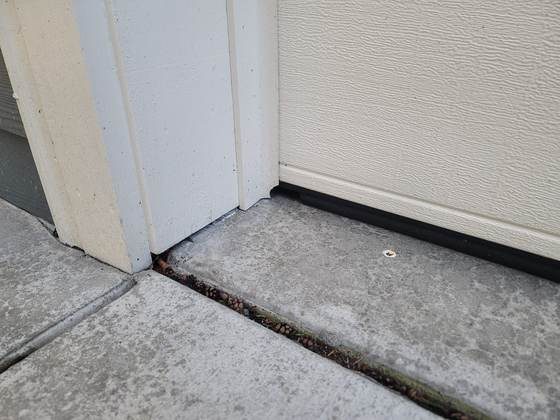
- Garages, especially stored boxes, paint cans and the bottom edge of the garage door.
- Attics, reached from tree limbs over the roof and from gaps at the eaves.
- Bedrooms, bathrooms and kitchens, reached from a hot attic in summer.
- Bed lines with rock borders or edging stones, which make ideal daytime cover.
Health risk
The sting is real and it hurts, but the risk in Texas is limited. The field guide describes stings that are painful and produce local swelling and itching that may last several days, along with possible swelling, discoloration, numbness and pain lasting from minutes to days. It states plainly that there are no scorpions in Texas considered lethal to people.
AgriLife’s publication explains why. Texas scorpion venom has little effect on the nervous system, so most people have only a moderate reaction, though severity varies with the individual scorpion and the person. Its first-aid advice: watch the person closely for adverse reactions, remember that allergic reactions are possible as with any venom, and use an ice pack for pain. If swelling or pain persists, or breathing becomes difficult, get medical attention immediately.
Young children deserve extra care. The same publication warns that scorpions should never be kept indoors or around small children, because even low-venom species can cause serious reactions in young children and in adults allergic to the toxin.
What treatment realistically involves
The EPA’s integrated pest management model asks for prevention before control, and AgriLife says the same about this animal in particular: scorpions are difficult to control with insecticides alone, so the first strategy is to change the area around the structure.
A scorpion treatment that ignores the woodpile and the tree over the roof is a treatment that will have to be repeated. That is why this species carries a “treat” verdict and a long prevention list at the same time. Our scorpion control page describes the visit in detail. The short version:
- Inspect inside and out, including a night or UV-light pass where it helps, looking at weep holes, door thresholds, the garage seal, soffits, utility penetrations and the trees touching the roof.
- Find shelter and food. Timbers, stones, woodpiles and mulch against the slab, plus the crickets, roaches and spiders the scorpions are eating.
- Treat where they live. Cracks, voids, garage edges and bath areas inside; the foundation, weep holes and door frames outside.
- Close the gaps. A plain list of what to seal, with larger work handed to our exclusion and repairs crew.
- Follow up if activity continues.
AgriLife’s own guidance for exterior treatment matches that pattern: around the foundation and up to a foot above ground on exterior walls, plus doors, window eaves and other entry points, with indoor treatment aimed at entry points, corners, cracks and crevices. Visits are covered by our 100% Service Guarantee, which asks you to correct conditions such as the woodpile and overhanging limbs.
Prevention you can do yourself
AgriLife’s checklist, applied to a Houston lot:
- Clear trash, logs, boards, stones and bricks away from the house.
- Keep grass mowed close to the house.
- Prune shrubs and tree limbs back from the walls and roof; branches give scorpions a path to the attic.
- Store garbage cans in a frame that holds them off the ground.
- Bring firewood inside only when it goes straight onto the fire.
- Weather-strip loose doors and windows, and keep screens tight in their frames.
- Plug weep holes with copper mesh, nylon scouring pad or screen wire; steel wool rusts, so keep it to dark brick.
- Seal around roof eaves, pipes and other cracks into the structure.
Cut the prey too. A garage full of field crickets every August is a scorpion buffet, and a damp bed full of insects does the same job. Shake out shoes, gloves and towels left in the garage before using them.
Related pages
Scorpions and house centipedes hunt the same small insects, and the occasional invader control page covers reducing that prey base. For a lot with mature trees over the roof, the roofline and soffit gaps page explains how attic entry points get closed. We work in Spring, Conroe, Magnolia and across the service area, and the contact page is where to request a free inspection.
Frequently asked questions
Is the striped bark scorpion dangerous?
The sting hurts, with sharp pain, swelling and itching that can last days, but Texas A&M states that no Texas scorpion is considered lethal. Watch anyone stung for allergic reactions, and seek medical care at once for breathing trouble or symptoms that persist.
Why do I find scorpions on my ceiling?
This species climbs. Texas A&M says it commonly climbs trees and walls and is often found in attics, and that in hot weather scorpions may move from the attic down into living areas to escape the heat.
How do I know it is a striped bark scorpion?
In north Houston, any scorpion you find almost certainly is one. Texas A&M records it as the only scorpion species in the eastern part of the state. Look for the two dark stripes on a tan back and the dark triangle above the eyes.
Can spraying alone get rid of scorpions?
Texas A&M says scorpions are difficult to control with insecticides alone and puts changing the area around the house first: clearing debris, trimming branches off the roof, sealing doors and weep holes. Treatment works best on a property that has already been made less welcoming.
Sources
- Texas A&M AgriLife Extension — Scorpions (E-362) — read October 5, 2026
- Texas A&M Field Guide to Common Texas Insects — Striped bark scorpion — read October 5, 2026
- US EPA — Integrated Pest Management (IPM) Principles — read October 5, 2026
Next scheduled review of this page against its sources: October 5, 2027.
Pest problem in north Houston?
No long-term contracts, and service agreements are backed by our 100% Service Guarantee.
Because we are based in Spring, we can often come out the same or next day for urgent problems. Call before noon, Monday through Friday, for the best chance at next-day service.
Last updated