
Mud Tubes on the Slab in Spring and North Houston
Thin, pencil-width tunnels of dried soil running up a slab edge, pier, pipe or garage wall are almost always shelter tubes built by subterranean termites to travel between the soil and wood. A damp, crumbly tube is likely active. Photograph it, leave most of it in place, and have the property looked at before anything is sprayed.
Call 281-627-4810 Request a free inspection
Year-round protection plans from $70 Core · Premium · Legendary See the plans

What to do, in order
- Photograph the tube with something for scale, and note where on the slab it is.
- Break open a small section at the top only, and check later whether it has been repaired.
- Leave most of the tube in place so it can be examined.
- Pull mulch, soil and stored items back from that stretch of slab so it stays visible.
- Look for leaks, a dripping AC line or a downspout near the tube and note them.
- Do not spray store-bought insecticide on the tube or the wall.
What it usually turns out to be
A mud tube is a covered walkway. Texas A&M’s native subterranean termite page explains that worker termites build shelter tubes from particles of soil or wood and bits of debris held together by their own secretions. They need them because they have very little resistance to drying out, and must stay connected to the soil or another moisture source to survive.
On a north Houston slab home, that makes the foundation edge a crossing point. The termites live in the soil, the wood is in the wall, and between the two is a strip of bare concrete. The tube is how they cross it.
Most tubes run in a fairly straight line from the soil up the slab, a pier or a pipe toward the nearest wood, about the width of a pencil.
What else gets mistaken for a termite tube:
- Mud dauber nests. Clusters of mud cells under eaves, on garage walls or in a corner, not a single tunnel from the ground up. Our page on mud daubers covers those.
- Dirt splash. Dried mud from a sprinkler or downspout, which brushes off flat with no tunnel inside.
How to tell at home
You can learn a good deal without disturbing much.
- Look at where it goes. A tube that starts at the soil and climbs toward the brick ledge, a door frame or a garage wall plate is heading for wood.
- Open a small piece. Break a little out of the top section. Damp soil and possibly pale, soft workers inside suggest an active tube.
- Check it again. Look at the same spot in a few days. A repaired gap means termites are using it.
- Leave the rest. Texas A&M’s termite control FAQ advises leaving at least part of any suspicious mud structure in place for a professional to examine.
While you are outside, look along the rest of the foundation. Texas A&M’s native termite page says to check for swarmers, including wings or dead termites in windows, for mud tubes and for damaged wood inside or around a structure. Stickiness in a door or window near the tube, or trim that dents under a thumb, is worth noting too.
Why the slab edge is where they show
Most homes here sit on slab foundations, and a lot of north Houston lots supply the moisture termites look for: clay soil that stays wet after rain, flower beds built up against the brick, sprinklers aimed at the foundation, and AC condensate lines dripping beside the wall. The same native termite page notes that any cellulose touching the soil, from trees and vines to plumbing fixtures, can become an avenue of infestation, and it points to drainage and fixing plumbing or roof leaks as part of prevention.
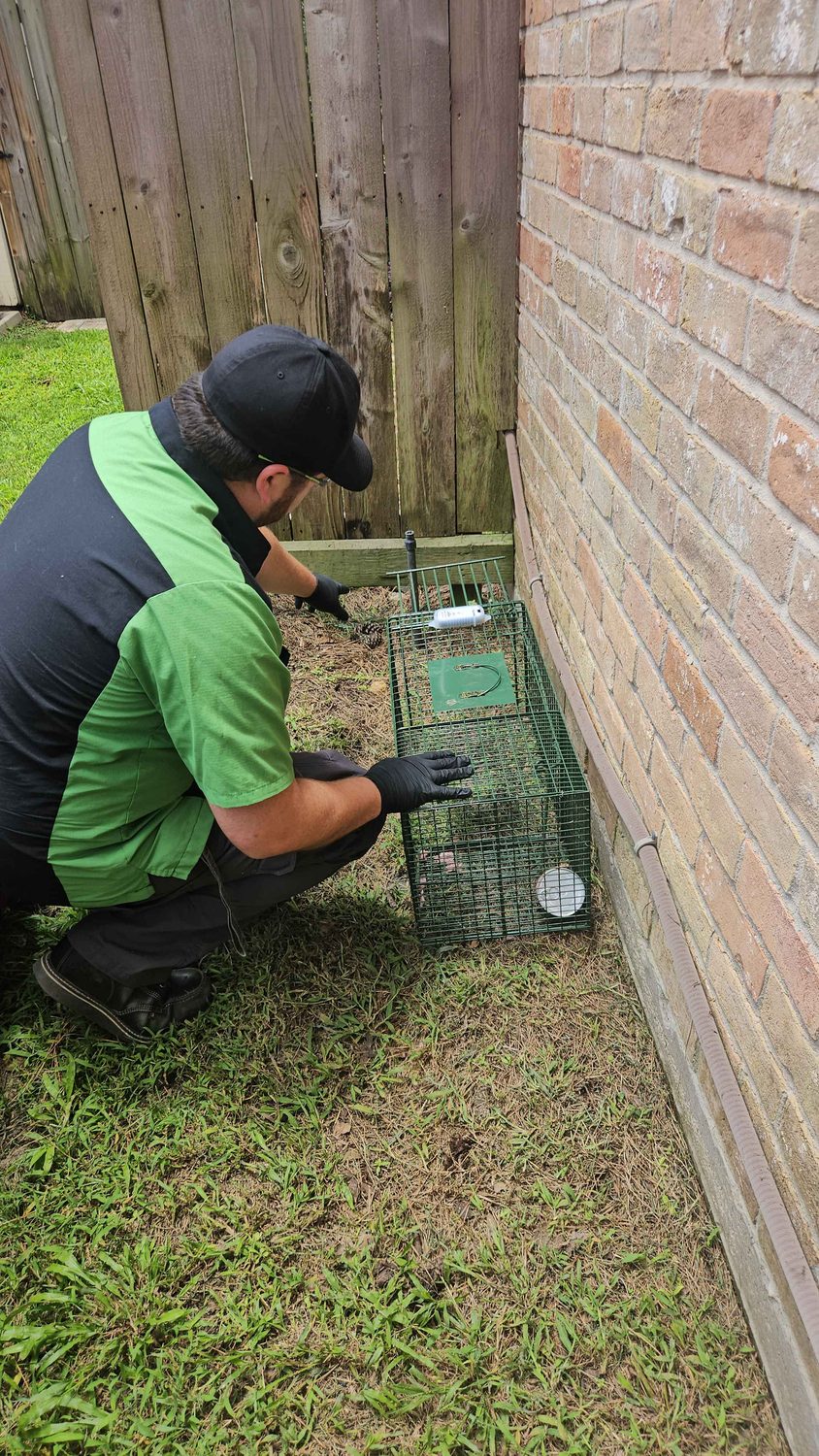
The citybugs FAQ adds a practical point: keeping soil and debris, such as stacked wood, away from the foundation reduces the chance of termite entry and makes it easier to see a problem. A slab edge buried under mulch hides tubes for years.
What we do about it
Our approach for termites: look the property over carefully, treat the activity found, and give guidance on keeping it from coming back.
- A free inspection. The full slab perimeter, the garage, accessible attic space, plumbing penetrations and the spots where water collects, with attention to the tube you found.
- Identify the termite. A tube points to subterranean termites, native or Formosan, and the species shapes the plan.
- Targeted treatment. Depending on the site, that may be liquid barrier treatment at the foundation, spot treatments of active galleries, or aerosol applications into voids.
- Moisture and follow-up. Leaks, drain lines and grading problems are pointed out for a plumber or contractor to fix, and the treated area is checked again for rebuilt tubes.
Termite work is priced and agreed separately from general pest service. The termite control page describes the options and how the guarantee terms apply to termites.
When to call
Call as soon as you find a tube on the slab, a pier or an inside garage wall, whether it looks fresh or old. A tube is the visible end of feeding you cannot see, and subterranean termites usually eat wood from the inside out. Call too if you find a tube on a stretch of slab that was hidden under mulch or a flower bed for years, since the feeding may be old.
Related problems
Tubes and swarms often go together. Our page on Formosan termite swarms explains what a late-spring flight around the lights means. The main termite control page covers the three termites found around north Houston and the prevention list for your yard. To set up a visit, send us a note with a photo of the tube.
Frequently asked questions
How do I know a mud tube is active?
Break a small piece out of the top. Live tubes are usually damp inside and may have pale workers moving in them. If the gap is patched within a few days, termites are using it. A dry, hollow, brittle tube may be old, but still needs checking.
If I knock the tube down, will the termites go away?
No. The tube is a covered walkway, not the colony. Knocking it down usually just leads the workers to rebuild, sometimes somewhere harder to see. Texas A&M advises leaving at least part of any suspicious mud structure in place so a professional can examine it.
Could it be something other than termites?
Mud daubers build mud structures too, but theirs are tube-shaped cells clustered under eaves and on walls, not long tunnels running up from the soil. Old dirt from a wasp nest, spider egg sacs or dried splash from a sprinkler also confuse people.
Why do tubes show up on slab homes?
On a slab, termites cannot reach the wood without crossing exposed concrete, and they cannot survive dry air. The tube keeps them in moist shelter. On many slab homes, a tube on the foundation edge is the first sign anyone sees.
Guides
Termite Control in north Houston?
No long-term contracts. Termite work is quoted separately, with its own written terms; our 100% Service Guarantee does not cover termites.
Because we are based in Spring, we can often come out the same or next day for urgent problems. Call before noon, Monday through Friday, for the best chance at next-day service.
Last updated