
Formosan Termite Swarms in Spring and North Houston
A swarm of yellowish-brown winged insects around porch or bathroom lights on a warm night in late May or early June in Harris County is often Formosan termites. Outdoors, it means a colony is nearby. Indoors, Texas A&M calls it a strong sign of an active infestation. Save some in a sealed bag and have them identified.
Call 281-627-4810 Request a free inspection
Year-round protection plans from $70 Core · Premium · Legendary See the plans

What to do, in order
- Turn off outdoor lights and close doors and windows to stop more swarmers being drawn inside.
- Collect a few insects and shed wings in a sealed plastic bag or a jar with rubbing alcohol for identification.
- Note where indoors you found the most insects or wings, such as one window, a vanity light or a bathroom.
- Once your sample is saved, vacuum up the rest of the insects and wings.
- Do not spray the walls or tear out trim; the source has to be found, not the swarmers.
- Look for wet spots, leaks or stains near where the swarm came from and note them.
What it usually turns out to be
Every year, on warm, humid evenings from late May into early June, people in Spring, Klein, Cypress and across Harris County see clouds of small winged insects swirling around porch lights, streetlights and bathroom fixtures. A good share of those swarms are Formosan subterranean termites.
Texas A&M’s Formosan termite page says Formosan swarmers fly at night in late May and early June and are attracted to lights. It describes them as yellowish-brown, about half an inch long, with a dense covering of hair on their transparent wings. It also records the first Texas infestations in 1956 around the Houston Ship Channel in Pasadena, and lists Harris County among the counties where the species is now found.
Other things that swarm around lights here:
- Native subterranean termites. Smaller, often darker swarmers that fly in late winter and spring. Texas A&M’s native termite page puts their swarmers at about a quarter to three-eighths of an inch.
- Flying ants. Fire ants, crazy ants and carpenter ants all fly in spring. They have a pinched waist and longer front wings. See carpenter ants if that is what you have.
- Midges and other small flies. Two wings instead of four, no shed wings left behind.
How to tell at home
Texas A&M’s termite control FAQ gives the quickest test: termites lack the pinched waist of ants, and termite wings are equal in length, while ant front wings are distinctly longer.
After you have checked a few insects, look at the scene:
- Where the wings are. Swarmers drop their wings soon after landing. A pile of wings on one windowsill or one bathroom counter suggests they came from inside the wall nearby.
- Indoors or out. Swarmers only around outside lights point to a colony somewhere in the neighborhood. Swarmers inside, especially in a room with no open door, point to a colony in or under the house.
- Moisture. Formosan colonies can live off a steady leak. A swarm near a bathroom, a window that leaks in storms or a wall with an AC drain line is worth noting.
Save a sample. A few insects and wings in a sealed bag, or in a small jar of rubbing alcohol, make identification much easier than a description.
What we do about it
Our termite work means a careful look at the property, targeted treatment of the activity found, and follow-up guidance.
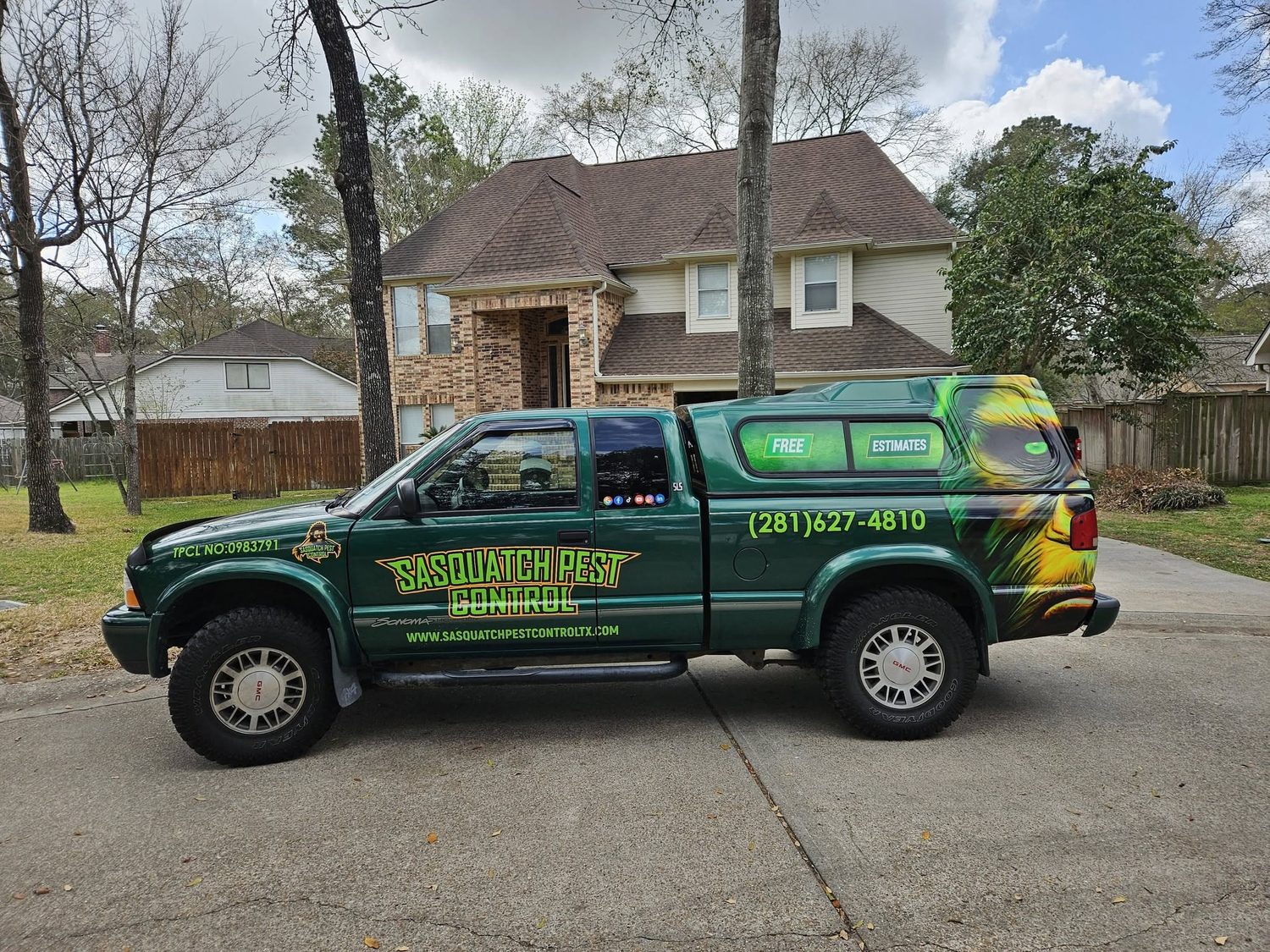
- A free inspection. The slab edge, garage, accessible attic space, bathrooms and any spot where the swarm appeared, along with the moisture sources that could be feeding a colony.
- Confirm the species. Formosan, native subterranean or drywood, because each calls for a different plan. A Formosan aerial nest in a wall may need attention above ground as well as at the soil.
- Targeted treatment. Depending on the species and the building, that may include liquid barrier treatment, spot treatments or aerosol applications into active galleries.
- Moisture and monitoring. Because termites follow water, we point out leaks and drainage faults for a plumber or roofer to fix, then come back to check for renewed activity.
Termite work is priced on its own, with its own terms, and is not part of the general service agreement. Our termite control page explains each method and the guarantee terms in more detail.
When to call
Call if you find swarmers or a pile of shed wings indoors, or if a swarm comes from the same spot outside two years running. Call even if the swarm stopped on its own; the swarmers leave, but the colony that sent them stays. Waiting for next year’s flight to see if it happens again gives a large colony another season of feeding.
Related problems
Swarms are one sign; mud tubes are the other. Our page on mud tubes on the slab explains what a tube on the foundation means and what to do before calling. The weekend prevention list for drainage and moisture around the slab is on the termite control page as well. To set up a visit, send us a note with a photo of the insects.
Frequently asked questions
Are these termites or flying ants?
Check the waist and wings. Texas A&M says termites lack the pinched waist of ants, and their two pairs of wings are equal in length, while ants have distinctly longer front wings. Formosan swarmers also have a dense covering of hair on their wings.
Do swarmers mean my house is infested?
Outdoors, not necessarily; a swarm around a streetlight may come from a colony in a tree or a neighbor's fence. Indoors is different. Texas A&M's Formosan termite page says swarmers found inside a house are a strong indication of an active infestation.
Will the swarmers damage anything?
Swarmers are not the stage that chews through wood. They are a sign of the colony that sent them. The damage, if any, is being done by workers you cannot see, inside a wall, under the slab or in an aerial nest.
Why are Formosan termites a bigger concern than native ones?
Colony size and nesting. Texas A&M says a typical Formosan colony can exceed one million insects, and that they often build aerial nests above ground that can be several cubic feet in size. A nest with a steady water source does not need to stay connected to the soil.
Guides
From the blog
Termite Control in north Houston?
No long-term contracts. Termite work is quoted separately, with its own written terms; our 100% Service Guarantee does not cover termites.
Because we are based in Spring, we can often come out the same or next day for urgent problems. Call before noon, Monday through Friday, for the best chance at next-day service.
Last updated