
Fire Ant Mounds in the Yard in Spring and North Houston
Loose, fluffy mounds of soil with no opening on top, often popping up after rain, are red imported fire ant colonies. Treating one mound at a time rarely clears a yard. Texas A&M recommends the Two-Step Method: broadcast a bait across the lawn that workers carry to the queen, then treat problem mounds directly.
Call 281-627-4810 Request a free inspection
Year-round protection plans from $70 Core · Premium · Legendary See the plans
What to do, in order
- Walk the yard a day or two after a rain, when new mounds are easiest to see, and flag the ones near play areas, paths and AC units.
- Keep children and pets off the flagged mounds, and do not kick, flood or dig them, which only moves the colony.
- Never pour gasoline or other fuel on a mound; it is dangerous and it contaminates the soil.
- If you broadcast a bait yourself, spread it across the whole lawn and follow the label for timing and rate.
- Treat individual mounds that need quick action with a labeled drench, granule or dust, and sweep granules off paved surfaces.
- Check AC disconnects, irrigation boxes and the electric meter for packed ants, and do not open live equipment yourself.
- Call us if mounds keep reappearing, or if the yard is too large to bait evenly on your own.
What it usually turns out to be
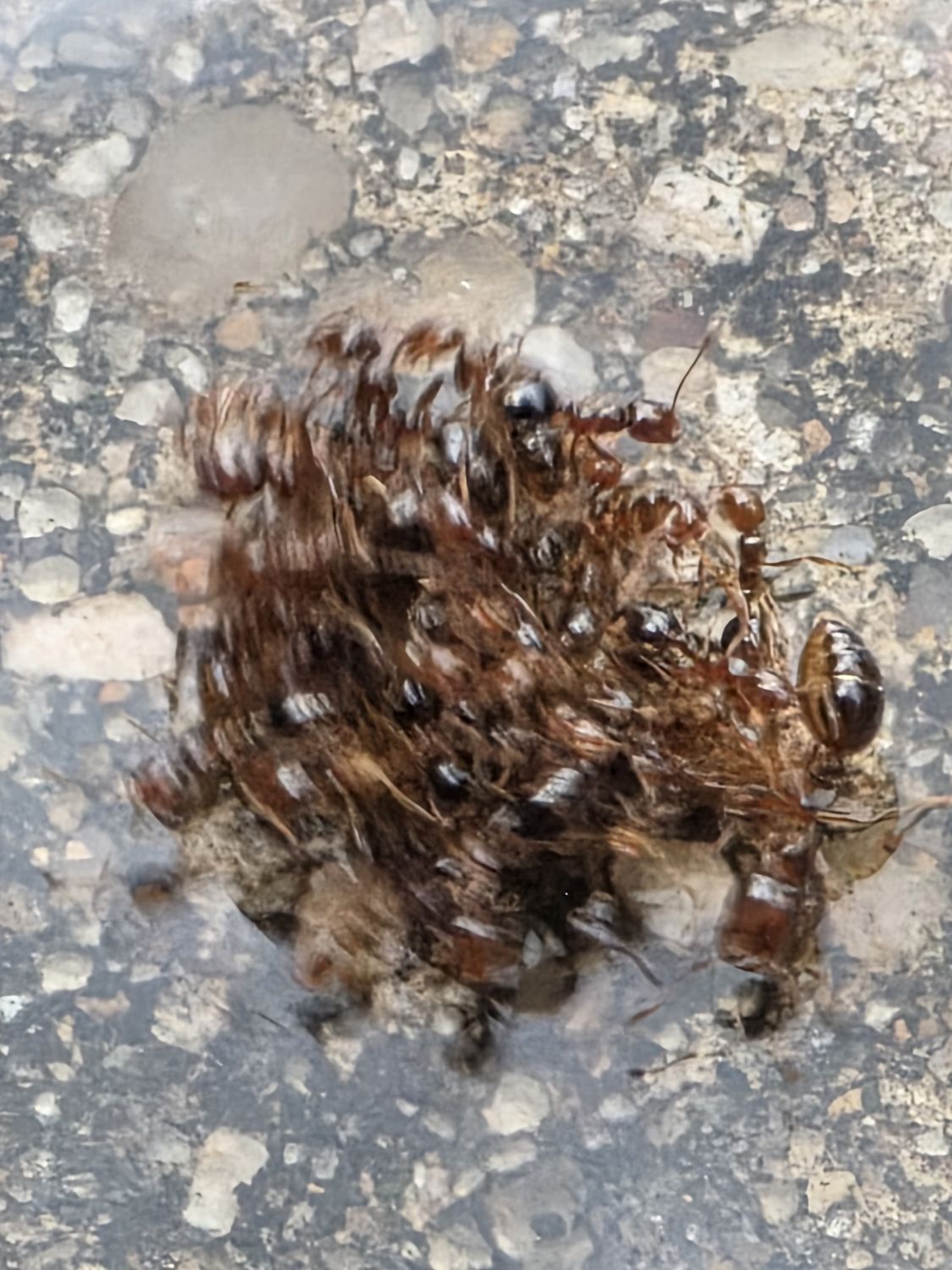
A dome of loose, crumbly soil in a sunny part of the lawn, along a sidewalk or against a utility box, with no single hole in the top, is a red imported fire ant mound. Disturb it and dozens of reddish-brown ants of mixed sizes pour out and climb. The stings burn, and a day or two later a white pustule forms at each one. Texas A&M’s fire ant program describes that pustule on its page on the impact of the red imported fire ant, along with the venom that causes it, an alkaloid called solenopsin.
The same page notes that, left undisturbed, mounds can grow large and tall, and that fire ants nesting in turf will move into homes, gardens, compost piles, mulched beds and electrical equipment and utility housings. In north Houston that last one is the expensive one. AC disconnect boxes, irrigation controllers and pool equipment are common places to find a packed colony.
The lookalikes
- Ordinary ant hills with a neat hole in the center, often a small crater of fine soil, belong to other ants. Fire ant mounds have no visible central opening.
- Tawny crazy ants do not build mounds at all and do not sting. They pour across the ground and into equipment in loose, jittery streams. See tawny crazy ants.
- Crawfish chimneys in wet clay yards are mud towers with a hole straight down the middle and no ants.
- Fresh soil kicked up by moles or grubs has no ants boiling out of it when it is disturbed.
How to tell at home
Look rather than poke. After a rain, walk the yard and note fluffy mounds that were not there last week. Watch a sidewalk crack or the edge of a flower bed on a warm morning; fire ant workers in one trail come in a range of sizes, from tiny to roughly a quarter inch, all reddish with a darker rear end. If someone already has stings that turned into white blisters by the next day, that settles it.
How the Two-Step Method works
Texas A&M AgriLife’s guidance on the Two-Step Method pairs two different tools.
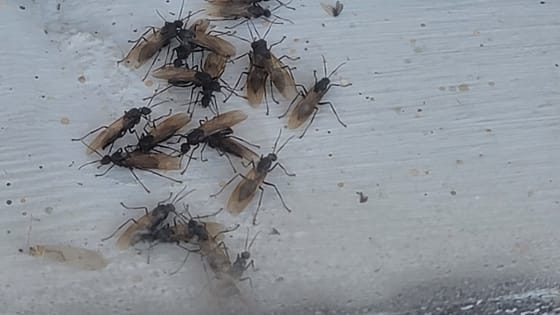
Step one is a broadcast bait. The bait is spread across the whole lawn at a low rate, so there is no need to find every colony. Foragers pick it up and carry it back to the nest, where it reaches the queen. AgriLife names spring and fall as the best times, because fire ants slow down and their mounds flatten out once the summer turns hot and dry.
Step two is mound treatment. Mounds that need to go now, near a swing set, a doorway or a garden bed, get a liquid drench or a granular, non-bait insecticide or dust. AgriLife says most contact products applied directly to a mound kill the colony in one to two days. It also warns against gasoline or other petroleum products, and against leaving insecticide granules on streets or sidewalks.
Fire ants in Houston yards
The typical north Houston lot gives fire ants exactly what Texas A&M’s fire ant program says they seek: open, sunny turf. Its page on the impact of the red imported fire ant lists lawns, parks and playgrounds among their usual nesting sites, and says nest galleries can reach as deep as 1.2 meters, about four feet, in a V shape under the mound. That depth is why raking a mound flat or running a hose into it leaves the queen untouched.
How crowded a yard gets depends partly on which form of the ant moved in. The same page cites pasture surveys averaging 72 mounds per hectare at a single-queen site in Montgomery County, against more than 1,600 per hectare at a multiple-queen site in Brazos County. It also notes that frequent mowing or other disturbance often pushes a colony to relocate to a quieter spot nearby, which in a Spring or Cypress yard usually means a flower bed, the strip along the fence or the edge of the slab.
Are fire ants in Texas native?
No. The red imported fire ant behind the fluffy mounds in Texas lawns came from South America. Texas A&M’s fire ant project says it was brought into the country around the 1930s, through Mobile, Alabama, reached Texas during the 1950s, and now covers the eastern two-thirds of Texas, with greater Houston well inside that range.
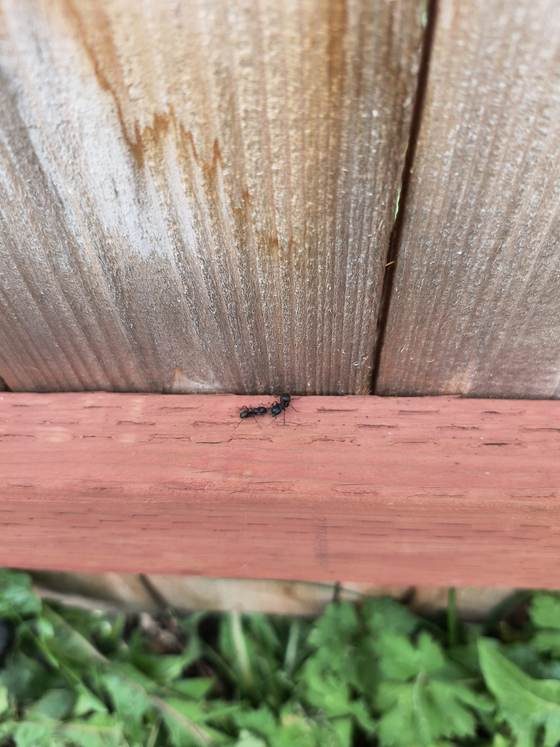
Many of the other ants in a Texas yard are native, and the imported species has not been kind to them. The same project says that where red imported fire ants are abundant they displace many native ant species. Its page on native ants names pyramid ants, bigheaded ants and the little black ant among the species in constant competition with fire ants, and says some of them may help control fire ants. That is a reason to aim mound treatments at actual fire ant mounds rather than at every ant hill on the lot.
Around Houston there is a second invader in the story. The tawny crazy ant, first discovered in the United States in a Houston suburb in 2002 according to University of Texas researchers, can displace fire ants where it is heavy, a point Texas A&M’s urban entomology program makes too. A yard that suddenly has no mounds but has ants streaming over the patio and into the meter box has traded one imported ant for a harder one. Our page on tawny crazy ants explains how to tell, and the red imported fire ant profile in our pest library covers identification and biology. Both ants are handled under our ant control service.
What we do
Our approach follows the same two-step logic. The full ant service is on our ant control page.
- Inspect the whole yard, not just the mound you called about, and mark the hot spots around play areas, patios, utility boxes and the AC pad.
- Broadcast a slow-acting bait that foragers carry down to feed the queen, so the colony collapses from the inside.
- Treat individual mounds directly where quick knockdown matters.
- Time the work to the season when the ants are actively foraging.
- Schedule follow-ups, because new colonies drift in from neighboring lots.
Recurring yard service falls under our 100% Service Guarantee, and there is no long-term contract.
When to call
A few mounds in a small yard are a reasonable weekend project with a bait and a mound product from the store, following the label. Call when mounds keep coming back after you have baited, when the lot is large or backs onto open land, when ants are packed into AC or irrigation equipment, or when a child or someone with a sting allergy uses the yard every day. If you are finding large black ants indoors as well, see carpenter ants in the house. For a free inspection, use the contact page.
Frequently asked questions
Why do new mounds show up after it rains?
Texas A&M AgriLife explains that spring rains percolate through the soil and collapse underground fire ant tunnels. The ants push the new tunnel soil up onto the surface, which builds a fresh mound. The colony was already there; the rain just made it visible.
How quickly does the Two-Step Method work?
The two steps work on different clocks. A contact insecticide applied straight to a mound usually kills that colony in one to two days, according to AgriLife. Broadcast bait is slower, because foragers have to carry it back and feed it to the queen, but it reaches colonies you never saw.
What should I do if someone is stung many times?
Leave the pustules unbroken, since Texas A&M says they are easily infected and can scar. If the person has chest pain, nausea, heavy sweating, trouble breathing, serious swelling or slurred speech, get them to medical care immediately.
Can I get rid of fire ants permanently?
Not on the Gulf Coast. Queens fly in from neighboring yards, roadsides and open lots, and colonies spread outward from nearby properties. What a good program does is keep your yard mostly clear, which is why baiting is repeated in spring and fall.
How long have imported fire ants been in Texas?
Since the 1950s. Texas A&M's fire ant project says the red imported fire ant arrived from South America around the 1930s and spread into Texas during the 1950s. It has kept moving west ever since and now covers the eastern two-thirds of the state.
Guides
From the blog
Ant & Fire Ant Control in north Houston?
No long-term contracts, and service agreements are backed by our 100% Service Guarantee.
Because we are based in Spring, we can often come out the same or next day for urgent problems. Call before noon, Monday through Friday, for the best chance at next-day service.
Last updated