
Carpenter Ants in Spring and North Houston Homes
Ants
Carpenter ants are the large ants that nest in damp or already-damaged wood. Texas A&M says Texas species rarely damage framing lumber, so a stray worker is no cause for alarm. A colony living in the house does warrant treatment, and the moisture problem feeding it warrants fixing, because that leak keeps working whether or not the ants are gone.
Call 281-627-4810 Request a free inspection
Year-round protection plans from $70 Core · Premium · Legendary See the plans
Sometimes worth treating, sometimes not — it depends on what is below.
Carpenter ants at a glance
| Worker size | About a quarter inch to five-eighths of an inch, in mixed sizes |
|---|---|
| Color | Yellowish red, solid black, or black with red; indoor species often dull red with a black abdomen |
| Body | Single node at the waist, evenly rounded thorax with no spines, ring of hairs at the abdomen tip |
| Antennae | Elbowed at a right angle about halfway along |
| Wings (swarmers) | Front pair longer than the hind pair |
| Nest | Moist or damaged wood, voids and insulation; satellite nests are common |
| Active | Mostly at night; swarms in spring and early summer |
Signs you have them
- Large ants walking across counters or baseboards after dark
- Small cone-shaped piles of shredded wood, insect parts and debris below a tiny opening
- Winged ants emerging indoors in spring or early summer
- Smooth, clean galleries following the grain in damp or rotted wood
- Faint rustling inside a wall or hollow door on a quiet night
Big ants, smaller damage than their reputation
“Carpenter ant” covers a whole genus, Camponotus, rather than one species. Texas A&M AgriLife’s household ant guide, B-6183, counts 14 carpenter ant species in Texas. The largest, the black carpenter ant, lives mainly in wooded areas and rarely causes trouble indoors. The ones that show up in houses are more often Camponotus rasilis and C. sayi, with dull red bodies and black abdomens.
The reputation these ants carry was earned mostly in colder, wetter parts of the country. Texas A&M’s carpenter ant publication, E-412, calls Texas species nuisance pests that rarely damage framing lumber. That is the honest starting point for anyone in Klein or The Woodlands who just watched one cross the kitchen floor at eleven at night.
Identification
E-412 gives worker sizes from about a quarter inch to five-eighths, with winged reproductives larger still. Colors range from yellowish red through solid black to mixes of black, red and reddish orange. Three features separate them from most other big ants:
- a single node, or segment, between the thorax and abdomen
- a thorax that is evenly rounded in profile, with no spines or bumps
- a circle of hairs at the tip of the abdomen
The lookalikes that matter
Termite swarmers. This is the identification that changes everything, because the control work is entirely different. E-412 sets out the comparison: ants are pinched at the waist, their antennae bend at a right angle about halfway along, and their front wings are longer than the hind pair. Termites are broad-waisted, with straight, bead-like antennae and four wings of equal length. The publication adds that in Texas it is not unusual for the two to swarm at the same time. If winged insects pour out of a wall in April, bag a few before vacuuming the rest.
Acrobat ants also nest in dead wood. E-412 describes them as smaller, an eighth to three-eighths of an inch, with a heart-shaped abdomen often held up over the body.
Large fire ant workers look big up close but come in mixed sizes on one trail and nest in lawn mounds.
Biology through the year
A colony begins with one mated queen, and E-412 says it stays small for its first two or three years before growing fast, reaching 3,000 or more ants in four to six years and often budding off satellite colonies connected to the parent nest. Mature colonies produce 200 to 400 winged reproductives a year. Those winged ants usually develop in late summer, overwinter inside the nest, and fly in spring and early summer. B-6183 places the swarming season from May through July and says a swarm found indoors likely means a nest indoors.
Foraging happens mostly at night. E-412 describes workers following fence rails, garden edging, branches, hoses and other lines from a nest in a tree to indoor food, and notes they may travel as far as 100 yards. Their diet is broad: honeydew from aphids and scale, living and dead insects, fruit, sweets, grease and meat. What they cannot do is digest wood.
Where they nest in and around buildings
Moisture decides it. E-412 explains that higher moisture favors colony growth and brood development, which is why nests concentrate in damp wood. Its list of typical sites reads like a punch list for an older Gulf Coast house:
- wood soaked by clogged gutters, damaged flashing or leaking door and window frames
- around kitchen and bathroom plumbing where a leak has wet the framing
- wood touching soil: porch supports, siding, stair risers
- poorly ventilated attics and spaces under porches
- voids and insulation around tubs, showers and hot tubs
- hollow porch posts, columns and beams
- wall and attic insulation, including rigid foam board
Outdoors they live in stumps, dead limbs, firewood, fences and landscape timbers. The entry routes E-412 lists are cracks around windows and in the foundation, ductwork, and anywhere tree branches or utility lines touch the structure.
The real risk
Structural damage from Texas carpenter ants is uncommon, and B-6183 says tunneling into sound structural wood is rare with Texas species. They bite but do not sting, and they carry no disease concern of note.
The risk is what they point to. A colony living in a window header or a bathroom wall is evidence that wood there has been staying wet. That leak keeps rotting the wood whether or not anyone treats the ants. Treat the colony and ignore the water, and a new colony, or a satellite of the old one, moves back into the same soft wood.
Winged ants indoors: what a swarm tells you
Most people first take carpenter ants seriously the day winged ones appear on a window sill. B-6183 gives the useful distinction: winged ants swarming inside the home mean the colony is probably somewhere inside, while winged ants swarming outside, around porch lights for example, are not a concern. Its suggestion for the outdoor kind is simple: switch off the porch lights or use yellow bug bulbs.
An indoor swarm narrows the search. Note which room, which wall and which window the winged ants are coming from, collect a handful in a sealed bag, and leave the rest of the evidence where it is. Vacuuming everything up before anyone looks erases the best clue to where the nest sits.
The bagged sample settles the other question too. If the insects turn out to have straight antennae and four equal wings, they are termites, and the right next step is our termite control page rather than this one.
When treatment is warranted, and when it is not
E-412 is unusually frank: a few workers, or even an occasional swarm, may not justify an expensive treatment program. That is why this profile is marked “depends.”
Treatment makes sense when you see ants regularly for a week or two, find frass piles, see winged ants emerging indoors, or see steady activity in winter, which suggests the nest is in a heated part of the house.
What treatment realistically involves
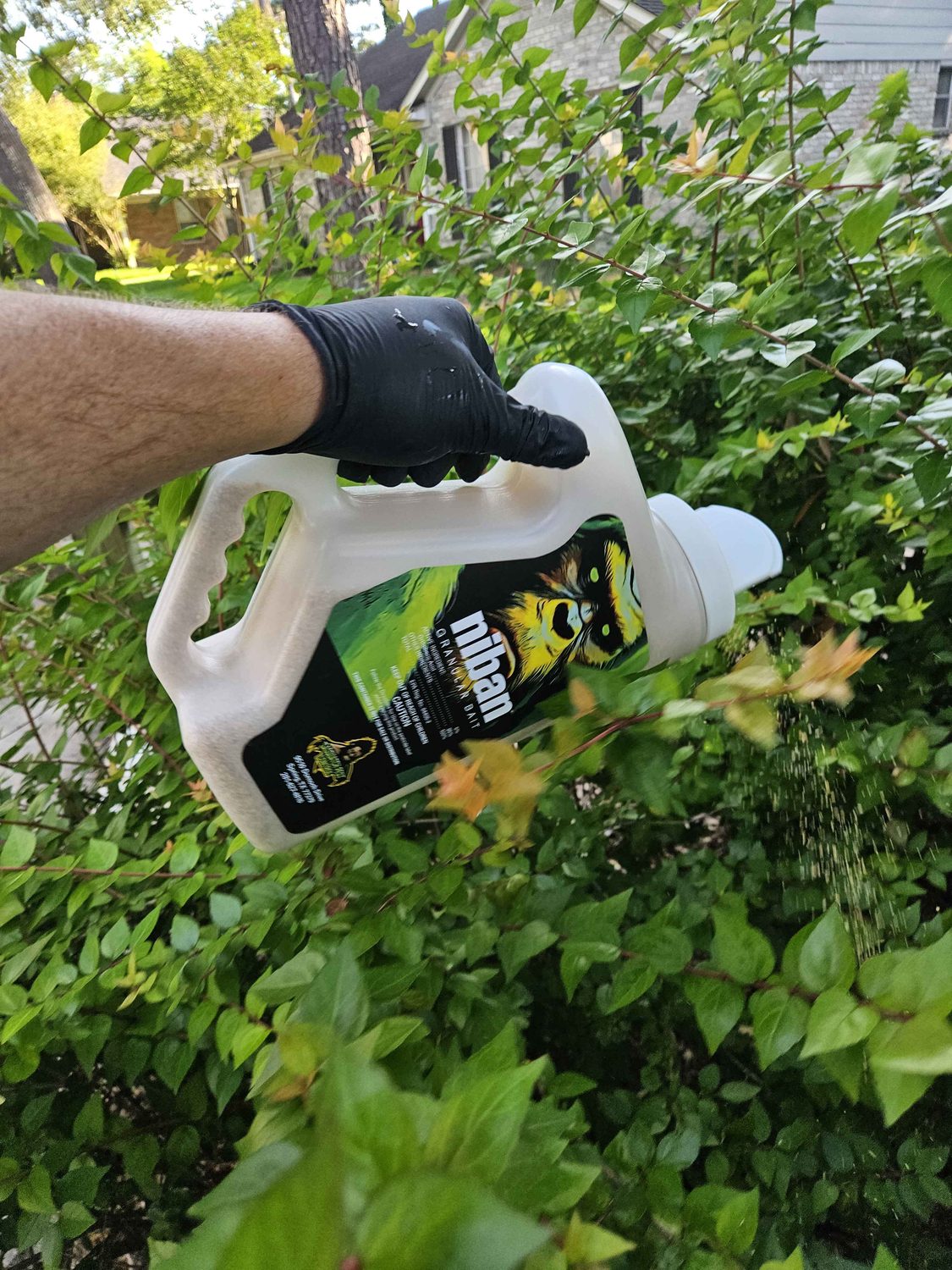
The key, E-412 says, is to find every location where a colony could exist, inside and out. Our method follows that, as described on the carpenter ants in the house problem page and the broader ant control page: inspect for moisture, satellite nests and entry points, use non-repellent products and carpenter-ant-specific baits that foragers carry home, treat wall voids, exterior harborage and trailing routes, and point out the wet wood that attracted the colony.
Several technical details from E-412 shape that work:
- Direct nest treatment with a dust, aerosol or foam injected into the galleries is one of the most effective approaches. Dusts reach further into cavities and are carried deeper by the ants.
- Boric acid dust is not effective against carpenter ants.
- Boron wood treatments protect against decay and wood-eating insects but will not control carpenter ants, which never eat the wood.
- Termite treatments do not control carpenter ants.
The leak itself belongs to a roofer, a plumber or a carpenter. Gaps where utility lines and pipes enter can be closed under exclusion and repairs. The ant work is covered by our 100% Service Guarantee.
Prevention
From E-412’s own list, adapted to a slab house in Harris or Montgomery County:
- Fix dripping faucets, roof leaks and drainage that sheets water against the walls.
- Replace wood already softened by rot or termites.
- Keep soil and mulch from touching siding and trim.
- Ventilate the attic and the space under any porch or deck.
- Move firewood, stumps and wood debris away from the house.
- Trim branches and vines that touch the roof or walls.
Related pages
- Carpenter ants in the house
- Ant and fire ant control
- Exclusion and repairs
- If the winged insects turn out to be termites, the next stop is termite control.
- For a free inspection, use the contact page.
Frequently asked questions
Will carpenter ants destroy my house like termites?
Not in the way people fear. Texas A&M's E-412 says Texas carpenter ants cause less damage than those in other parts of the country and rarely damage framing lumber. They cannot digest wood; they excavate it to nest, usually in wood that water or termites already softened.
How do I tell winged carpenter ants from termite swarmers?
Ants have a pinched waist, elbowed antennae and front wings longer than the back pair. Termites have a thick waist, straight bead-like antennae and four equal wings. In Texas the two can swarm at the same time, so save a few specimens in a sealed bag.
Do the ant bait stations from the grocery store work on them?
Texas A&M says no. The containerized general ant baits sold in stores are not effective on Texas carpenter ants, which are also choosy about which baits they accept at different times of year.
Do I need a pest contract for carpenter ants?
No. E-412 itself says carpenter ant control can be done in several visits over a month or two, and advises not to feel pushed into an ongoing contract if carpenter ants are your only concern. We never require one.
Sources
- Texas A&M AgriLife Extension E-412 — Carpenter Ants — read October 5, 2026
- Texas A&M AgriLife Extension B-6183 — Managing Household Ant Pests — read October 5, 2026
Next scheduled review of this page against its sources: October 5, 2027.
Pest problem in north Houston?
No long-term contracts, and service agreements are backed by our 100% Service Guarantee.
Because we are based in Spring, we can often come out the same or next day for urgent problems. Call before noon, Monday through Friday, for the best chance at next-day service.
Last updated