
Brown Recluse Spider in Spring and North Houston
Loxosceles reclusa · Spiders
The brown recluse is a uniformly tan to dark brown spider with a body a quarter to half an inch long, six eyes in three pairs and a violin-shaped mark behind the eyes. It hides in undisturbed garages, closets and stored boxes and bites when pressed against skin. Anyone who may have been bitten should see a doctor.
Call 281-627-4810 Request a free inspection
Year-round protection plans from $70 Core · Premium · Legendary See the plans
We treat this, and finding it usually warrants treating.
Brown recluse at a glance
| Body size | A quarter to half an inch; with legs, about the span of a quarter to a half-dollar |
|---|---|
| Color | Orange-yellow to dark brown, evenly colored, with no bands on the legs |
| Eyes | Six, in three pairs arranged in a semicircle; most spiders have eight |
| Marking | A dark violin shape on the front body section, sometimes faint |
| Web | Small, irregular white or grayish retreats, not a catching web |
| Egg sac | Round, about five-eighths of an inch, flat on the bottom and domed on top |
| Bite | Little pain at first; a reaction can follow over hours to days. See a doctor. |
Signs you have them
- Small, untidy white or gray webbing in the corners of boxes, shelves and closets
- Brown spiders caught on glue boards along garage or closet walls
- Shed spider skins in stored items that have not been moved in months
- Round, flat-bottomed egg sacs tucked into undisturbed corners
- Spiders found in shoes, gloves or clothing pulled from storage
The spider in the box you have not opened in a year
The brown recluse earns its name. It is a shy, night-hunting spider that spends the day tucked into a crack, a fold of cardboard or the toe of a shoe, and it is most often met by someone reaching into a place nobody has touched in months. Around north Houston that usually means a garage, an attic storage area, a hall closet or the boxes stacked under a staircase.
It is also one of the two spiders in this area that genuinely warrants care. That is worth saying plainly, because the brown recluse is the subject of a great deal of exaggeration, and the useful response sits between dismissing it and panicking.
Identification
The Texas A&M Urban and Structural Entomology Program gives the description. The body is only a quarter to half an inch long; with the legs spread, the spider covers about the area of a quarter or a half-dollar. Color runs from orange-yellow to dark brown, and the spider is evenly colored, without bands on the legs or a patterned abdomen.
Three features matter most:
- Six eyes. Texas A&M describes six eyes in three pairs, set in a semicircle on the front of the head. Most spiders have eight. The CDC’s venomous spider guidance makes the same point and notes the eyes are equal in size.
- The violin. A darker violin-shaped mark sits on the front body section. It can be faint on young spiders and pale individuals, so its absence does not rule a recluse out.
- A flat profile. Texas A&M AgriLife’s Venomous Terrestrial Animals of Texas describes the front body region as flat.
The same AgriLife guide notes that Texas has five species in the recluse genus, Loxosceles, and that all of them are venomous. A recluse-shaped spider in a Spring garage does not need to be identified to species to be handled with the same caution.
Lookalikes
Most brown spiders in a Houston house are not recluses. Wolf spiders are the most common mix-up: they are hairier, usually striped or mottled, have eight eyes with one large forward-facing pair, and run across open floors at night instead of hiding in boxes. Grass spiders, funnel weavers and the many small brown hunting spiders also get blamed. If you can photograph the spider or trap it under a jar without touching it, the eye count usually settles the question.
Biology and the Houston season
Texas A&M describes recluses as shy and nocturnal, hunting insects and other arthropods at night and sheltering by day in irregular white or grayish webs that serve as retreats rather than traps. Females lay one to two egg masses a year in dark, sheltered places. The egg cases are round, roughly five-eighths of an inch across, flat on the bottom and domed on top, and the spiderlings emerge after 24 to 36 days. How quickly they grow after that depends on food and conditions.
North Houston gives them a long season. Air-conditioned homes and garages that stay warm through a mild winter let recluses keep hunting and maturing most of the year. What drives a population is undisturbed shelter close to a supply of insects: crickets and roaches coming in under a garage door feed recluses living in the shelving above them.
Recluses have predators of their own. Texas A&M AgriLife’s publication on wasps notes that mud dauber larvae are generally fed spiders, including the brown recluse, one reason those wasps are worth tolerating; see the mud dauber profile.
Where it shows up
Texas A&M lists garages, firewood piles, cellars, stored boards, bathrooms, bedrooms, closets, the undersides of furniture, the gaps behind baseboards, and corners and crevices generally. The AgriLife venomous animals guide adds piles of boards, firewood and rocks outdoors. In a typical north Houston house, the places worth checking first are:
- Cardboard boxes in the garage, the attic and closets
- Shelving along garage walls, especially the bottom shelf
- Shoes, boots and gloves left on the floor of a garage or mudroom
- Linens and clothing in storage
- The space behind and under beds, dressers and couches
- Firewood and lumber stacked against the house
Bites and health risk
If you think a recluse bit you or someone in your home, see a doctor. This page describes what extension and federal sources say to expect so you can describe it accurately; it is not medical advice.
Texas A&M says bites often happen when people roll over onto a spider in bed or put on clothing that has not been worn in a while. The initial pain may be delayed. Within 24 to 36 hours there can be fever, chills, nausea, weakness, restlessness and joint pain, and the bite can lead to tissue death that sloughs away gradually and takes six to eight weeks to heal, sometimes leaving a scar. The AgriLife venomous animals guide adds that the reaction may be delayed for up to a week, that the bite area can spread and develop a red ring, that healing can take months, and that secondary infection is common.
The CDC’s first aid steps are to stay calm, identify the spider only if that can be done without handling it, wash the area with soap and water, apply a cold compress or ice, keep the bite raised, never try to remove venom, and seek professional medical attention. Bring the spider in a sealed container or a clear photo if you have one.
What treatment realistically involves
This is one of the spiders where treating is usually warranted, because a population in a lived-in house means repeated chances of a bite. It is also one where spraying alone fails, because the spiders are inside things.
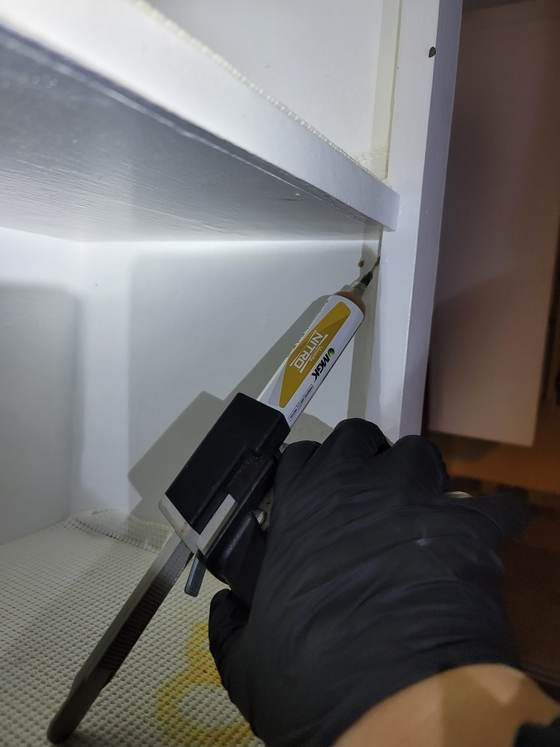
Under our spider control service, recluse work runs like this: an inside-and-outside look to find where they are living and what they are eating, removal of webs and egg sacs, a repellent treatment around the foundation, doors, windows and other entry routes, treatment of baseboards indoors, and glue boards placed along walls where spiders travel. Glue boards double as a gauge of whether the numbers are dropping. It runs on a quarterly schedule with our 100% Service Guarantee. The page on brown recluse spiders has the detail on stored items.
Your part matters as much as ours. No product reaches the inside of a sealed cardboard box, so getting stored things into plastic bins is part of the fix.
Prevention
- Move stored items from cardboard into lidded plastic bins, and lift them off the floor.
- Shake out shoes, gloves and work clothes before putting them on; the CDC recommends checking clothing and equipment before use.
- Store seasonal clothing and linens sealed in plastic bags.
- Wear gloves when sorting the garage, the attic or a woodpile.
- Pull beds a few inches off the wall and keep bedskirts and blankets off the floor.
- Replace worn garage door seals and door sweeps to cut off the insects recluses eat.
- Keep firewood, lumber and rock piles away from the walls of the house.
Related reading
The other spider that warrants care here is the southern black widow, and the most common harmless lookalike is the wolf spider. The full pest library has the rest. If glue boards in your garage are catching recluses, ask us to come out and we will look at where they are living.
Frequently asked questions
How can I tell a brown recluse from other brown spiders?
Count the eyes if you can do it without touching the spider. Texas A&M's urban entomology program describes six eyes in three pairs, where most spiders have eight. The body is evenly colored orange-yellow to dark brown, and there is often, though not always clearly, a violin-shaped mark behind the eyes.
What should I do if I think a brown recluse bit me?
See a doctor. The CDC's first aid guidance is to wash the bite with soap and water, apply a cold compress, keep the area raised and get medical attention. Texas A&M notes reactions can be delayed, so do not wait for it to look serious before getting it seen.
Are there other recluse spiders in Texas?
Yes. Texas A&M AgriLife's guide to venomous animals of Texas says there are five species in the recluse genus in the state, and all are venomous. The brown recluse is the best known, but the advice on bites and storage applies to the whole group.
Can I get rid of brown recluses by spraying?
Not by spraying alone. They hide inside boxes, behind baseboards and under furniture where spray does not reach, which is why recluse work combines glue boards, targeted treatment of cracks and voids, and moving stored items out of cardboard.
Do brown recluses live outside around Houston homes?
They can. AgriLife's guide lists piles of boards, firewood and rocks as preferred undisturbed spots, and Texas A&M includes firewood piles and garages. A woodpile against the back wall is a reasonable place to expect them.
Sources
- Texas A&M Urban and Structural Entomology Program — Brown Recluse — read October 5, 2026
- Texas A&M AgriLife Extension — Venomous Terrestrial Animals of Texas — read October 5, 2026
- CDC NIOSH — Venomous Spiders — read October 5, 2026
- Texas A&M AgriLife Extension — Paper Wasps, Yellowjackets and Solitary Wasps (E-239) — read October 5, 2026
Next scheduled review of this page against its sources: October 5, 2027.
Pest problem in north Houston?
No long-term contracts, and service agreements are backed by our 100% Service Guarantee.
Because we are based in Spring, we can often come out the same or next day for urgent problems. Call before noon, Monday through Friday, for the best chance at next-day service.
Last updated