
When Do Wasps and Hornets Build Nests in Houston, TX?
Call 281-627-4810 Request a free inspection
Year-round protection plans from $70 Core · Premium · Legendary See the plans
A seasonal guide to wasp and hornet nesting for Greater Houston and Harris County homeowners.
In Houston, wasps get an early start — queens often begin building nests as soon as February or March, months ahead of colder regions — and they stay active late into fall, sometimes nearly year-round in mild winters. New nests start small, with just the founding queen, then grow through the long Gulf Coast summer to peak size and aggression from late summer into early fall. Because the season runs so long here, catching a nest early in spring is the easiest, safest, and cheapest way to keep it from becoming a large, defensive colony.
When do wasps start building nests in Houston?
Houston’s warm climate stretches the wasp season on both ends. Overwintered queens can become active as early as February or March, well ahead of northern regions. Each queen starts a small nest and raises the first workers herself; by late spring those workers take over, and the colony expands steadily through the hot months. Populations typically peak from August into October, and in mild winters some colonies linger far later than homeowners expect.
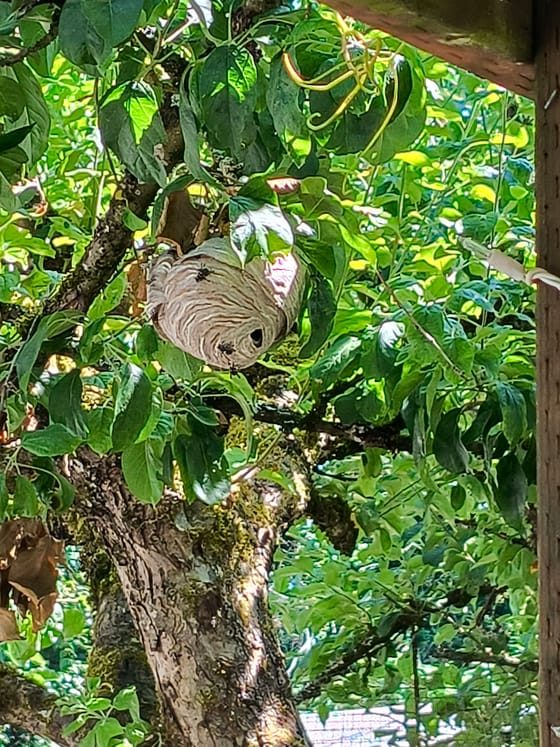
If you spot a lone wasp scouting your eaves or patio in early spring, that’s often a founding queen — and the perfect time to act, before the colony has hundreds of defenders.
What does the wasp life cycle look like over a Houston year?
- Late winter to early spring (Feb–March): queens emerge early and begin small starter nests.
- Spring (April–May): the first workers hatch and take over building and foraging.
- Summer into early fall (June–October): the colony peaks, populations swell, and wasps grow more aggressive.
- Fall to winter: new queens are produced and the colony winds down, though Houston’s mild winters can extend activity later than usual.
Red paper wasps
The reddish-brown Polistes paper wasp is one of the most common around Houston homes, building open, umbrella-shaped nests under eaves, in door frames, and inside grills and patio furniture. They’ll defend the nest if you get close.
Yellowjackets
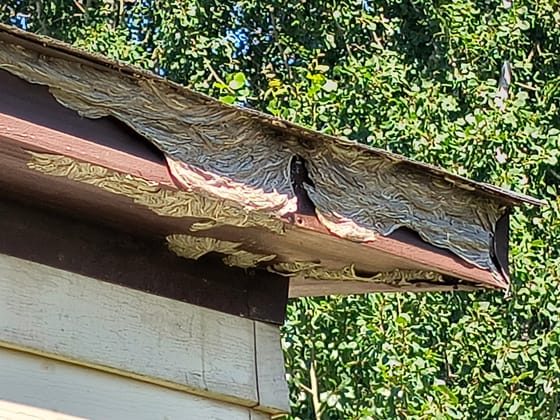
Yellowjackets nest in the ground, in wall voids, and in cavities, and they’re strongly drawn to food and sweet drinks — the classic uninvited guest at a Harris County cookout. They’re aggressive nest defenders, especially late in the season.
Bald-faced hornets
A large relative of the yellowjacket, the bald-faced hornet builds the gray, football-shaped paper nests you’ll see hanging in trees and under eaves. Colonies can grow large and defend the nest vigorously.
Mud daubers and cicada killers
Not every big wasp is a threat. Mud daubers are solitary and build small mud tubes; they rarely sting. Cicada killers are alarmingly large but are docile solitary wasps that pose little danger to people. Knowing the difference keeps you from panicking over harmless species — and we can tell them apart for you.
Where do wasps like to build nests on Houston homes?
- Under eaves, soffits, and roof overhangs
- Inside attics, wall voids, and vents
- Beneath patio covers, decks, and porch ceilings
- In sheds, garages, and outdoor grills or playsets
- Inside dense shrubs, hedges, and trees
- In the ground — old rodent burrows are a yellowjacket favorite
- In utility boxes, fence posts, and rarely used mailboxes
How can you spot a wasp nest early?
- A single wasp flying repeatedly to the same spot on your house
- A small papery nest the size of a golf ball under an eave, patio cover, or railing
- Steady wasp traffic in and out of one gap, vent, or hole in the ground
- Mud tubes on walls (mud daubers) or gray paper starting to form
- More wasps than usual patrolling one area of the yard or patio
Why is spring the best time to deal with wasps in Houston?
Because Houston’s season starts early and runs long, a nest left alone in spring has months to grow into a large, defensive colony. Removing it while it’s small — often just the founding queen — is faster, safer, and less expensive than treating a mature summer nest. Early action also prevents the aggressive late-season colonies that make patios and yards unusable and put anyone with a sting allergy at real risk.
What should you do if you find an early nest — and why not knock it down yourself?
Grabbing a can of spray or a broom is how a lot of Houston homeowners end up stung. Yellowjackets and hornets defend their nests aggressively and sting repeatedly, and disturbing a nest can send the whole colony after you at once. Nests hidden in wall voids or underground are especially risky because you can’t judge their true size.
The safer approach is to keep your distance, avoid swatting or spraying, and call a professional. Sasquatch will identify the species, find the full nest, remove it safely, and help seal the entry points so wasps don’t rebuild in the same place.
What month do wasps become active in Houston?
Thanks to the warm climate, wasp queens in the Houston area can become active as early as February or March, weeks or months ahead of northern regions. Colonies then grow through summer and peak from late summer into fall.
Are wasps more aggressive at certain times of year?
Yes. Wasps are most aggressive from late summer into fall, when colonies are largest and food gets scarce. In Houston, mild weather can stretch that aggressive period later into the year than many homeowners expect.
Do wasps reuse last year’s nest?
Generally no. Colonies die off and abandon the nest, and new queens build fresh nests the next season. That said, in Houston’s mild winters some colonies persist longer, and queens often reuse the same favorable locations year after year.
Are cicada killers and mud daubers dangerous?
Not really. Cicada killers are very large but docile solitary wasps, and mud daubers rarely sting. Both are far less of a threat than yellowjackets or hornets. If you’re unsure what you’re seeing, we can identify it during a free inspection.
What attracts wasps to my Houston yard?
Food and shelter. Open trash, fallen fruit, pet food, sugary drinks, and outdoor dining attract foraging wasps, while eaves, vents, shrubs, patio covers, and ground burrows offer nesting sites. Managing food and sealing gaps reduces the draw.
How do I tell a wasp nest from a beehive?
Wasp and hornet nests are made of chewed wood that looks like gray or tan paper — open umbrella shapes for paper wasps, enclosed footballs for hornets. Honeybee nests are wax and usually inside a cavity. If you’re not sure, don’t disturb it; we’ll identify it for free.
Sasquatch Pest Control offers a free, no-pressure inspection across Greater Houston / Harris County.
Frequently asked questions
What month do wasps become active in Houston?
Thanks to the warm climate, wasp queens in the Houston area can become active as early as February or March, weeks or months ahead of northern regions. Colonies then grow through summer and peak from late summer into fall.
Are wasps more aggressive at certain times of year?
Yes. Wasps are most aggressive from late summer into fall, when colonies are largest and food gets scarce. In Houston, mild weather can stretch that aggressive period later into the year than many homeowners expect.
Do wasps reuse last year's nest?
Generally no. Colonies die off and abandon the nest, and new queens build fresh nests the next season. That said, in Houston's mild winters some colonies persist longer, and queens often reuse the same favorable locations year after year.
Are cicada killers and mud daubers dangerous?
Not really. Cicada killers are very large but docile solitary wasps, and mud daubers rarely sting. Both are far less of a threat than yellowjackets or hornets. If you're unsure what you're seeing, we can identify it during a free inspection.
What attracts wasps to my Houston yard?
Food and shelter. Open trash, fallen fruit, pet food, sugary drinks, and outdoor dining attract foraging wasps, while eaves, vents, shrubs, patio covers, and ground burrows offer nesting sites. Managing food and sealing gaps reduces the draw.
How do I tell a wasp nest from a beehive?
Wasp and hornet nests are made of chewed wood that looks like gray or tan paper — open umbrella shapes for paper wasps, enclosed footballs for hornets. Honeybee nests are wax and usually inside a cavity. If you're not sure, don't disturb it; we'll identify it for free.
Related posts
- Bees vs Wasps vs Hornets in Houston: How to Tell Them Apart
- Why DIY Wasp Nest Removal in Houston Is Dangerous — And What Works Instead
- Why Ants Invade Houston Homes in Spring — And What to Do About It
- Why Do I Have Millipedes in My Home?
- Why Earwigs Are Invading Your Houston Home (And What to Do About It)
- Why Fire Ant Mounds Suddenly Appear After Rain (And What It Means for Your Yard)Across Texas
Pest problem in north Houston?
No long-term contracts, and service agreements are backed by our 100% Service Guarantee.
Because we are based in Spring, we can often come out the same or next day for urgent problems. Call before noon, Monday through Friday, for the best chance at next-day service.
Last updated