
Sasquatch Pest Control | Serving Houston, Spring & Tomball, TX | August 13, 2026
Unlike some parts of the country, the Houston area is home to both of North America’s medically significant spiders — the brown recluse and the black widow — alongside dozens of harmless species that do more good than harm. The vast majority of spiders you’ll see around a Texas home are beneficial and not worth worrying about; the goal is to respect the two dangerous ones, control the insects that spiders feed on, and seal the home so they don’t come inside. Here’s how to tell them apart and keep your home spider-free.
Which spiders in Houston are actually dangerous?
Two: the black widow and the brown recluse, and both are present in the Houston area. Female black widows are shiny black with a red hourglass marking on the underside of the abdomen and favor garages, sheds, wood piles, and outdoor storage. Brown recluses are brown with a darker violin-shaped mark behind the head, and they hide in undisturbed spots like closets, attics, storage boxes, and stored clothing and shoes. Both bites warrant medical attention, though bites are uncommon because both spiders are shy and only bite when trapped against skin.
Unlike in some cooler states where brown recluses aren’t native, in Texas they’re a genuine part of the local spider population, so caution around undisturbed storage areas is warranted.
Are the tiny black spiders in my house dangerous?
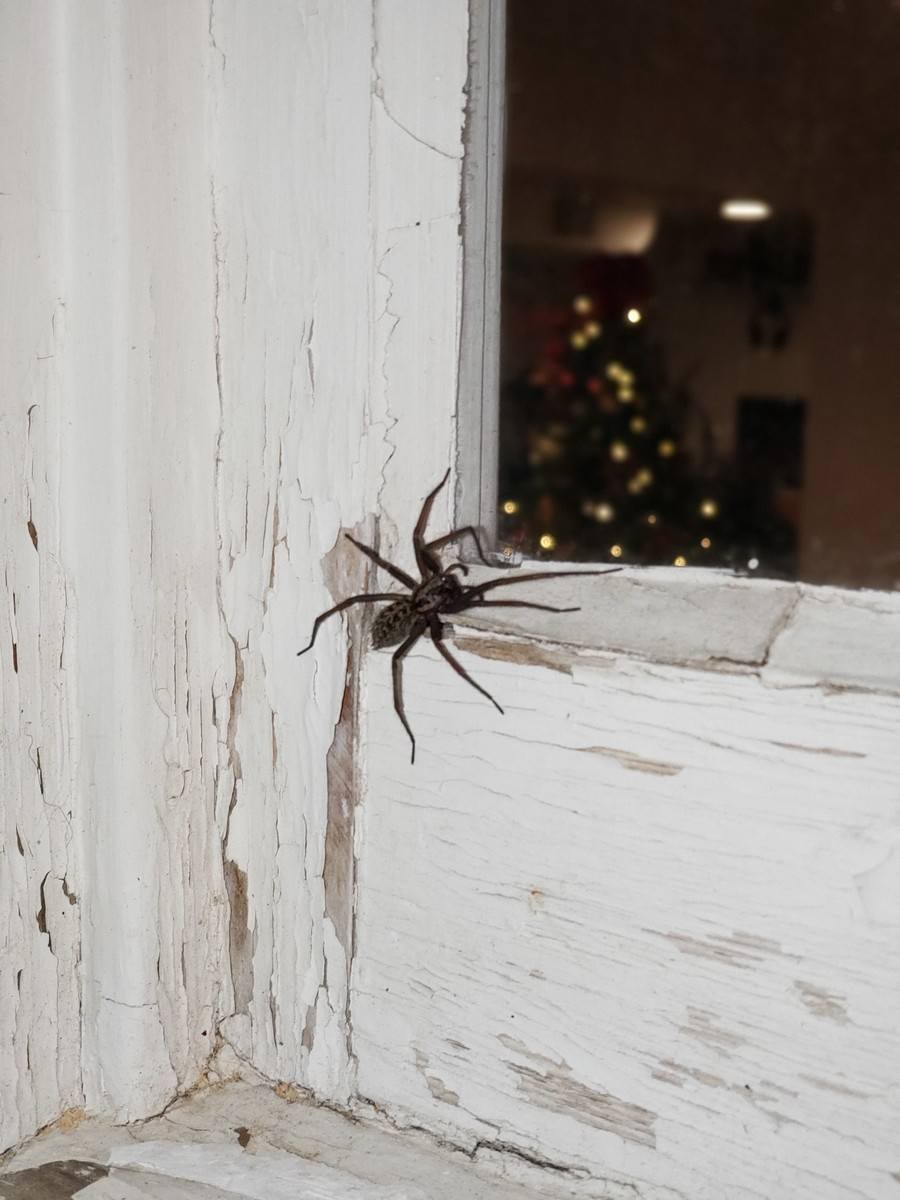
Almost always no. The small dark spiders people notice scurrying across floors and walls are typically harmless species like common house spiders, jumping spiders, or ground spiders, none of which pose a medical threat. Jumping spiders in particular are small, often fuzzy, and move in quick hops — they look startling but are harmless and even beneficial, feeding on other insects. The two spiders that matter medically, the black widow and brown recluse, are not the tiny quick ones you see out in the open.
So a scattering of small black spiders is far more a sign of available insect prey in the home than a danger in itself.
SASQUATCH TIP In Texas, treat stored shoes, gloves, and boxes in the garage and attic with respect — those quiet, undisturbed spots are exactly where brown recluse and black widow spiders hide. Shake items out and wear gloves when reaching into stored belongings, rather than reaching in bare-handed.
How do I protect myself from the dangerous ones?
Focus on behavior rather than trying to identify spiders up close. Wear gloves when reaching into stored boxes, woodpiles, or dark corners; shake out shoes, gloves, and clothing that have been stored in the garage or attic; keep storage areas decluttered and store items in sealed bins off the floor; and never reach blindly into undisturbed spaces. These habits protect you far more reliably than trying to spot a marking on a spider you shouldn’t be that close to.
Because both dangerous species prefer quiet, cluttered, undisturbed areas, simply reducing clutter and disturbing storage areas periodically lowers your risk significantly.
Why do I have so many spiders?
Spiders follow their food, so a lot of spiders usually means a lot of other insects in and around your home. They’re also drawn indoors by shelter and by exterior lighting that attracts the insects they eat. Fall tends to bring more visible spiders as males roam looking for mates and as cooler weather nudges both spiders and their prey toward the house. Cluttered garages, sheds, and storage areas give them ideal harborage.
This is why the most effective long-term spider control targets the insect population and the harborage — take away the food and the hiding spots, and the spiders have far less reason to stay.
How do I keep spiders out of my home?
Combine exclusion, sanitation, and insect control. Seal gaps around windows, doors, siding, and utility lines, repair screens, and add door sweeps to block entry. Declutter garages, sheds, and storage areas, and clear webs and egg sacs as they appear. Manage exterior lighting that draws insect prey, and keep the broader insect population in check, since spiders go where the food is. For the dangerous species, targeting their preferred harborage areas is especially important.
Because so much of spider control is really about the pests they eat, a general pest control program often does more to reduce spiders than spider-specific treatment alone.
Frequently Asked Questions
Do you offer spider control in the Houston area?
Yes. We handle spider problems throughout Houston, Spring, Tomball, and the surrounding Harris County communities, including targeting the harborage areas where brown recluse and black widow spiders hide. Our approach seals entry points, clears webs and egg sacs, and reduces the insects spiders feed on. Call or text 281-627-4810 to schedule.
Are brown recluse spiders found in Texas?
Yes. Unlike some cooler states where they aren’t native, brown recluses are a genuine part of the spider population in the Houston area. They’re brown with a darker violin-shaped mark and hide in undisturbed spots like closets, attics, storage boxes, and stored clothing and shoes, which is why caution around storage areas is warranted.
Are the tiny black spiders in my house dangerous?
Almost always no. Small dark spiders scurrying across floors and walls are typically harmless house spiders, jumping spiders, or ground spiders that pose no medical threat and often help by eating other insects. The two medically significant spiders here — black widow and brown recluse — are not the small quick ones you see out in the open.
How do I tell a black widow or brown recluse apart?
Female black widows are shiny black with a red hourglass on the underside of the abdomen. Brown recluses are brown with a violin-shaped mark behind the head. Both are shy and prefer undisturbed areas like garages, sheds, woodpiles, closets, and storage boxes. If you suspect either, don’t handle it — vacuum from a safe distance and consider a professional inspection.
Why do I suddenly have so many spiders?
Spiders follow their food, so lots of spiders usually means lots of other insects in and around your home, plus available shelter and exterior lighting that attracts prey. Fall often brings more visible spiders as males roam and cooler weather pushes spiders and their prey toward the house. Cluttered storage areas provide ideal harborage.
What should I do if I find a dangerous spider?
Don’t handle it. For a suspected black widow or brown recluse, vacuum it from a safe distance and be cautious in the surrounding area, since these species favor clusters of undisturbed hiding spots. If you’re bitten and develop worsening pain, a spreading sore, or systemic symptoms, seek medical attention. When in doubt, a professional inspection is safer than a close look.
Do you offer a free spider inspection?
Yes. We’ll inspect your home, identify harborage areas and the insect activity drawing spiders in, and give you an honest plan. Call or text 281-627-4810 for your Houston, Spring, or Tomball home. Everything is backed by our 100% service guarantee, with no contracts.
Ready to protect your Houston-area home?
Spider control across Houston, Spring, Tomball, and Harris County — including brown recluse and black widow harborage areas, backed by our 100% service guarantee.
Call or text 281-627-4810
Free inspection • No contracts • 100% service guarantee