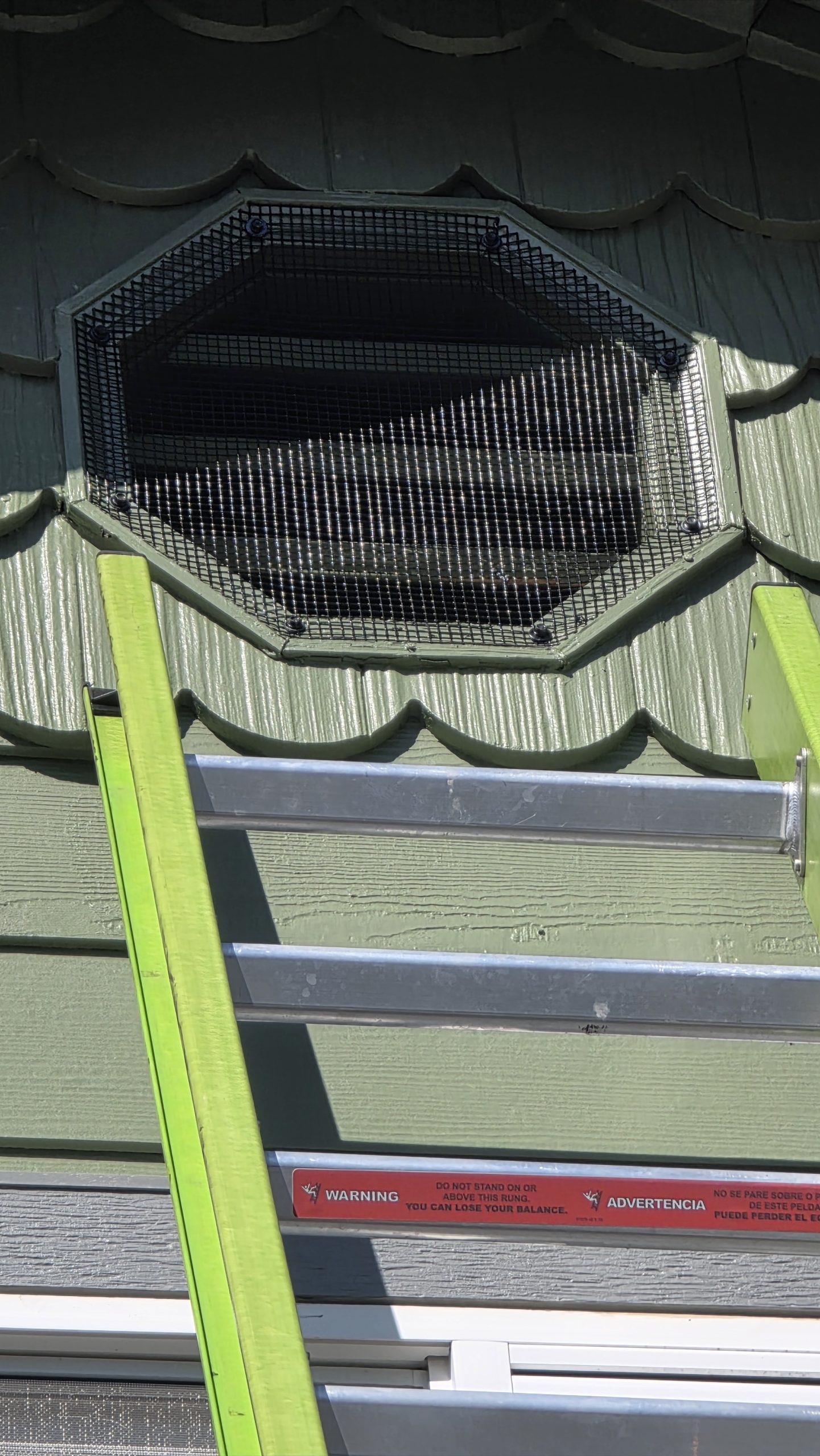
Bats roosting in your attic, chimney, or soffits and leaving guano behind at your Houston property? We perform humane, code-compliant exclusion that lets bats out but never back in, then sanitize and seal every gap against the Gulf Coast’s roosting colonies — all covered by our 100% service guarantee with no long-term contracts.
★★★★★ Google-reviewed • Licensed & Insured • Local & Family-Owned • 100% Service Guarantee • No Contracts
Bat Removal and Exclusion in Houston, Texas
Bat Removal and Exclusion in Houston, Texas
Sasquatch Pest Control provides humane, legal bat removal and exclusion for homes and businesses across Houston, Spring, Tomball, and Harris County. Bats are protected under Texas law, so the right solution is never extermination — it’s exclusion: safely sealing bats out of your home without harming them, then cleaning up the guano they leave behind. Because exclusion has to be timed correctly around the summer maternity season and done thoroughly to keep bats from returning, it’s a job for professionals. Every project starts with a free inspection. Call or text 281-627-4810 to get started.
Why Bats Move Into Houston Homes
Bats are looking for warm, dark, protected spaces to roost, and the modern home offers plenty of them. In the Houston area, bats commonly get into:
Attics — the number one roosting spot, offering warmth, darkness, and quiet.
Soffits, eaves, and fascia gaps — small openings along the roofline that bats squeeze through.
Chimneys and flue spaces.
Gable, ridge, and dormer vents that aren’t properly screened.
Wall voids and spaces behind siding or shutters.
Under loose flashing and along the roof edge.
Bats only need a gap about the width of your thumb to get inside, which is why they exploit openings most homeowners never notice. Our warm climate also means bats are active for much of the year here, so a roost can grow well before it’s discovered.
Signs You May Have Bats
Bats are quiet and nocturnal, so an infestation often goes unnoticed until the signs build up. Watch for:
Guano (bat droppings) — dark, pellet-like droppings piling up in the attic, on siding, on the ground below a roofline gap, or near an entry point.
A strong, ammonia-like odor from accumulating guano and urine, often noticeable in or below the attic.
Scratching, squeaking, or fluttering sounds around dusk and dawn as bats leave and return.
Greasy brown rub marks around gaps, vents, and entry points where bats squeeze in and out.
Bats seen flying out from a spot on your roofline at dusk — the clearest confirmation of a roost.
Even a small colony can create real problems, so if you notice any of these signs, it’s worth having your home inspected before the roost grows and the guano accumulates.
Health and Safety Risks of Bats in Your Home
While bats are beneficial outdoors, a roost inside your home creates genuine health and safety concerns that shouldn’t be ignored:
Histoplasmosis — accumulated bat guano can grow a fungus whose spores, when disturbed and inhaled, can cause histoplasmosis, a respiratory illness. This is why guano should never be swept or vacuumed without proper precautions.
Rabies — rabies is rare in the overall bat population but does occur, so bats should never be handled with bare hands, and any direct contact warrants prompt medical advice since bat bites can be tiny and easily missed.
Property damage — guano and urine can stain and saturate insulation, drywall, and ceilings, corrode materials, and leave lasting odors, sometimes requiring insulation removal and restoration.
Parasites — bats can carry mites and other parasites into the home along with their roost.
Why DIY Bat Removal Is Dangerous — and Illegal in Texas
Bats are a protected species in Texas, and it is against the law to exterminate them in most circumstances. The legal, humane, and effective approach is exclusion — sealing bats out alive — not killing them. Attempting to remove bats yourself creates several serious problems:
Timing: exclusions must be done outside the summer maternity season. During maternity season, female bats raise flightless pups, and sealing the colony out traps the young inside to die — an illegal, inhumane, and foul-smelling outcome.
Legality: disturbing or killing a protected bat colony can put you on the wrong side of Texas wildlife regulations.
Health exposure: DIY attempts risk dangerous contact with guano and potential rabies exposure without proper protective equipment.
Incomplete results: without a full inspection, homeowners routinely miss secondary entry points, so bats simply return through another gap.
Professional exclusion resolves the problem the right way: legally, humanely, and permanently.
How Sasquatch Removes Bats: The Exclusion Process
Our bat removal is built around humane, one-way exclusion rather than extermination. Here’s how it works:
Inspection. We inspect your home inside and out to confirm bats, identify the species and colony size, and locate every entry and exit point — including the secondary gaps homeowners miss.
Timing the exclusion. We schedule the exclusion outside the maternity season so no flightless pups are trapped inside, keeping the process legal and humane.
One-way exclusion devices. We install one-way devices (“bat valves”) over the active entry points so bats can fly out to feed at night but cannot get back in. Over several days, the colony leaves on its own.
Sealing the home. Once the colony is out, we seal every gap, vent, crevice, and roofline opening with durable materials so bats — and other wildlife — can’t return.
Guano cleanup and decontamination. We safely remove accumulated guano using containment and protective equipment, decontaminate the area, and address contaminated insulation where needed.
Preventing Future Bat Problems
The most important part of lasting bat control is making sure they can’t come back. After exclusion, prevention focuses on keeping your home sealed:
Seal and screen all vents, gaps, and roofline openings with bat-proof materials.
Repair damaged soffits, fascia, flashing, and screens promptly.
Cap chimneys and screen attic and gable vents.
Address the small entry points before bats find them — a thumb-width gap is all they need.
Because bats return to established roosts and to the scent of previous colonies, thorough sealing after removal is what breaks the cycle for good.
The Important Role Bats Play in Texas
Bats are extraordinary allies outdoors, which is exactly why the goal is to exclude them from your home rather than harm them. A single bat can eat thousands of insects — including mosquitoes and agricultural pests — in one night, providing natural pest control worth billions to Texas agriculture. Texas is one of the most bat-rich states in the country, and the Mexican free-tailed bat is the species most common around Houston, with famous urban colonies roosting under bridges like the Waugh Drive and Watonga bridges.
Bat populations also face real threats, including white-nose syndrome, a fungal disease that has devastated colonies across North America. That’s another reason humane exclusion — getting bats safely out of your home and back into the wild — is the responsible approach for both your family and the bats.
Why Choose Sasquatch for Bat Removal
Humane and legal — we use one-way exclusion in compliance with Texas regulations, never extermination.
Thorough — we find every entry point, seal the home completely, and clean up the guano, so the problem is solved for good.
Locally owned and family operated — based in Spring, serving Houston, Spring, Tomball, and Harris County.
Honest service — free inspections, clear quotes, no contracts, and no scare tactics.
Backed by our 100% service guarantee.
Frequently Asked Questions
Do you remove bats in the Houston area?
Yes. We provide humane, legal bat removal and exclusion throughout Houston, Spring, Tomball, and the surrounding Harris County communities. Because bats are protected and exclusion has to be timed correctly, we start with an inspection, install one-way exclusion devices, seal every entry point, and clean up guano. Call or text 281-627-4810 to schedule.
Is it legal to remove bats in Texas?
Bats are protected in Texas and cannot be exterminated in most circumstances, so the legal, humane method is exclusion rather than killing. The timing matters too: exclusions must be done outside the summer maternity season, when flightless pups would be trapped inside if the colony were sealed out. We handle bats in compliance with Texas regulations.
Why can bats not be removed during the summer?
Because summer is maternity season. Female bats form colonies and give birth to pups that cannot yet fly, so sealing the colony out during this window traps the flightless young inside to die, creating a serious odor and health problem. Correct exclusion is scheduled outside maternity season, once the pups are old enough to fly out on their own.
Is bat guano dangerous?
It can be. Accumulated bat guano can grow a fungus associated with histoplasmosis, a respiratory illness contracted by breathing in spores when dried guano is disturbed, and it can contaminate insulation and HVAC systems. Guano should never be swept or vacuumed without proper precautions. Professional cleanup uses containment and protective equipment to remove it safely.
What are the signs of a bat infestation?
Common signs include piles of dark guano near entry points, on siding, or in the attic; an ammonia-like odor from guano buildup; scratching or fluttering sounds around dusk and dawn; greasy rub marks around gaps and vents; and bats seen flying out from a roofline spot at dusk. Even a small colony can cause damage and health risks, so early inspection matters.
How does professional bat exclusion work?
After an inspection confirms bats and locates every entry point, and outside maternity season, one-way exclusion devices are installed so bats can fly out to feed but cannot get back in, typically over several days. Once the colony has left, every gap, vent, and crevice is sealed to prevent re-entry, and accumulated guano is cleaned up and the area decontaminated.
Can I remove bats myself?
You should not. Bats are protected in Texas, disturbing a roost during maternity season can be illegal, and DIY attempts risk trapping flightless pups, dangerous exposure to guano and potential rabies, and an incomplete job that lets bats return. Safe, legal, permanent removal requires properly timed professional exclusion and proper guano handling.
Do bats in Texas carry rabies?
Rabies is rare in the overall bat population, but it does occur, so caution is warranted. Never handle a bat with bare hands, especially one found on the ground or behaving unusually, and keep pets and children away from any bat inside your living space. Because bat bites can be small and easily missed, seek medical advice promptly after any direct contact with a bat.
Get a Free Bat Inspection
Think you have bats? Get a free inspection from Houston’s humane bat removal specialists. We seal bats out legally and permanently, clean up the mess, and protect your home — with no contracts and a 100% service guarantee. Call or text 281-627-4810 today.
Why Choose Sasquatch Pest Control
We’re passionate about helping people just like you get rid of unwanted pest problems. Dont ask yourself if you need of pest control services. We are proud to be the only pest control in Houston, Texas promising excellence in value, service, and trust. And honesty above all. We will do whats best for you 100% of the time!
Value
After your pest inspection, we’ll provide you with a quote that makes sense for your budget and unique needs.
Service
We’re not happy unless you are. So if you’re not satisfied with your most recent service, we’ll make it right.
Trust
We know you are putting a lot of trust in our hands. So we promise to treat you and your home with respect.
Refer your Family & Friends, Get $25 OFF Your Next Service
Marcus with Sasquatch Pest Control is absolutely fantastic. From the moment he arrived, he was professional, knowledgeable, and genuinely cared about making sure everything was handled properly. He took the time to explain what he was doing, answered all of my questions, and made me feel completely at ease.Not only did he solve the issue quickly and thoroughly, but he also went above and beyond to make sure it wouldn’t come back. It’s rare to find someone who takes this much pride in their work.I highly recommend Marcus and his services to anyone needing reliable and effective pest control. You won’t be disappointed!
– AJ Ashlie James Spring, Texas
The owner definitely knows his stuff! Very knowledgeable and aware of all the pests in the area. Great service for an exceptional price! Shows up on time, solved our pest issues, and answered all our questions! Will definitely use again.– Oran W Houston, Texas
Great experience. Worked with my hectic schedule. Very knowledgeable. Answered all my curious questions regarding different pest issues. Highly recommend.
Pest control Ferndale Wa, Pest control Birch Bay Wa, Pest control Blaine Wa, Pest control Everson Wa, Pest control Sumas Wa, Pest control Nooksack Wa, Pest control Maple Falls Wa, Pest control Deming Wa, Pest control Custer Wa, Pest control Lummi Wa, Pest Control Glacier Wa, Pest control Alger Wa, Pest control Lynden Wa, Pest Control Acme Wa, Pest Control Bow Wa, Pest control Sedro woolley Wa, Pest Control Mt Vernon Wa, Pest control Burlington Wa
Frequently Asked Questions About Bat Removal & Exclusion
Are bats dangerous?
Bats are beneficial insect-eaters, but a colony in your attic is a health concern. Bats are a rabies-vector species, and their accumulated droppings (guano) can grow a fungus that causes histoplasmosis, a respiratory disease. They should never be handled directly.
How do I get bats out of my attic?
Bats require humane exclusion, not extermination, and it is often regulated by season because of maternity roosts. Sasquatch Pest Control installs one-way devices that let bats leave but not return, then seals every entry point.
Why should I not remove bats myself?
Bats are protected in many circumstances, exclusion must avoid trapping flightless young, and guano cleanup carries health risks. Professional, properly-timed exclusion is the safe and lawful approach.
How are bats getting into my attic?
Bats enter through surprisingly small gaps around the roofline, ridge vents, chimneys, fascia, and where different building materials meet. Sasquatch Pest Control finds and seals every one during exclusion.
Do you clean up bat guano?
Yes. Guano cleanup and decontamination are an important part of the service, since droppings pose a health risk and attract other pests.
How much does bat removal cost?
It depends on the size of the colony, the number of entry points, and cleanup needs. Sasquatch Pest Control provides a free inspection and honest, up-front pricing.
Related Pest Control Services
Sasquatch Pest Control handles the full range of household and commercial pests. Explore our other services:
Ready to get started? Call or text 281-627-4810 or contact us online for a free inspection — no contracts, no scare tactics, and a 100% service guarantee behind every job.
Expert-Reviewed ● Our pest-control methods and educational content are reviewed by Jorge Bedoya, ACE — Associate Certified Entomologist and consulting entomologist for Sasquatch Pest Control.