Sasquatch Pest Control | Serving Houston, Spring & Tomball, TX | July 16, 2026
In the Houston area, the stinging insects people lump together as “wasps” are usually one of three things — paper wasps, yellowjackets, or hornets — and telling them apart matters because they nest differently and react very differently when disturbed. Paper wasps are relatively docile; yellowjackets are far more aggressive and account for most painful backyard stings, especially in late summer and fall. Because many nests are hidden in the ground, wall voids, or eaves, and because yellowjackets can sting repeatedly, nest removal is a job worth leaving to a professional.
Are wasps and yellowjackets the same thing?
Not exactly — a yellowjacket is a type of wasp, but not all wasps are yellowjackets. “Wasp” is the broad category that includes paper wasps, yellowjackets, and hornets. The distinction matters because their nesting habits and temperaments differ sharply. Paper wasps build open, umbrella-shaped nests under eaves and are generally slow to sting, while yellowjackets build large hidden nests and defend them aggressively.
So when someone says they have “wasps,” the first job is identifying which one, because that determines how dangerous the situation is and how it should be handled.
How do I tell them apart in Houston?
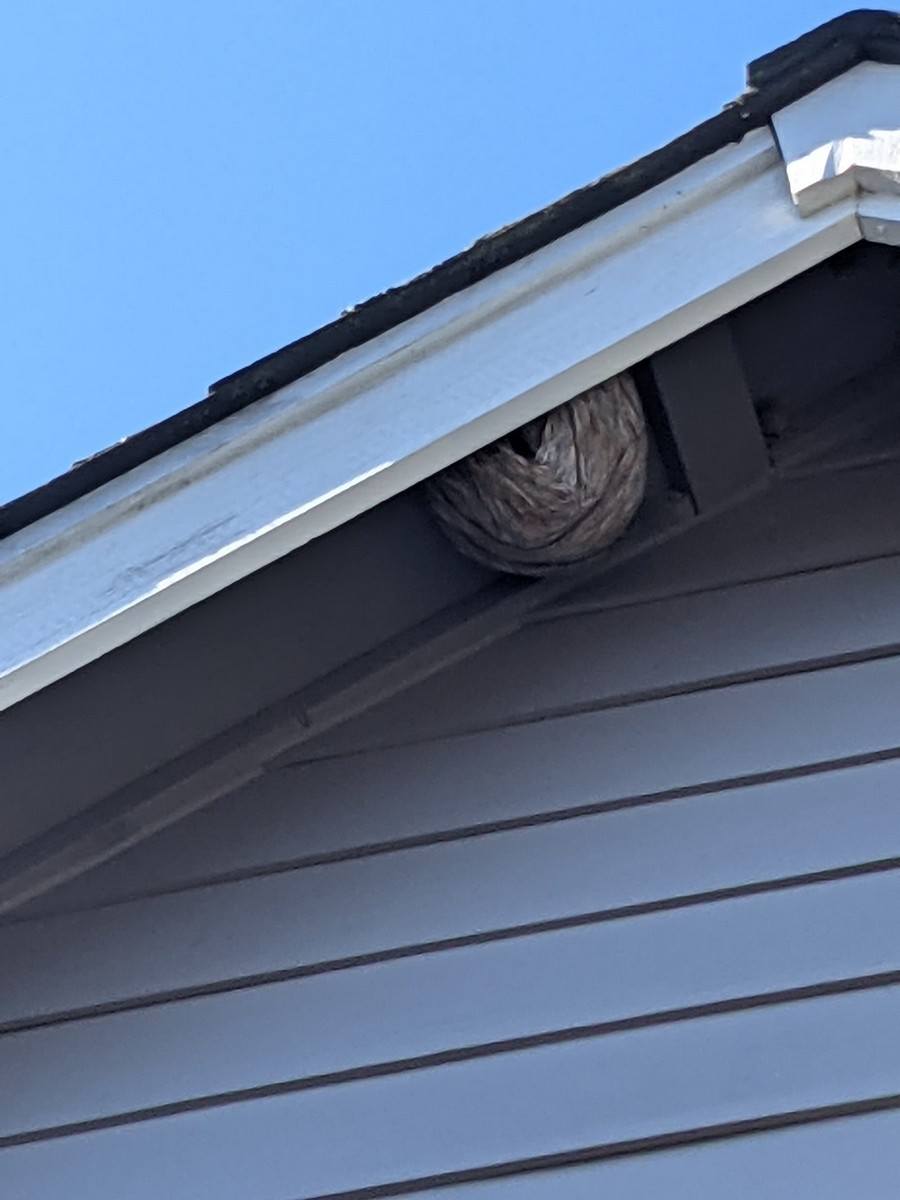
Paper wasps are slender with long dangling legs and build the familiar open, honeycomb nests hanging under eaves, porch ceilings, and railings. Yellowjackets are shorter, stockier, and boldly banded black and yellow, and they nest out of sight — in the ground, wall voids, and dense shrubs — with only a small entry hole giving them away. Hornets (including bald-faced hornets) are larger and build big enclosed, football-shaped paper nests in trees and on structures.
If you’re seeing a steady stream of insects flying in and out of a single spot in the ground or a wall, that’s the classic sign of a hidden yellowjacket nest.
SASQUATCH TIP A stream of insects flying in and out of a single hole in your lawn or an exterior wall almost always means a hidden yellowjacket nest — not something to poke at. Mark the spot from a safe distance, keep kids and pets away, and call a professional rather than mowing or spraying over it.
Why are yellowjackets so aggressive?
Yellowjackets are highly defensive of their nests, and unlike a honeybee, a single yellowjacket can sting repeatedly without dying. Their aggression peaks in late summer and early fall, when colonies are largest and natural food sources dwindle, which is exactly when they start crashing barbecues, hovering around trash cans, and turning up at outdoor gatherings. Disturbing a hidden nest — even accidentally with a lawnmower — can trigger a mass defensive response.
This combination of hidden nests, repeat stinging, and seasonal aggression is what makes yellowjackets the most dangerous of the common stinging insects here.
Are wasp and yellowjacket stings dangerous?
For most people a sting is painful but not medically serious. The real danger is for those with allergies: stings can cause severe allergic reactions, and because yellowjackets and some wasps sting multiple times, a disturbed nest can deliver many stings quickly, which raises the risk even for people without known allergies. Anyone experiencing difficulty breathing, swelling beyond the sting site, or dizziness after a sting should seek medical help immediately.
Because a single nest can hold thousands of yellowjackets, an encounter can escalate fast — another reason not to attempt removal of a large or hidden nest yourself.
Should I remove a wasp nest myself?
A small, newly started paper wasp nest in an accessible spot can sometimes be managed by a homeowner with caution, but hidden yellowjacket nests, large hornet nests, and any nest near doorways or high-traffic areas are best left to a professional. Store-bought sprays often fail to reach the whole colony inside a wall or the ground, and a partial treatment can leave a large, angry nest behind. Nests in wall voids also can’t simply be sealed, since trapped insects may chew into living spaces.
Professional removal locates the full nest, treats the colony at the source, and handles the removal safely for people and pets.
Frequently Asked Questions
Do you remove wasp and yellowjacket nests in Houston?
Yes. We handle paper wasps, yellowjackets, and hornets throughout Houston, Spring, Tomball, and the surrounding Harris County area, including hidden ground and wall-void nests. We locate the full nest, treat the colony at the source, and remove it safely. Call or text 281-627-4810 to schedule.
What’s the difference between a wasp and a yellowjacket?
A yellowjacket is a type of wasp, but not all wasps are yellowjackets. Paper wasps build open umbrella-shaped nests under eaves and are relatively docile, while yellowjackets are stockier, boldly black-and-yellow, nest out of sight in the ground or walls, and are far more aggressive. Identifying which one you have determines how the nest should be handled.
Why are yellowjackets worse in late summer and fall?
Because colonies reach their largest size then, just as natural food becomes scarce, so yellowjackets aggressively seek out human food and defend their nests more fiercely. That’s why they crash barbecues and hover around trash cans in August through October. It’s also the most dangerous time to accidentally disturb a hidden nest.
Can a yellowjacket sting more than once?
Yes. Unlike a honeybee, which dies after stinging, a single yellowjacket can sting repeatedly. Because a nest can hold thousands of them and they defend it aggressively, a disturbed nest can deliver many stings very quickly, which is dangerous even for people without a known allergy.
Is it safe to remove a nest myself?
A small, accessible paper wasp nest can sometimes be managed with caution, but hidden yellowjacket nests, large hornet nests, and nests near doorways should be left to a professional. Store-bought sprays often fail to reach the whole colony inside a wall or the ground, and a partial treatment leaves an angry nest behind.
What should I do if I’m stung and have a reaction?
Most stings are painful but not serious. However, if you experience difficulty breathing, swelling beyond the sting site, dizziness, or other signs of a severe allergic reaction, seek emergency medical help immediately. Because disturbed yellowjackets can deliver many stings fast, reactions can escalate quickly.
Do you offer a free inspection for stinging insects?
Yes. We’ll inspect your property, locate the nest and any other activity, and give you an honest plan and quote at no cost. Call or text 281-627-4810 for your Houston, Spring, or Tomball home. Everything is backed by our 100% service guarantee, with no contracts.
Ready to protect your Houston-area home?
Safe wasp, yellowjacket, and hornet nest removal across Houston, Spring, Tomball, and Harris County — backed by our 100% service guarantee.
Call or text 281-627-4810
Free inspection • No contracts • 100% service guarantee