Along the Gulf Coast, millipedes thrive in Houston’s moist, organically rich soils and often migrate indoors by the dozens after heavy rains or, conversely, during dry spells when they seek moisture. Sasquatch Pest Control stops these invasions at the source with targeted perimeter treatments, all backed by our 100% service guarantee and no long-term contracts.
Get a Free QuoteCall or Text 281-627-4810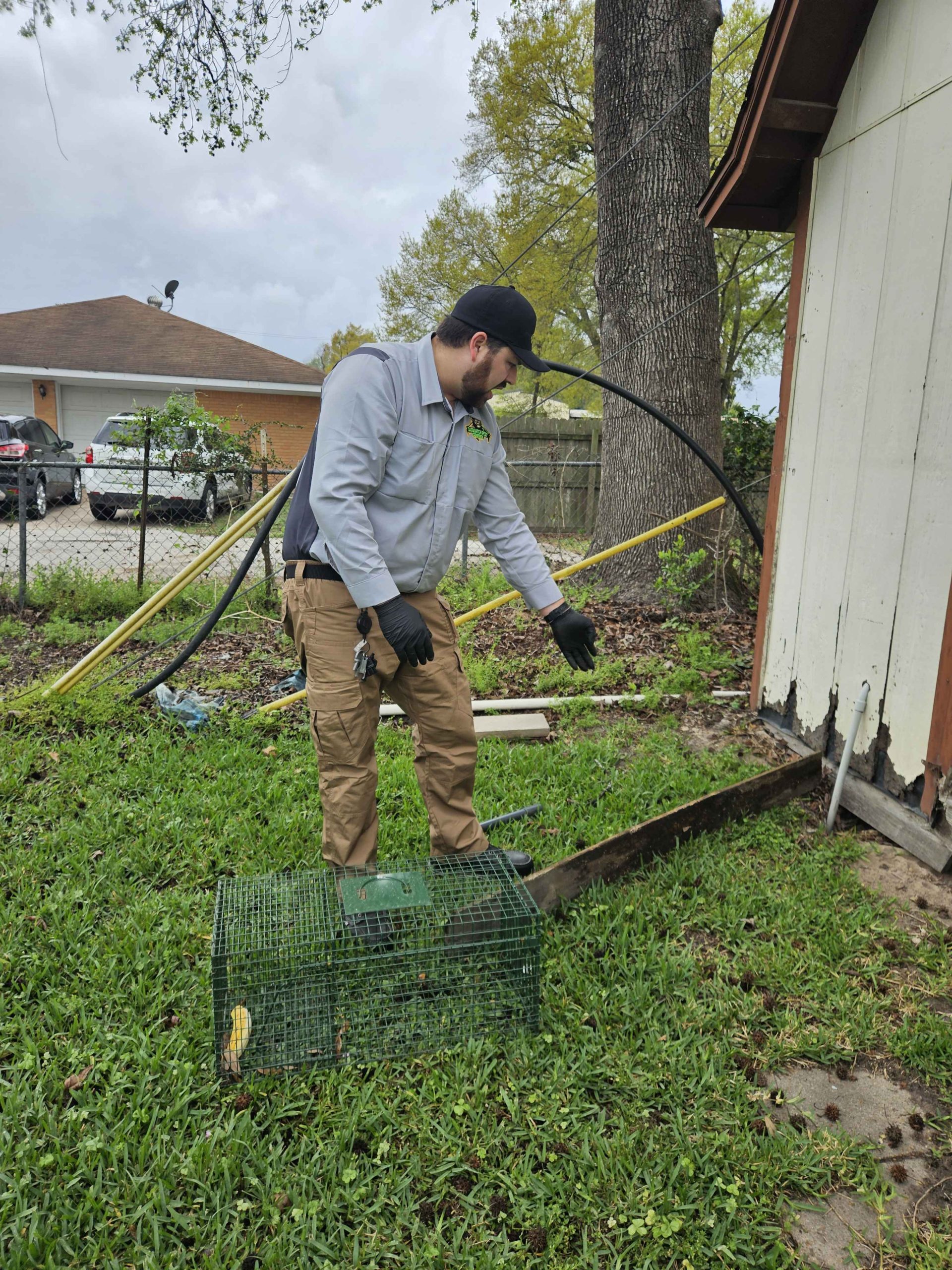
Along the Gulf Coast, millipedes thrive in Houston’s moist, organically rich soils and often migrate indoors by the dozens after heavy rains or, conversely, during dry spells when they seek moisture. Sasquatch Pest Control stops these invasions at the source with targeted perimeter treatments, all backed by our 100% service guarantee and no long-term contracts.
How to Identify Millipedes
Millipedes are cylindrical, worm-like arthropods with a hard, segmented body and two pairs of legs on most segments, which distinguishes them from the flattened, single-legged centipede. The species common around Houston are typically brownish to black, ranging from about 1 to 1.5 inches long, and they move slowly, coiling into a tight spiral when disturbed or dead. They live outdoors in damp, decaying organic matter such as mulch beds, leaf piles, compost, and under landscape timbers, and are most visible after Gulf Coast rains push them out of saturated soil.
Signs of a Millipede Problem
The most obvious sign is finding numerous slow-moving, coiling millipedes along your foundation, in the garage, or just inside doors and sliding tracks, especially after a storm or heavy irrigation. You may see them dead and curled in corners, since they quickly dehydrate and die once indoors where it is dry. Because they cannot reproduce inside your home, a sudden surge usually points to excess moisture and abundant organic debris right against the exterior walls.
How Sasquatch Treats Millipedes in the Houston Area
Your Sasquatch technician inspects the perimeter and landscape to pinpoint the damp harborage and entry points driving millipedes indoors. We apply a targeted exterior barrier treatment around the foundation, thresholds, and weep holes, treat mulch beds and other harborage zones, and seal off the gaps they use to get inside. We also advise on drainage and moisture reduction and return for follow-up as needed, with every service backed by our 100% guarantee, so if they return between scheduled visits, we come back at no additional cost.
How to Prevent Millipedes
Since millipedes depend on moisture, keep a dry buffer around your home: pull mulch, leaf litter, and grass clippings back several inches from the foundation and use gravel or bare soil against the slab. Correct drainage so water flows away from the house, adjust sprinklers to avoid soaking the foundation, and fix leaky spigots and downspouts. Seal cracks, install or replace door sweeps and weatherstripping, and store firewood and compost well away from the walls to remove the damp habitat they need.
Frequently Asked Questions
Are millipedes harmful to people or pets?
Millipedes do not bite or sting and are not dangerous. Some species secrete a defensive fluid that can irritate skin or eyes and stain surfaces if handled or crushed, so it is best not to touch them with bare hands. We remove them safely without the mess.
Why did millipedes suddenly invade my home after it rained?
Heavy Gulf Coast rains saturate the soil and mulch where millipedes live, forcing them to move to higher, drier ground, which often means the walls and doorways of your home. Their numbers spike quickly, then they die indoors because it is too dry for them.
What is the difference between a millipede and a centipede?
Millipedes are rounded, slow, dark, and have two pairs of legs per segment; they eat decaying plant matter and are harmless. Centipedes are flattened, fast, and have one pair of legs per segment; they are predators and can bite. We treat both.
Will millipedes damage my house or plants?
No. Millipedes feed on decaying organic material, not structures, and rarely harm healthy plants. The main issue is the nuisance of large numbers entering and dying indoors, which our perimeter treatment is designed to prevent.
How much does millipede treatment cost in Houston?
The price depends on your home size, how severe the invasion is, and the amount of moisture and organic harborage around the property. We give a free, no-obligation upfront quote with no contracts, so you know the full cost before we start.
Get Rid of Millipedes for Good
Free quote for Houston-area homes and businesses.
Call or Text 281-627-4810Free Quote